
Fermented Indian Pickles: Homemade Achar Made Simple

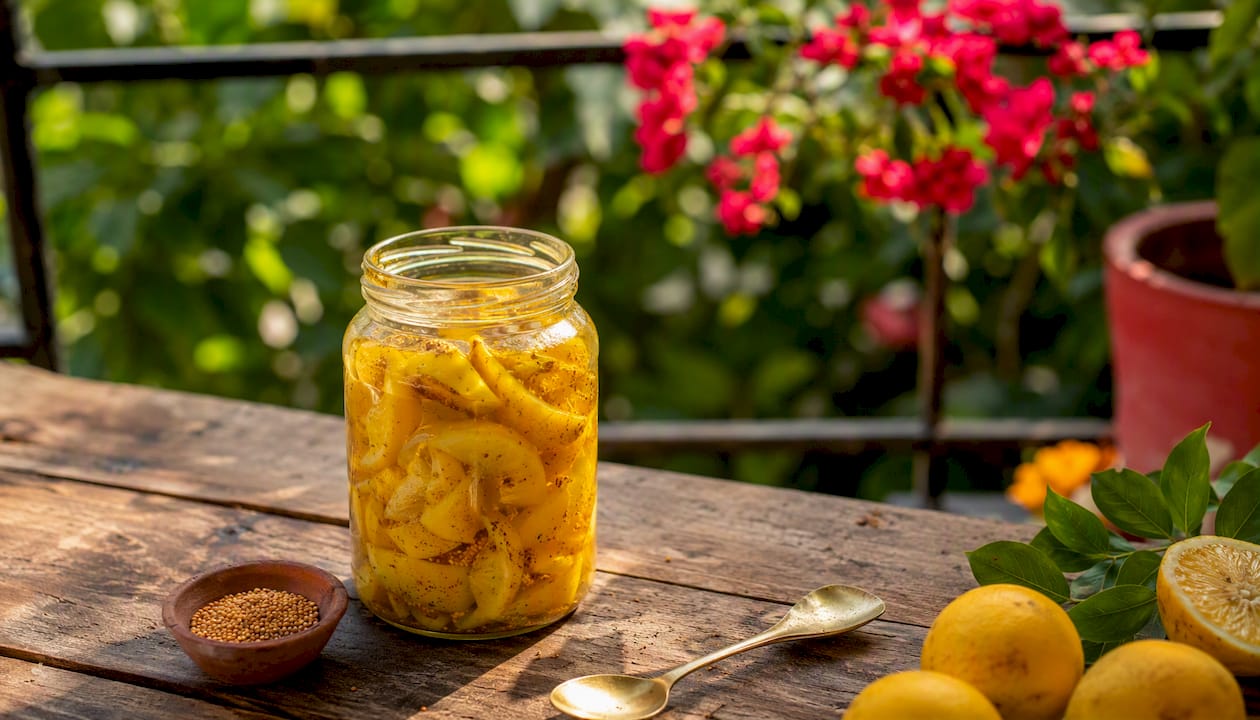
Fermented Indian pickles, known as lacto-fermented achar, are salt-brined fruits or vegetables that develop deep tang, bold spice, and live probiotic cultures over days to weeks. Unlike vinegar-preserved or oil-packed achar, true lacto-fermented versions rely on native Lactobacillus bacteria to do all the work. No vinegar, no heat, no shortcuts.
Taste: Sharp, funky, and complex. Think sour with layers of spice that vinegar pickles simply can’t replicate.
Time and effort: Most varieties need several days of ambient fermentation, then cold storage. Active preparation is relatively quick.
Gut-health headline: Research suggests fermented vegetables may support gut microbiome diversity and reduce markers of inflammation, though sodium content means portion size matters.
This guide walks you through the most popular varieties, a kitchen-friendly step-by-step method, a simple starter recipe for fermented lemon achar, and everything you need to store and troubleshoot your ferments safely.
Key Takeaways
Lacto-fermented Indian pickles made with salt brine and native Lactobacillus bacteria deliver a flavor and potential gut-health profile that vinegar or oil-preserved achar simply cannot match.
Point | Details |
What lacto-fermentation means | Salt brine plus native bacteria produce lactic acid, creating tang and live cultures. |
Best starter ferment | Fermented lemon achar takes under 30 minutes of prep and is ready in 5–7 days. |
Key safety rule | Keep all produce submerged below the brine line and use non-iodized salt throughout. |
Sodium caution | Treat achar as a condiment (1–2 tablespoons per meal) and check with a clinician if you manage hypertension. |
Ready-made option | Desimunchiess offers handcrafted, home-style pickles shipped directly to your door. |
Table of Contents
What makes fermented Indian pickles different from vinegar or oil achar?
Lacto-fermentation is one of the oldest food preservation methods on earth. You submerge produce in a salt brine, and native lactic acid bacteria (LAB), primarily Lactobacillus species, consume the sugars and produce lactic acid. That lactic acid is what creates the tang, preserves the food, and, critically, keeps beneficial microbes alive in the jar.
Vinegar pickling works differently. Acetic acid (from vinegar) preserves by lowering pH rapidly, but it doesn’t involve live microbial activity. The result is a sour pickle, but not a probiotic one. Oil-preserved achar, common across North India, uses oil as a barrier against spoilage. Some oil-based achars do undergo an initial fermentation phase, but many are spiced and packed without any live-culture activity.
WebMD explains the practical difference clearly: fermented pickles are microbe-driven, while vinegar or quick pickles are not, and for gut-health benefits, the refrigerated “naturally fermented” label is the one to look for.
Feature | Lacto-fermented achar | Vinegar-pickled achar | Oil-preserved achar |
Souring agent | Lactic acid (microbial) | Acetic acid (vinegar) | Spices and salt (oil barrier) |
Live microbes | Yes, if unpasteurized | No | Rarely |
Typical storage | Refrigerator after ferment | Pantry or fridge | Pantry (oil seal) |
Flavor profile | Deep, funky, complex tang | Sharp, bright, uniform sour | Rich, spiced, oily |
Among traditional styles, water-based lemon, raw mango, and carrot achars are the most likely to retain live cultures. Oil-heavy or heat-processed jars generally do not.
Which Indian pickle varieties are traditionally fermented?
India’s achar tradition spans hundreds of regional recipes. Here are the varieties most commonly made with true lacto-fermentation, along with what to expect from each.
Lemon or lime achar is one of the most beginner-friendly ferments. Whole or quartered lemons are packed in salted brine with turmeric and chilies. The peel softens over weeks and the brine turns golden and tangy. Water-based versions from Eastern India are especially likely to carry live cultures.
Raw mango achar is probably the most beloved variety across India. Green, unripe mangoes are cut, salted, and fermented with mustard seeds, fenugreek, and red chili. North Indian versions often finish in mustard oil after the initial ferment. Farmdidi notes that fermentation gives mango achar a deeper, more complex tang than vinegar-based versions.
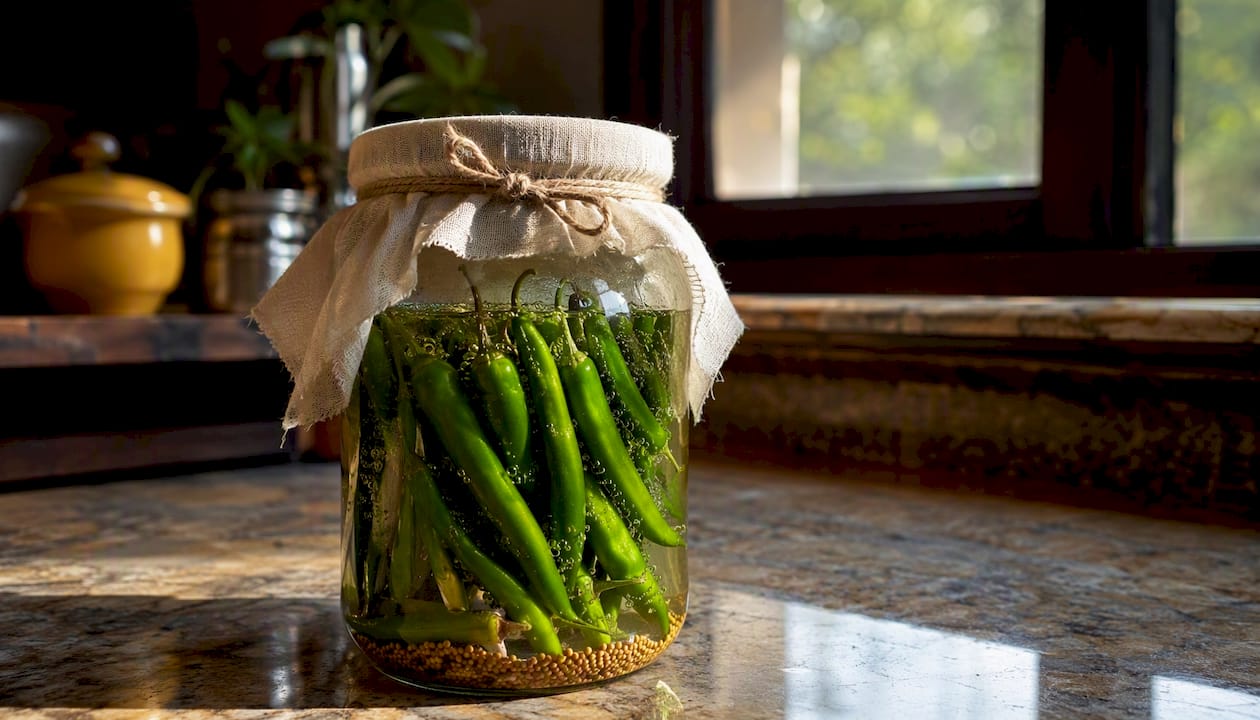
Green chili achar is sharp, fiery, and fast. Whole or slit green chilies ferment in a light brine within 3–5 days. Popular across Rajasthan and Punjab, these are typically water-based and retain live cultures well.
Carrot achar is mild, crunchy, and approachable. Carrot sticks ferment beautifully in a simple salt brine with mustard seeds and turmeric. A great first ferment for anyone new to the process.
Radish (mooli) achar is pungent and earthy. Daikon-style radishes are common in North Indian and Punjabi households. The fermentation tames the sharpness and adds a pleasant sourness.
Onion achar is quick and versatile. Small pearl onions or sliced onions ferment in a spiced brine within a few days. Common in South Indian meals as a condiment.
Amla (Indian gooseberry) achar is tart and slightly bitter. Amla is naturally high in vitamin C and ferments well in a simple salt brine. Traditional in Uttar Pradesh and Andhra Pradesh.
Mixed vegetable achar combines carrots, cauliflower, turnips, and green chilies in one jar. Regional recipes vary widely, but the mixed format means a broader range of native bacteria and, potentially, greater microbial diversity in the finished product.
How to make fermented Indian pickles at home, step by step
This method works for most water-based achar styles. Follow it closely the first time, then adapt spices and vegetables to your taste.
Equipment checklist
1-quart or 1-liter wide-mouth glass jar (sterilized)
Small glass or ceramic weight (or a zip-lock bag filled with brine)
Breathable cover: cheesecloth, a loose lid, or a simple airlock lid
Kitchen scale (strongly recommended over volume measurements)
Non-iodized pickling salt or fine sea salt
Step-by-step method
Wash and dry your produce thoroughly. Any surface bacteria you don’t want should be minimized. Pat dry with a clean towel.
Cut to your preferred size. Smaller pieces ferment faster. Uniform cuts help even fermentation.
Salt the produce. Use roughly 2% salt by weight of your produce. For a dry-salt method, toss the cut produce with salt and let it sit for 30 minutes to draw out moisture.
Add your spices. Classic achar spices include mustard seeds, fenugreek seeds, turmeric, and dried red chili. Toast lightly if you prefer a deeper flavor, but don’t cook them.
Pack the jar tightly. Press the produce down firmly so it sits below the brine line. If using a wet brine, dissolve 20 grams of non-iodized salt in 1 liter of filtered water and pour over the packed jar.
Weigh the produce down. Use a fermentation weight or a small zip-lock bag filled with brine to keep everything submerged. Exposed produce above the brine line is where mold grows.
Cover loosely and set at room temperature. The ideal range is 65–75°F (18–24°C). Avoid direct sunlight.
Check daily for the first 3–5 days. Look for small bubbles rising through the brine. That’s your Lactobacillus at work. Taste from day 3 onward.
Move to cold storage when the tang is right. Most achar-style ferments are ready in 5–10 days at room temperature. Refrigeration slows fermentation and holds the flavor where you want it.
Use clean utensils every time you serve. Never double-dip or introduce moisture from other foods into the jar.
Pro Tip: Iodized table salt can inhibit lactic acid bacteria and slow or stall your ferment. Always use pickling salt, kosher salt, or fine sea salt for reliable results.
Easy starter recipe: fermented lemon achar in a small jar
This is a low-risk, high-reward first ferment. The lemon peel softens beautifully, the brine turns golden, and the whole jar smells like a South Asian kitchen in the best way.
Ingredient | Quantity |
Small lemons or limes (quartered) | 500 g |
Non-iodized pickling salt | 30 g |
Ground turmeric | 1 tsp |
Dried red chili flakes | 1 tsp |
Fenugreek seeds (lightly crushed) | ½ tsp |
Filtered water (for brine top-up) | As needed |
Preparation: Quarter the lemons and toss them with the salt, turmeric, chili flakes, and fenugreek in a bowl. Let the mixture sit for 20–30 minutes. The lemons will release juice, which becomes part of your brine.
Packing: Transfer everything into a sterilized 1-quart jar, pressing down firmly so the lemons are submerged in their own juice. If the juice doesn’t fully cover the fruit, top up with a light brine (10 g salt dissolved in 500 ml filtered water) until everything is submerged.
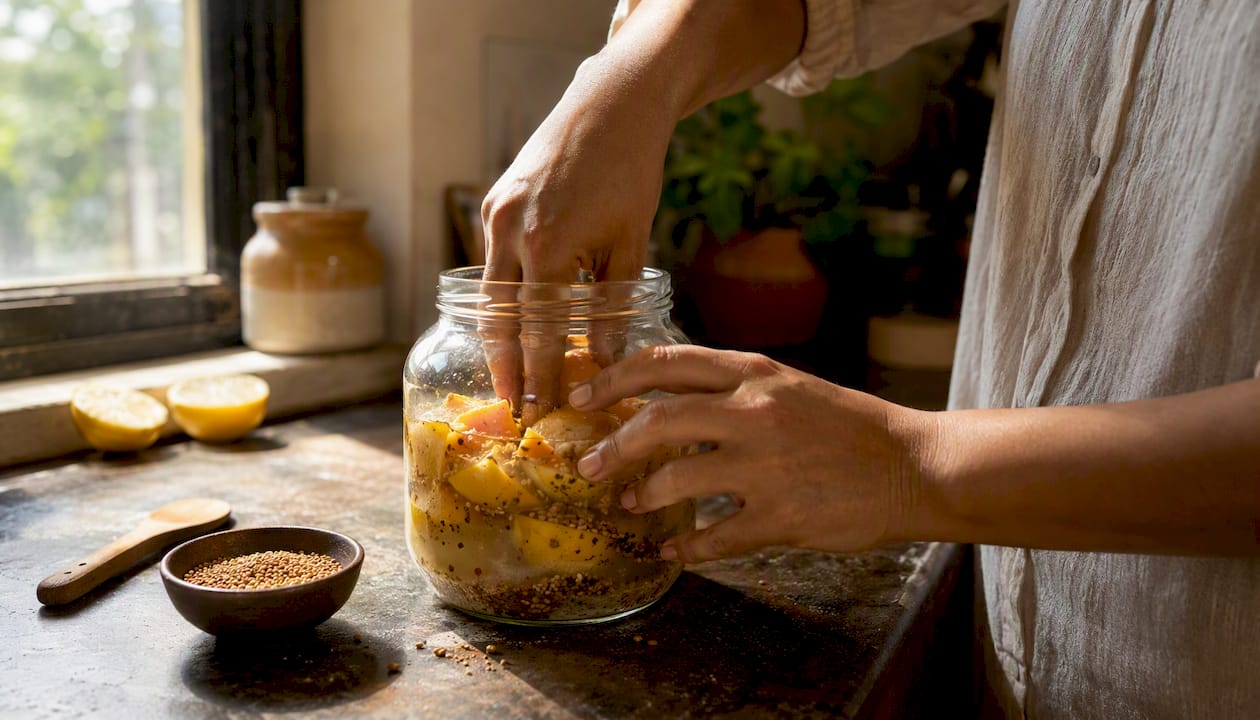
Fermentation: Cover loosely and leave at room temperature (65–75°F) for 5–7 days. Check daily. You’ll see small bubbles by day 2 or 3. Taste from day 5. The lemon peel should be softening and the brine should taste pleasantly sour and salty.
Cold storage: Once the flavor is where you want it, seal the jar and refrigerate. The achar continues to mellow slowly in the fridge and is best after 2–3 weeks total.
Serving: Use as a condiment with dal, rice, flatbreads, or grilled meats. A small spoonful goes a long way. For a milder version, swap half the lemons for limes, or reduce chili flakes to ¼ tsp.
How to store your ferment safely and fix common problems
Getting the ferment right is satisfying. Knowing what to watch for keeps it safe.
Safe fermentation: do’s and don’ts
Do keep all produce submerged below the brine line at all times.
Do use sterilized jars and clean utensils every time you open the jar.
Do use non-iodized salt. Iodized salt can suppress the LAB you need.
Don’t seal jars airtight during active fermentation. CO₂ needs to escape.
Don’t use reactive metal containers. Stick to glass, ceramic, or food-grade plastic.
Don’t panic over cloudy brine. Cloudiness is a sign of active fermentation, not spoilage.
Troubleshooting common issues
White film on the surface: This is likely kahm yeast, a harmless (if unpleasant-smelling) film that forms when fermentation slows or the jar is exposed to air. Skim it off, press the produce back under the brine, and continue. It won’t harm the ferment.
Colored or fuzzy growth (pink, black, green): This is mold. Discard the batch. Mold above the brine line that has visibly spread into the produce means the jar is unsafe to eat.
Soft or mushy vegetables: Usually caused by fermenting at too high a temperature or for too long. Keep temps below 75°F and taste regularly from day 3 onward.
No bubbles after 3 days: Check your salt ratio. Too much salt slows LAB activity. Also check your water source. Chlorinated tap water can inhibit fermentation. Use filtered or boiled-and-cooled water.
Shelf life at a glance
Properly fermented and refrigerated achar typically stays good for 2–3 months. Oil-topped jars (where a thin layer of neutral oil seals the surface) can last longer, up to 6 months, if kept cold and handled with clean utensils. Discard any jar that smells off, shows mold, or has an unusual color change in the brine.
What does the research actually say about gut-health benefits?
The honest answer: the evidence is promising but still building. Here’s what we know.
Cleveland Clinic’s review of pickle research summarizes findings that fermented vegetables may improve glucose metabolism, reduce inflammation, and support immune regulation. Registered dietitians cited in that piece also flag the sodium content as a real consideration, particularly for people managing hypertension or diabetes.
Time’s 2024 feature reviewed the broader fermented-vegetable literature, noting that most published studies focus on kimchi but that the findings are broadly applicable to other lacto-fermented vegetables. Research contexts typically used serving sizes of roughly 2 tablespoons to ¾ cup per day.
On the traditional achar side, a Clinicaltrials tested daily consumption of several traditional fermented achar types over an 8–12 week intervention and reported improved gut microbiome diversity and changes in immune biomarkers for some formulations. A related Vitals News report on an AKU study found that daily consumption of traditional fermented achar increased gut-bacterial diversity and showed markers suggesting reduced inflammation among women in the trial. Both studies are early-stage and need larger replication, but they’re the first controlled human data specifically on Indian-style fermented pickles.
Beyond live probiotic counts, USDA/ARS researchers are studying bioactive peptides produced during vegetable fermentation as potential health-promoting compounds. These postbiotic compounds may contribute to benefits even when live bacteria counts vary from jar to jar.
A practical note on sodium: A single tablespoon of achar can contain a meaningful amount of sodium. Treat it as a condiment, not a side dish. One to two tablespoons per meal is a reasonable portion for most healthy adults.
Who should check with a clinician first: Anyone managing high blood pressure, kidney disease, or a compromised immune system should talk to their doctor before adding fermented pickles regularly to their diet.
Buying tip: When shopping for probiotic-rich achar, look for refrigerated jars labeled “naturally fermented” with no vinegar in the ingredient list. A slight fizz when you open the jar is a good sign of live cultures. WebMD’s guidance on label reading is a solid starting point for understanding what to look for.
How regional methods across India shape the flavor of achar
India’s geography and climate created wildly different fermentation traditions. Understanding them helps you adapt techniques in a U.S. kitchen.
North Indian style: Many North Indian achars, like the classic mango pickle, use an oil-after-ferment method. The produce is salted and sun-dried first, then packed in mustard oil with spices. The oil acts as a preservative seal. In the U.S., you can replicate the sun-drying step by placing salted produce near a sunny window for a day or two.
South Indian sun-fermented mango achar: Tamil Nadu and Andhra Pradesh styles often rely on intense sun exposure to accelerate fermentation and develop a concentrated, almost caramelized sourness. Without strong sun, a warm proofing cabinet or a spot near your oven (65–80°F) works well.
Eastern water-based ferments: Bengali and Odishan kitchens favor lighter, water-based lemon and tomato ferments with minimal oil. These are the styles most likely to carry live cultures all the way to your table, and they’re the easiest to replicate in a standard U.S. kitchen.
Mustard oil: Traditional in many North and East Indian recipes, mustard oil adds a pungent, slightly bitter note that’s taste-essential in authentic versions. Cold-pressed mustard oil is available at most Indian grocery stores in the U.S. If you can’t find it, a neutral oil works but the flavor profile will be milder.
Hybrid vinegar recipes: Some modern or diaspora recipes add a splash of vinegar for faster sourness or longer shelf life. These are fine for flavor, but the vinegar reduces or eliminates live-culture activity. If gut health is your goal, skip the vinegar and let the salt do its job.
For a deeper look at traditional Indian fermentation methods, the Desimunchiess blog covers indigenous techniques that go well beyond pickling.
Why traditional fermented pickles deserve more respect than they get
There’s a tendency in Western food culture to treat fermented Indian pickles as a condiment afterthought, a small spoonful on the side of a plate. That framing misses the point entirely.
Traditional achar was never just a flavor booster. It was a preservation technology, a seasonal food system, and a form of nutritional insurance, all in one jar. Families in rural India fermented the summer mango harvest to last through winter. The salt and lactic acid kept food safe without refrigeration. The spices—fenugreek, turmeric, mustard—weren’t decorative. They had documented antimicrobial and anti-inflammatory properties that made the ferment more stable and the food more functional.
What strikes us most about the emerging research is that scientists are now catching up to what home cooks already knew. The bioactive peptides and microbial diversity in a well-made achar aren’t a modern discovery. They’re the result of generations of trial, error, and sensory refinement. Your grandmother’s recipe wasn’t guesswork. It was precision, expressed through taste and smell rather than lab instruments.
The caution we’d add: not every jar labeled “achar” is a fermented pickle. Many commercial versions are vinegar-based or heat-treated, which means the probiotic story doesn’t apply. If you’re making it at home, you control that. If you’re buying, read the label carefully and look for refrigerated, naturally fermented options.
Authentic achar, ready when you are
Making your own fermented achar is deeply satisfying. But some days, you just want the real thing without the wait.
Desimunchiess makes bold, home-style Indian pickles using authentic recipes and high-quality ingredients, the kind that taste like someone’s kitchen, not a factory. We handcraft every batch to bring you that genuine, freshly made flavor. Whether you’re after a tangy lime pickle or a fiery mango chilli pickle, we’ve got you covered. No long wait, no fermentation jars to babysit. Just good achar, delivered to your door. Visit Desimunchiess to shop our full pickle range and find your new favorite.
Sources
These are the primary references behind this guide. Each one is worth bookmarking if you want to go deeper.
Cleveland Clinic: Surprising Health Benefits of Pickles — A registered-dietitian-reviewed summary of research on fermented vegetables and metabolic health. Best for understanding the sodium caution and who should be careful.
Time: Why Your Diet Needs More Fermented Pickles — A clear review of the fermented-vegetable research landscape, including serving-size guidance used in studies. Good for context on how the science is developing.
ClinicalTrials.gov: NCT06748313 — The registered record for a community trial testing traditional fermented achar formulations. Useful for readers who want to see the primary trial data.
Vitals News: AKU Fermented Achar Study — Plain-language coverage of the community trial findings on gut diversity and immune markers.
WebMD: Pickles — Nutrition, Benefits, Risks, and Preparation — Practical consumer guidance on label reading, the fermented-vs-vinegar distinction, and safety basics.
USDA/ARS: Pickle Benefits and Fermented Cucumbers — The best source for understanding bioactive peptides and postbiotic compounds beyond live probiotic counts.
This article is general information, not a substitute for advice from a qualified doctor. Consult a qualified healthcare professional about your own circumstances before acting on anything here.
Recommended
Comments