
Keep Pickles Crisp: Store Pickles Right for Store Bought and Homemade

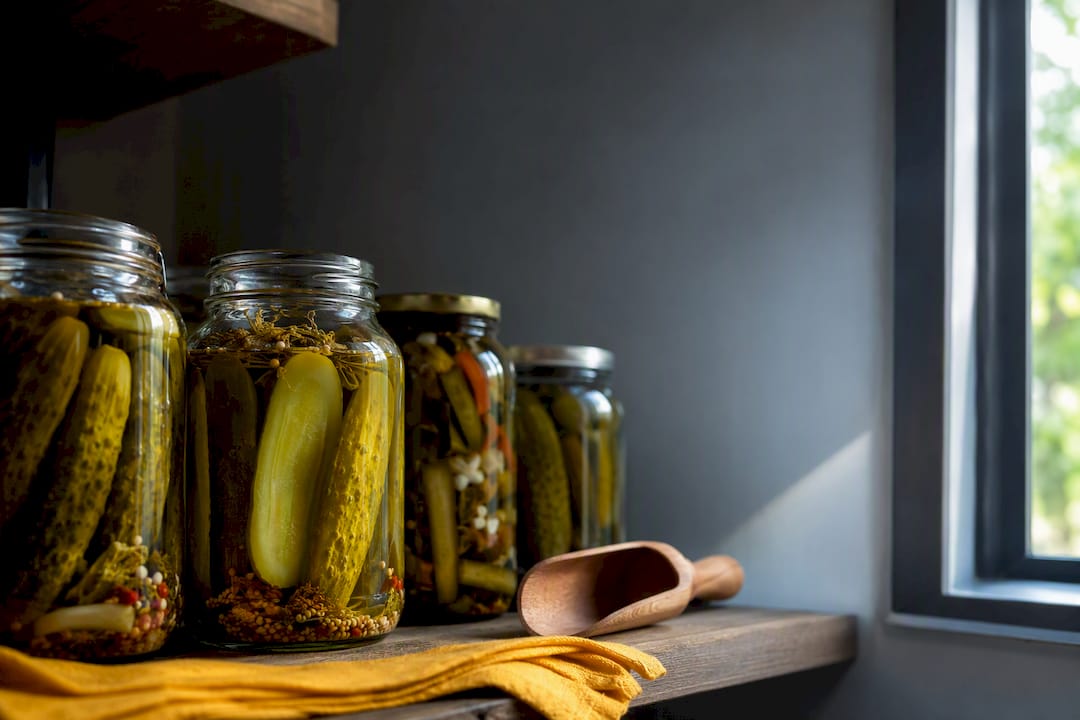
Unopened, heat-processed jars of pickles belong in a cool, dark pantry. Refrigerated-case jars, unpasteurized pickles, and anything homemade need cold storage from the start. Once you crack the seal, every jar goes in the fridge, submerged in its own brine. When you’re not sure which rule applies, refrigerate it, check for spoilage signs, and skip the taste test if anything looks or smells off.
TL;DR:
Unprocessed, heat-processed jars of pickles can be stored in a cool, dark pantry for up to 12 months, while refrigerated jars require cold storage from the start.
Once opened, vinegar-packed pickles last about 2 to 3 months in the fridge, fermented pickles last 1 to 2 months, and homemade quick-pickles remain good for 3 to 4 weeks.
Properly processed jars do not need refrigeration until opened, but should be kept in a dark, cool, dry place away from heat sources to maintain quality.
Fermented pickles need continuous submersion and refrigeration to prevent spoilage, with signs of mold or foul smells indicating they should be discarded.
Using glass jars with removable rings, keeping everything submerged, maintaining hygiene, and avoiding temperature fluctuations extend pickles’ shelf life and quality.
Table of Contents
How to Store Pickles: Know Your Type First
Before you pick a shelf or a fridge spot, figure out what kind of jar you’re holding. The storage rule follows the pickle, not the other way around.
Canned pickles are heat-processed in a boiling-water canner, which kills off the microbes that cause spoilage and lets you shelve the jar at room temperature until you open it. This is the classic supermarket dill spear or bread-and-butter pickle. Fermented pickles, sometimes called lacto-fermented or old-world style, get their tang from live cultures instead of heat. Those cultures stay active, so fermentation keeps creeping along unless the cold slows it down. Refrigerator or quick pickles skip canning altogether. They’re brined for flavor, not long-term preservation, and they’re built for the fridge from day one.
Reading the label saves you a guessing game:
“Processed in a boiling-water canner” or a sealed lid with no cold-chain sticker usually means shelf-stable until opened.
“Keep refrigerated” or “refrigerate after opening” on an unopened jar means it needs cold storage now, not later.
Jars sold from a grocery store’s refrigerated case are refrigerator pickles no matter what the label says. If it left the fridge, it goes back in yours.
Homemade jars without a proper water-bath process should always be treated as fridge-only, even if they look sealed.
Desimunchiess follows the same logic with its own Mixed Pickle, matching the storage instructions to how the batch was actually made rather than assuming one rule fits every jar.
Where to Keep Unopened Jars
A sealed, properly processed jar doesn’t need fridge space. It needs three things: cool, dark, and dry. Sunlight and heat break down flavor and texture faster than time alone does, which is why that back corner of the pantry usually beats a spot on the counter.
Michigan State University Extension recommends storing processed pickles in a dark, cool, dry place, and suggests preserving only as much as your household can realistically eat within about 12 months for the best quality. Oregon State University Extension backs the same guidance for home-canned batches.
A few practical notes on placement:
Keep sealed jars under roughly 70°F when you can, which matches the best practices for maintaining optimal conditions as explained in Store Whole Beans in a Kitchen Cabinet the Right Way. Sustained heat above 70 to 85°F speeds up quality loss even in a sealed jar.
Avoid storing jars near an oven, a sunny windowsill, or a garage that swings hot in summer and cold in winter.
If the jar came from a refrigerated grocery case, or the label says unpasteurized, don’t move it to the pantry. Treat it exactly like a fridge pickle, sealed or not.
Storing Opened Jars and Fridge Pickles the Right Way
The moment you break the seal, the clock changes. Opened jars need cold storage and a brine that fully covers the vegetables inside.
Keep everything submerged. Air is the enemy here. Pickles poking above the brine line dry out, discolor, and invite mold. If the liquid has dropped, mix a quick booster of equal parts vinegar and water with a pinch of salt and top the jar off, a fix Food & Wine recommends for exactly this problem.
Refrigerate at 40°F or colder, and place the jar in the body of the fridge rather than the door. Door shelves swing in temperature every time someone opens the fridge, and that fluctuation is what softens texture faster than the cold itself would.
Use a clean utensil every time. A fork that’s touched other food, or fingers straight from a sandwich, introduces bacteria into the brine. Wipe the rim and threads before resealing so residue doesn’t build up and attract mold around the lid.
Pro Tip: Once you’ve processed a jar at home, take the metal ring off before it goes into storage. Rings trap moisture against the lid, and acidic brine will rust that band over time. The flat lid alone keeps the seal fine.
Fermented Pickles Need Their Own Rules
Fermentation doesn’t stop just because you’re done eating for the day. The cultures that made your achar or lacto-fermented cucumbers tangy keep working as long as conditions allow, and warmth is what keeps them going fastest.
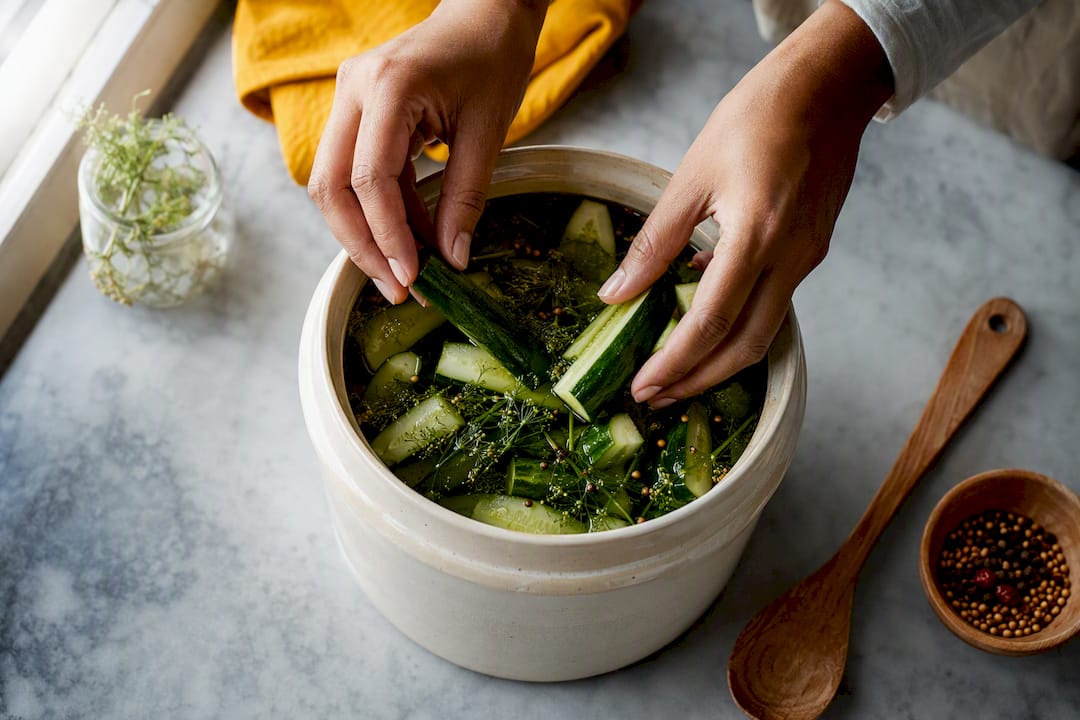
Refrigeration is the brake pedal. Cold slows the fermentation dramatically, which is exactly why refrigerated fermented pickles hold their crunch longer than ones left on a counter. Food & Wine points to keeping everything submerged in brine as the single most effective step to avoid surface molds and yeast problems in the first place, a lesson Desimunchiess applies in its own fermented pickle process.
A few things to watch for as fermentation continues:
Vegetables floating above the brine need a weight, a smaller jar, or a top-up. Anything exposed to air is at risk.
Gas buildup is normal in an active ferment. Burp the jar by loosening the lid briefly, or use an airlock lid if you’re fermenting at scale.
A thin white film, sometimes called kahm yeast, is usually harmless and can be skimmed off the surface.
Fuzzy, colored, or fast-spreading mold is not the same thing. That calls for tossing the batch, not skimming it.
The tell is texture and smell as much as appearance. A sharp, clean sour smell is fermentation doing its job. A rotten, musty, or chemical odor is your cue to stop.
How Long Do Pickles Last?
Shelf life depends entirely on which category your jar falls into, and “safe” isn’t the same question as “still tastes good.”
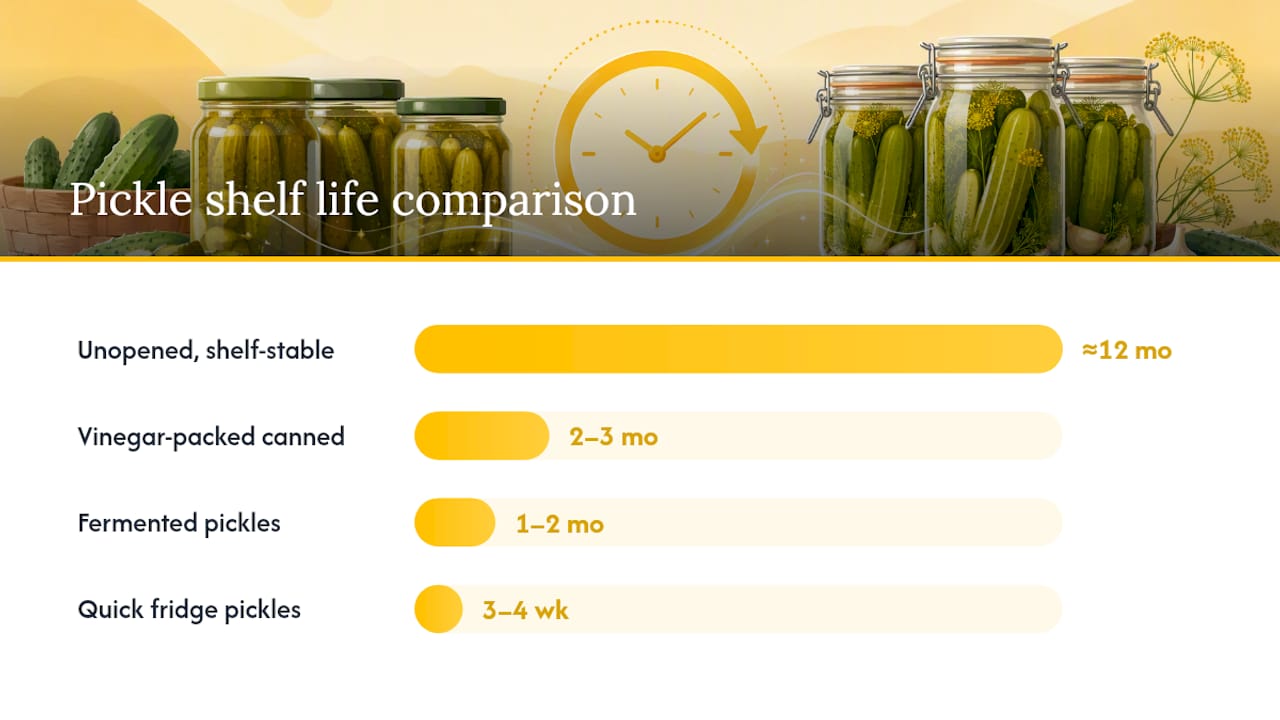
Unopened, properly heat-processed jars can stay safe well past a year, but Epicurious notes that the use-by date on a commercial jar is mostly a quality marker, not a safety cutoff. Best flavor and crunch usually hold for about 12 months, matching the same guideline from Michigan State Extension. After that, the pickle won’t hurt you, but it may turn soft and dull.
Once opened, the timeline shortens fast:
Vinegar-packed, canned pickles: roughly 2 to 3 months in the fridge for best quality once opened.
Fermented pickles: often 1 to 2 months before texture and tang start to fade, even refrigerated.
Refrigerator quick-pickles: homemade versions typically run 3 to 4 weeks, according to Southern Living, with commercial cold-packed versions carrying their own manufacturer date on the label.
Labeling your jars with the open date is a small habit that saves a lot of guessing later.
Signs of Spoilage: When to Toss the Jar
Trust your senses over the calendar. A jar that’s technically within its window but smells wrong isn’t worth the risk.
Watch for these before you reach for a fork:
Fuzzy or colored mold anywhere on the surface, the lid, or the rim.
Brine that’s turned cloudy, slimy, or noticeably thicker than when you opened the jar.
A foul, sour-beyond-normal, or chemical smell instead of a clean vinegar or ferment tang.
A lid that’s bulging or domed, which points to gas buildup that shouldn’t be there.
Fizzing or bubbling that starts up again after the jar has been refrigerated a while, especially in a jar that wasn’t meant to ferment.
If you’re staring at a jar and asking yourself whether it’s still good, that hesitation is the answer. A little surface yeast in an active ferment can sometimes be skimmed safely, but fuzzy mold, sliminess, or a bulging lid means the whole jar goes in the trash, not on the sandwich.
Michigan State Extension lists fuzzy or colorful mold and slimy texture as clear discard signals, and there’s no version of “maybe it’s fine” that’s worth testing with your own stomach.
Best Containers and Jar Hygiene for Longer-Lasting Pickles
The jar you use matters almost as much as where you put it. Glass is the gold standard, food-grade plastic works for short-term fridge storage, and stainless steel holds up fine for utensils and weights. Reactive metals like aluminum or plain steel are a problem because pickle brine is acidic enough to corrode them, which taints flavor and can introduce metal into your food.
A few habits keep jars cleaner for longer:
Remove the metal canning ring once a jar has been processed and cooled. Oregon State University Extension points out that rings left on can corrode from the acid and salt in the brine, especially over months of storage.
If a ring has already rusted, replace it before your next batch. A rusted band can flake into the seal area.
Dip a clean fork or tongs into the jar every time, never fingers, and wipe the rim before resealing.
Store jars away from strong-smelling foods. Glass doesn’t absorb odors the way plastic can, but an open pantry shelf next to onions or spices still affects flavor over time.
Quick Fixes for Common Pickle Problems
Most small pickle problems have a fast, safe fix if you catch them early.
Brine running low? Mix equal parts vinegar and water, add a small pinch of salt, and top the jar off so nothing sits exposed to air.
Fresh refrigerator pickles gone soft? An ice-brine soak, ice cubes and cold salted water for a short soak, can help crisp them back up before serving, though it won’t reverse spoilage.
Thinking about the freezer? Skip it for regular pickles. Freezing breaks down the cell structure in cucumbers and turns them mushy on thawing. The exception is a recipe specifically formulated as a freezer pickle, which uses less water and a different texture profile from the start.
Desimunchiess Perspective: What Small-Batch Production Teaches About Freshness
We build our storage advice around how our own jars are made, not around generic rules borrowed from a different kind of pickle. Our Mixed Pickle and Lime Pickle go through handcrafted, small-batch production, which means we control freshness at the jar level instead of relying on volume processing to even things out.
That mindset carries into packaging, too. We remove rings after processing, we watch brine coverage closely, and we treat every batch the way we’d want a home cook to treat it after opening the jar. If you want to see how we handle fermentation specifically, our guide to homemade achar walks through the same submersion and hygiene habits covered here, applied at production scale.
Good pickles aren’t complicated to store. They just reward a little attention.
— Shivam
Sources
Recommended
Comments