
Your Go-To Spicy Indian Snacks List for Home Cooks

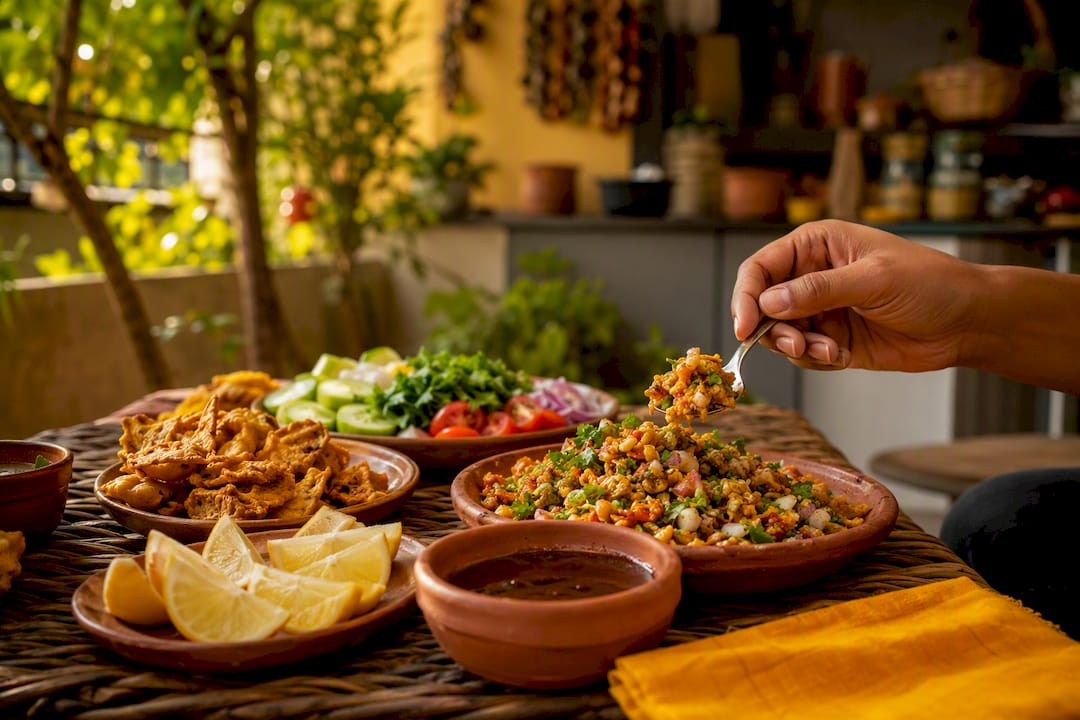
This list gives you 30-plus spicy Indian snacks you can actually cook or serve this week, organized so you can scan by region, heat level, or occasion instead of scrolling endlessly. We picked snacks home cooks in the US can pull off with a regular grocery run plus one trip to an Indian grocer for spices.
If you only try a handful first, start here:
Samosa — the crispy, potato-stuffed classic everyone already loves.
Onion pakora (pakoda) — thin-sliced onions in a spiced chickpea batter, fried until lacy and crunchy.
Mirchi bajji — whole green chilies dipped in batter and fried, not for the faint of heart.
Vada pav — Mumbai’s spicy potato patty stuffed into a bun with garlic chutney.
Masala vada — South Indian lentil fritters loaded with curry leaves and dried chilies.
Bhel puri — puffed rice tossed with chutneys, onion, and a chili kick, ready in ten minutes.
Bhujia — crunchy, spiced chickpea-flour noodles you snack on straight from the bag.
Once you know which region’s flavor you’re chasing, or whether you’re feeding a mild-palate crowd or heat seekers, the full catalog below sorts everything for you.
Key Takeaways
A spicy Indian snack platter works best when you mix regional heat styles, cooling sauces, and make-ahead components instead of relying on one dish to carry the whole spread.
Point | Details |
Start with familiar picks | Samosa, onion pakora, and vada pav give newcomers an easy entry point before trying whole-chili snacks. |
Match heat to region | North India builds heat gradually with spice blends; South India and mirchi bajji go straight for raw chili burn. |
Control batter and oil | Keep frying oil between 350°F and 375°F and use a thick, clingy batter for the crispest fritters. |
Hold, don’t cover | Rest fried snacks uncovered on a rack in a low oven to keep them crisp instead of steaming them soft. |
Buy ready-made when short on time | Desimunchiess offers handcrafted namkeen and roasted chana as a shortcut to the dry-mix snacks on this list. |
Table of Contents
The Complete Spicy Indian Snacks List
This is the reference list. Every entry gives you what it is, where it comes from, why it’s spicy, and a quick note on cooking or serving it. Home cooks in the US can find most of these ingredients at an Indian grocery, and several are increasingly common in mainstream supermarket spice aisles.
Fritters and fried bites
Onion pakora (pakoda) — North and West Indian. Sliced onions coated in chickpea flour batter spiked with red chili powder. Fry at 350°F to 375°F for the crispest edges, and serve immediately with mint chutney.
Aloo bonda — mashed spiced potato balls dipped in chickpea batter. Popular across South India as a tea-time snack; green chilies and mustard seeds bring the heat.
Mirchi bajji — Andhra specialty using whole Bhavnagri or banana chilies, slit and stuffed with tangy tamarind or roasted gram filling, then batter-fried.
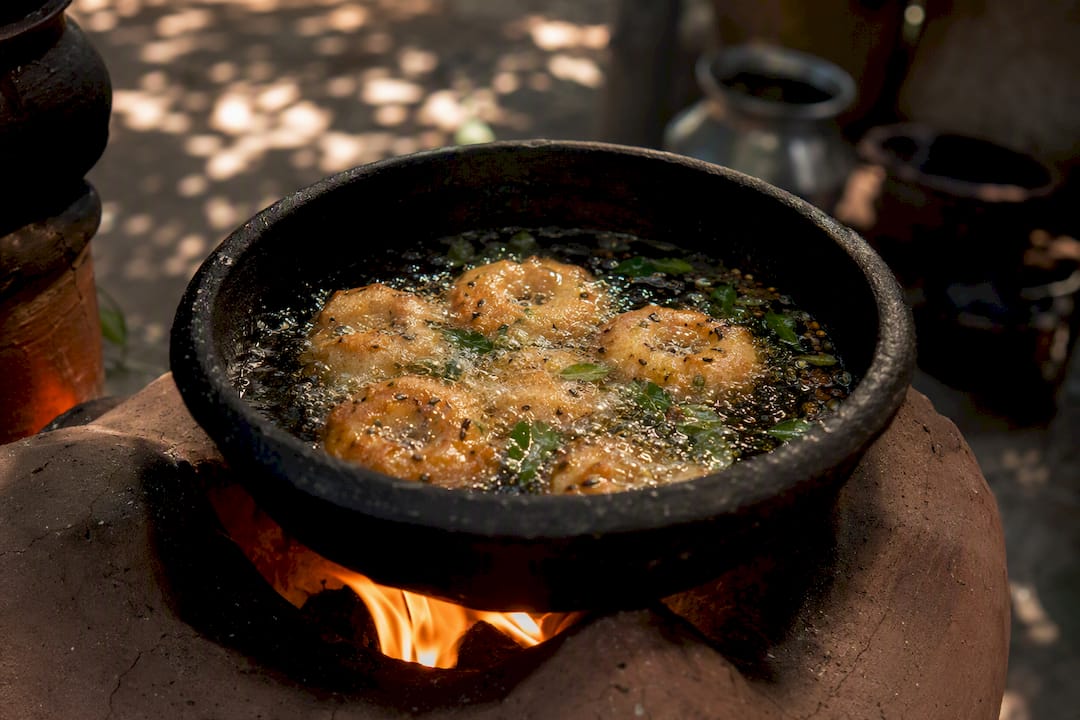
Masala vada — spicy lentil fritters made from soaked chana dal, ginger, curry leaves, and dried red chilies. The street-style masala vada method calls for a coarse, not smooth, batter grind for the right crunch.
Medu vada — the South’s savory doughnut, made from urad dal batter, black pepper, and green chilies. Best served hot with sambar and coconut chutney.
Bread pakora — bread slices stuffed with spiced potato, dipped in gram flour batter, and fried. A North Indian tea-stall favorite.
Corn pakora — sweet corn kernels in a chili-and-cilantro batter, quick to make and a good gateway snack for milder palates.
Palak pakora — spinach leaves battered and fried whole, seasoned with ajwain and red chili powder.
Stuffed and street-style snacks
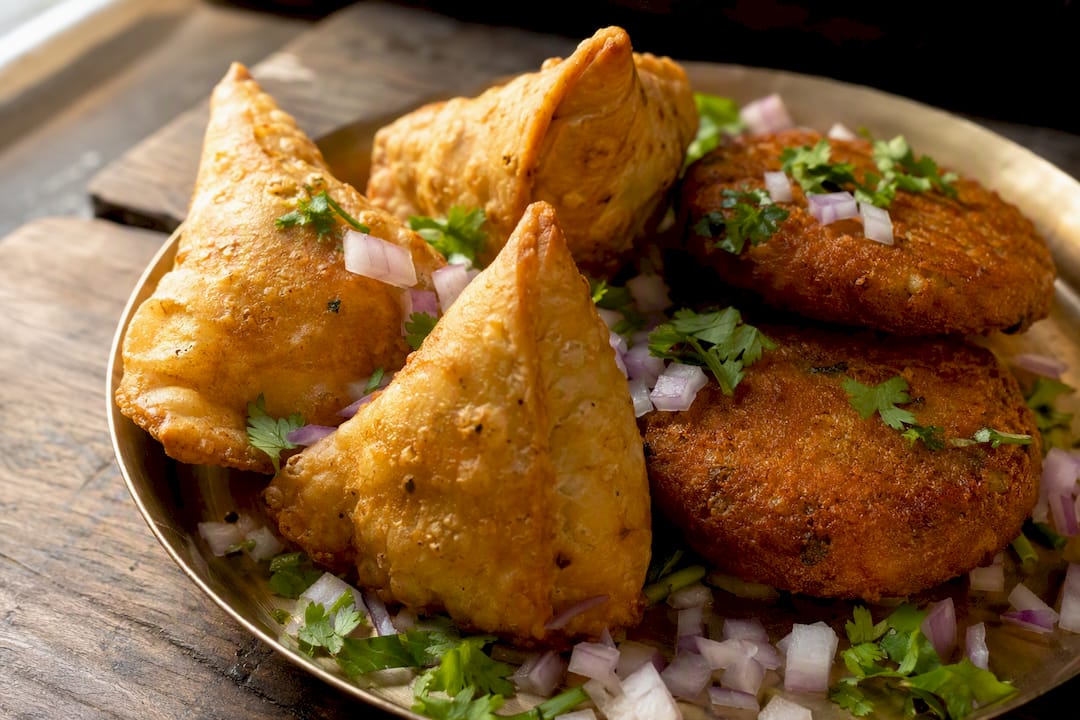
Samosa — deep-fried pastry stuffed with spiced potatoes, peas, and sometimes minced meat, found across North India in countless regional variations.
Vada pav — Mumbai’s answer to the burger: a fried potato vada, green chili, and garlic chutney packed into a soft bun.
Dabeli — a Kutch (Gujarat) specialty of spiced mashed potato in a bun, topped with pomegranate, sev, and peanuts for crunch against the heat.
Kachori — flaky pastry stuffed with spiced moong dal or urad dal filling, popular in Rajasthan and North India.
Misal pav — a Maharashtrian sprouted-lentil curry topped with farsan, served with pav bread; one of the spicier one-bowl street meals you’ll find.
Aloo tikki — spiced potato patties, pan-fried or deep-fried, often topped with chutneys and served as a standalone snack or chaat base.
Momos (spicy chutney style) — steamed or fried dumplings served with a fiery red chili dip, more common in East and Northeast India but now a nationwide street food.
Chaat and puffed-rice snacks
Bhel puri — puffed rice, sev, onion, tomato, and a mix of sweet and spicy chutneys. No cooking required, just assembly.
Sev puri — crisp puris topped with potato, chutneys, and bhujia sev, eaten in one bite for a hit of crunch and chili.
Pani puri — hollow puris filled with spiced, chili-and-mint-infused tangy water. The heat comes from the pani, not the shell.
Papdi chaat — crisp fried dough wafers layered with yogurt, chutneys, and chaat masala.
Jhalmuri — a Bengal street snack of puffed rice tossed with mustard oil, green chilies, and chopped onion, prized for its sharp, pungent heat.
Ragda pattice — potato patties served in a spicy white pea curry, a Mumbai favorite with real depth of heat.
Dry mixes and namkeen
Bhujia — thin, spiced chickpea-flour noodles fried until crisp, one of the most widely exported Indian snack foods and a pantry staple for many households.
Chivda — a flattened-rice mix with peanuts, curry leaves, and green chilies, common in Maharashtra and Gujarat.
Farsan mix — a Gujarati blend of fried lentils, sev, and spiced peanuts, often the base of chaat toppings.
Masala peanuts — roasted or fried peanuts coated in a spicy gram-flour crust, a quick bar-snack style bite.
Masala makhana — roasted lotus seeds tossed in chili powder, turmeric, and chaat masala, a lighter option that still delivers a kick.
Aloo bhujia — a potato-based sev variant, spicier and more textured than plain bhujia.
South Indian tea-time and regional specialties
Murukku — a crunchy, spiral-shaped rice-and-lentil snack, seasoned with ajwain, cumin, and chili powder, a fixture at South Indian evening tea spreads.
Banana chips (spicy masala style) — thin-sliced raw banana fried and coated in chili powder and salt, a Kerala export now sold nationwide.
Mysore bonda — a fluffier, spicier cousin of the standard bonda, made with black pepper and green chilies folded into the batter.
Masala dosa (fried edge snack style) — while typically a meal, the crispy chili-and-onion-studded edges are often eaten as a stand-alone bite at tea stalls.
Kara boondi — tiny fried gram-flour pearls seasoned with curry leaves and red chili, often mixed into chivda or eaten on its own.
Pro Tip: Keep a jar of homemade chaat masala on hand. A quick mix of cumin, coriander, black salt, dried mango powder, and chili powder turns almost any item on this list into a chaat-style snack in seconds.
How the Regions Shape the Heat
Where a snack comes from tells you almost everything about how it will taste, long before you bite into it.
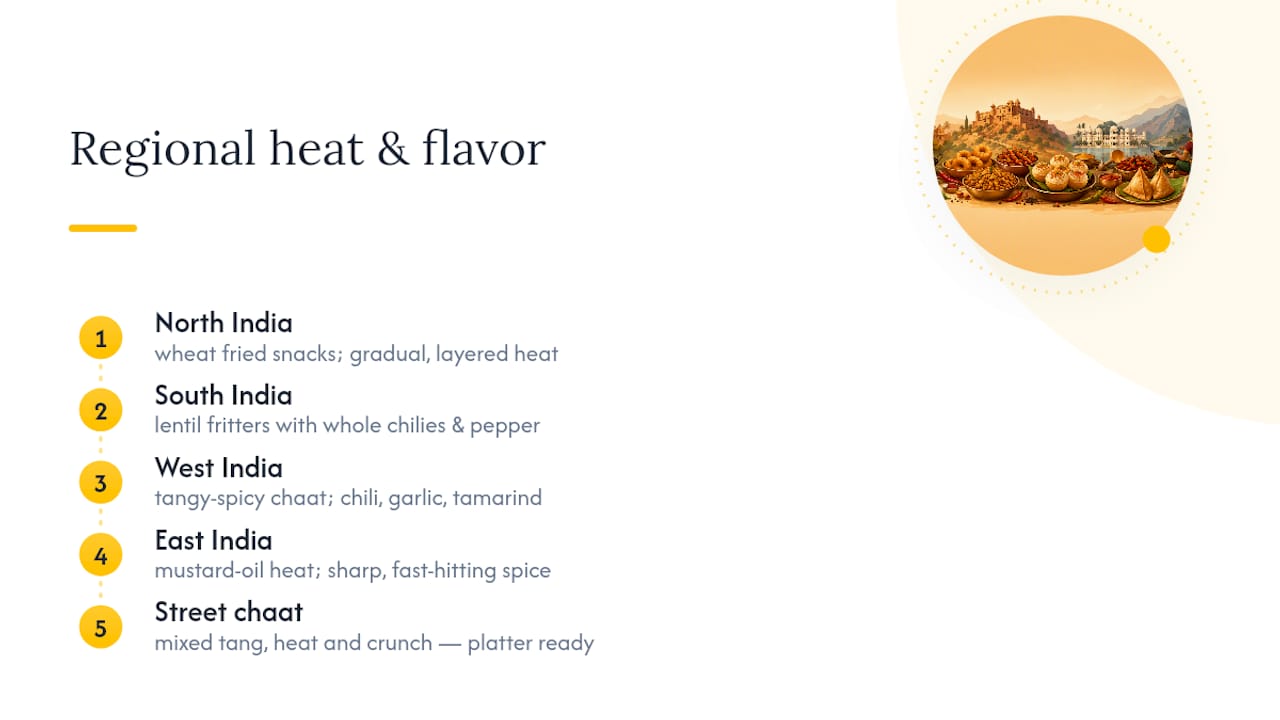
North India leans on wheat-based fried snacks and layered spice blends. Samosas, aloo tikki, and kachori dominate here, and the heat usually comes from garam masala, red chili powder, and the tangy punch of chaat masala rather than raw chili heat. This is the easiest region for newcomers to spicy Indian food, since the fire builds gradually instead of hitting all at once.
South India works differently. Lentil fritters like masala vada and medu vada get their kick from whole dried red chilies and black pepper ground straight into the batter, and curry leaves and mustard seeds add a sharp, oil-forward aroma. Mirchi bajji takes this further by using whole chilies as the main ingredient, not just a seasoning.
West India, especially Gujarat and Maharashtra, is the land of farsan, bhujia, and big-flavor street food. Misal Pav and Vada Pav bring a tangy-spicy combination that comes from a mix of ground chili, garlic, and souring agents like tamarind or kokum. If you want a snack platter that surprises guests, this region rarely disappoints.
East India and Bengal rely on mustard oil as the flavor backbone, which gives snacks like jhalmuri a pungent, sinus-clearing heat that’s different from chili burn. It’s sharper and faster to hit, then fades quicker too.
Street chaat, wherever it’s made, is really its own category. Bhel puri, sev puri, and pani puri all combine tang, heat, and crunch in a single bite, which is why they work so well as a mixed platter rather than a single-snack course.
Pro Tip: If you’re building a spread for guests who haven’t tried Indian food before, start them on North Indian fried snacks, then work toward South Indian lentil fritters and West Indian chaat as their tolerance builds.
Quick Recipes and Spice-Level Shortcuts
You don’t need a dozen recipes memorized to cook from this list. Three shortcuts cover most of the fried and assembled snacks above.
Onion pakora batter trick. Mix chickpea flour with just enough water to coat the onions without pooling at the bottom of the bowl. A thick, clingy batter fries crisper than a runny one. The gram-flour-to-water ratio that produces the best texture runs about 1:1.5 to 1:2 by volume, adjusted until the batter coats a spoon without dripping fast.
Pan-fried samosa pockets. Skip deep frying by folding the spiced potato filling into store-bought spring roll wrappers and pan-frying in a thin layer of oil, turning once. You get 80% of the crunch with a fraction of the oil.
Instant bhel assembly. Toss puffed rice, chopped onion, tomato, boiled potato, and sev with tamarind and mint chutney right before serving. Bhel turns soggy in minutes, so never assemble it more than five minutes ahead.
Spice scaling is where most home cooks either overshoot or play it too safe. Fresh green chilies bring a sharper, more volatile heat that fades faster on the tongue. Red chili powder builds a slower, rounder burn that lingers. Cayenne is hotter by weight than most standard Indian red chili powders, so if you’re substituting, use roughly half the amount the recipe calls for and adjust up.
For frying, oil temperature matters more than the exact spice blend. Keeping oil between 350°F and 375°F during shallow or deep frying is what actually determines whether a fritter turns out crisp or greasy. Too cool, and the batter soaks up oil before it sets. To reheat leftovers without sogginess, skip the microwave and use an air fryer or oven at 375°F for five to seven minutes, since air-fryer adaptations hold texture far better than steam-heavy reheating methods.
Planning a Spicy Snack Platter
A good spread mixes heat levels, not just flavors. Put mild items like corn pakora or masala makhana on one side of the platter, and hotter ones like mirchi bajji or ragda pattice on the other, so guests can self-select. A bowl of cooling raita or a mint-yogurt dip does more to save a dinner party than any amount of warning about spice levels.
Stock up on chickpea flour (besan), curry leaves, dried red chilies, and chaat masala from an Indian grocery, since these show up in nearly every recipe above.
Mainstream supermarket spice aisles increasingly carry cumin, coriander, and turmeric, which cuts down your shopping list to just the specialty items.
Online Indian grocery retailers are worth using for shelf-stable items like bhujia, chivda, or masala peanuts if you don’t live near a physical store.
Fry items like pakora and vada in batches and hold them uncovered on a wire rack over a sheet pan in a low oven (around 200°F) so steam escapes and the crust stays crisp.
Never cover fried snacks with foil while holding them; trapped steam turns crunch into mush within minutes.
Where DesiMunchiess Fits Into This List
We built this list around the same instinct that drives everything we make: real regional recipes, not shortcuts dressed up as tradition. Several items above, especially the dry mixes and namkeen, are exactly what we focus on.
Our roasted chana and bhujia-style snacks follow the same bhujia principles covered in the catalog above, handmade rather than mass-extruded.
If you want to go deeper on regional differences, our piece on North vs South Indian snacks expands on the groupings covered here.
For readers exploring beyond the usual suspects, we’ve also covered lesser-known snack types worth trying.
Authentic doesn’t mean complicated. It means using the same spice ratios and techniques a home kitchen in India would use, just without cutting corners for speed.
This article doesn’t include customer case studies or taste-test testimonials yet. Written by Shivam, it draws on established snack references and hands-on recipe sources rather than in-house product trials, and we’ll expand it with real customer feedback as that becomes available.
An Honest Pick From the List Above
If I had to cook just one snack from this entire list on a Friday night, it’s masala vada. The dried chilies ground into the batter give it a rounder heat than mirchi bajji’s raw-chili punch, and it holds its crunch longer than pakora once it cools slightly.
Pro Tip: Fry your fritters, drain them on a rack (never paper towels, which trap steam underneath), and hold them in a 200°F oven. That’s the difference between a crisp snack twenty minutes later and a soggy one.
— Shivam
Skip the Frying, Keep the Flavor
Cooking this whole list in one weekend is a lot to take on, even for a dedicated home cook. That’s the gap Desimunchiess fills: handcrafted, small-batch versions of the same roasted chana, namkeen, and traditional snacks covered above, made with authentic recipes instead of mass-production shortcuts.
We make our snacks fresh in small batches, the same way you’d want to make them yourself if you had a free afternoon and a well-stocked spice cabinet. If a recipe in this list looked good but frying isn’t in your Friday-night plans, browse the Desimunchiess storefront and add a few ready-made bites to your next snack platter or gifting order.
Sources
Recommended
Comments