
Why Namkeen Pairs Well With Chai: The Sensory Science

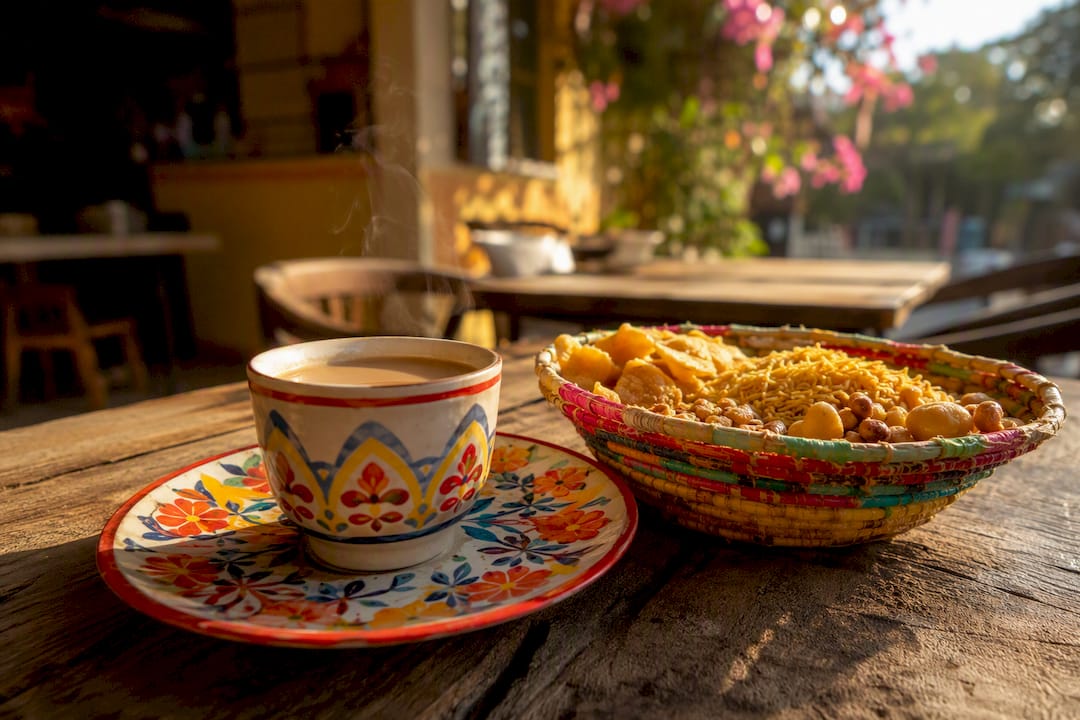
Namkeen pairs so well with chai because hot, slightly astringent tea cuts through fried snacks’ fat while its masala spices echo the same cardamom, ginger, and clove notes fried into the snack itself. It’s contrast and complement happening in the same sip. TasteAtlas ranks masala chai among the world’s most recognized tea styles, and Chef Kunal Kapur points out that the right namkeen depends on the moment, and Desimunchiess makes that pairing easy to get right at home.
Hot tea + crunchy snack = temperature and texture contrast
Chai spices + namkeen spices = flavor echo
Tannins in tea = a natural palate cleanser after oily bites
Key Takeaways
Namkeen pairs well with chai because the tea’s heat, tannins, and shared spices balance the snack’s fat, salt, and crunch in a single bite.
Point | Details |
Match spice intensity | Pair strong masala chai with fried, richer snacks and lighter tea with delicate namkeen. |
Astringency cuts fat | Tea’s tannins bind to oil and reset your palate between bites. |
Ritual matters as much as flavor | Time of day, season, and company shape snack choice as much as taste does. |
Try lighter swaps | Roasted chana and makhana keep the crunch with less oil, especially with elaichi or ginger chai. |
Choose handcrafted namkeen | Desimunchiess offers bhujia-style mixes, mathri, and chaat papdi made fresh for chai-time pairing. |
Table of Contents
Why Namkeen Pairs Well With Chai: The Flavor Chemistry
Masala spices echo snack spices. Cardamom, ginger, and clove simmered into chai show up again in mathri dough, pakora batter, and bhujia seasoning. That repetition isn’t an accident of Indian cooking. It’s the reason a bite of namkeen after a sip of chai feels like the flavor is continuing rather than competing.
Temperature contrast does real work here too. A hot cup against a crisp, room-temperature snack creates a push and pull that keeps your palate alert, bite after bite. Cold or lukewarm tea flattens that effect, which is part of why chai is almost always served steaming alongside namkeen rather than iced.
Then there’s astringency. Black tea carries tannins that bind to fat and protein on the tongue, which is exactly why a sip of chai after a greasy pakora resets your palate instead of leaving it coated. NDTV Food notes that tea’s warmth balances the richness of fried snacks, its masala spices echo the snack’s own seasoning, and the liquid itself helps wash down excess oil.
The main sensory mechanisms at play:
Temperature contrast — hot liquid against a crisp, cooler snack
Astringency — tannins cutting through oil and salt
Aromatic echo — shared spices in tea and snack reinforcing each other
Textural counterpoint — smooth liquid against crunch or flake
Chef Kunal Kapur frames this as situational rather than fixed, noting that accompaniment choices change by time of day and social context, with lighter snacks preferred in the morning and a wider variety including sweet and savory options for leisurely conversations; rainy-season chai commonly accompanies pakoras.
Pick your snack based on what your tea is doing for your mouth in that moment, not just what’s in the pantry.
How Does Chai-Time Ritual Shape Snack Choice?
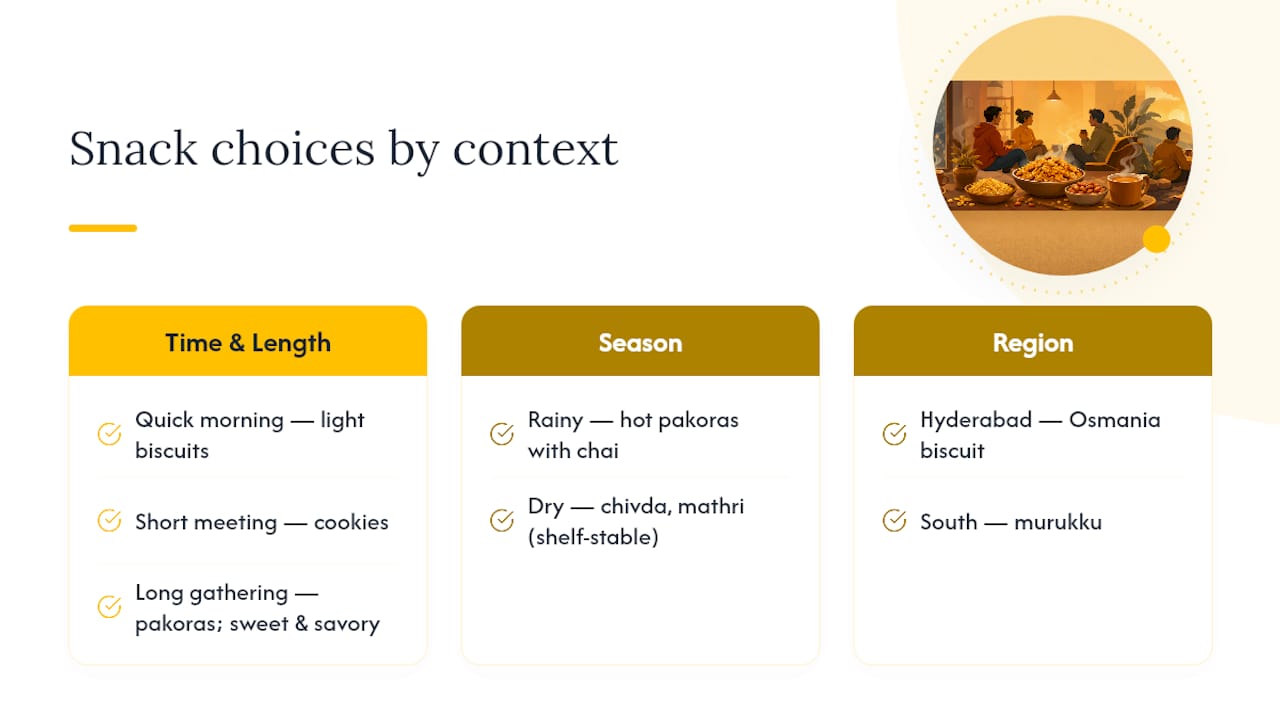
Tea-time choices are shaped as much by the clock and the calendar as by taste. A rushed weekday morning calls for something you can eat one-handed. A lazy Sunday afternoon with visitors calls for something you can linger over.
Kunal Kapur’s framing captures this well: light biscuits suit a quick morning cup, cookies work for a short meeting, while pakoras and a mix of sweet and savory snacks belong to longer gatherings. Seasonality also influences choices; rainy weather commonly leads households to enjoy hot pakoras with chai, while dry, shelf-stable namkeens like chivda and mathri are everyday staples.
The pairing is rarely just about flavor matching. It’s about hosting style, the length of the conversation, and what the season calls for.
Region adds another layer. Hyderabadi households reach for the Osmania biscuit alongside their chai, while southern kitchens lean toward murukku as the everyday accompaniment. Neither is “correct.” Both prove the same point: chai-time habits are local as much as they are universal.
What Namkeen Snacks Pair Best With Chai?
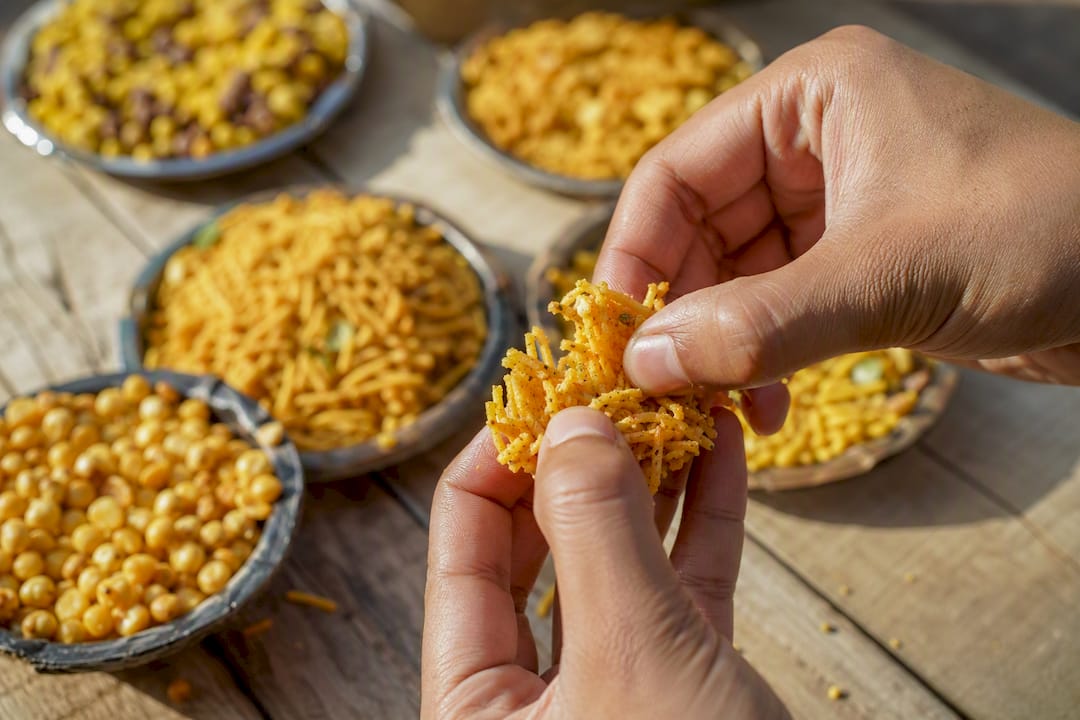
Some combinations have earned their place through decades of repetition. NDTV’s roundup of popular chai-time namkeen gives a good starting map, and here’s how the logic breaks down by texture and occasion.
Dry and crunchy (everyday staples):
Bhujia — thin, spiced gram-flour strands that bring instant crunch and a salt hit strong tea can stand up to.
Chivda — a flattened-rice mix with nuts and curry leaves; light enough for a mid-afternoon cup.
Chakli — spiral-shaped and deeply savory, best with a stronger masala chai that can match its intensity.
Namak paare — diamond-cut, mildly salted crisps that work with almost any tea strength.
Makhana — roasted fox nuts with a subtle crunch, gentle enough for a lighter or ginger-forward chai.
Fried and richer (occasion snacks):
Pakora — the classic rainy-day match; dip it, let the chai cut the oil, repeat.
Samosa — best with strong, well-brewed chai that can hold its own against the potato filling’s richness.
Mathri — flaky and layered, ideal for slow dipping into hot tea until it just begins to soften.
Regional specialties:
Murukku — a South Indian favorite, its rice-and-lentil crunch pairs naturally with filter-style chai.
Banana chips — sweet-salty and crisp, a South Indian staple that plays well against a mildly spiced brew.
These are representative pairings, not a complete list. Regional kitchens each keep their own favorites, and Desimunchiess’s comparison of namkeen types is a good place to explore beyond this list.
How Do You Match Chai Strength With the Right Snack?
The core rule: match intensity. A strong masala chai, heavy on ginger and cardamom, needs a snack with enough character to keep up, think fried pakoras or a peppery chakli. A lighter, more delicate tea does better with something equally restrained, like plain mathri or roasted makhana.
Quick guidelines to apply the next time you brew a pot:
Do pick snacks whose spices echo your tea’s spices (cardamom, ginger, clove show up in both).
Don’t pair a delicate, lightly brewed chai with an aggressively spiced snack. It will overwhelm the tea entirely.
Do dip flaky snacks like mathri briefly. A few seconds softens them without turning them soggy.
Don’t overload your plate. Two or three snack types are plenty for one sitting.
Do consider lighter alternatives when you want the ritual without the oil. Times of India recommends roasted chana, makhana, and khakhra as chai-friendly options that keep the crunch but skip the deep fryer.
Roasted chana pairs particularly well with a cardamom-forward (elaichi) chai, since its dry, nutty crunch mirrors what bhujia would deliver without the oil. Makhana leans naturally toward a ginger chai, where the tea’s slight sharpness offsets the snack’s mildness.
Pro Tip: Alternate one sip, one bite, rather than finishing your tea or your snack first. That rhythm keeps the oil-cutting effect of the tea working throughout the whole sitting instead of just at the end.
What Small Rituals Make Chai and Namkeen Taste Better?
Small serving choices change how the whole pairing feels. Warm your cup before pouring so the tea doesn’t cool too fast, and serve namkeen on small individual plates rather than one shared bowl. It keeps portions honest and oil off the table.
Warm the cup before pouring hot chai
Use small plates for namkeen instead of one communal bowl
Keep a small bowl of chutney or a lemon wedge nearby for dipping
Set the sip-bite rhythm early: one sip, one bite, repeat
Have napkins within reach for oilier snacks like pakora
If you’re serving several snacks at once, offer a small glass of water between rounds so guests can reset their palate before the next combination. Desimunchiess’s guide to hosting a snack tasting covers this in more detail.
Pro Tip: At a multi-snack tasting, pour water between each pairing so guests taste every combination fresh, not layered on top of the last one.
A Personal Note on Chai-Time Culture
Every pairing rule in this guide traces back to something simpler: chai and namkeen were built to be eaten together, spice for spice, sip for sip. Desimunchiess’s own recipes lean on that same tradition, handcrafted the way a home kitchen would make them, because authenticity is what makes chai-time worth pausing for.
Where to Find Chai-Ready Namkeen
Desimunchiess makes the kind of namkeen that’s built for exactly the pairings covered above: fresh, handcrafted batches instead of mass-produced bags sitting on a shelf for months. Our bhujia-style mixes bring the crunch and spice echo strong masala chai calls for, while our Tikoni Mathi delivers that flaky, dippable texture built for slow afternoon tea. For a tangier bite that cuts through a stronger brew, our chaat papdi rounds out the lineup.
No preservative-heavy shortcuts, no factory-line seasoning, just recipes made the way they’re meant to be made. Browse the full range at Desimunchiess and pick your next chai-time snack based on what your tea actually needs.
Sources
Recommended
Comments