
Why Traditional Snacks Are Better Than Chips

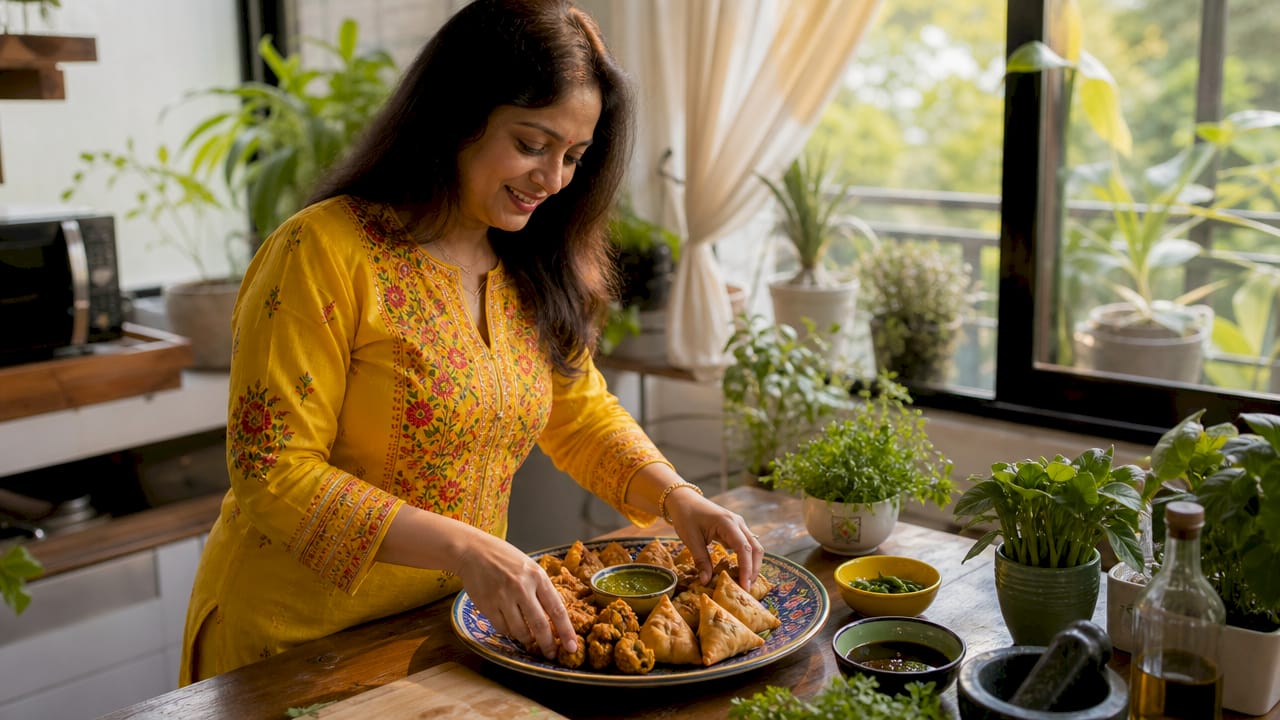
Traditional snacks genuinely beat chips when it comes to nutrition, and the gap is wider than most people realize. Whole-food snacks built on lentils, chickpeas, nuts, and grains deliver protein and fiber that keep you full and energized. Chips, by contrast, lean on refined carbs, excess sodium, and additives that spike energy fast and leave you reaching for more. Snacks make up a significant portion of daily calories, so what you pick actually shapes your health over time. Registered dietitians consistently recommend snacks that combine protein and fiber as the gold standard for balance and lasting fullness.
Here is a quick look at why the choice matters:
Better nutrition: Traditional snacks provide protein, fiber, and real vitamins from whole-food ingredients.
Sustained energy: No sugar crash. Whole foods digest steadily, keeping you going longer.
Fewer additives: Less sodium, fewer preservatives, and no artificial flavors.
Mindful eating: Homemade or carefully crafted snacks naturally encourage better portion awareness.
Richer flavor: Bold, authentic spices and fresh ingredients beat artificial seasoning every time.
What counts as a traditional snack versus a chip?
Traditional snacks come from whole-food bases. Think roasted chickpeas, spiced lentil crisps, makhana (fox nuts), nuts, seeds, and grain-based bites made with minimal processing. They often follow recipes passed down through generations, using real spices and clean fats. The ingredients list is short and readable.
Chips are a different story. Most commercial potato chips and corn chips go through heavy frying or baking, then get coated in flavor powders loaded with salt, artificial flavoring, and preservatives. Even the newer options in the chip aisle fit this pattern:
Potato chips: Fried or baked slices, high in refined carbs and sodium.
Popped snacks: Air-popped grain or potato puffs, marketed as lighter but often still high in sodium and low in protein.
Protein chips: Processed snacks with added protein isolates, but typically still carrying artificial flavors and minimal fiber.
Traditional snacks: Whole-food bases, real spices, minimal processing, naturally occurring protein and fiber.
Popped snacks and protein chips are marketed as healthier alternatives, but traditional whole-food snacks generally outperform them in nutrient density and absence of additives.
How do the nutrition profiles actually compare?
The numbers tell a clear story. Traditional snacks built on whole foods carry more protein, more fiber, and better fats than a standard bag of chips.
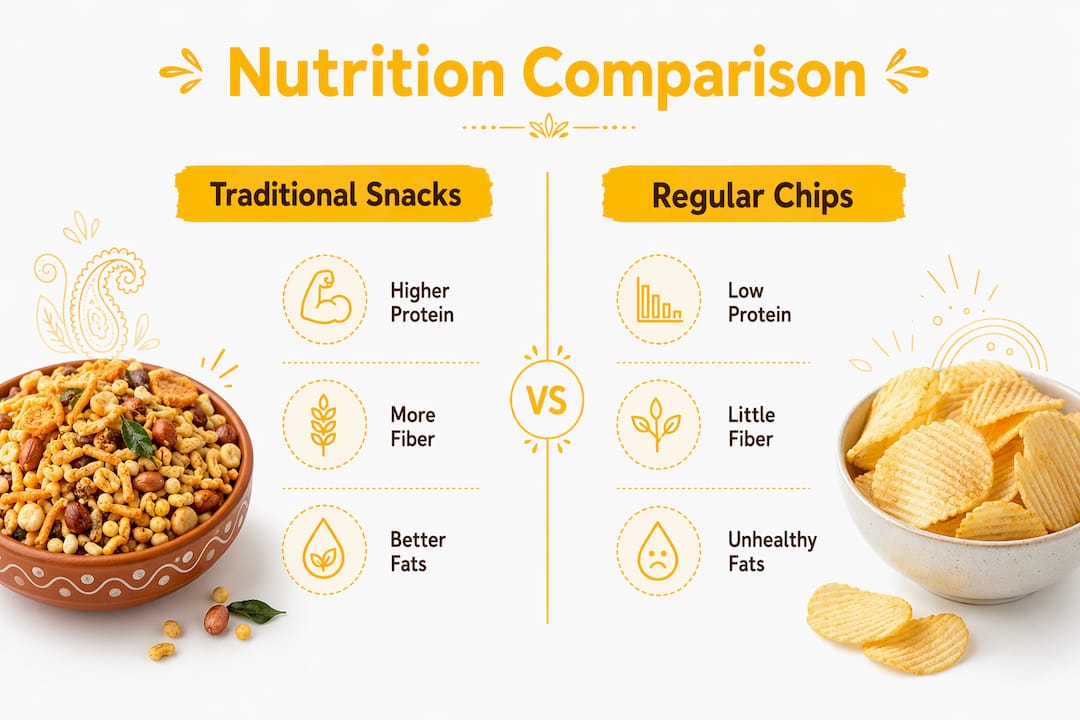
Nutrition factor | Traditional snacks | Regular chips |
Protein | Moderate to high (from legumes, nuts) | Low |
Fiber | Moderate to high | Low |
Healthy fats | Present (nuts, seeds, olive oil) | Minimal or poor quality |
Additives | Few to none | Common (flavors, preservatives) |
Refined carbs | Low | High |
Registered dietitians recommend pairing protein with fiber as the winning combo for snacks because it keeps hunger at bay and delivers vitamins and minerals your body actually uses. Traditional snacks built on chickpeas or lentils hit that target naturally. Chips do not.
Whole-food snack bases also support better weight management and reduce the risks tied to processed snack consumption. The fiber slows digestion, the protein signals fullness, and the real ingredients give your body something useful to work with.
How do taste and texture compare?
Chips have one real advantage: that immediate salty crunch. It is satisfying in the moment. But traditional snacks can absolutely match that crunch, and they bring a lot more to the table in terms of flavor complexity.
Here is how the two stack up on the senses:
Traditional snacks: Crunchy, spiced, layered flavors from real ingredients like cumin, tamarind, or chili. Freshness you can taste.
Chips: Salty, oily, often one-note. Artificial flavoring can taste sharp or chemical after a few handfuls.
Texture: Both deliver crunch, but traditional snacks tend to feel lighter and less greasy.
Aftertaste: Whole-food snacks leave a clean finish. Chips often leave a coating of oil and salt.
Satisfaction: Traditional snacks fill you up faster because of protein and fiber, so you eat less to feel satisfied.
Mindful preparation makes a real difference here. When a snack is made fresh with quality spices, the flavor is brighter and more complex than anything a flavor powder can replicate.
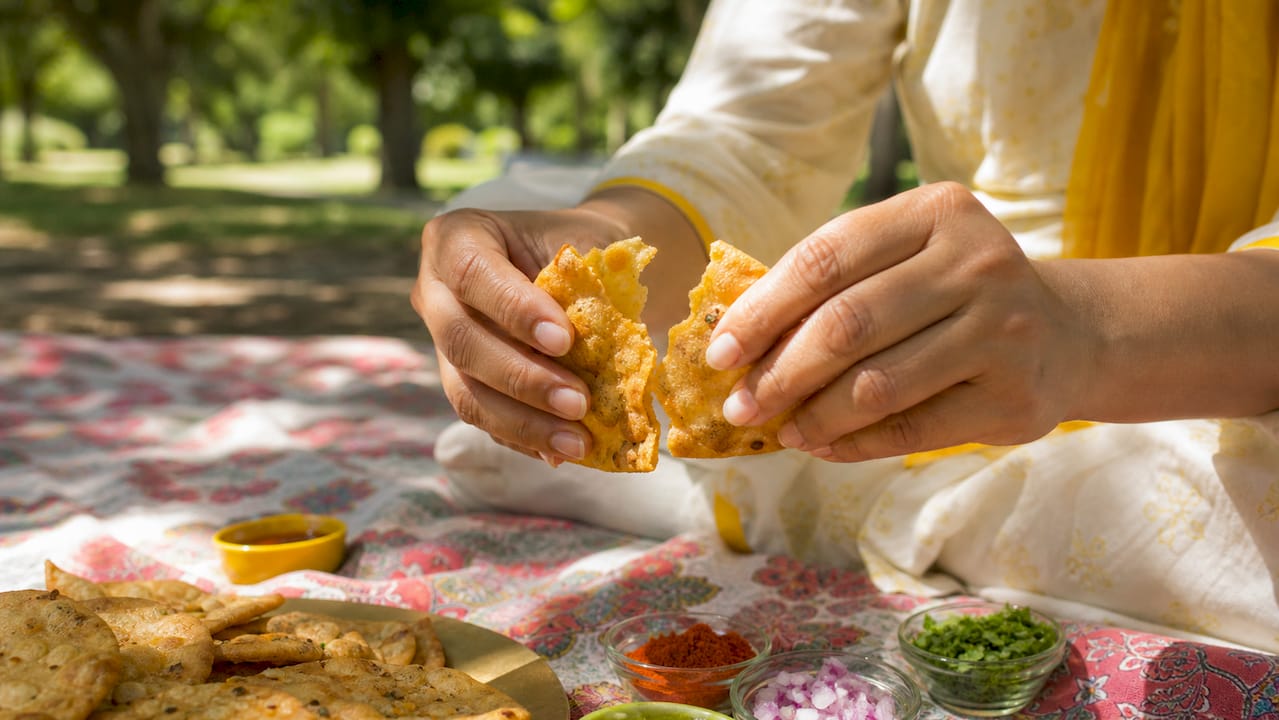
Popular traditional snack brands and varieties in the US
The US market for traditional snacks has grown steadily, with more options now than ever for people who want real flavor without the junk.
Desimunchiess: Handcrafted traditional Indian snacks made with authentic recipes and high-quality ingredients. Signature items include Tikoni Mathi, a classic flaky savory bite, and Tamarind Candy, a bold sweet-tangy treat. Every product is freshly made using handcrafted methods that preserve real flavor.
Roasted chickpea snacks: Available across natural grocery chains, these deliver solid protein and fiber in a satisfying crunch.
Makhana (fox nut) snacks: Light, airy, and naturally low in fat, these are gaining ground in health-focused US markets.
Spiced nut mixes: A staple in South Asian and Middle Eastern snack traditions, now widely available in specialty and mainstream stores.
Grain-based traditional bites: Snacks made from whole grains like millet or sorghum, often seasoned with real spices rather than artificial powders.
What sets Desimunchiess apart is the commitment to handmade production. That means fresher taste, no shortcuts on ingredients, and a snack that actually feels like it came from someone’s kitchen.
Why mindful preparation makes traditional snacks healthier
How a snack is made matters as much as what goes into it. Homemade and traditionally prepared snacks reduce exposure to the additives, excess salt, and preservatives that mass-produced chips rely on to stay shelf-stable for months.
Food preservatives in packaged chips have been linked to digestive issues, and some have shown possible connections to chronic health conditions. Traditional snacks skip all of that. Real fats like those from nuts or a light drizzle of oil provide stable energy and support digestion, rather than the industrial oils common in commercial chips.
Preparing snacks at home also promotes mindful eating. When you make something yourself, or choose a snack that was made with care, you tend to eat it more deliberately. That breaks the mindless consumption cycle that chips are practically designed to trigger.
Pro Tip: When choosing traditional snacks, look for a short ingredient list with recognizable whole foods. If you can picture every ingredient in its natural form, you are on the right track.
The NHS recommends limiting packaged snacks and swapping chips for homemade or whole-food alternatives to avoid excess sodium and sugar. That guidance lines up perfectly with what traditional snacks already deliver.
Why traditional snacks carry real cultural and environmental value
Traditional snacks are not just food. They carry the memory of a culture, a region, and a way of cooking that has been refined over generations. Mathi from North India, roasted makhana from Bihar, spiced chivda from Maharashtra. Each one tells a story that a bag of chips simply cannot.
From an environmental angle, traditional snacks often use locally sourced ingredients with shorter supply chains. Whole grains, legumes, and seeds require less industrial processing than the potato chip production line, which involves large-scale frying, flavoring, and packaging operations. Simpler production generally means a lighter footprint.
Choosing traditional snacks also supports small producers and cultural food traditions that might otherwise fade. That is a real reason to reach for them beyond just the nutrition label.
How ingredient sourcing and processing affect your health
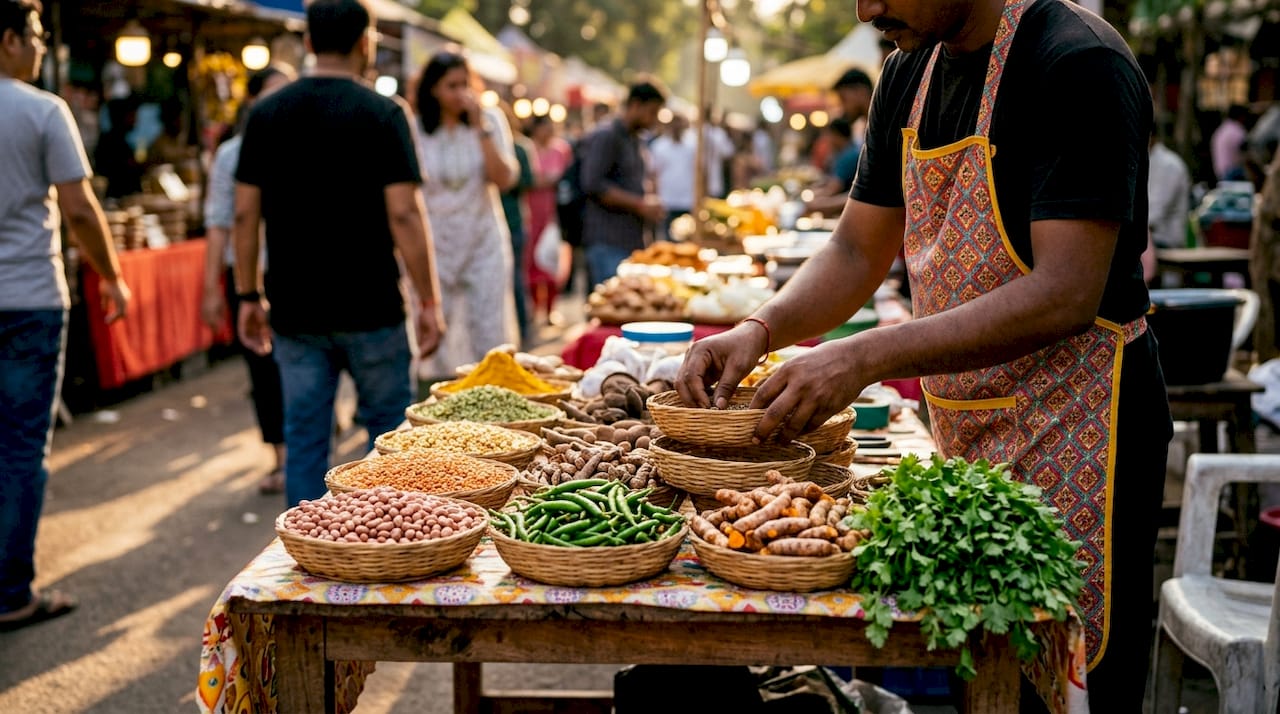
The gap between a traditionally made snack and a commercial chip starts at the source. Traditional snacks use whole ingredients that retain their natural nutrients through minimal processing. Chickpeas stay chickpeas. Lentils stay lentils. The nutrients are largely intact when the snack reaches you.
Commercial chip production strips ingredients down and rebuilds them. Potatoes get sliced, fried in industrial oils, and then coated in flavor compounds. Excessive consumption of refined, processed snacks like chips is linked to weight gain and increased risk of chronic conditions including type 2 diabetes, hypertension, and cardiovascular disease. The processing itself is part of the problem, not just the ingredients.
Traditional preparation methods like roasting, air-popping, or light frying in clean oils preserve the nutritional integrity of the base ingredients. You get a snack that your body can actually use.
Long-term lifestyle benefits of choosing traditional snacks
Switching from chips to traditional snacks is not just a one-meal decision. Over time, it reshapes how you eat and how you feel. Whole-food snacks support better weight management and reduce the risks tied to processed snack habits. The fiber and protein in traditional snacks keep blood sugar steadier, which means fewer cravings and less overeating across the day.
There is also a cultural and emotional dimension. Snacking on something made with real care, whether that is a homemade batch of spiced nuts or a pack of freshly made mathi from Desimunchiess, connects you to something more meaningful than a bag of chips ever could. That connection tends to make you more mindful about what you eat in general.
Choosing traditional snacks over chips: the bottom line
Traditional snacks are the smarter, tastier, and healthier choice. Here is the short version:
Nutrition wins: More protein, more fiber, better fats, fewer additives.
Energy that lasts: No crash, no rebound hunger, just steady fuel.
Cleaner ingredients: You know what you are eating because the list is short.
Real flavor: Bold spices and fresh ingredients beat artificial seasoning.
Long-term health: Lower risk of chronic disease with regular whole-food snacking.
Cultural richness: Every traditional snack carries a story worth tasting.
We love making it easy to snack better. Desimunchiess brings you authentic traditional Indian snacks made fresh, with bold flavors and real ingredients. No shortcuts, no fillers, just goodness in every bite.
Key Takeaways
Traditional snacks outperform chips on every measure that matters: nutrition, ingredient quality, flavor depth, and long-term health impact.
Point | Details |
Snacks shape daily health | Snacks make up a significant portion of daily calories, so the type you choose has a real cumulative effect. |
Protein and fiber are key | Registered dietitians recommend snacks combining protein and fiber for fullness, energy, and essential nutrients. |
Processing drives the gap | Traditional snacks preserve whole-food nutrients; chips lose them through industrial processing and add harmful additives. |
Mindful prep reduces additives | Homemade and traditionally made snacks cut exposure to excess salt, preservatives, and artificial flavors. |
Long-term benefits are real | Whole-food snacking supports weight management and lowers risk of chronic conditions linked to processed snack habits. |
Recommended
Comments