
Identify Whole-Ingredient Snack Brands: A Quick Guide

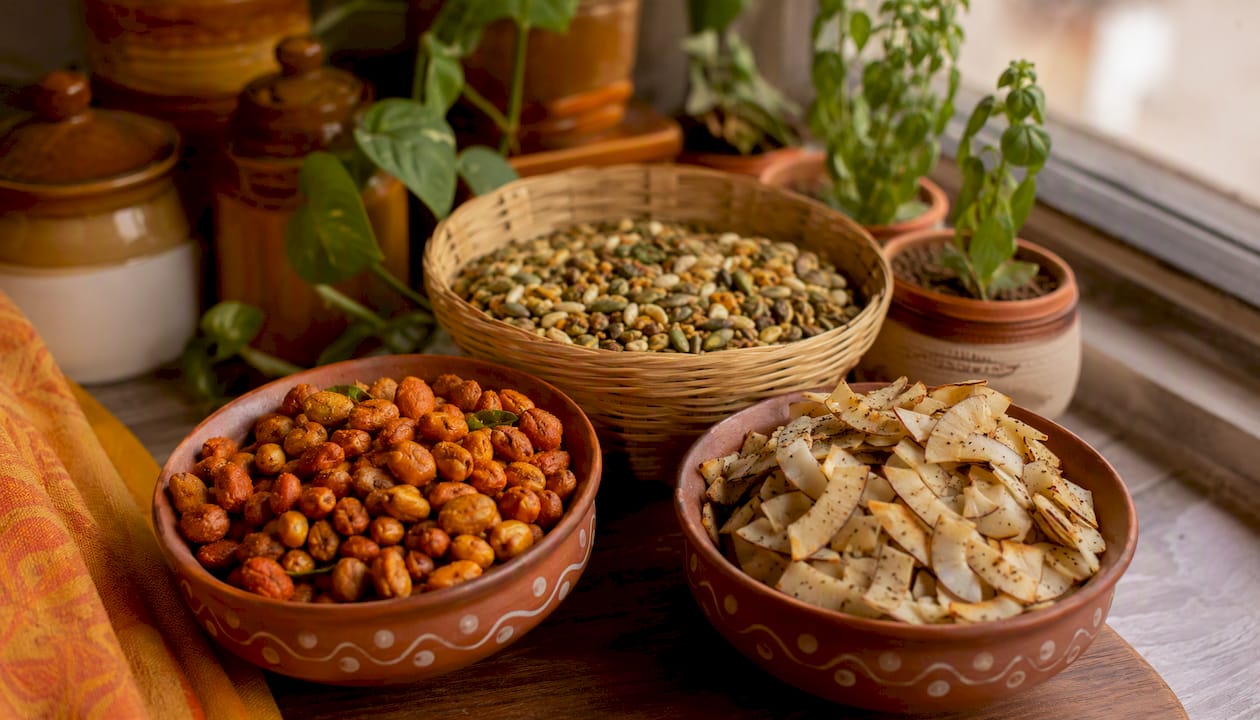
If you want to identify whole-ingredient snack brands, check the ingredient list before you check anything else on the package: a short list, five to seven items or fewer, with recognizable foods like oats, dates, chickpeas, or almonds listed first, is your fastest tell. Snacks make up roughly one-third of daily calories for many people, so what you grab between meals carries more weight on your overall diet than you might think.
We built this guide so you never have to stand in an aisle squinting at a label wondering what “natural” really means. Here’s your quick checklist before you toss anything in the cart:
Flip the package and read the ingredients first, not the front claims.
Count them. Fewer than seven ingredients is a strong sign.
Scan for whole foods in the first three spots (nuts, grains, fruit, legumes).
Watch for added sugars, hydrogenated oils, or chemical-sounding names anywhere on the list.
Keep reading below for the exact steps to read a label like a pro, the Nutrition Facts numbers worth checking, and where DesiMunchiess fits if you’d rather skip the guesswork entirely.
Key Takeaways
Identifying a whole-ingredient snack brand comes down to three checks every time: ingredient count, ingredient order, and the Nutrition Facts numbers behind the label.
Point | Details |
Count the ingredients | Fewer than seven listed items usually signals a whole-food, minimally processed snack. |
Check what’s listed first | Ingredients are ordered by weight, so a whole food in the top three spots matters most. |
Watch added sugar and sodium | Confirm added sugars stay near 6 to 8 grams and sodium stays reasonable per labeled serving. |
Avoid long chemical names | Multiple unfamiliar additives in a row usually means heavier processing, regardless of front-label claims. |
Consider Desimunchiess for ready-made options | The brand posts full ingredient panels on product pages for items like roasted chana and atta biscuits. |
Table of Contents
What Counts as a Whole-Ingredient Snack
A whole-ingredient snack is one where every item on the label is a food you’d recognize in your own kitchen, listed in a short sequence with little to no industrial processing between farm and package. Think roasted chickpeas, dried mango, or a granola bar made from oats, honey, and nuts. Nothing on the label should require a chemistry degree to pronounce.
Ingredients are legally listed by weight, heaviest first. That means the first one or two items make up most of what you’re eating. If the first ingredient is a whole food like oats or peanuts, you’re in good shape. If it’s “enriched wheat flour” followed by three kinds of sugar, you’ve got a different product than the front label suggests. Short lists matter because every additional ingredient is another chance for a hidden sweetener, an emulsifier, or a preservative to sneak in under a name you don’t recognize.
Labeling terms confuse more shoppers than they help. “Natural” has no strict legal definition for most snack categories, so a bag can carry that word and still contain isolated additives. “Organic” tells you about farming methods and pesticide use, not about how many ingredients are in the bag or how processed they are. “Clean label” is a marketing term with no regulatory teeth at all. None of these words substitute for reading the actual list. Desimunchiess breaks down the real role of natural ingredients in snack marketing if you want the fuller picture on how these claims get used.
Here’s what the difference looks like side by side:
Whole-ingredient trail mix: Almonds, cashews, dried cranberries, sunflower seeds. Heavily processed “trail mix”: Sugar, corn syrup, hydrogenated palm kernel oil, yogurt-flavored coating (sugar, palm oil, nonfat milk, artificial flavor), corn starch, salt, mono and diglycerides, natural and artificial flavors, soy lecithin, artificial color (red 40, yellow 5).
One of those lists reads like a pantry. The other reads like a lab report.
Snack Categories Most Likely to Meet Whole-Ingredient Criteria
Nuts, dried fruit, roasted legumes, air-popped popcorn, simple jerky, and oat-based bars top the list of snack categories where whole-ingredient versions are easiest to find. Each category has a clean version and a compromised version, and knowing the difference saves you time in the store.
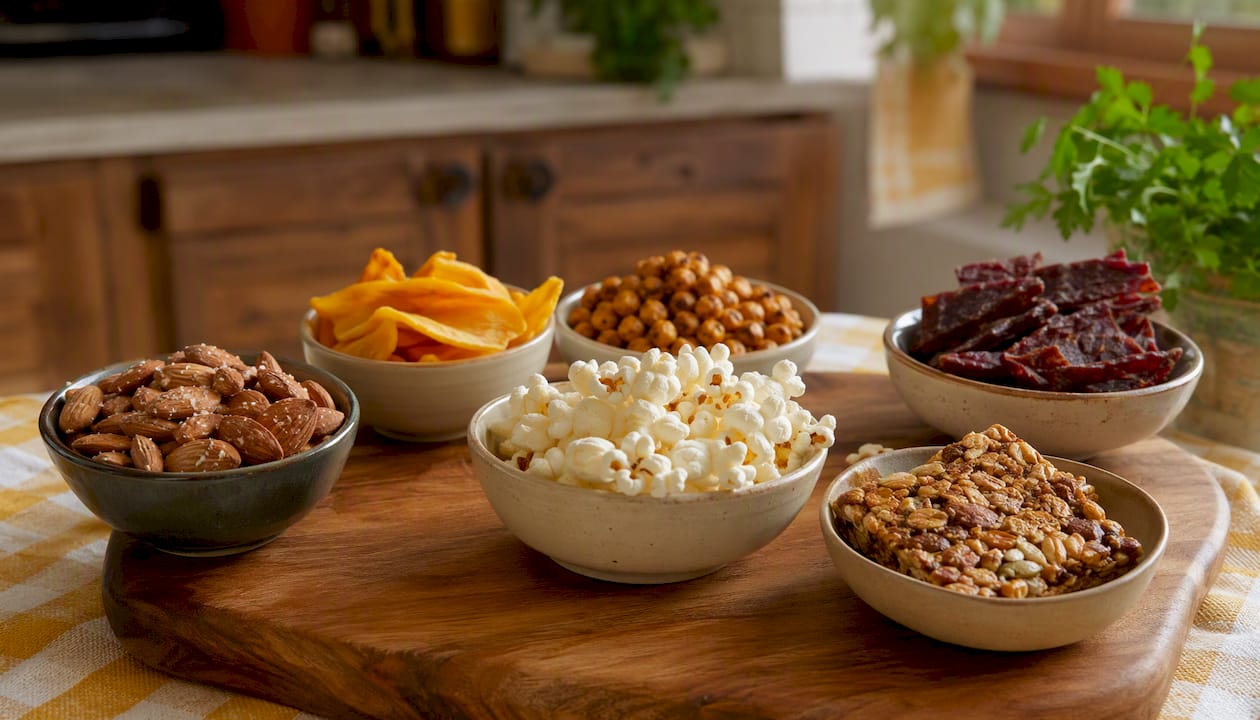
Nuts and seeds. The whole-ingredient version is just the nut, maybe with salt: “almonds, sea salt.” Flavored varieties often add oil blends, sugar, and a string of seasoning agents that push the ingredient count past ten. Roasted and salted is usually your safest bet.
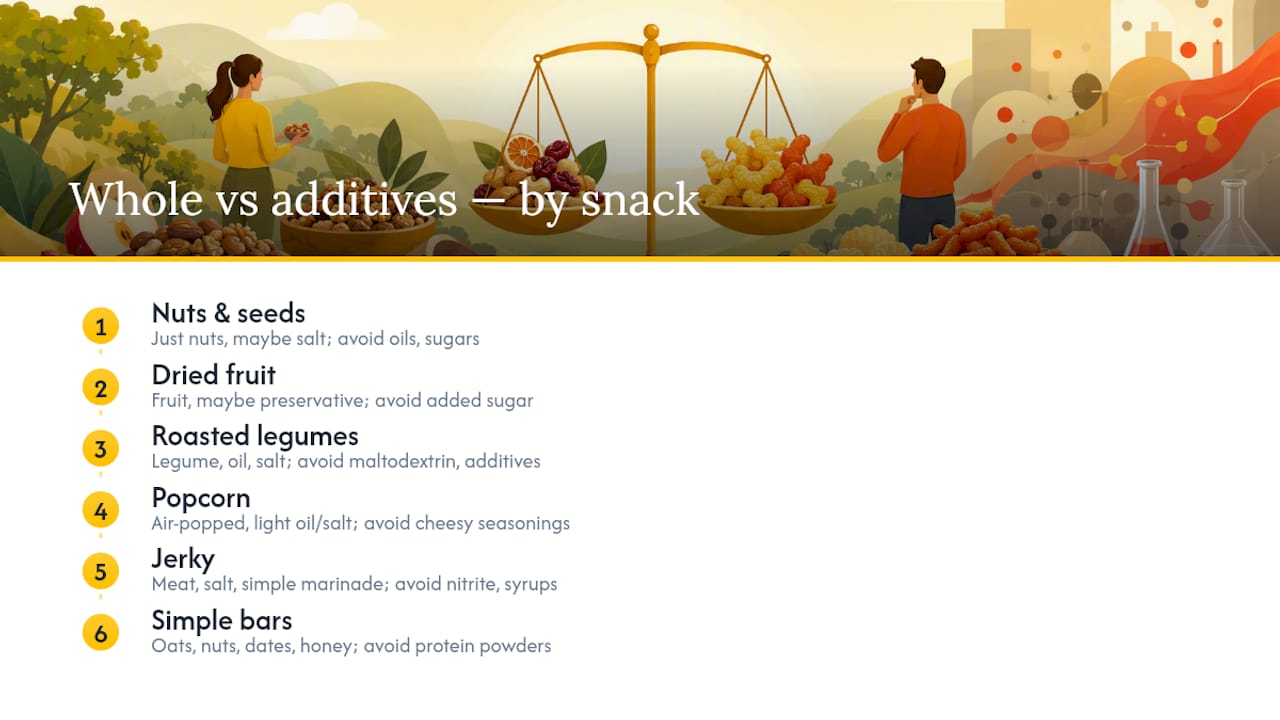
Dried fruit. Plain dried mango, apricots, or apples should list the fruit and, at most, a preservative like sulfur dioxide for color retention. The pitfall here is added sugar. Many dried fruit snacks are candied before drying, which triples the sugar content compared to the unsweetened version sitting one shelf over.
Roasted legumes. Roasted chickpeas and edamame snacks can be genuinely simple: legume, oil, salt. Flavored versions (spicy, ranch, barbecue) tend to bring in maltodextrin, artificial flavoring, and anti-caking agents.
Popcorn. Air-popped popcorn with a light coat of oil and salt is about as whole-ingredient as packaged snacks get. Movie-theater-style or cheese-flavored versions usually carry a dozen additional ingredients, several of them flavor compounds with no nutritional role at all.
Jerky. Meat, salt, and a simple marinade base (soy sauce, vinegar, spices) mark a clean jerky label. Many mass-market jerky brands add sodium nitrite, corn syrup solids, and multiple preservatives to extend shelf life.
Simple bars. Oats, nuts, dates, and honey bound together is the whole-ingredient template. Bars marketed as “protein” or “energy” often add isolated protein powders, sugar alcohols, and stabilizers that stretch the ingredient list well past ten items. Dietitians consistently point to combinations pairing protein with fiber, like fruit with nut butter, as the pattern worth looking for across all these categories.
How to Read an Ingredient List the Right Way
Read the ingredient list before anything else on the package. The front of the bag is marketing copy. The ingredient panel is the only legally accurate description of what’s actually inside.
Here’s the step-by-step process we use every time:
Check the first three ingredients. They make up the bulk of the product by weight. If a recognizable whole food isn’t in that first trio, keep looking.
Spot the sugar aliases. Sugar hides under dozens of names: cane syrup, dextrose, maltodextrin, brown rice syrup, fruit juice concentrate. If two or three of these show up separately, they often add up to more sugar than a single “sugar” entry would suggest.
Flag chemical-sounding names. If you can’t picture the ingredient as a food, it’s likely a synthetic additive. A few natural-sounding preservatives are fine in small amounts. A long stretch of them is a red flag.
Look for emulsifiers, stabilizers, and artificial sweeteners. Soy lecithin in small amounts is common and generally harmless, but stacked emulsifiers plus sucralose or acesulfame potassium signal a heavily engineered product, not a whole-food one.
Compare the serving size on the front claim. A “low sugar” claim can mean less when the serving size is unrealistically small compared to what you’d actually eat in one sitting.
Pro Tip: Ingredients are ordered by weight, so the shortest lists tend to hide the fewest surprises. A four-ingredient bar has almost nowhere to bury an additive. A twenty-ingredient bar has plenty of room.
A quick example: compare “peanuts, honey, oats, sea salt” to “corn syrup, sugar, peanuts, palm oil, rice flour, soy lecithin, natural flavor, salt, mixed tocopherols.” The first is a snack. The second is a formulation.

Nutrition Facts Checks That Matter After Ingredients
Ingredients tell you what’s inside a snack; the Nutrition Facts panel tells you how much of it you’re actually eating. You need both, because a whole-ingredient snack can still deliver more sugar, sodium, or calories than you’d expect if the serving size is small or the food is calorie-dense by nature.
Here’s what to scan every time:
Serving size. Check it against how much you’d realistically eat in one sitting. A bag that “contains 2.5 servings” but reads like a single-serve pack is a common trick.
Calories per serving. Nuts and dried fruit run calorie-dense by nature, which isn’t a problem, but it matters if you’re tracking intake.
Added sugars. Aim for roughly 6 to 8 grams or less per packaged snack serving where possible. This is separate from naturally occurring sugar in fruit or dairy.
Sodium. Flavored nuts, jerky, and roasted legumes can carry a surprising sodium load per serving, even when the ingredient list looks short.
Saturated fat. Coconut oil and palm oil, both common in “natural” snack bars, are higher in saturated fat than seed oils.
Health authorities are direct about why this step can’t be skipped: the American Heart Association recommends checking added sugars and sodium on every packaged snack, because a product marketed as natural or wholesome can still carry a heavy sugar or salt load per serving. A single-serve pack of roasted nuts might run 15 grams of protein and 200 milligrams of sodium, a reasonable trade. A bag of flavored chips marketed with “real cheese” language can carry three times that sodium in the same serving size, with none of the fiber or protein to show for it. Peer-reviewed research on dietary patterns also backs prioritizing minimally processed whole foods over ultra-processed alternatives when the goal is long-term cardiometabolic health. For a deeper look at portion strategy, our guide on balanced snacking walks through how to size servings without obsessing over every gram.
Where and How to Shop for Whole-Ingredient Snack Brands
The fastest shopping move is different depending on where you’re standing: online, zoom into the ingredient photo before you add anything to your cart; in-store, flip the bag over and read the back panel before you commit to buying it.
In-store tactics:
Always read the back panel first. Front claims like “made with real fruit” are marketing, not ingredient disclosure.
Compare two or three similar products side by side. Ingredient count often varies more than you’d expect within the same snack category.
Check the serving size printed on the package against how much is actually in the bag.
Favor shorter ingredient lists when two products otherwise look similar in price and portion.
Online tactics:
Use ingredient or dietary filters where the retailer offers them, especially for common concerns like added sugar or gluten.
Zoom into every product photo. Most reputable brands post a clear image of the ingredient panel, not just the front of the package.
Read reviews specifically for mentions of taste, freshness, or portion size complaints, which front-page marketing rarely covers.
Cross-check the brand’s own product page for full ingredient transparency rather than relying on a marketplace’s abbreviated listing.
Pro Tip: Snap a phone photo of the ingredient panel every time you find a snack you like. Build a short running list of go-to brands and products. Six months from now, you’ll have a personal shortlist instead of starting from scratch every grocery trip.
Public health guidance echoes this same instinct toward preparation: keeping whole-food snacks prepped and stored ahead of time makes the healthier choice the easy choice, whether that’s chopped vegetables at home or a shortlist of trusted packaged brands.
Why Desimunchiess Fits the Whole-Ingredient Standard
Desimunchiess is a solid option if you want packaged snacks that hold up to the same ingredient scrutiny we just walked through, built on traditional recipes and a short, transparent ingredient approach rather than industrial shortcuts. Every product grows out of a homemade-style recipe made in small batches, which keeps ingredient lists closer to what you’d use in your own kitchen than what a factory formulation line produces.
A few proof points worth knowing:
Recipes lean on traditional, authentic methods rather than mass-production shortcuts, a point Desimunchiess details in its look at traditional recipe snack brands.
Production is handcrafted and small-batch, which supports freshness and keeps the ingredient list tight instead of padded with shelf-stabilizing additives.
The direct-to-consumer model means ingredient information sits on the product page, not buried behind a customer service line, something covered further in the brand’s piece on better-for-you snack alternatives.
Here’s what that looks like in practice. A roasted chana snack typically runs: chickpeas, oil, salt, and a light spice blend. An atta biscuit built on tradition might list: whole wheat flour, ghee, jaggery, and a pinch of cardamom. These are illustrative examples of the kind of short, recognizable ingredient structure the brand aims for, not a claim covering every single item in the catalog. You’ll find the specific ingredient panel and freshness details listed directly on each product page before you check out, which is exactly where that information should live.
Balancing Convenience With Whole-Food Ideals
Choose whole-ingredient snacks most of the time, and don’t beat yourself up over the convenience option on a chaotic Tuesday. That’s the practical stance worth adopting once you’ve internalized how to read a label. Perfection isn’t the goal; a consistent habit is.
What stands out most when you actually sit down and compare ingredient panels side by side is how much variance exists within categories that seem identical at a glance. Two bags of trail mix on the same shelf can differ by a dozen ingredients. Two granola bars marketed almost identically can carry wildly different sugar loads. Ingredient count, not front-of-package language, is the variable that actually separates a whole-food snack from an engineered one, and that gap is bigger than most shoppers assume until they start checking for themselves.
Taste and portion size matter just as much as ingredient purity, because a snack you don’t enjoy or one that leaves you hungry an hour later doesn’t serve you no matter how clean the label reads. The practical tip that makes this sustainable: rotate three or four go-to whole-ingredient snacks you genuinely like, rather than hunting for a new “perfect” option every week. Habits stick when they’re simple to repeat, not when they demand constant research. Our comparison of homemade versus packaged snacks digs further into where that balance tends to land for most households.
If You Want Ready-Made Whole-Ingredient Snacks
Desimunchiess makes it simple to skip the ingredient-panel guesswork entirely: every product is built from a short, homemade-style recipe, and the full ingredient list is posted right on the product page before you buy.
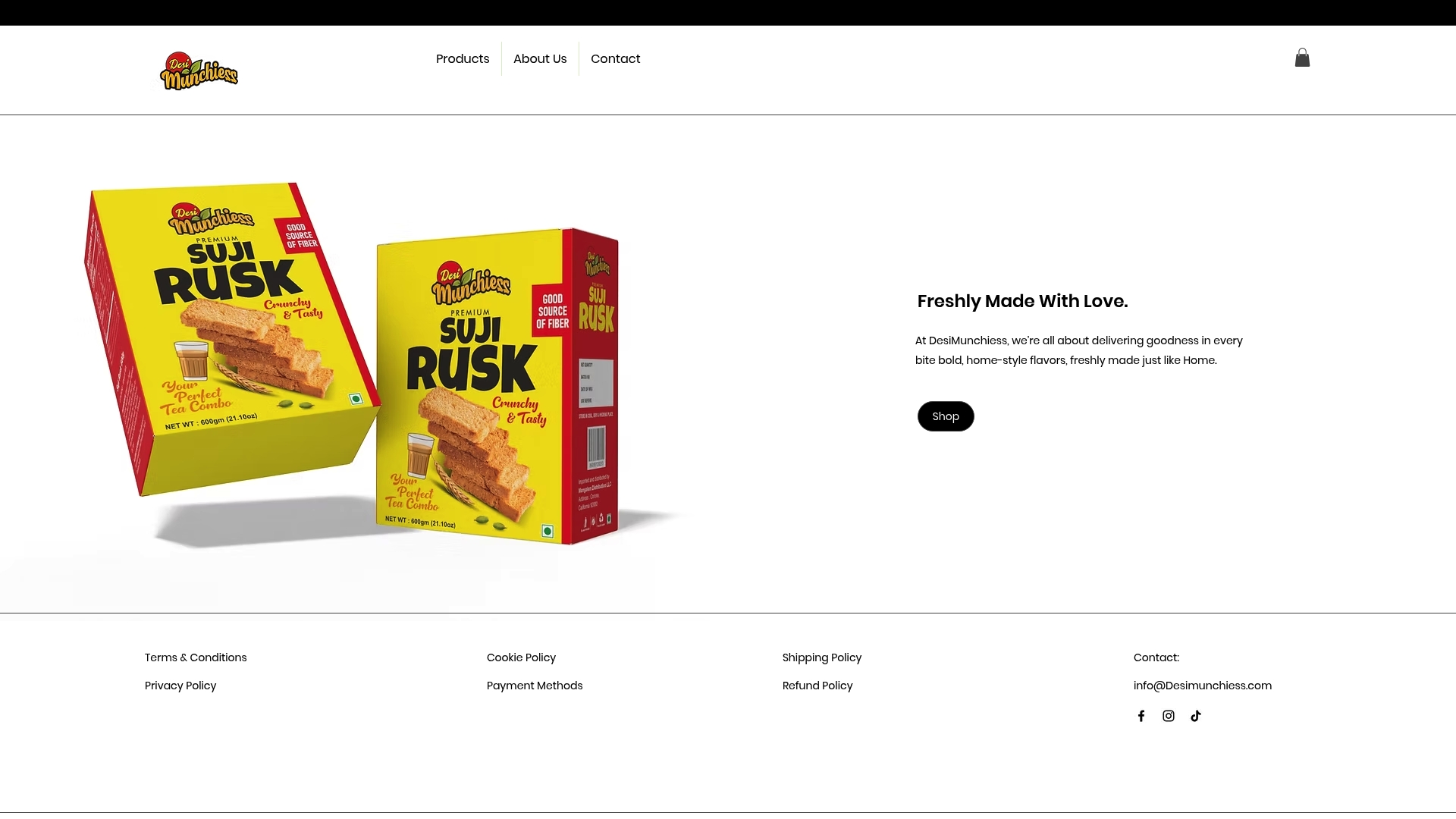
The lineup includes roasted chana, atta biscuits, traditional cookies, suji rusk, and a rotating range of pickles and Indian sweets, each made in small batches rather than mass-produced on an industrial line. If you’ve read through the checklist above and want to skip straight to a brand that already fits the criteria, browse the full shop and check ingredient details before you place your first order. It’s the fastest way to put everything in this guide into practice without scanning a dozen labels first.
Sources
Registered dietitians and national health organizations remain your most reliable guides when a snack label leaves you second-guessing an ingredient or a marketing claim.
Treat the ingredient panel as your primary source every time, and treat front-of-package claims as a starting point at best.
Recommended
Comments