
Rusk vs Biscotti: Why Slow Baking Keeps Rusks Dunkable in Chai


A rusk is a twice-baked, dry bread or cake found across many cultures, and biscotti is the Italian twice-baked almond cookie, or cantucci, from Prato. Rusks tend to be thicker and more cakelike, so they soak up tea or coffee without falling apart, while biscotti stay thin and crisp, built for a quick dip in coffee or a glass of Vin Santo. If you love a long, slow dunk, rusk usually wins.
TL;DR:
Rusk is often cut nearly an inch thick and dried slowly; biscotti is sliced about half an inch thick and baked hotter.
Dip rusk in hot tea or coffee for 3 to 5 seconds; give biscotti just 1 to 2 seconds in espresso or dessert wine.
Rusks vary by recipe: buttermilk or ghee makes the crumb richer, while a yeast loaf produces a firmer, more open texture.
Neither snack is automatically healthier; compare sugar, fat, and serving size, since recipes vary and lower moisture alone does not mean fewer calories.
Table of Contents
Rusk vs Biscotti: A Quick Comparison
Both are twice-baked, but that is where the similarity mostly ends; for example, pairing biscotti with a Christmas Coffee Blend can enhance the experience. Here is how they stack up when you line them up side by side.
Shape and size: Rusks are often thick, rectangular slices cut from a loaf or cake, while biscotti are slim, oblong pieces sliced from a log.
Ingredients: Rusks frequently include enriched dough with butter, buttermilk, or ghee, while biscotti lean on eggs, sugar, and nuts like almonds.
Drying speed: Rusks go through a slow, low-heat second bake that can take hours, while biscotti crisp up faster at a higher temperature.
Texture: Rusks turn out dense and absorbent, while biscotti stay hard, dry, and snap when you bite in.
Classic pairings: Rusks pair with milky tea or black coffee for breakfast, while biscotti pair with espresso or a sweet dessert wine.
If you want something that holds together through a slow, patient dunk in your morning chai or coffee, reach for rusk. If you want a crisp, nutty bite to nibble alongside your espresso or dessert wine, biscotti is the better fit.
What Exactly Is a Rusk?
“Rusk” is not one single recipe. It is a category name that covers a surprising range of twice-baked, dried breads and cakes from different parts of the world, and that variety is exactly why the word can feel confusing. According to Wikipedia’s entry on rusk, the term stretches across cultures to include South African soetbeskuit, Indian suji rusk, Italian fette biscottate, and even Melba toast and zwieback.
These products are not interchangeable, even though they share a twice-baked foundation. A South African buttermilk rusk is rich and crumbly. A suji rusk made from semolina and wheat flour has a lighter, slightly grainy bite that holds its shape beautifully in hot chai. Fette biscottate, popular in Italy for breakfast, are thinner and closer to a dried bread slice than a cake.
What ties them together is the method and the purpose: bake once, slice, then dry slowly a second time to pull out moisture and extend shelf life. That drying step is also what gives rusk its dunking superpower.
Bread-based rusks start as a yeasted loaf, giving a firmer, more open crumb.
Cake-based rusks start as an enriched batter with butter or buttermilk, giving a softer, richer crumb.
Buttermilk and fat content change how the crumb behaves once it hits liquid, often making it creamier when soaked.
The wheat type and fat content matter more than people expect. A rusk made with buttermilk or ghee absorbs liquid differently than a lean, bread-style rusk. Fat coats the crumb structure, slowing saturation just enough that the rusk softens instead of turning to mush, which is part of why a good atta biscuit or suji rusk can survive a full minute in hot tea without falling apart in your hand.
What Exactly Is Biscotti?
Biscotti traces back to Prato in Tuscany, where bakers created cantucci: oblong, twice-baked cookies studded with almonds. In Italian, “biscotti” simply means “biscuits” or “cookies” in general, but in English usage the word has narrowed to mean this specific hard, twice-baked treat, as noted on Wikipedia’s biscotti page. That naming gap trips up a lot of people searching for the difference between rusk and biscotti, since the word sounds like it should mean something broader than it does in American grocery aisles.
The dough itself is cookie-style and egg-rich, closer to a shortbread or sugar cookie base than to bread dough. Classic additions include whole almonds, though variations add dried fruit, chocolate, or anise. Bakers shape the dough into a log, bake it once, slice it into individual pieces, then bake the slices again until they turn golden and firm.
Egg-rich dough gives biscotti a tighter, cookie-like crumb rather than a bready one.
Almonds and dried fruit add crunch and chew without softening the base texture.
Log-and-slice shaping creates the signature oblong pieces you see in a coffee shop case.
That combination, egg-rich dough, a hard second bake, and a slim profile, produces a dense, crunchy bite that resists immediate saturation. Dunk a biscotto too briefly and it barely softens. Dunk it too long and the outside can slump because there is less crumb structure to hold liquid evenly, unlike the thicker, more absorbent build of a rusk.
How They Are Made: The Baking Steps That Shape Texture
The difference between rusk and biscotti really comes down to three decisions: what the dough looks like before the first bake, how it is shaped, and how long the second bake runs.
First bake: Rusk dough is often a yeasted loaf or an enriched cake batter, while biscotti dough is a firmer, egg-based cookie dough shaped into a log.
Shaping and slicing: Rusk loaves get sliced thick, sometimes close to an inch, while biscotti logs get sliced thinner, closer to half an inch.
Secondary drying: Rusks dry slowly at low heat for a longer stretch, pulling moisture out gradually, while biscotti crisp up quickly at higher heat for a short burst.
Slice thickness controls soak capacity directly. A thick rusk slice has more internal crumb to absorb liquid before it reaches saturation, while a thin biscotti slice has less room to hold moisture, so it crisps rather than softens.
If you want to try either at home, the second bake is where you have the most control. A gentle, low oven for a long stretch gives you a rusk-style crumb that holds up to dunking. A hotter oven for a short burst gives you biscotti-style snap. Our post on making suji rusk at home walks through eggless, maida-free batches if you want to see the technique in action.

Pro Tip: Cut your slices before the second bake, not after, so each piece dries evenly instead of crumbling at the edges.
Dunking and Texture: Getting It Right Without a Mess
Dunking success comes down to pore size, density, and fat content. A denser, fattier crumb like a rusk slows liquid absorption just enough to let you dunk for several seconds without the piece collapsing, while a tighter, drier biscotti crumb resists liquid at first, then softens unevenly if you leave it in too long.
For rusk: Dunk in hot milky tea or black coffee for 3 to 5 seconds, then eat before it softens further.
For biscotti: Dip briefly, 1 to 2 seconds, in espresso or Vin Santo, since the dense crumb needs less time to soften at the surface.
Avoid over-dunking: Leaving either in liquid too long breaks down the crumb structure and risks losing half your snack to the bottom of the cup.
A Sunday Times comparison of South African rusk and Italian biscotti found the rusk’s thicker cut and longer drying time make it better suited to long dunking, while the biscotti’s slimmer shape and faster dry produce a crisper bite meant for quicker dips.
Pro Tip: If your store-bought rusk or biscotti has gone stale, a few minutes in a low oven brings back the crunch before you dunk. For longer storage between snack sessions, our guide to keeping biscuits crisp covers how to keep either one fresh.
Regional Styles Worth Knowing
Rusk and biscotti both branch into regional versions that change the flavor and the dunking experience, and recognizing them helps when you are shopping or baking.
Indian suji or atta rusk: Made with semolina or whole wheat, lightly sweet, cut thick, and built for long sessions in hot chai.
South African buttermilk rusk (soetbeskuit): Rich with buttermilk, dried slowly at low heat for hours, producing a dense, crumbly texture that Daily Maverick ties to its history as a long-life food for travelers.
Italian cantucci (biscotti): Nut-forward and cookie-crisp, built for pairing with coffee or Vin Santo rather than a long soak.
Melba toast and zwieback: Common U.S. rusk-like options that trade the rich crumb of a traditional rusk for a drier, lighter cracker, more suited to a quick snack than a slow dunk.
The buttermilk choice in South African rusks is not just tradition. Historical accounts describe buttermilk as a way to add richness and nutrition to a food meant to survive long journeys, which still shows up today in how creamy a good rusk tastes once it meets hot coffee.
Our Take on the Dunking Ritual
Dunking is not just a habit. It is a small daily ritual, and the right texture makes or breaks it. We think too many snack brands chase shelf life over feel, and that trade-off shows up the moment you dip a stale, overly dry rusk into your tea and watch it crumble before it even softens.
Handcrafted matters here more than people expect. When a rusk or an atta biscuit is made in small batches with real butter, ghee, or buttermilk, the crumb holds together through a proper dunk instead of turning to mush or staying rock hard. Mass-produced versions often chase a longer shelf life, which can mean a drier, less forgiving bite. A handcrafted batch, made fresh and dried with care, gives you that in-between texture: soft enough to soak up chai, sturdy enough to survive the trip from cup to mouth.
That is the whole point of a good dunking snack. Get the crumb right, and the ritual takes care of itself.
— Shivam
Bring Home a Handcrafted Dunking Snack
We make atta biscuits and rusk-style snacks the way they are meant to be made: small batches, real ingredients, and recipes that taste like home. We take no shortcuts on fat content or drying time, aiming for each piece to hold its shape through a proper dunk in your morning chai or coffee.
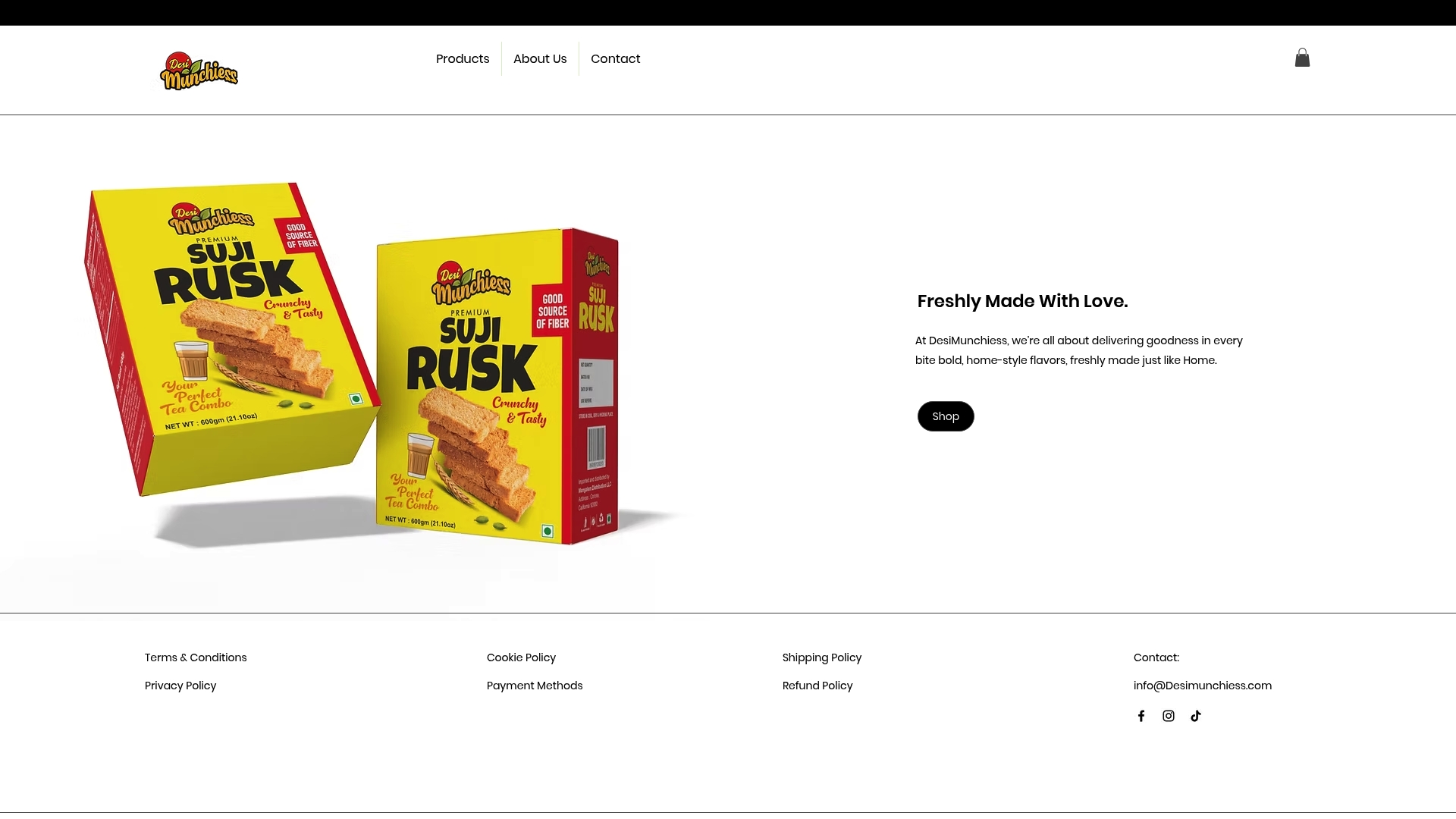
If you want to taste the difference handcrafted makes, try our atta biscuits, built with wholesome ingredients and a crumb that stands up to a good soak. Want to see everything we offer first? Browse our full snacks and sweets collection and order online. We ship straight to your door, so your next cup of tea has the right partner waiting.
FAQ
What are rusks called in America?
In the United States, the closest rusk-like products are Melba toast and zwieback, both sold in grocery stores as dry, twice-baked crackers. Biscotti are also widely available in American grocery stores and coffee shops, according to Wikipedia’s rusk entry.
Are rusks healthier than biscuits?
It depends on the recipe rather than the category, since ingredients vary widely between brands. A rusk made with whole wheat and less sugar, like a suji rusk, can offer a lighter option than a butter-heavy cookie, but any claim about a specific product depends on its actual ingredient list.
Is rusk healthier than bread?
Rusk and bread often start from similar doughs, so the nutritional difference usually comes down to added sugar, fat, and portion size rather than the baking method itself. A plain rusk is typically lower in moisture than bread, which can make it easier to control portions, but it is not automatically lower in calories.
What is the difference between a biscuit and a rusk?
A biscuit is typically a single-baked, soft or crisp product, while a rusk is twice-baked and dried a second time for a firmer, longer-lasting texture. That second bake is what gives rusk its dense, absorbent crumb, which is ideal for dunking in tea or coffee.
Sources
Recommended
Comments