
Bake Crisp, Healthier Atta Biscuits in 40 Minutes for Home Bakers
- DesiMunchiess

- 1 day ago
- 10 min read
Yes. When you make atta biscuits with whole-wheat flour, minimal added fat, and low-refined sweeteners like jaggery, they can be a genuinely healthier homemade snack than store-bought maida cookies. Skip the eggs, skip the refined flour, and lean on natural swaps instead. Want the exact recipe? Jump straight to the batch below and start baking within the hour.
TL;DR:
Using whole-wheat atta instead of refined flour increases fiber, B vitamins, and minerals, making the biscuits nutritionally superior to traditional maida cookies.
Proper handling of fat and rolling the dough evenly to about a quarter-inch thickness are crucial for achieving the desired crisp texture.
Cooling biscuits on a wire rack for 20 to 25 minutes after baking is essential to maintain their crunch and prevent sogginess.
Replacing refined sugar with jaggery or coconut sugar adds trace minerals without significantly changing calorie content.
Store biscuits in airtight containers with moisture absorbers for up to three weeks to preserve crispness and quality.
Table of Contents
Quick Healthy Atta Biscuits Recipe (One Batch, Eggless, No Maida)
Ingredients And Healthy Swaps: How To Improve Nutrition Without Losing Texture
Nutrition Snapshot: Calories, Macros, And How Swaps Change The Numbers
Keeping Them Crisp: Cooling, Storage, And Realistic Shelf Life
Flavor And Texture Variations To Try: Coconut, Oats, Seeds, And Spices
Author And Brand Notes: Why Desimunchiess’s Approach Matters
Quick Healthy Atta Biscuits Recipe (One Batch, Eggless, No Maida)
This batch makes a moderate quantity of small biscuits, roughly the size of a two-bite cookie, and takes under 40 minutes from mixing bowl to cooling rack. We built it around whole-wheat atta because that’s the whole point: no maida hiding in the ingredient list, no eggs needed, and a sweetener you can actually pronounce.
Ingredients:
2 cups whole-wheat atta
1/3 cup melted coconut oil (or 1/4 cup ghee, if you prefer)
1/2 cup grated or powdered jaggery
1/4 teaspoon salt
1/2 teaspoon ground cardamom
1/4 teaspoon baking soda
4 to 5 tablespoons milk (or water for a vegan version), added gradually
Method:
Whisk the atta, salt, cardamom, and baking soda together in a large bowl. This spreads the leavening evenly so you don’t get random puffy spots.
Rub in the melted coconut oil with your fingertips until the mixture looks like coarse sand. Don’t overwork it. This is what keeps the biscuits crumbly instead of tough.
Dissolve the jaggery in 2 tablespoons of warm milk, then fold it into the flour mixture.
Add milk a tablespoon at a time, kneading gently, until the dough just holds together. It should feel like soft play dough, not sticky bread dough.
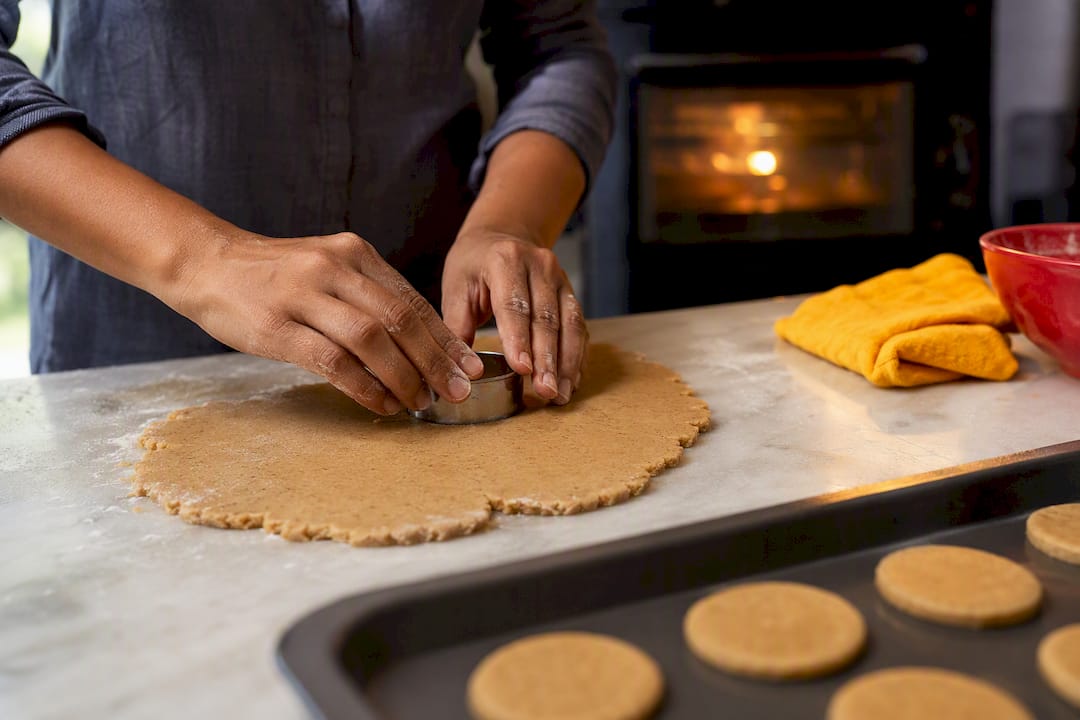
Roll the dough between two sheets of parchment to about a quarter-inch thickness. Cut into rounds with a cookie cutter or a small glass.
Prick each biscuit two or three times with a fork. This lets steam escape and keeps them from puffing into little domes.
Bake at 180°C (350°F) on the middle rack for 18 to 20 minutes, rotating the tray halfway through.
Pull them out when the edges turn a light golden brown. The centers will still feel soft. That’s normal. Leave them alone.
Transfer to a wire rack and let them cool completely, about 20 to 25 minutes, before touching or storing.
Serve them with masala chai, or crumble one over yogurt for a fiber-forward breakfast topper. If you’d rather skip the baking altogether some weeks, Desimunchiess offers ready-made atta biscuits made with the same whole-wheat, no-maida philosophy.
Ingredients And Healthy Swaps: How To Improve Nutrition Without Losing Texture
Whole-wheat atta keeps the bran and germ that refining strips out of maida, which means more fiber and more of the B vitamins and minerals that get lost in the milling process for white flour. That’s the entire nutritional argument for atta over maida in one sentence, but the swaps you build around it matter just as much as the base flour.
It lightens the crumb without reaching for refined flour.*
Fats: Coconut oil gives a clean, slightly sweet flavor and holds up well at room temperature. Ghee tastes richer but adds more saturated fat per tablespoon. Light olive oil works in a pinch but can make biscuits taste faintly grassy. Swap coconut oil for ghee at a 1:1 ratio, or cut either by a quarter and add a tablespoon of milk to compensate for lost moisture.
Sweeteners: Jaggery swaps in for white sugar at roughly a 1:1 ratio by weight, though its natural molasses content means it can pull in extra moisture, so reduce your liquid slightly. Coconut sugar works the same way and has a milder, caramel-like taste.
Nutrient boosters: A tablespoon or two of ground flaxseed, chia seeds, or rolled oats adds fiber and a slight nutty crunch. Sesame seeds pressed into the tops before baking add both flavor and a subtle calcium boost.
Dietary adjustments: Swap milk for water or a plant-based milk to make the recipe fully vegan. Cut the coconut oil by two tablespoons and add one extra tablespoon of milk to lower the total fat per biscuit without drying out the dough.
Fortifying your atta or leaning on stronger whole-grain blends can push the fiber and micronutrient content even higher, a point echoed in Bambino Pasta’s guide to fortified wheat atta cookies. If you’re deciding between jaggery and sugar for the long term, not just for this one recipe, Desimunchiess breaks down the nutritional tradeoffs in its jaggery versus sugar comparison.
What’s The Right Baking Method For Perfect Texture?
Getting atta biscuits crisp instead of chewy or rock hard comes down to three things: how you handle the fat, how thin you roll the dough, and how patient you are after the oven timer goes off.
Start by cutting the fat into the flour with your fingers or a pastry cutter rather than creaming it the way you would for a Western-style cookie. Creaming whips air into butter and sugar, which is great for chewy chocolate chip cookies but wrong here. You want minimal gluten development and a short, crumbly bite, so handle the dough as little as possible once the milk goes in.
Mix cold, not warm. If your kitchen runs hot, chill the shaped dough for 10 to 15 minutes before baking. This firms the fat back up and stops the biscuits from spreading into flat, greasy puddles in the oven.
Roll evenly. Aim for a quarter-inch thickness across the whole sheet. Uneven rolling is the number one reason some biscuits burn while others stay pale and underdone on the same tray.
Dock every biscuit. A few fork pricks let steam vent and keep the tops flat rather than domed.
Bake at 180°C (350°F) for 18 to 22 minutes. Tarla Dalal’s eggless atta biscuit recipe confirms this range works well and specifically flags that the biscuits will feel soft coming out of the oven.
Trust the cooling, not the color. The biscuits firm up as they sit on a wire rack. Pulling them early because they still feel soft is the most common mistake first-time bakers make.
That last point is worth repeating because it trips up more people than any other step. Biscuits set through a process where residual heat and moisture keep redistributing after the oven turns off, so the texture you feel at minute zero is not the texture you get at minute twenty. Experienced bakers consistently warn against judging doneness by touch alone right out of the oven.
If your biscuits come out soggy in the center, you likely underbaked them or the dough held too much liquid. If the edges are scorched while the middle stays pale, your oven is probably running hot, or your baking sheet is too thin and conducting heat unevenly. Flat, greasy biscuits usually mean too much fat relative to flour, or dough that got overworked and warmed up before baking.
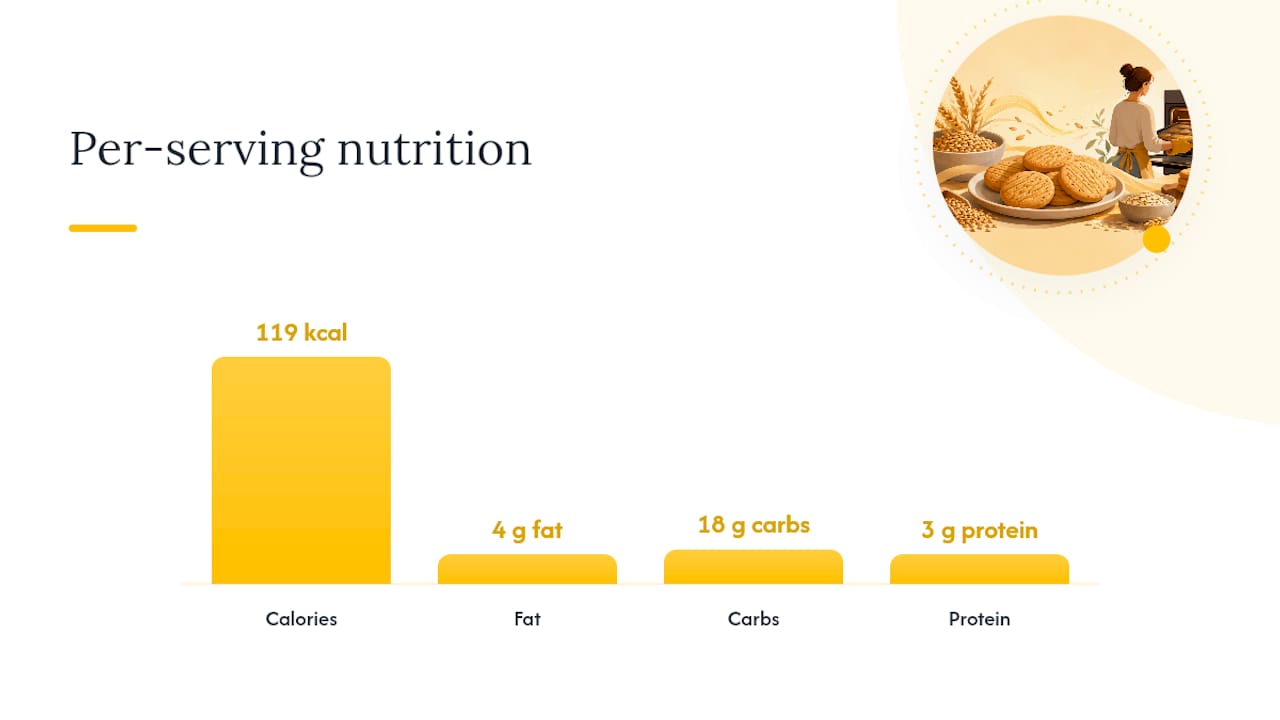
On the calorie side, a comparable homemade whole-wheat biscuit recipe from Allrecipes lists about 119 calories, 4 grams of fat, 18 grams of carbs, and 3 grams of protein per serving. Atta biscuits made smaller and thinner, the way most Indian-style recipes are cut, tend to land lower per piece, which we’ll break down next.
Nutrition Snapshot: Calories, Macros, And How Swaps Change The Numbers
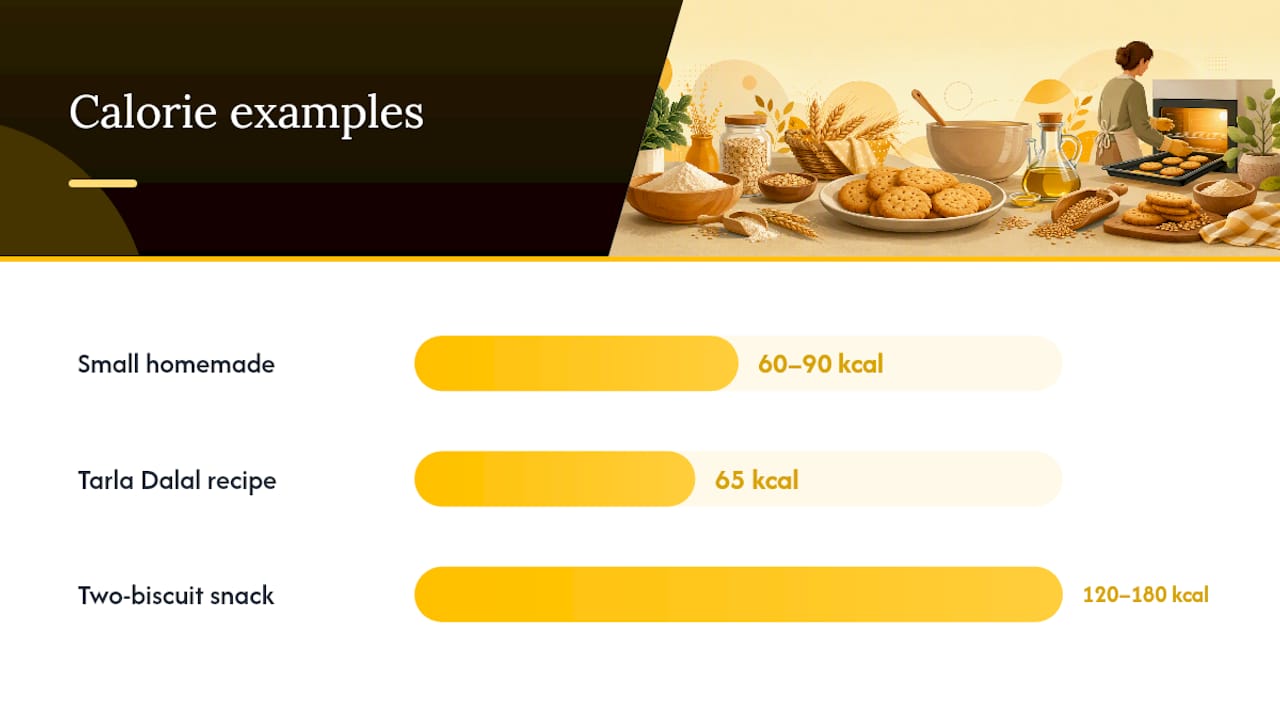
A single small homemade atta biscuit, cut about two inches across and a quarter-inch thick, generally lands somewhere between 60 and 90 calories, depending on how much fat and sweetener you used. Two biscuits, which is a realistic snack portion, can vary in calories depending on size and ingredients. That’s a wide range on purpose. Size, thickness, and ingredient choices swing the number more than most recipes admit.
Tarla Dalal’s recipe puts a small eggless atta biscuit at around 65 calories, which tracks closely with a standard whole-wheat biscuit formula.
Swapping white sugar for natural sweeteners without artificial additives like jaggery doesn’t cut calories much on paper. What it changes is the mineral content, since jaggery carries trace iron and potassium that refined sugar simply doesn’t have.
Here’s how the main swaps shift the nutritional picture:
Standard recipe (coconut oil, jaggery, no add-ins): moderate fat, moderate sugar, baseline fiber from whole-wheat atta alone.
Jaggery-heavy swap: similar calorie count to sugar, but a small mineral bump and a deeper caramel flavor that lets you use slightly less sweetener overall.
Seed-enriched variant (flax or chia added): a modest calorie increase per biscuit, offset by a meaningful jump in fiber and a noticeable increase in fullness after eating two or three.
Whole-wheat atta itself is the biggest lever here. It carries more fiber and protein than refined maida before you add a single seed or swap a single sweetener, which is the core reason atta biscuits outperform standard commercial cookies on paper. Fiber and protein together also slow digestion, which is part of why a couple of these biscuits tend to feel more satisfying than an equivalent number of thin, buttery maida cookies.
If you want exact per-piece and per-serving breakdowns across different biscuit styles and sizes, Desimunchiess maps out the full calorie range for tea biscuits, which is useful if you’re tracking intake closely or comparing homemade batches to packaged options.
Keeping Them Crisp: Cooling, Storage, And Realistic Shelf Life
Cooling on a wire rack isn’t a suggestion, it’s the step that actually makes atta biscuits crisp. Air circulating underneath the biscuit lets trapped steam escape from both sides instead of condensing back into the crumb the way it would on a flat plate or straight from the tray. Skip this step and you’ll end up with biscuits that taste slightly gummy no matter how long you baked them.
Once fully cooled, usually 20 to 25 minutes, storage becomes the next thing standing between you and a stale biscuit.
Store in an airtight glass or metal jar, not a plastic bag that lets air pockets form.
A small food-safe silica packet or a folded tissue with a few grains of raw rice tucked into the jar absorbs stray moisture, especially useful in humid climates.
Keep the jar away from the stove, sink, or any spot that sees steam or direct sunlight.
Expect roughly two to three weeks of good texture at room temperature in a dry kitchen, a range consistent with Veg Recipes of India’s storage guidance for whole-wheat atta biscuits.
If a batch starts to soften, a two-minute re-toast in a 150°C (300°F) oven brings most of the crispness back.
For longer storage, freeze fully cooled biscuits in a sealed bag for up to two months and thaw at room temperature before eating.
For a deeper walkthrough with step-by-step photos on humidity control and container choices, Desimunchiess has a full guide on how to store biscuits so they stay crisp.
Flavor And Texture Variations To Try: Coconut, Oats, Seeds, And Spices
Once the base recipe feels comfortable, the fun part is customizing it without wrecking the texture you worked to get right.
Coconut-jaggery version: swap in 2 tablespoons of desiccated coconut per cup of atta and increase jaggery slightly for a chewier, more tropical bite. Expect slightly less crispness, so roll the dough a touch thinner to compensate.
Oat-and-seed version: fold in 3 tablespoons of rolled oats plus a tablespoon of chia or flax. Because dry add-ins soak up moisture, reduce your milk by roughly a tablespoon for every added tablespoon of oats or seeds, or you’ll end up with a soggy center.
Sweet-spiced version: nutmeg and cardamom both work well layered together, and a pinch of cinnamon adds warmth without competing with the jaggery.
Savory version: drop the sweetener entirely, add a half teaspoon of roasted cumin and a tablespoon of sesame seeds, and pair with a pinch of black salt for a snack that works better with tea than dessert.
Any variation with added dry ingredients usually needs one or two extra minutes in the oven. Watch the edges rather than the clock, and let the cooling rack do the rest.
Author And Brand Notes: Why Desimunchiess’s Approach Matters
This guide comes from Shivam, who develops and tests homemade-style snack recipes with a focus on whole-grain baking and natural ingredient swaps. Desimunchiess builds its snack lineup around the same principle running through this whole article: authentic, traditional recipes made with high-quality ingredients, not shortcuts.
That’s the philosophy behind Desimunchiess’s own atta biscuits, handcrafted in small batches rather than mass-produced. If you want to go deeper on any piece of this guide, the storage post and the calorie breakdown linked above cover the finer details we couldn’t fully unpack here. Together, they round out a fuller picture of what makes a batch of atta biscuits worth baking, or buying, in the first place.
What Most Guides Get Wrong About Atta Biscuits
Most recipe blogs treat “healthy” as a marketing label slapped onto anything with the word “whole wheat” in the title. That’s lazy. A biscuit drowning in ghee and white sugar doesn’t become virtuous just because the flour changed. The fat and sweetener choices matter as much as the flour, sometimes more.
The bigger blind spot is portion size. Two small atta biscuits, cut thin and baked properly, sit in a reasonable calorie range for a snack. Four thick, hand-torn pieces from a batch someone rolled too generously can quietly double that number. Nobody talks about thickness, and it’s one of the easiest variables to control.
What actually moves the needle: swapping in jaggery over sugar, adding a tablespoon of seeds, and using coconut oil instead of a heavy hand with ghee. Skip the trend chasing. Get the fat-to-flour ratio right, cool the biscuits properly, and you’ll have a snack that earns the “healthy” label instead of just wearing it.
— Shivam
Want The Homemade Taste Without The Baking Day?
Some weeks, you don’t have 40 minutes for dough and a cooling rack, and that’s fine. Pre-made whole-wheat, no-maida atta biscuits made in small batches are available for purchase, offering a convenient alternative to baking at home.
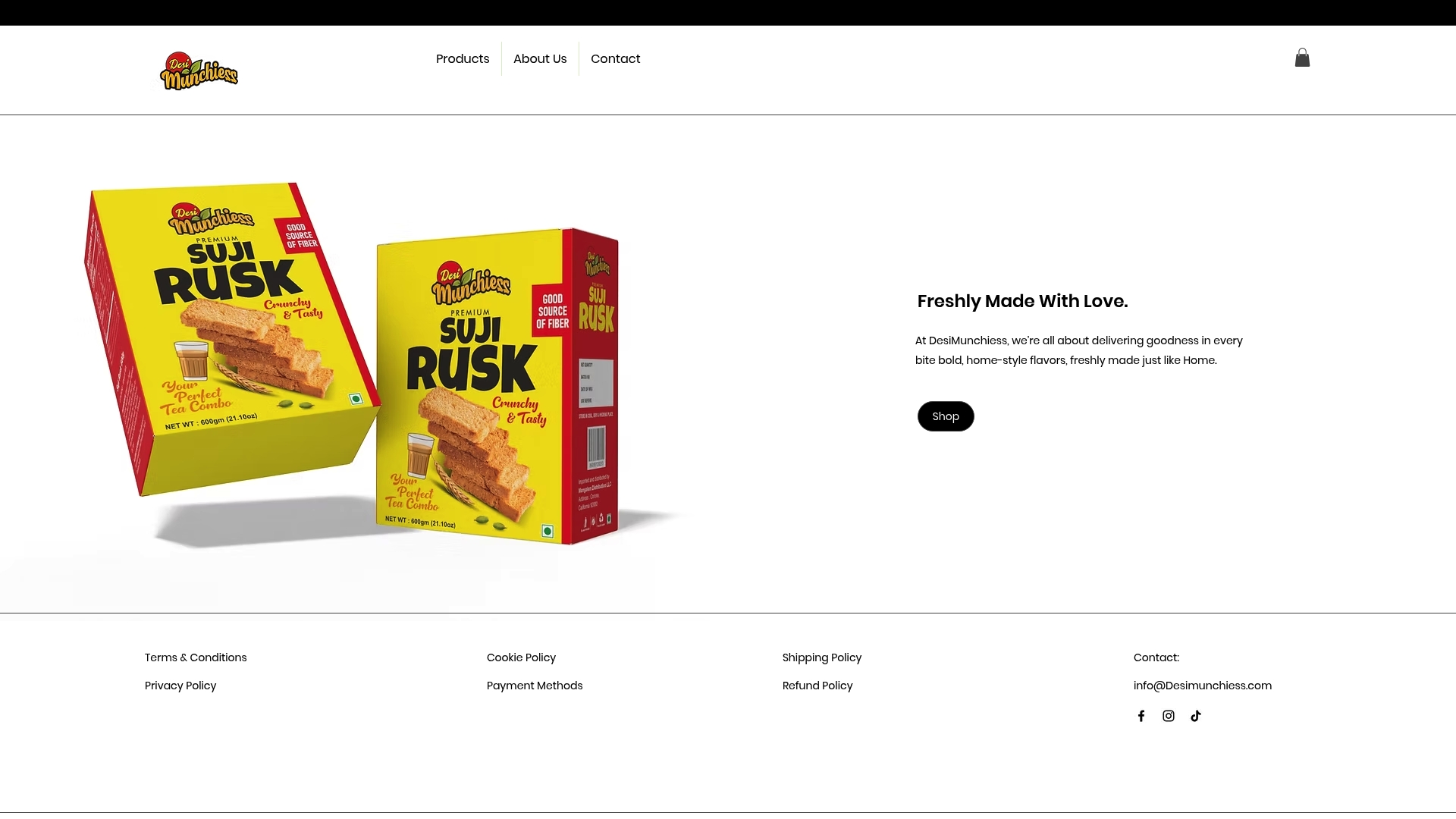
Every batch comes from the same philosophy covered above: real atta, honest sweeteners, no shortcuts hiding behind a health claim. If biscuits aren’t quite what you’re craving today, the Tikoni Mathi offers the same handcrafted, small-batch approach in a savory direction. Either way, browse the full lineup at Desimunchiess and get a batch on its way to your door today.
Sources
Recommended
Comments