
Build a 3 Jar Indian Pickle Spread with the One One One Rule
- DesiMunchiess

- 11 minutes ago
- 11 min read
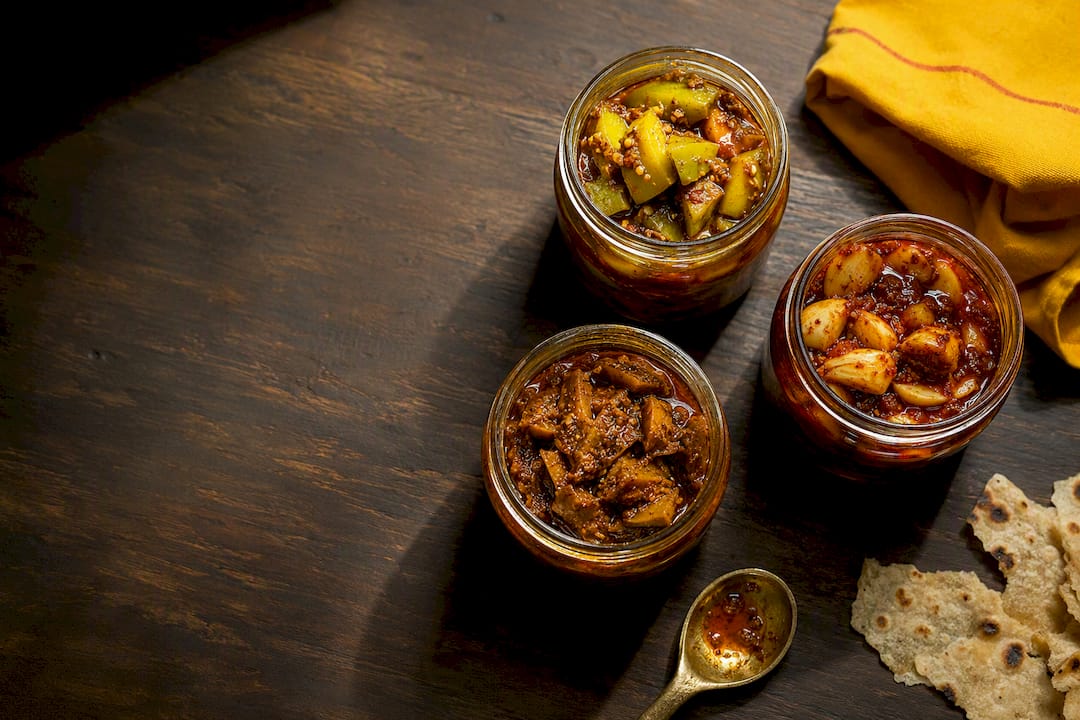
Mango achar belongs next to warm paratha, lime pickle brightens rice and dal, garlic and chili achar deepen pulao and biryani, and mixed veg achar earns its place beside chaat and fried snacks. The reason behind all four: acidity and salt cut through fat and starch, while heat and sweetness balance whatever’s already on the plate. Once you understand that logic, you can pair confidently with dishes we haven’t even listed here.
TL;DR:
Acid and salt in pickles refresh the palate and cut through fats, making them effective companions for rich curries, fried snacks, and ghee-heavy dishes.
Different regional pickles are best paired with specific dishes, such as Punjabi mango achar with paratha and lime achar with plain rice, based on their flavor profiles.
Serving pickles in small amounts, like one to two tablespoons per person, and tasting jars beforehand help balance heat levels and prevent overwhelming dishes.
Pickles like garlic achar work well with both vegetarian and non-vegetarian meals, while spicy pickles should be served on the side for adjustable heat.
Traditional dairy drinks like buttermilk complement spicy achar, with light or acidic pickles suited for tea time, whereas richer pickles go better with hearty breakfast options.
Table of Contents
What Makes an Indian Pickle Pairing Actually Work?
Every great pickle pairing comes down to four forces: acid, salt, fat, and heat. Achar is loaded with vinegar or citrus, oil, and spice, and each of those does a specific job on your plate.
Acidity and salt reset your palate between bites. That’s why a spoonful of lime pickle next to a bowl of dal-chawal doesn’t just taste good. It cuts through the starch and makes the next bite of rice taste fresh again. The same mechanism explains why pickles cut through fatty foods and refresh the palate, which is exactly why achar shows up next to rich curries, fried snacks, and ghee-heavy rice dishes across Indian kitchens.
Sweetness plays a different role. Punjabi aam ka achar and some mango pickles carry a jaggery or sugar note that tempers spicy food and pairs naturally with curd rice or a plate that leans heavy on chili. Vinegar-forward pickles do something less obvious: the acid mutes how hot a dish tastes on your tongue, so a fiery chili achar next to an already-spicy curry doesn’t double the heat the way you’d expect. It rebalances it.
Serving mechanics matter as much as flavor logic:
Offer a teaspoon or two per person, never a mountain on the plate.
Chop mixed veg or garlic achar fine for garnishing samosas or chaat; leave mango pieces whole for a paratha side.
Use the oil floating on top of achar sparingly. It carries flavor fast and can overwhelm a delicate dish in seconds.
Pro Tip: Taste a small spoonful of pickle on its own before adding it to a full plate. Heat and salt levels vary wildly jar to jar, even within the same brand.
Which Pickle Goes With Which Dish? A Regional Breakdown
Different regions of India built their pickle traditions around the dishes they already had on the table, and those pairings still hold up. Here’s how to match achar variety to meal, plus a quick note on why each one works.
Punjabi aam ka achar with paratha and stuffed breads. The oil-cured mango, mustard seed, and fennel in this achar were built for breakfast. Fat from ghee-fried paratha needs the acidity and salt cutting through it, and the achar’s slow heat wakes up an otherwise heavy plate.
Lime or lemon achar with dal-chawal and plain rice. Nimbu achar is sharper and brighter than mango pickle, which makes it ideal for the blandest parts of an Indian meal. Lemon pickles traditionally pair with dal-chawal and plain rice across much of India, and the citrus note keeps a simple rice plate from tasting flat.
Garlic achar with biryani, pulao, and roasted meats. The savory depth in lasun achar plays well with the layered spice in biryani rather than fighting it. Use a small amount worked through the rice rather than a big spoonful on the side, since oil-based pickles carry spice into rice without watering it down the way a vinegar-based quick pickle would.
Red chili achar with parathas, chaats, and fried snacks. Mirchi achar delivers a heat contrast that snack food needs, but it’s strong enough that it should sit on the side of the table, not stirred directly into a shared dish, so guests can opt in.
Mixed veg achar with samosas, pakoras, and Gujarati thali. This is the most flexible jar in your fridge. Chop it fine as a samosa topping, or serve it whole as one of several thali sides.
Inji puli (ginger tamarind pickle) with ghee rice and curd rice. This Kerala classic carries sweet, sour, and spicy notes in one bite, which is why it turns up next to simple rice dishes that need contrast rather than more heat. Regional Indian pickles like avakaya and inji puli traditionally match specific local dishes, and Andhra’s avakaya works the same way alongside curd rice or ghee rice, where its raw mustard oil bite needs something cooling to lean against.
A quick serving cheat sheet for the varieties above:
Aam ka achar: a few whole pieces, room temperature, alongside the bread.
Nimbu achar: a small spoonful mixed into the first few bites of rice, not the whole plate.
Lasun or mirchi achar: a small amount folded into biryani per serving, more on request.
Mixed veg achar: finely chopped for garnish, whole for a thali plate.
How Do You Match Pickles to Breakfast, Lunch, and Snack Time?
Pairing by meal context is often more useful than pairing by region alone, since it mirrors how you actually plan a day of eating rather than forcing you to memorize a map. Breakfast, rice-based comfort food, breads, and snacks each call for a different jar.
Breakfast: Paratha wants aam ka achar or garlic achar for a punch of fat-cutting acidity first thing in the morning. Poha and upma are lighter and starchier, so a milder mango pickle or a small dab of lime achar brightens them without overpowering the dish.
Rice and comfort meals: Dal-chawal, khichdi, and curd rice all benefit from lime pickle’s acidity, but a sweeter mango achar works when the dish already leans spicy and needs something to temper it. Khichdi in particular, being mild by design, takes well to a stronger, garlic-forward achar.
Breads and sandwiches: Mango and garlic achar make excellent spreads when chopped fine and mixed with a smear of butter or cream cheese to balance sweetness with fat, which keeps the pickle from sliding out of the sandwich. Try it in a grilled cheese or a simple bread-butter-achar snack.
Snacks and chaat: Chopped mixed veg achar works as a garnish stirred directly into the dish, while whole chilies or stronger mirchi achar belong on the side for anyone who wants extra heat.
Cheese boards: A small amount of tangy garlic or lime achar next to sharp, aged cheese plays the same role a cornichon plays on a charcuterie board. Pickles pair well with fatty meats and creamy cheeses because the acidity contrasts the richness. Skip sugary mango pickle here. It competes with delicate cheese rather than complementing it.
What’s the 1-1-1 Rule for a Pickle Spread?
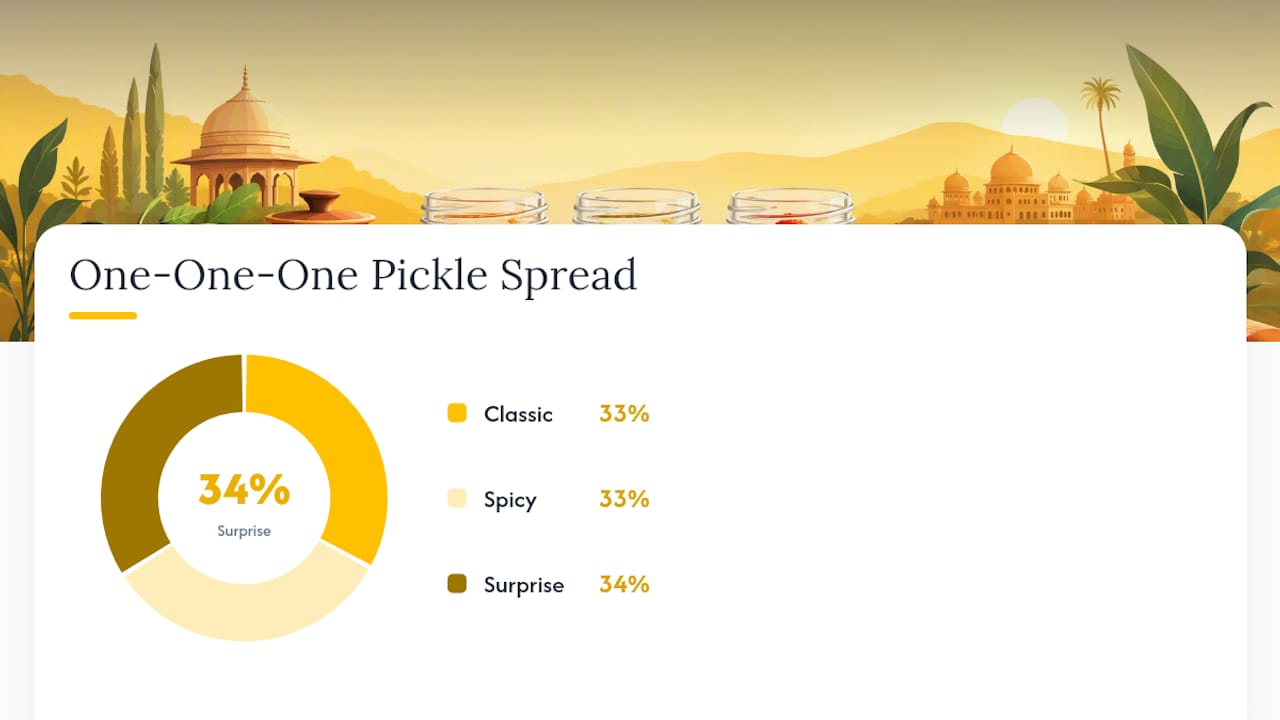
The easiest way to host with achar is to build a spread using the one-one-one rule: one classic (mango or lime), one spicy (garlic or red chili), and one surprise (inji puli, avakaya, or a sweet-tart tamarind pickle). This mirrors the broader idea that a three-item pickle spread covering classic, spicy, and surprise flavors works for almost any group, since it covers different heat tolerances without overwhelming anyone.
For portioning, plan on roughly one to two tablespoons of achar per guest across the whole spread, not per jar. Offer at least one pre-chopped bowl so guests can spoon it over rice or samosas without wrestling with whole pieces.
A few practical notes worth keeping in mind:
Once a jar is opened, refrigerate it and use a dry spoon every time to avoid introducing moisture that speeds up spoilage.
Oil-based achar keeps longer at room temperature than watery, low-oil pickles, but refrigeration after opening is still the safer default.
If you want to go deeper on how fermentation affects shelf life and flavor, fermented achar made at home behaves differently than shelf-stable jarred versions, and it’s worth understanding before you stock a party spread.
Pro Tip: Before setting any pickle out for guests, taste-test a tiny spoonful yourself first. Heat levels can shift dramatically between batches, even from the same maker.
What About Festive or Less Common Pickles Like Gooseberry and Tamarind?
Nellikkai (gooseberry) achar and tamarind-based pickles show up around festivals and special meals precisely because they carry a tartness that regular mango or lime achar doesn’t quite match. Gooseberry pickle has a sharper, almost mineral sourness that pairs beautifully with festive rice dishes like coconut rice or lemon rice, where its acidity balances the richness of coconut and ghee without adding extra heat.
Tamarind-based achar, sometimes blended with jaggery for a sweet-and-sour profile, works well alongside puliyodarai (tamarind rice) itself, or as a counterpoint to fried festival snacks like murukku and chakli where you want tartness rather than more oil.
Garlic chutney-style pickles, thicker and more paste-like than typical oil-cured achar, deserve their own moment at festive spreads. They work less as a side condiment and more as a flavor base, folded into a small portion of pulao or spread thin on a roti before rolling it around a vegetable filling.
The common thread with all three: these pickles tend to be bolder and more complex than daily-use jars, so they’re better suited to special occasions where the rest of the menu has room for a standout flavor, rather than an everyday lunch where a simple mango or lime achar does the job just fine.
Do Vegetarian and Non-Vegetarian Meals Need Different Pickles?
Vegetarian thalis lean on pickles to add richness and complexity that the dishes themselves might not have, since a meal built around dal, sabzi, and rice can taste one-note without something sharp to cut through it. Mixed veg achar, lime pickle, and mango achar all do heavy lifting here, adding fat, acid, and salt to a plate that’s otherwise light on all three.
Non-vegetarian meals flip that logic. Meat, poultry, and fish dishes already bring fat and richness to the table, so the pickle’s job shifts from adding depth to cutting through it. Garlic achar next to a biryani, or a sharp lime pickle beside a roasted chicken thali, works because the acidity does what a squeeze of lemon would do on a Western dinner plate. Heavier, oil-based achar tends to overwhelm a rich meat dish rather than complement it, so a lighter, more vinegar-forward pickle usually performs better.
The exception worth noting: garlic and chili achar cross both categories well, since their savory depth complements vegetable curries the same way it complements roasted meats. If you’re building a mixed vegetarian and non-vegetarian spread for guests, garlic achar is often the safest jar to put in the middle of the table because it works for both plates without needing separate options.
How Do Pickles Fit Into Fusion and Modern Indian Dishes?
Achar has moved well beyond the traditional thali, and it holds up in fusion cooking because the same acid-salt-fat logic applies no matter what cuisine it’s crossing into. A pickle used on sandwiches, in salads, or as a garnish for bowls can transform a dish that has nothing to do with Indian food.
Try a spoonful of finely chopped mango achar folded into a grain bowl instead of a standard vinaigrette. Garlic achar stirred into mayonnaise makes a sharp, savory spread for a burger or a wrap. Mixed veg achar works as a relish on grilled cheese or even alongside a charcuterie-style snack board next to crackers and cured meats, where it plays the same palate-cutting role a classic cornichon does.
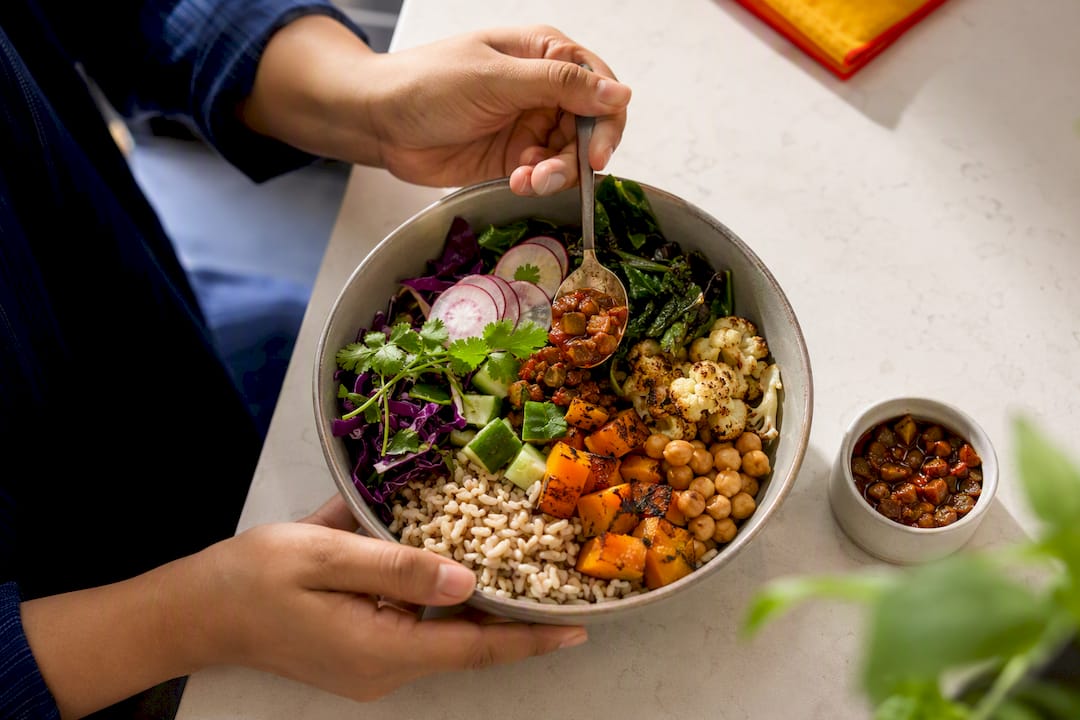
The key with fusion pairings is restraint. A teaspoon of achar can do more work in a modern dish than in a traditional Indian meal, because it’s not competing against an equally spiced curry or rice dish. Start small, taste, and add more only if the dish can handle it.
How Should You Adjust for Spice Tolerance?
Not every guest wants the same heat level, and pickle heat varies enormously from jar to jar even within the same variety. The fix is simple: default to milder pairings for a mixed crowd and let heat-seekers add their own.
Serve red chili and garlic achar in a small side bowl with a spoon rather than mixing it directly into a shared dish, so people who want the heat can add it and people who don’t can skip it entirely. This opt-in approach at the table makes strong achar accessible to guests who aren’t used to it, without watering down the dish for those who are.
For a household that leans spicy, mango and lime achar make good “training wheel” jars for anyone new to Indian pickles, since their heat is usually secondary to their tang and sweetness. Garlic and chili achar should be introduced gradually, starting with a half teaspoon stirred into a full plate of rice or dal rather than served as a standalone side, until you know how a particular jar’s heat lands.
What Should You Drink With Indian Pickles?
Buttermilk, or chaas, is the classic partner for spicy achar because its cooling, slightly sour dairy base does the same job as curd rice: it tempers heat without dulling the pickle’s flavor. A glass of spiced buttermilk alongside a paratha-and-Mango Treat-achar breakfast is one of the most balanced combinations in everyday Indian cooking.
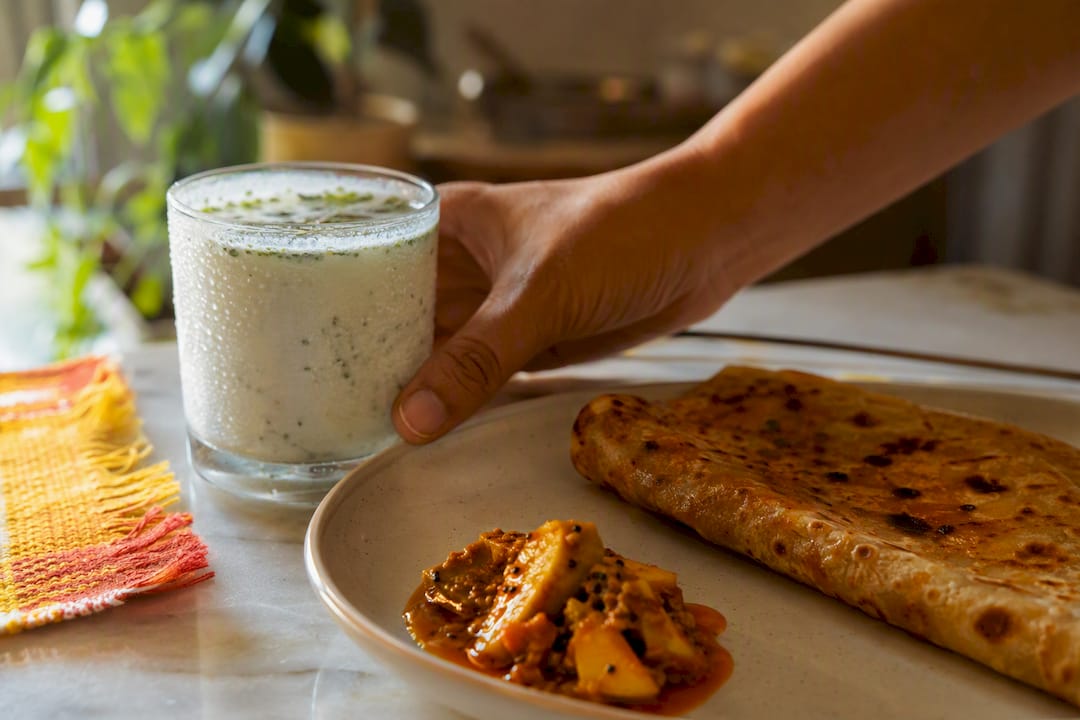
Tea plays a different role. A strong, milky chai pairs well with the sweeter, oilier pickles like Punjabi mango achar, especially at breakfast or teatime, because the tannins in tea cut through the achar’s fat much the way namkeen pairs with chai through similar sensory contrast. Lighter, more acidic pickles like lime achar can clash with tea’s bitterness, so they’re better saved for meal times rather than a tea break.
For guests who prefer something cold, a simple lemon-lime soda or a lightly sweetened lassi works with spicier chili achar the same way buttermilk does, offsetting the heat with sweetness and dairy fat rather than more acid.
Why We Make Pickles the Way We Do
Many pickle producers build jars on traditional recipes and handcrafted production, not shortcut formulas, because achar made in small batches keeps the texture and brightness that mass production tends to flatten out. Homemade-style pickles usually win on freshness and crunch, especially with vegetable-based achar where texture matters as much as flavor. Jarred, shelf-stable pickles still have a place, particularly for pantry staples you don’t go through quickly. For the pairings in this guide, though, a fresher jar makes a noticeable difference on the plate. If you want to go deeper on how fermentation and preservation affect a pickle’s character, that’s worth exploring on its own.
— Shivam
Ready to Build Your Own Pickle Pairing Spread?
Some producers make mango, mixed vegetable, and lime achar in small handcrafted batches, which can help preserve bright acidity and texture that make these pairings work.
If you’re building a breakfast spread, start with the Mango Pickle, stirred through a hot paratha or spread thin with butter on toast for a quick sandwich. Want more heat in the mix? The Mango Chilli Pickle adds that opt-in spice without losing the sweetness that balances a rich breakfast plate, and the Lime Pickle is the jar to keep next to your everyday dal-chawal. Browse the full lineup and pick the jar that fits tonight’s dinner at Desimunchiess.
Sources
Recommended
Comments