
Make or Buy Suji Rusk: 20–24 Homemade Pieces, Eggless, Maida Free
- DesiMunchiess

- 17 minutes ago
- 8 min read
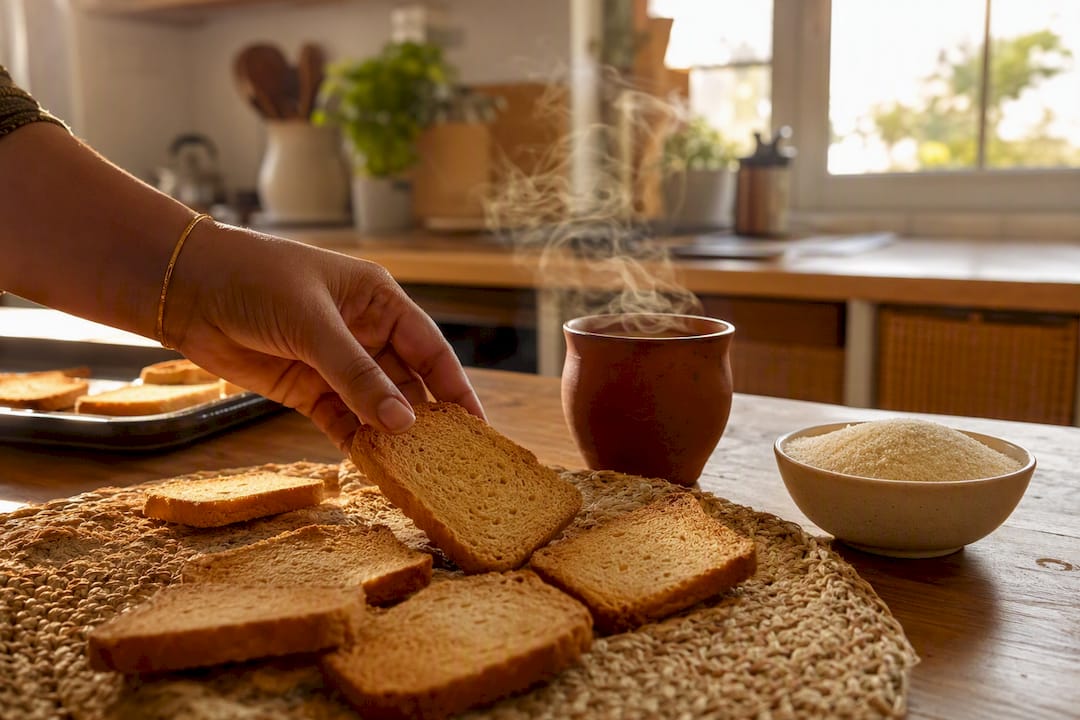
Suji rusk is a twice-baked semolina snack, dry and crunchy enough to survive a good dunk in hot tea without falling apart. Suji means semolina, and rusk describes the double-baking process that turns a soft cake or bread into a shelf-stable crisp. Most versions use cardamom or fennel for aroma and are designed to pair well with morning chai or coffee.
TL;DR:
The double-baking process is essential, with the second bake at 300°F to 325°F lasting 20 to 30 minutes to achieve crispness.
Commercial suji rusk products often contain refined wheat flour, vegetable oils, and milk powder, unlike traditional homemade recipes that rely solely on semolina.
For healthier options, use 100% semolina or jaggery instead of refined flour and sugar, but expect denser crumbs and slightly different textures.
Proper storage requires cooling the rusk completely before sealing, with airtight containers extending shelf life but requiring reheating to restore crunch.
Making authentic suji rusk involves patience for cooling and slicing, but pre-made, handcrafted versions like Desimunchiess offer consistent quality with real ingredients.
Table of Contents
What Goes Into Suji Rusk?
Semolina, or suji, is the coarse, granular flour milled from durum wheat. It’s technically a wheat product, but the texture couldn’t be more different from regular flour. Semolina gives baked goods a slightly gritty, sturdy crumb that holds up beautifully once you slice and re-bake it, which is exactly why it became the base for this snack instead of standard flour.
Most home recipes build the dough or batter from a handful of categories, affecting whether the rusk is delicate or denser and rustic.
Flour base: pure semolina, semolina blended with maida (refined flour), or a whole-wheat version for a heartier bite
Sweetener: white sugar for the classic bakery flavor, or jaggery for a deeper, less refined sweetness
Fat: ghee for richness, butter for a softer crumb, or a neutral oil for a lighter texture
Leavening: yeast for a bread-style rise, or baking powder for a quicker, cake-style version
Flavorings: cardamom (elaichi) and fennel (saunf) are the traditional go-tos, sometimes rounded out with milk powder or chopped nuts
Packaged brands don’t always follow the same script. Some commercial suji rusk products list refined wheat flour, vegetable oils, and milk powder alongside semolina, which is a noticeably different ingredient profile than what you’d find in a from-scratch kitchen recipe. That gap matters if you’re paying attention to what actually goes into your snack.
How Is Suji Rusk Made? The Twice-Bake Method Explained
The defining trait of suji rusk isn’t the flavor. It’s the process. You bake a soft cake or bread first, cool it completely, slice it into fingers, then bake those slices again at low heat until they dry out and turn crisp. That second bake is what separates rusk from every other semolina snack on the shelf.
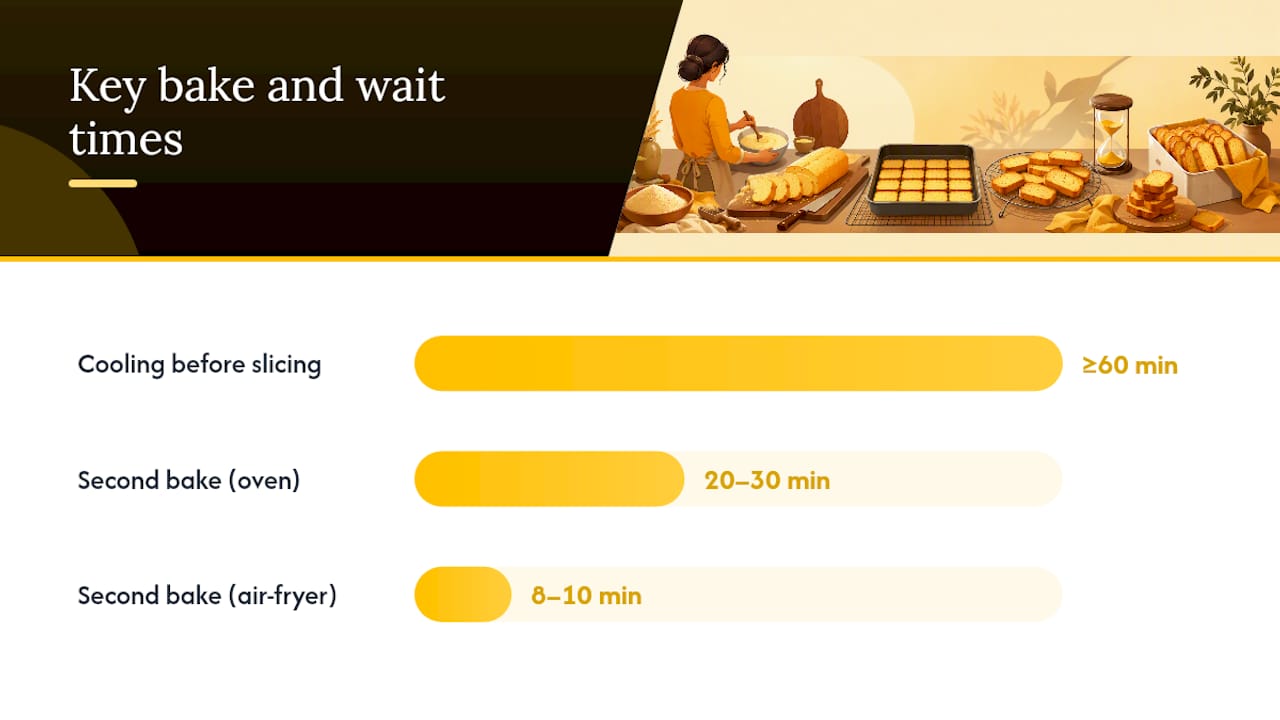
Here’s how the timeline typically breaks down:
Mix and bake the base. Combine semolina, flour, sugar or jaggery, fat, and leavening into a batter or dough. Bake at moderate oven temperatures until a toothpick comes out clean.
Cool completely. This step isn’t optional. Slicing a warm cake crumbles it instantly, so give it at least an hour, ideally longer, before you touch a knife.
Slice into fingers. Cut the cooled cake into even strips, roughly half an inch to three-quarters of an inch thick.
Second bake (the drying stage). Lay the slices flat on a baking sheet and bake at 300°F to 325°F for 20 to 30 minutes, flipping halfway through, until both sides turn golden and firm.
Cool again before storing. The rusk keeps crisping slightly as it cools, so don’t seal it away hot.
That low, slow second bake pulls moisture out of the crumb without burning it, leaving behind a porous, honeycombed structure. That’s the exact quality that lets a rusk soak up hot tea for a few seconds without turning to mush, which is the whole point of how these snacks pair with chai in the first place.
If you don’t have patience for yeast dough, the no-yeast cake rusk method swaps in baking powder for a quicker, denser crumb that still crisps up well on the second bake. Air-fryer versions are also gaining ground: a batch of sliced rusk at 300°F for 8 to 10 minutes, checked and flipped once, gets you most of the way to oven results in a fraction of the time.
Pro Tip: Slice your rusk slightly thinner than you think you need. Thinner pieces dry more evenly on the second bake and crisp all the way through instead of staying soft in the center.
Can You Make Suji Rusk Eggless or Maida-Free?
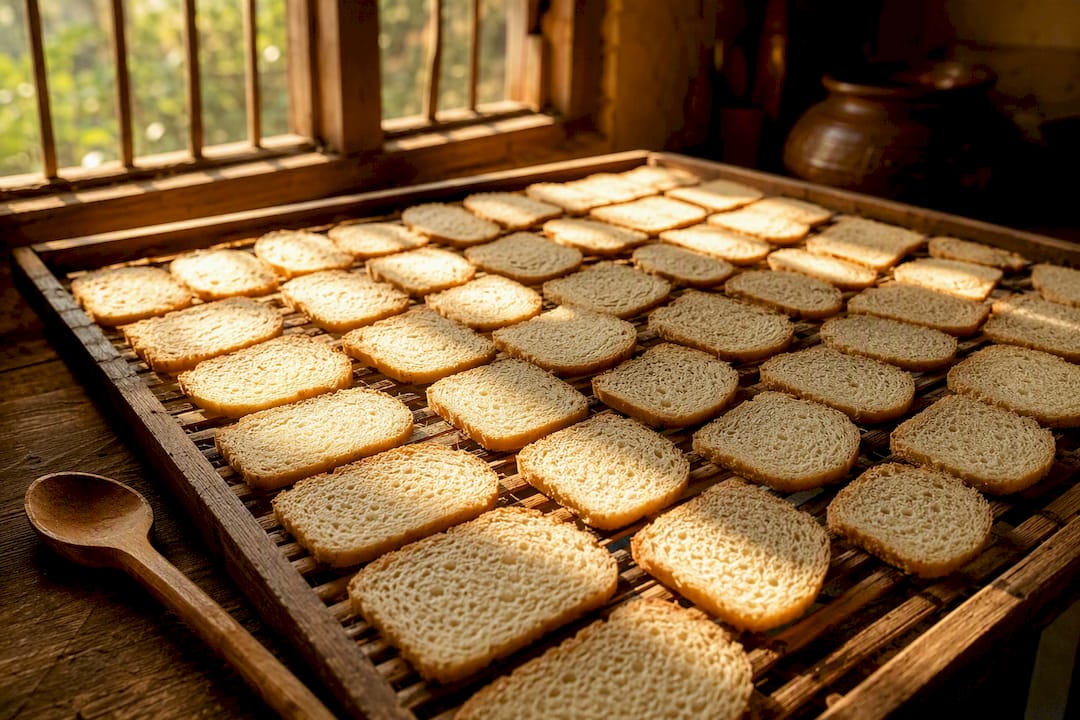
Suji rusk happens to be one of the easiest traditional snacks to adapt for dietary preferences, mostly because the base recipe rarely calls for eggs to begin with. Leavening usually comes from yeast or baking powder, so an eggless suji rusk recipe isn’t really a workaround. It’s closer to the standard.
Common variations you’ll run into:
Maida-free versions use 100% semolina or a semolina-whole wheat blend, giving a heartier, slightly denser bite than the refined-flour bakery style
Jaggery-sweetened versions trade white sugar for a mineral-rich sweetener with a deeper flavor, though the crumb browns a touch faster in the oven
Whole-wheat blends add fiber and a nuttier taste, at the cost of some of the light crispness you get from maida
Air-fryer or reduced-fat methods cut down on ghee or oil, which trims richness but can leave the crumb a bit drier if you don’t compensate with extra moisture upfront
Health-conscious home bakers tend to gravitate toward the semolina-forward, jaggery-sweetened route specifically to dodge refined sugar and refined flour, even though packaged brands still lean on maida and vegetable oil for shelf stability and cost. Neither approach is wrong. They just serve different priorities.
Is Suji Rusk Healthy? Nutrition and Portion Guidance
Suji rusk is a carbohydrate-forward snack, not a balanced meal, and treating it that way keeps expectations realistic. The semolina base delivers energy-dense carbs, the added fat contributes richness and calories, and protein or fiber content depends heavily on whether the recipe uses whole wheat or pure refined semolina.
Snack, Not a Meal: One commercially listed suji rusk serving from Britannia comes in as a carbohydrate and fat-heavy snack, which is fairly typical of the category. It’s built for flavor and crunch, not nutritional completeness.
That doesn’t make rusk a food to avoid. It makes it a food to portion. A couple of pieces alongside your tea is a very different snack than a half-dozen eaten straight from the tin.
A few practical guidelines worth keeping in mind:
Stick to a defined portion (two to three pieces) rather than eating straight from an open container
Choose whole-wheat or jaggery-based recipes if you’re watching added sugar or refined carbs
If you’re managing blood sugar, pair rusk with protein (a glass of milk, for instance) rather than eating it alone, and keep portions modest
Check labels on packaged versions, since sugar and fat content vary widely by brand
None of this is medical advice, just practical portioning logic. If you want exact numbers for a specific product, DesiMunchiess breaks down calories, macros, and portion sizing for its suji rusk on its nutrition page, and a broader nutrition guide can help if you’re trying to fit rusk into a wider macro plan.
How Do You Store and Re-Crisp Suji Rusk?
Rusk lives and dies by moisture control. Let every batch cool completely, down to room temperature, before it goes anywhere near a container, since sealing in residual warmth traps steam and softens the crumb.
Store in an airtight container or tin, away from humidity
Homemade rusk holds its crunch for about 2 to 3 weeks stored properly; packaged versions last considerably longer thanks to preservatives and sealed packaging
If it softens, a 5-minute low oven bake at 300°F or a quick 2 to 3 minute air-fryer blast restores the crunch almost instantly
Dunk in chai or coffee for a few seconds. Longer if you like it properly soaked
Crushed leftover rusk works surprisingly well as a crumb topping for desserts or as a quick crust base
Quick Suji Rusk Recipe Card
Yield: About 20 to 24 rusk pieces
Ingredients:
1 cup semolina (suji)
1/2 cup all-purpose flour or whole wheat flour
1/2 cup sugar (or jaggery, powdered)
1/3 cup melted ghee or neutral oil
1/2 cup milk (plus more as needed)
1 teaspoon baking powder
1/2 teaspoon cardamom powder
A pinch of fennel seeds (optional)
A pinch of salt
Equipment: Mixing bowl, loaf pan or baking tray, whisk, sharp knife, wire rack
Steps:
Preheat the oven to 350°F. Grease a loaf pan.
Whisk semolina, flour, baking powder, cardamom, fennel, and salt together in a bowl.
In a separate bowl, mix melted ghee, sugar, and milk until the sugar mostly dissolves.
Combine wet and dry ingredients into a thick, pourable batter, adding more milk if it feels too stiff.
Pour into the pan and bake for 30 to 35 minutes, until a toothpick comes out clean.
Cool completely on a wire rack, at least 1 hour.
Slice into finger-sized pieces, about half an inch thick.
Arrange slices flat on a baking tray and bake at 300°F for 20 to 25 minutes, flipping once, until golden and dry.
For air-fryer: 300°F for 8 to 10 minutes, flipping halfway.
Cool fully before storing in an airtight container.
Swap notes: Skip the maida entirely for a 100% semolina, maida-free version, or sub in jaggery for a less refined sweetness.
Pro Tip: Don’t rush the cooling step between bakes. A cake that’s even slightly warm will crumble when sliced, and you’ll lose the clean, even pieces that make rusk look and bake right.
How Desimunchiess Approaches Suji Rusk
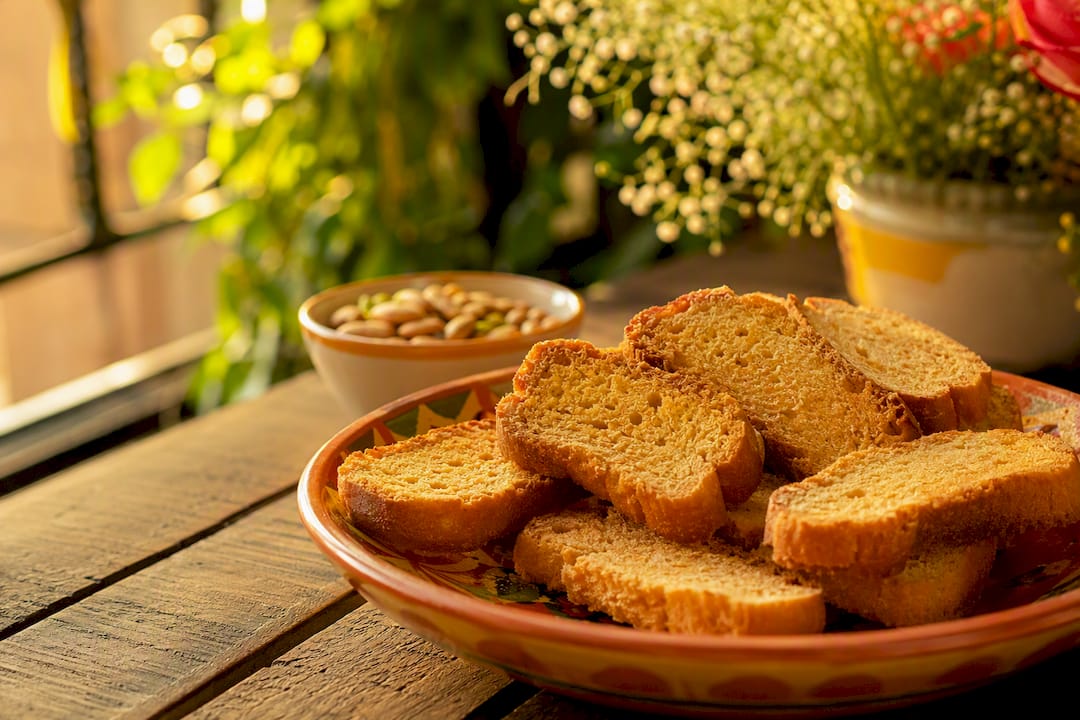
Desimunchiess makes suji rusk the way a home kitchen would, not the way a factory line would. That means real semolina, real ghee, and a slower, handcrafted bake instead of shortcuts that trade flavor for shelf life. It’s a small difference on paper, but you taste it immediately: the crumb is lighter, the cardamom actually comes through, and the crunch holds up to a proper dunk instead of turning to dust.
For snack lovers who care as much about ingredients as taste, that approach matters. Full nutrition and portion details live on the Desimunchiess suji rusk product page, and this piece was put together by Shivam for readers who want both the recipe and the reasoning behind it.
— Shivam
Ready to Skip the Slicing and Just Enjoy It?
Making suji rusk at home is rewarding, but between the double bake, the cooling wait, and the slicing precision, it’s also a genuine time commitment. Desimunchiess handles all of that for you, using the same homemade, eggless, maida-free approach outlined above, just without the flour on your countertop.
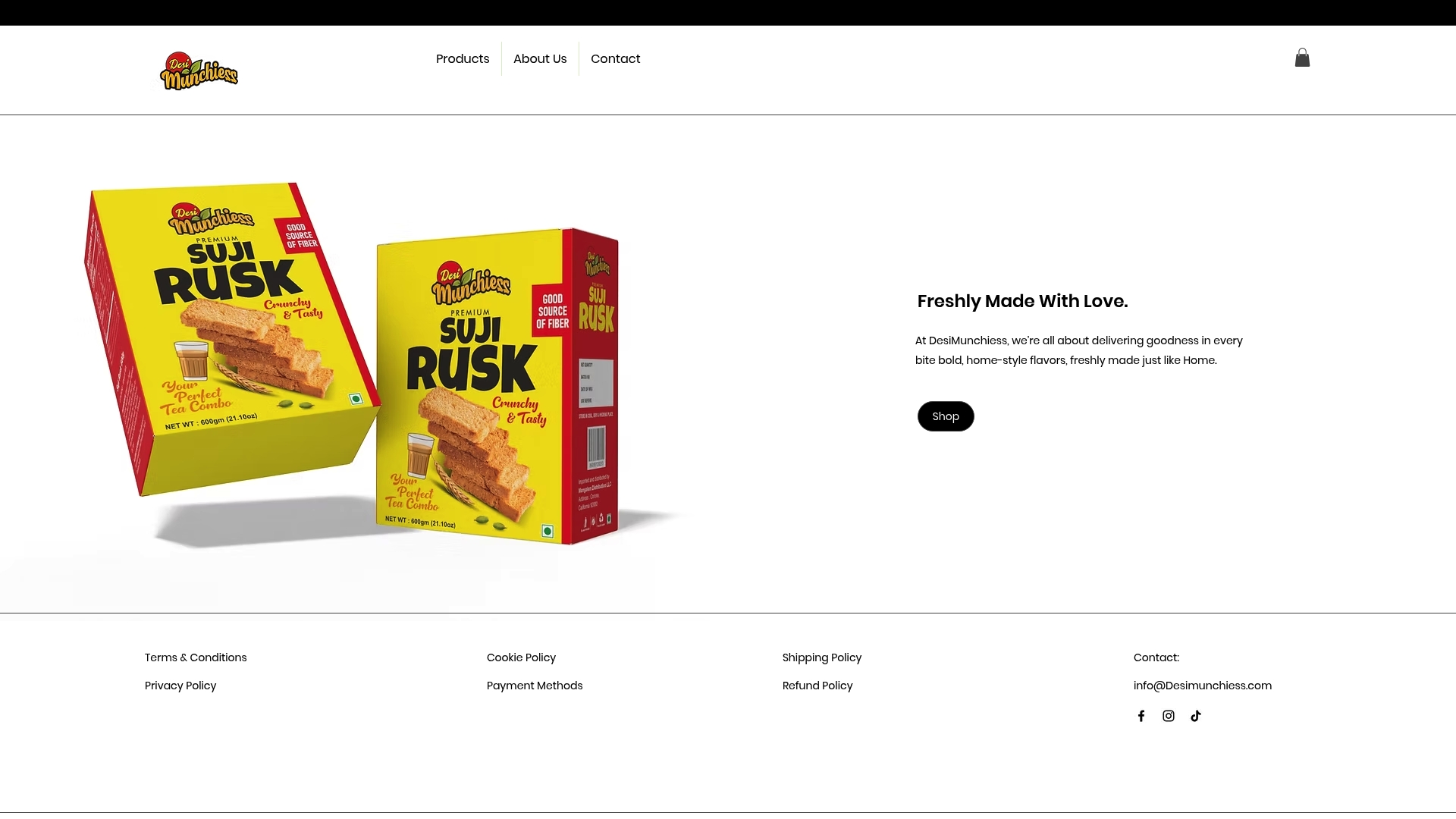
Head to the Desimunchiess suji rusk page to see package sizes, nutrition specifics, and ordering details, or browse the full Desimunchiess lineup if you’re curious about other homemade-style snacks made the same way. Order a batch and see what a proper handcrafted rusk tastes like next to your afternoon chai.
Sources
Recommended
Comments