
Tea Biscuit Calories: 30–360 Per Piece and U.S. Serving Sizes
- DesiMunchiess

- 11 minutes ago
- 6 min read
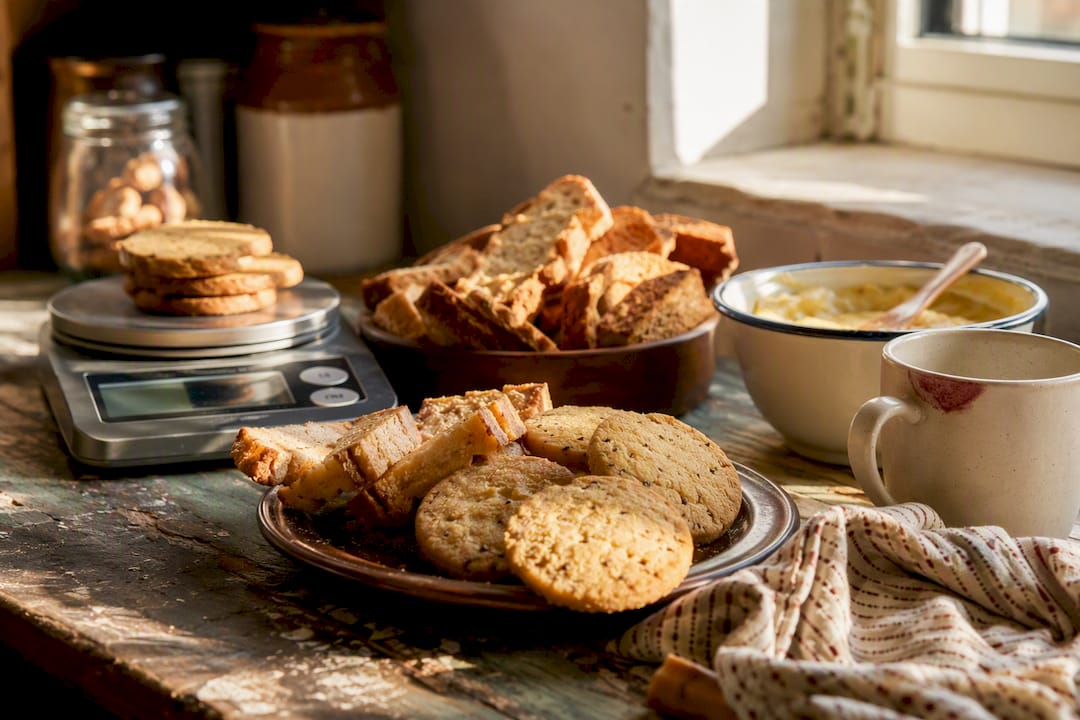
A plain tea biscuit or small rusk piece runs about 30 to 50 calories each, while a full bakery-style tea biscuit serving can land anywhere from 150 to 360 calories. The spread comes down to size, added butter or milk solids, and how the serving is portioned on the label. Keep reading for the exact numbers behind each type, plus how to read a package so you’re not guessing.
TL;DR:
Small plain rusks typically contain 30 to 40 calories each, while bakery-style tea biscuits can range from 150 to 360 calories per serving, depending on size and ingredients.
Calories vary significantly based on added fats, sugar, and portion size, with larger bakery biscuits and those with butter or milk solids being more calorie-dense.
Reading nutrition labels requires estimating actual portion sizes, often by weighing servings, since “a handful” rarely matches the listed serving weight.
Ingredient quality, especially the presence of butter, milk solids, or added sugar, accounts for most calorie differences between similar-looking biscuits.
Choosing simple, short-ingredient biscuits and portioning carefully helps manage calorie intake more effectively than relying solely on per-serving calorie counts.
Table of Contents
Tea Biscuit Calories: What The Numbers Actually Look Like
Here’s the honest answer: “tea biscuit” covers a lot of ground, from a dry, twice-baked rusk to a soft, buttery bakery roll, and calories per piece vary just as widely. A standard plain rusk or small tea-biscuit piece typically holds 30 to 40 calories, which is why two or three pieces with chai barely dent your day. Compare that to a packaged bakery item like Tim Hortons’ plain tea biscuit, listed at roughly 240 to 250 calories per serving, with about 9 grams of fat, 5 grams of protein, and 35 grams of carbs. That’s not a small snack anymore. It’s closer to a light meal.
Grocery bakery counters tell a similar story. Store-baked tea biscuits from chains like ShopRite report 240 to 360 calories per listed serving, and similar bakery servings from Giant Food Stores land in that same 240 to 360 range. Meanwhile, wheat-based rusk products commonly show 350 to 420 calories per 100 grams, which sounds high until you remember rusks weigh very little per piece.
Item type | Calories per piece | Calories per 100 g | Notes |
Plain rusk (small) | 30–40 kcal | ~350–420 kcal | Twice-baked, low moisture |
Milk rusk | 40–70 kcal | 350–420 kcal | Milk solids add fat and calories |
Suji (semolina) rusk | 30–50 kcal | 240–360 kcal | Slightly higher protein per piece |
Packaged bakery tea biscuit | 150–360 kcal | Varies by recipe | Serving size drives most of the swing |
A few things drive that variance every single time:
Butter or milk solids in the dough raise fat and calorie density fast.
Bigger, softer bakery biscuits pack more dough per piece than a dry rusk.
Added sugar glazes or fillings stack extra calories without adding size.
Brand recipes differ, so two “tea biscuits” from two shelves rarely match exactly.
How To Convert Package Numbers Into Real Portions
Reading a nutrition label is only half the job. You also need to translate “per serving” into “how many pieces am I actually eating,” because most of us underestimate that math.
Here’s a simple way to think about it, using the numbers we already know:
Check the serving size in grams on the package, not just the calorie count.
Divide total package weight by serving weight to find how many “official” servings are inside.
Weigh or count your actual portion against that serving size, since eating “a handful” rarely equals one serving.
Multiply the per-serving calories by how many servings you actually ate.
As a rough rule of thumb, one small plain rusk lands around 35 to 45 calories, so two small rusks with your evening tea run about 70 to 90 calories total. A full bakery-style tea biscuit serving, on the other hand, often reaches 200 to 360 calories on its own, closer to a slice of banana bread than a light bite.
Pro Tip: Weigh your first few servings on a kitchen scale instead of eyeballing piece counts. Rusks and biscuits vary so much in size within the same bag that “two pieces” can mean 60 calories or 140 calories depending on which two you grab.
Why Ingredients Change The Calorie Count So Much
Two biscuits can look nearly identical and still differ by 50% in calories, and the ingredient list explains why every time.
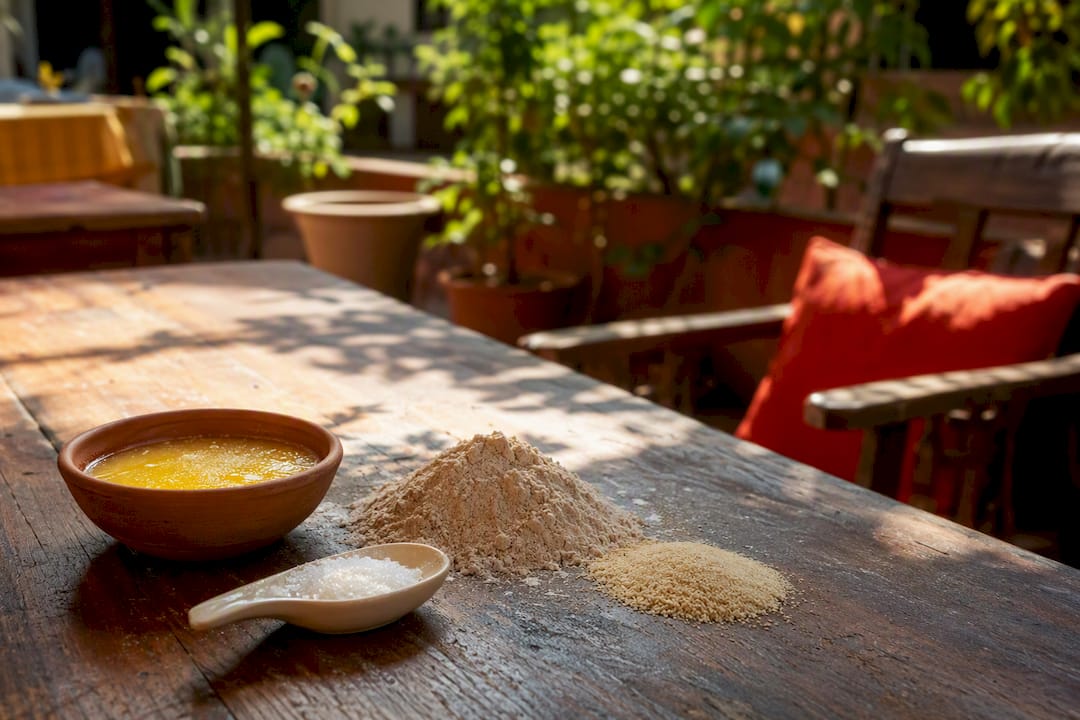
Butter, oil, milk solids, and added sugar are the biggest calorie drivers in any rusk or biscuit recipe. Flour, water, and leavening agents, by contrast, stay relatively neutral and keep the base calorie count low. This is exactly why the twice-baked process and recipe choice matter so much for nutrition: a wheat-flour rusk with minimal fat bakes up leaner than a milk rusk enriched with ghee or condensed milk.
Semolina, known as suji, changes the equation again. Suji rusks tend to have a coarser texture and slightly higher protein per piece compared with refined-wheat-only biscuits, which can make them more filling per calorie. Our suji rusk nutrition breakdown walks through exact macros if you want the specifics.
When you’re scanning an ingredient label, a few red flags matter more than others:
Ingredients are listed by weight, so if butter or sugar appears in the first three items, expect a denser calorie count.
“Milk” and “milk solids” are not the same. Milk solids concentrate fat and sugar and push calories higher.
Words like “invert syrup,” “glucose,” or multiple sugar names close together usually mean added sugar is doing heavy lifting.
A Quick Checklist For Choosing Lower-Calorie Biscuits
There’s no single lowest-calorie biscuit category that wins every time, but a short checklist gets you most of the way there:
Check calories per piece first, then confirm calories per 100 grams to catch misleading small servings.
Scan fat and added sugar grams. Anything over 5 grams of fat per small piece usually signals butter or milk solids up front.
Look for fiber or protein listed, since both improve satiety per calorie.
Favor short ingredient lists. Fewer additives usually means a simpler, more predictable calorie profile.
Swap a butter-heavy or milk-rich rusk for a plain or whole-wheat version when you’re watching intake, and pair whatever you choose with yogurt or fruit to round out the snack instead of reaching for a second or third piece — see helpful tips on nutritional therapy for selecting lower-calorie snack strategies.
Pro Tip: Small, plain pieces beat large, soft ones almost every time for satiety per calorie. A suji rusk’s slightly coarser bite also tends to slow you down, which naturally curbs how many pieces you eat in one sitting.
Our Take On Keeping Biscuits Simple
Desimunchiess builds every rusk and atta biscuit around traditional recipes and handcrafted batches, because we believe you shouldn’t need a chemistry degree to know what’s in your snack. We keep ingredient lists short on purpose. No hidden emulsifiers, no mystery fat blends, just wheat, semolina, and the basics done right at home-kitchen scale. If you want to keep a batch fresh longer, our guide on storing biscuits properly covers exactly that, and our product pages list nutrition specifics for anyone comparing numbers piece by piece.
What The Calorie Numbers Actually Tell You
The research here points to one clear conclusion: portion size, not biscuit type, does most of the damage. A plain rusk at 35 calories and a bakery tea biscuit at 300 calories aren’t really the same food category, even though both wear the same name, and treating them interchangeably is where most calorie counting goes wrong.
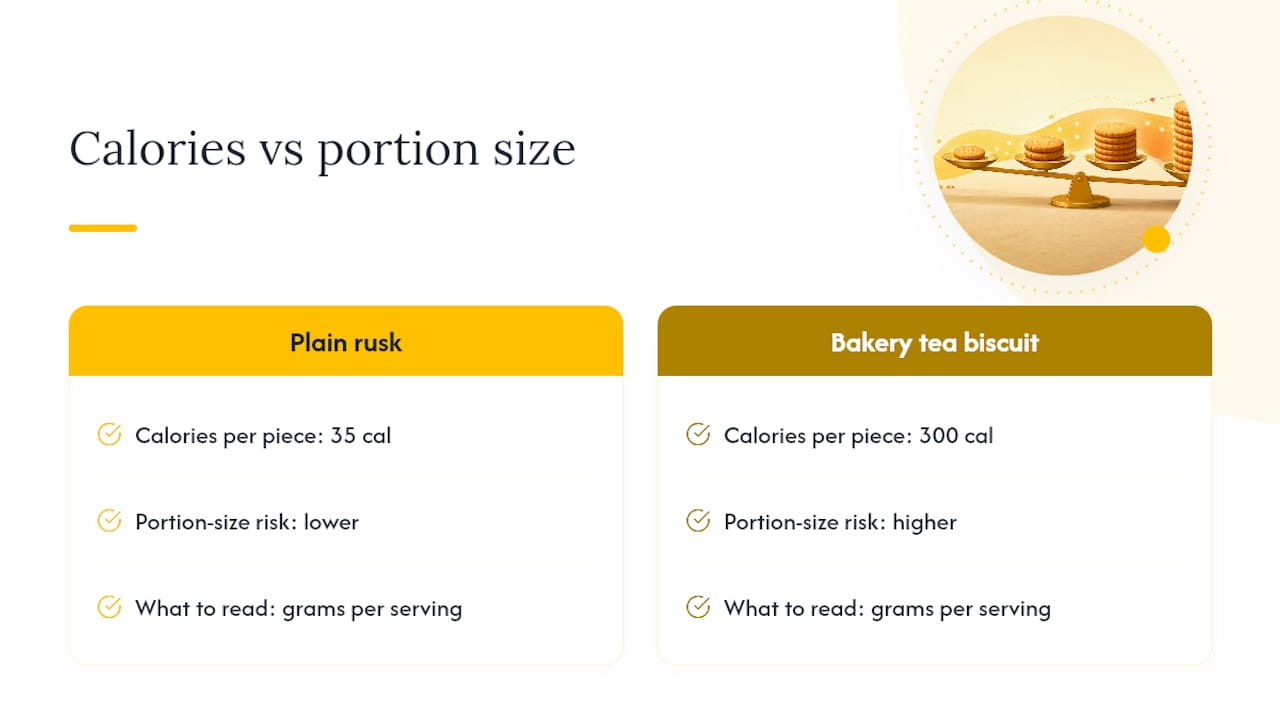
Conventional advice tends to stop at “check the label,” which is true but incomplete. The real skill is converting a serving size into the pieces you’ll actually eat, because that’s where most people lose track. Prioritize reading grams per serving over trusting a marketing-friendly calorie number on the front of the box.
If there’s one habit worth building first, it’s this: weigh a few servings early on so your eyes calibrate to real portions. After that, ingredient simplicity matters more than any single number on the label.
— Shivam
Try DesiMunchiess Atta Biscuits And Suji Rusk
Desimunchiess makes portion control easier because our atta biscuits and suji rusk variants use simple, homemade-style ingredients instead of long lists of fillers, so you always know roughly what you’re eating per piece.
We keep recipes close to what you’d make in your own kitchen: wheat flour, semolina, and just enough sweetness, without piling on milk solids or added fats to bulk up flavor. That means fewer surprises when you check the nutrition label. Take a look at our atta biscuits and see the exact calorie count per serving for yourself, then order a pack through Desimunchiess and taste the difference simple ingredients make. Always check the product label for exact calories per serving, since recipes and batch sizes can shift those numbers slightly.
Sources
Recommended
Comments