
Suji Rusk Nutrition: Calories, Macros & Portion Guide

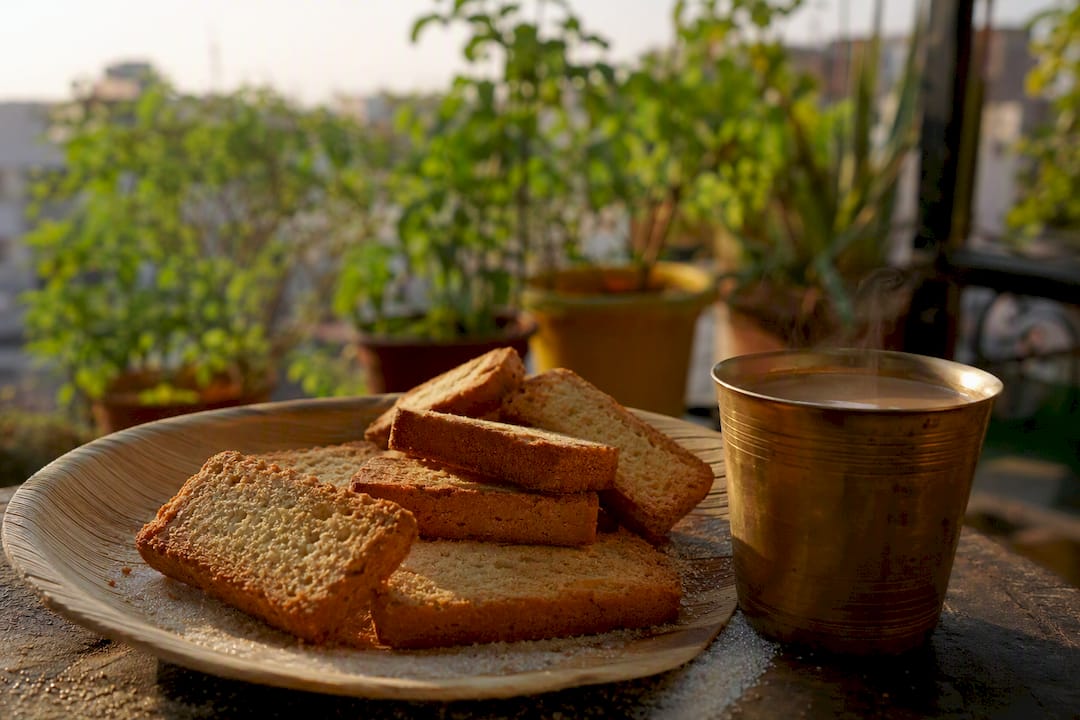
One piece of suji rusk (about 12 g) runs roughly 41 to 43 kcal, and per 100 g most brands land between 340 and 435 kcal. Carbs dominate the calorie count, usually 68 to 71% of total energy, with fat and protein filling in the rest.
Per piece: ~41 to 43 kcal
Per 100 g: ~340 to 435 kcal
Macro split: roughly 68 to 71% carbs, 20 to 22% fat, 9 to 10% protein
Suji rusk works best as an occasional snack, not a meal. Pair it with protein or fiber to slow digestion and keep you fuller longer.
Key Takeaways
Suji rusk delivers roughly 340 to 435 kcal per 100 g, driven mostly by carbohydrates, making portion size the single biggest factor in whether it fits your daily goals.
Point | Details |
Calories per piece | One piece (~12 g) runs about 41 to 43 kcal, so four pieces can exceed 160 kcal fast. |
Carb-heavy macro split | Carbs make up 68 to 71% of calories, with fat near 20% and protein under 10%. |
Sodium adds up | Some rusks carry close to 589 mg sodium per 100 g, worth watching against the WHO’s daily salt cap. |
Pair for satiety | Add yogurt, nut butter, or cheese to slow digestion and stay full longer. |
Choose semolina-forward brands | Desimunchiess Suji Rusk lists semolina as a primary ingredient, with the exact nutrition profile printed on the package. |
Table of Contents
Suji Rusk Nutrition Facts Per Serving and Per 100 g
Numbers vary a bit by brand, but the pattern holds steady: this is a carb-forward, low-moisture snack. We pulled the figures below from product labels and food databases so you can scale them to however many pieces you actually eat.
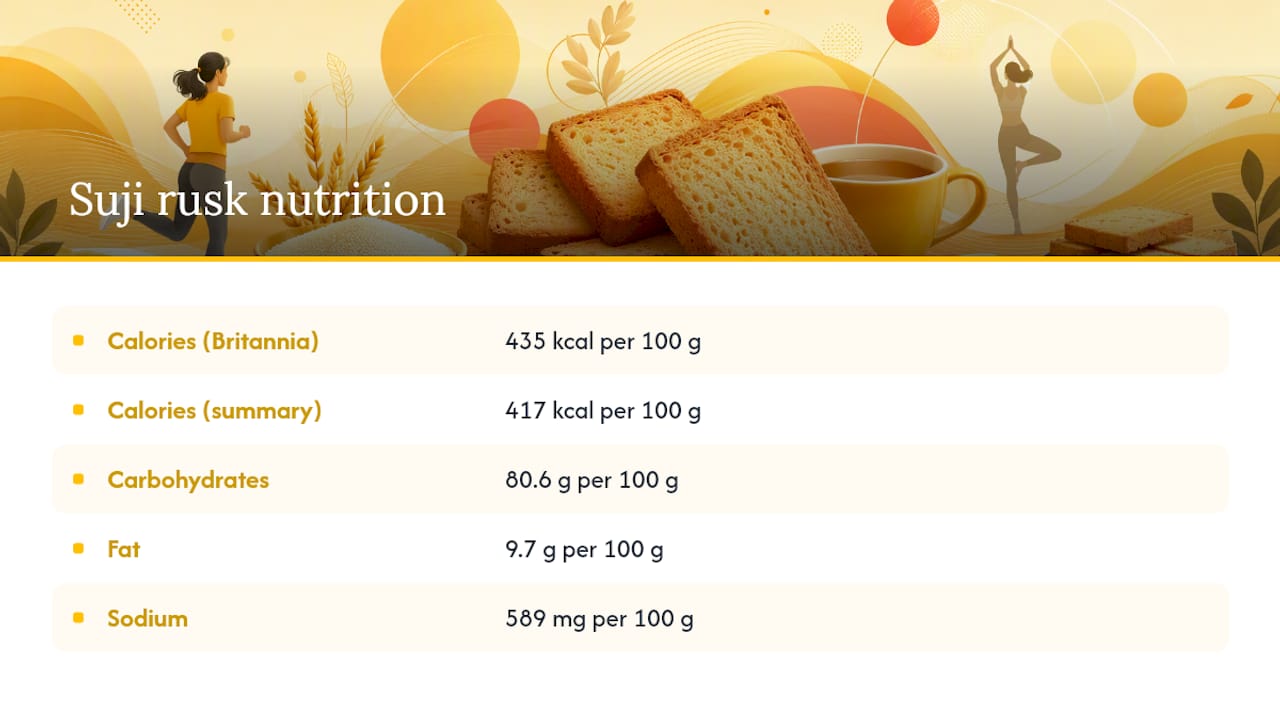
Two pieces (about 24 g) put you around 82 to 86 kcal, and four pieces (48 g) climb past 160 kcal fast, since rusk is dry and light by weight. A branded label entry from Britannia’s Toastea line reports 1822 kJ (about 435 kcal) per 100 g with 80.6 g carbs and 9.7 g fat, which sits at the higher end of what you’ll see across the category. A separate rusk composition summary lands closer to 417 kcal per 100 g with 589 mg sodium, a figure worth keeping in mind if you’re watching salt.
Pro Tip: Always check the package for the exact piece count per 100 g before you log calories. Some brands cut smaller, denser pieces that weigh more than they look.
What Do the Carbs, Fat, and Protein Actually Do?
Carbs give you quick energy, fat slows digestion and carries flavor, and protein builds and repairs tissue while keeping you satisfied longer. In suji rusk, carbs run the show, which is exactly why a few pieces alone won’t hold off hunger the way a protein-rich snack will.
Commercial suji rusks typically deliver 68 to 71% of calories from carbohydrates, with fat contributing 20 to 22% and protein trailing at just 9 to 10%, based on FatSecret’s breakdown of Britannia Suji Rusk. That’s a lopsided ratio. Compare it to a snack built for satiety, like Greek yogurt or roasted chana, and you’ll see rusk leans heavily toward fast-digesting carbs with almost nothing to slow the spike.
Carbs: quick fuel, but low fiber content means less staying power
Fat: adds texture and richness, roughly a fifth of total calories
Protein: the smallest piece of the puzzle, under 10% of calories
Pro Tip: Add a spoon of nut butter or a boiled egg alongside your rusk. It flattens the blood sugar curve and makes the snack actually last until your next meal.
Ingredients and Allergens to Check on the Label
Most suji rusks start with semolina (suji), then add refined wheat flour (maida), sugar, oil or butter, and sometimes milk solids for softness. The ratio between semolina and maida changes the nutrition more than people expect. Watch for these on the label:
Wheat and gluten: present in nearly every rusk, since semolina itself is wheat-based
Milk: common in butter-enriched or “milk rusk” varieties
Added sugar: check where it falls in the ingredient list, since order reflects quantity
Oil or butter type: affects saturated fat content more than people realize
If semolina isn’t listed first, you’re mostly eating refined flour with a semolina accent, not a semolina-forward snack.
How Suji Rusk Stacks Up Against Bread
By weight, rusk almost always beats bread on calorie density, and the reason comes down to moisture. Bread holds water; rusk is baked twice and dried out, which concentrates both sugar and calories into a smaller, crunchier package.
Rusk: often around 407 kcal per 100 g or higher, sometimes reaching 435 kcal
Bread: typically well under 300 kcal per 100 g, depending on the loaf
Dehydration during the double-bake process concentrates sugar per gram, not just calories
Whole-wheat or homemade rusk usually closes that gap, since you control the sugar and can add bran or oats for extra fiber.
Is Suji Rusk Actually Healthy?
It depends entirely on how much you eat and how often. One or two pieces alongside tea is a reasonable snack. A stack of five or six, eaten as a meal substitute, is closer to eating dessert.
Is it healthy? In moderation, yes. It’s not nutrient-dense, but it’s not junk either.
Calories in one piece? Roughly 41 to 43 kcal, per Eat This Much’s nutrition data.
Good for weight loss? Fine in small portions, but the low fiber and protein mean it won’t keep you full, so pair it or skip a second helping.
Sodium is the sleeper issue. Some rusk products carry close to 589 mg sodium per 100 g, and the World Health Organization recommends capping salt intake at under 5 g per day for heart health. A few pieces won’t break that budget, but a full sleeve during one tea break might eat up a meaningful chunk of it.
Portion Control and Smarter Pairings
Stick to one or two pieces if you’re eating rusk plain, or bump up to three or four when you’re pairing it with protein or fat that slows things down. Four or more pieces eaten alone, with nothing to balance the carbs, is where the snack starts working against you.
Higher-satiety pairings: Greek yogurt with cinnamon, a smear of nut butter with banana slices, or a slice of low-sugar cheese
Lower-calorie swap: whole-wheat rusk or a baked snack instead of a fried one cuts fat without losing the crunch
Homemade adjustment: cut added sugar by a third and swap butter for a lighter oil to bring both sugar and fat down
Pro Tip: If you’re baking rusk at home, reduce the sugar gradually across a few batches instead of all at once. Your taste buds adjust faster than you’d think, and you’ll barely notice the difference by the third try.
How to Double-Check the Nutrition Numbers Yourself
Find the serving size on the package, in grams, and note how many pieces that equals.
Compare the calories and macros listed per 100 g against the per-serving numbers so you’re not comparing mismatched portions.
If the label is missing details, cross-check with a database like OpenFoodFacts, which pulls real label scans from branded products.
When the label and a database disagree, trust the label. It reflects that specific batch and recipe.
DesiMunchiess Suji Rusk: What’s Actually In It
We make our suji rusk the way it’s meant to be made: semolina up front, simple ingredients, nothing hiding behind a long label. Here’s what to expect and what to check for yourself:
Made fresh in small batches, not mass-produced on a factory line
Semolina listed as a primary ingredient, not buried behind refined flour
Lightly sweetened, without the heavy sugar load some packaged brands carry
Expect a calorie range in line with standard suji rusk, generally in the 340 to 420 kcal per 100 g range, though we recommend checking the product label for exact serving numbers
Snack choices matter more when you know what’s actually in the box, and that’s the whole point of reading past the marketing.
What Actually Matters When You Eat Rusk
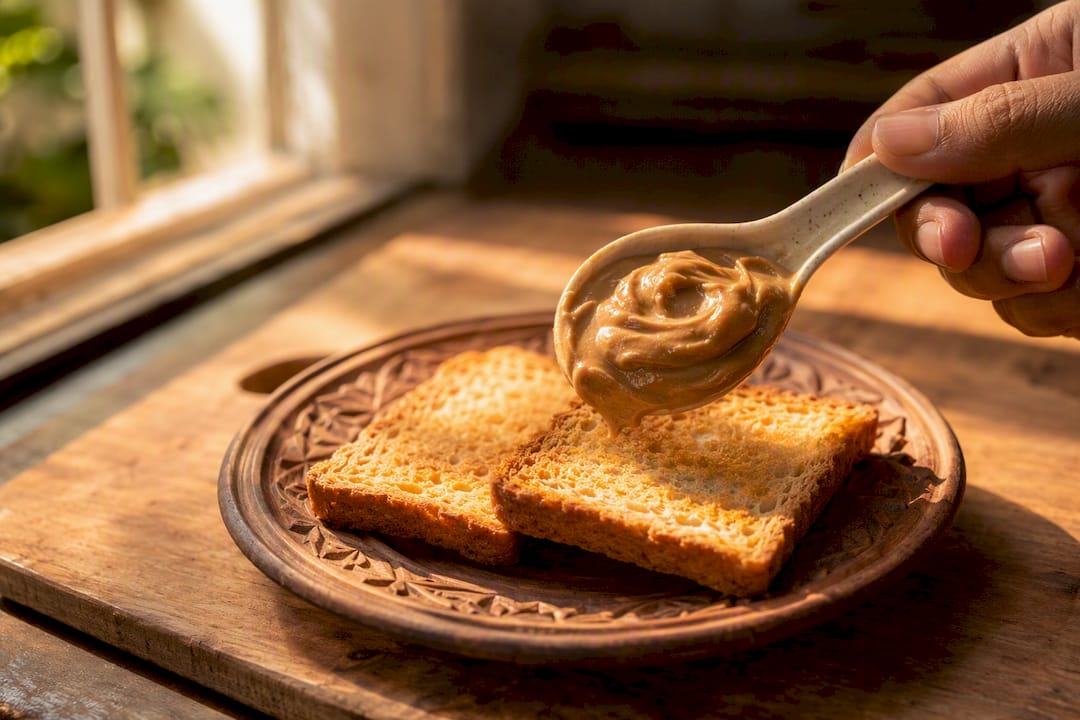
I’d rather see someone eat two pieces of rusk with a spoon of peanut butter than four pieces plain, chasing a feeling of fullness that never arrives. Favor whole-wheat or homemade versions when you can, since you control the sugar. Snack choices like this one come up often in our work here at Desimunchiess, and the pattern never really changes.
Get Your Suji Rusk Fix, the Homemade Way
Reading nutrition labels is smart, but so is knowing exactly who made your snack and how. Desimunchiess bakes suji rusk in small batches with semolina up front, not buried behind fillers, so what you read on the label actually matches what’s in your hand.
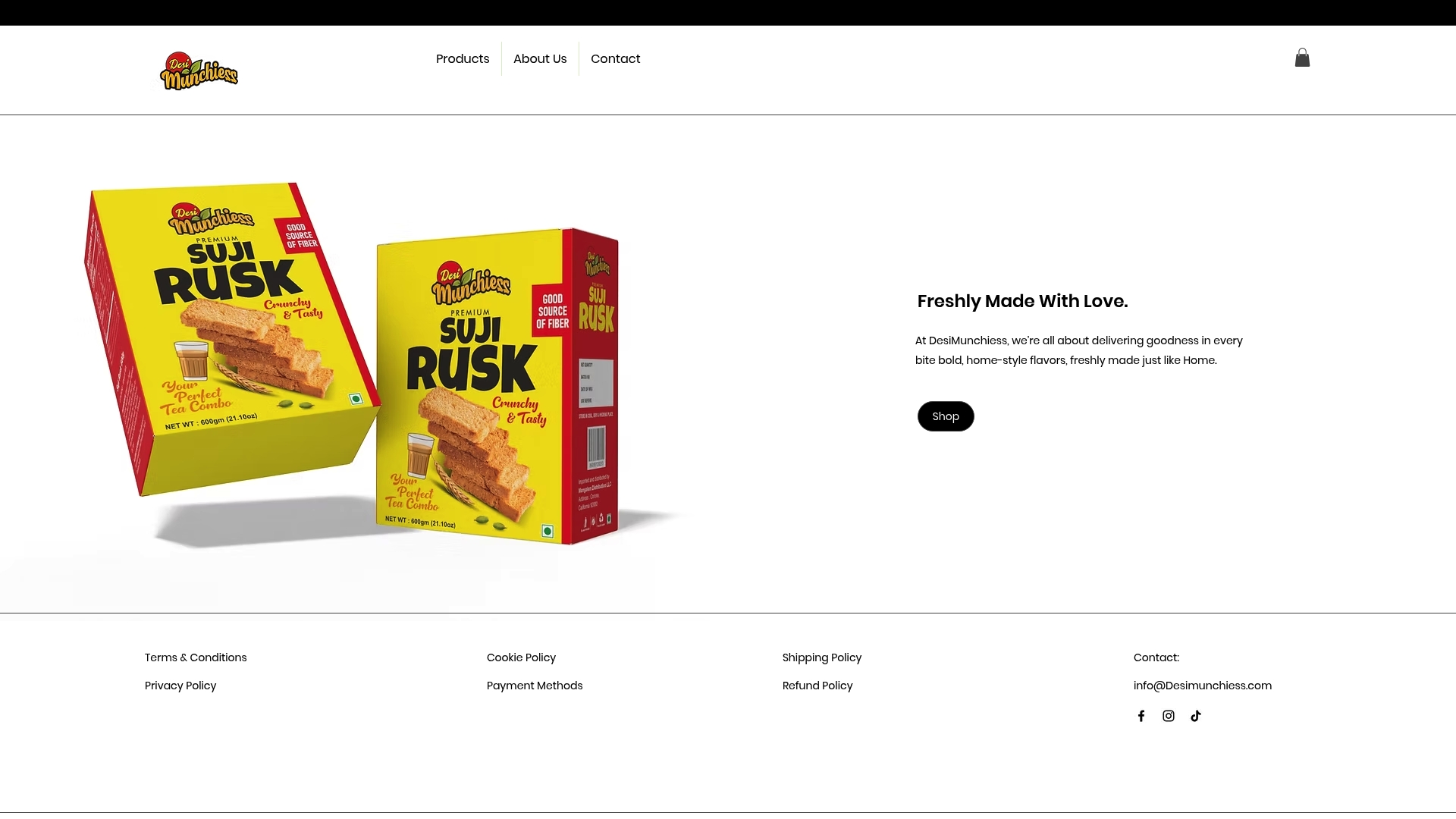
If you’ve been comparing calorie counts across three different brands trying to find one that doesn’t cut corners, that search ends here. Check the Suji Rusk 600g page for the full ingredient list and exact serving size before you order, and if savory is more your afternoon craving, the Tikoni Mathi makes a solid rotation partner. Head to Desimunchiess to place your order today.
Frequently Asked Questions
Is suji rusk healthy? In moderate portions, yes. It’s a carb-forward snack with little fiber or protein, so it works best alongside a protein source rather than as a standalone meal.
How many calories are in one piece of suji rusk? Roughly 41 to 43 kcal per piece, depending on the brand and piece weight, based on figures from Eat This Much and FatSecret.
Can I eat suji rusk while trying to lose weight? Small portions, one or two pieces paired with protein or fiber, fit into most calorie budgets. Eating four or more pieces alone tends to leave you hungry again quickly.
Is suji rusk made from semolina or wheat flour? Both, usually. Semolina (suji) is the base, but many commercial rusks blend in refined wheat flour (maida). Check the ingredient list to see which one appears first.
How does suji rusk compare to bread in calories? Rusk is typically denser in calories than bread by weight, often exceeding 400 kcal per 100 g versus well under 300 kcal for most bread, since the drying process concentrates calories.
Sources
Recommended
Comments