
Why Homemade Snacks Are Safer for Children

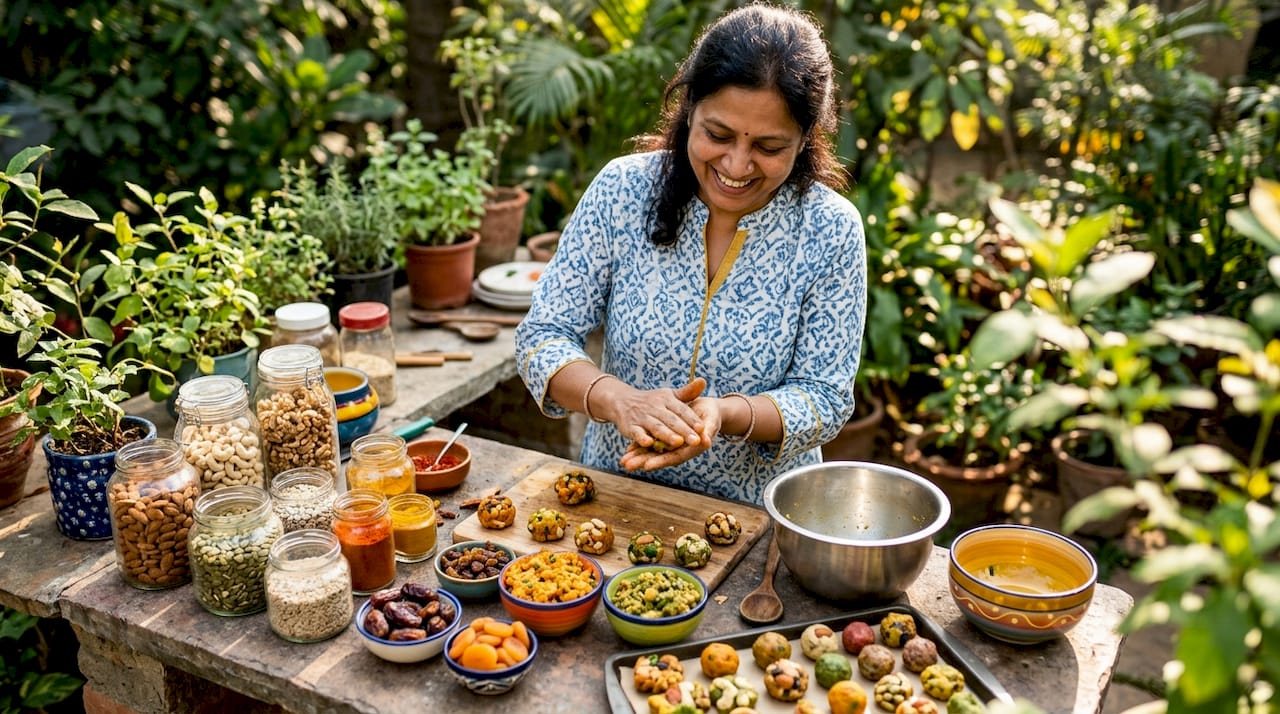
Homemade snacks are safer for children because parents control every ingredient, cutting out the harmful additives and excess sugars that fill most packaged options. The term “minimally processed food” is the standard nutritional science term for what most of us call homemade snacks. A 2019 NIH trial found that an ultra-processed diet caused participants to consume 508 extra calories daily and gain an average of 0.9 kg in just two weeks. That number tells you something real: what goes into a snack matters as much as the snack itself. When you make food at home, you decide what stays in and what stays out.
Why are homemade snacks safer for children than packaged ones?
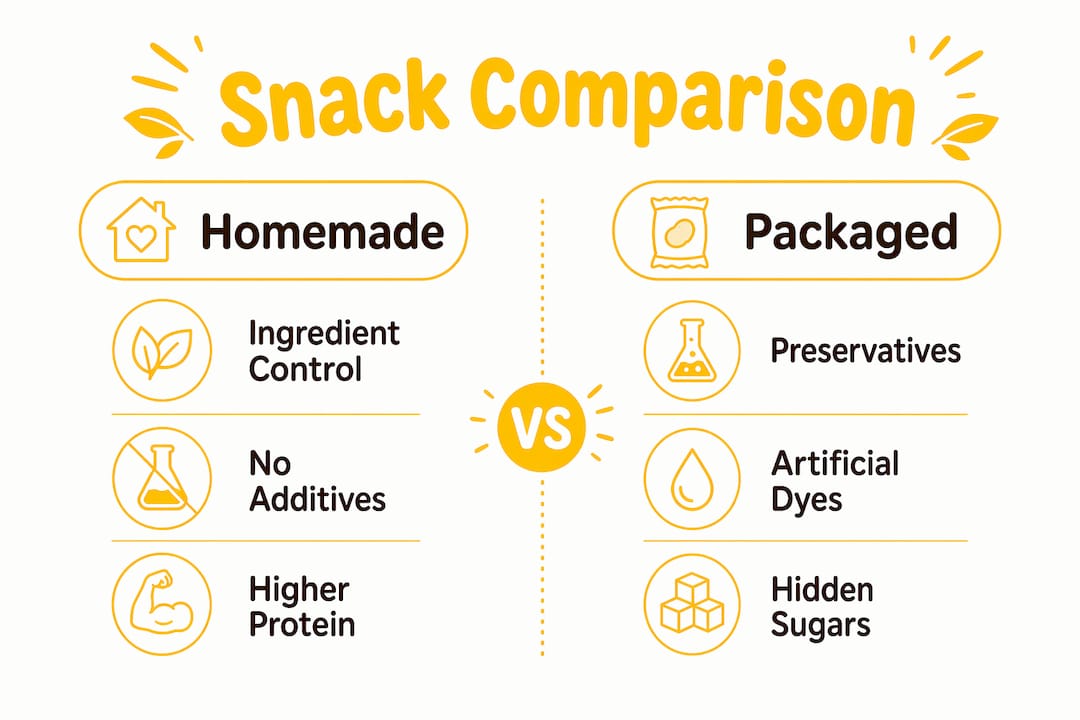
The core reason homemade snacks are safer comes down to one word: control. Packaged snacks are built for shelf life and flavor appeal, not for your child’s health. That means manufacturers reach for additives, dyes, and preservatives that keep products looking and tasting good for months. None of those ingredients benefit your child.
Additives like Red 40, Yellow 5/6, Blue 1, BHA, BHT, and titanium dioxide are linked to behavioral issues and metabolic concerns in children. These substances add zero nutritional value. They exist to make food look brighter or last longer on a store shelf. When you prepare snacks at home, none of these enter the picture.
Marketing on packaged snacks makes this worse. Labels that say “natural flavors” or “made with real fruit” can still hide artificial dyes, excess sugar, and unhealthy oils. This is greenwashing, and it is common across the snack industry. The ingredient list, not the front of the package, tells the real story.
Here are the additives most worth avoiding in your child’s snacks:
Red 40, Yellow 5, Yellow 6 — artificial dyes linked to hyperactivity and behavioral changes in children
Blue 1 — a synthetic dye with no nutritional purpose
BHA and BHT — petroleum-derived preservatives used to extend shelf life
Titanium dioxide — a whitening agent flagged for potential cellular damage
Pro Tip: Flip every packaged snack over and read the ingredient list before the nutrition label. If you cannot pronounce three or more ingredients, put it back.
How does making snacks at home improve nutrition?
Homemade preparation gives you direct control over protein, fiber, sugar, and sodium. That control produces snacks with a nutritional profile that packaged products rarely match. Whole food snacks like fresh fruit, vegetables with hummus, or plain yogurt provide volume and fiber that reduce hunger far better than processed snacks packing 150–200 calories into tiny servings.
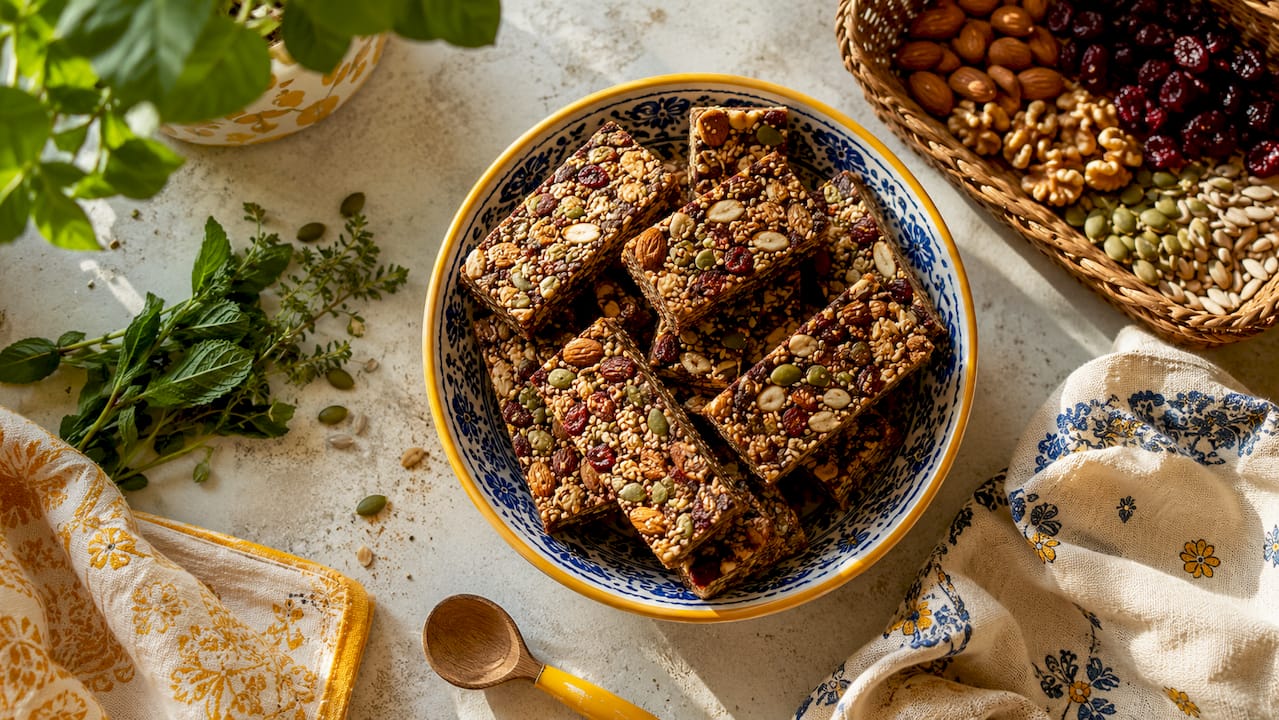
Protein is especially important for children’s snacks. Snacks with 5–10 grams of protein help maintain satiety and keep blood sugar stable between meals. A half-cup of low-fat cottage cheese delivers approximately 12–14 grams of protein. That is a snack that actually holds a child over until dinner, unlike a bag of crackers that disappears in three minutes and leaves them hungry again.
The table below shows how homemade snacks stack up against common packaged alternatives:
Snack | Protein | Added Sugar | Artificial Additives |
Homemade oat energy balls | 5–7g | None (sweetened with dates) | None |
Packaged granola bar | 2–3g | 10–14g | Often includes artificial flavors |
Cottage cheese with fruit | 12–14g | None | None |
Fruit-flavored snack pouch | 0–1g | 12–18g | May include Red 40, Yellow 5 |
Homemade veggie muffins | 4–6g | Minimal | None |
Packaged cheese crackers | 2–3g | 2–4g | BHT, artificial flavors common |
Batch cooking snacks at home also eliminates hidden sodium and saturated fats that manufacturers add for taste. A homemade trail mix with raw nuts, seeds, and dried fruit contains exactly what you put in it. The store-bought version often adds salt, sugar coating, and oil to boost flavor at the cost of your child’s health.
Pro Tip: Prepare snack portions in small containers on Sunday evening. Having ready-to-grab homemade options prevents last-minute packaged snack choices during the week.
What are the practical benefits of homemade snacks for families?
Beyond nutrition, homemade snacks offer real practical advantages that make them worth the effort. Cost is one of the biggest. Buying ingredients in bulk and preparing snacks yourself consistently costs less than purchasing premium packaged options. A bag of oats, a jar of nut butter, and some honey makes dozens of energy balls for a fraction of the price of a box of store-bought bars.
Customization is another major win. Children with peanut allergies, gluten sensitivities, or dairy intolerances face real risks from packaged snacks due to cross-contamination and hidden allergens. When you make snacks at home, you control allergen exposure completely. No guessing. No label anxiety. No emergency.
Here are four practical reasons families benefit from making snacks at home:
Cost savings — bulk ingredients like oats, nuts, and dried fruit cost far less per serving than packaged snack products
Allergen control — you exclude specific ingredients entirely, protecting children with food sensitivities
Portion management — you decide serving sizes, avoiding the oversized portions common in packaged snacks
Habit building — children who help make their snacks are more likely to eat them and develop appreciation for whole foods
Involving kids in snack preparation also builds a healthy relationship with food. A child who helps roll energy balls or mix yogurt parfaits is learning where food comes from and why ingredients matter. That lesson sticks. For more ideas on preservative-free snack options, there are plenty of simple recipes that work for busy families.
Pro Tip: Start with three or four go-to homemade snack recipes and rotate them weekly. Simplicity beats variety when you are building a new habit.
Can homemade snacks fully replace packaged snacks?
The honest answer is: not always, and that is fine. Experts recommend balance rather than perfection. Packaged snacks serve a real purpose during travel, school events, or busy childcare days when homemade options are not practical. The goal is not to eliminate packaged snacks entirely. The goal is to make homemade snacks the default and use packaged ones as a backup.
When you do reach for packaged options, ingredient screening matters. Look for products with short ingredient lists made of recognizable whole foods. Avoid anything with artificial dyes, added sugars in the first three ingredients, or preservatives like BHA and BHT. A packaged snack with five recognizable ingredients is a very different product from one with fifteen chemical names. For guidance on healthier packaged alternatives, the key is always the ingredient list.
Factor | Homemade Snacks | Packaged Snacks |
Ingredient control | Complete | None |
Additive exposure | None | Common |
Cost per serving | Lower | Higher |
Convenience | Requires prep time | Grab-and-go |
Allergen safety | Fully customizable | Risk of cross-contamination |
Nutritional quality | High | Varies widely |
Shelf life | Short | Long |
The practical approach is to prepare homemade snacks for most of the week and keep one or two carefully screened packaged options on hand for emergencies. That balance is realistic for most families and still delivers the majority of the safety and nutritional benefits that homemade preparation provides.
Key takeaways
Homemade snacks are safer for children because they eliminate harmful additives, deliver superior nutrition, and give parents complete control over every ingredient their child consumes.
Point | Details |
Additive avoidance | Homemade snacks contain no Red 40, BHA, BHT, or titanium dioxide that are common in packaged products. |
Better nutrition | Home-prepared options deliver more protein and fiber, supporting satiety and stable blood sugar in children. |
Allergen control | Parents can fully exclude allergens, removing cross-contamination risks present in packaged snacks. |
Cost advantage | Bulk ingredient preparation costs significantly less per serving than premium packaged snack products. |
Balanced approach | Experts support using carefully screened packaged snacks as occasional backups, not daily staples. |
Why i think ingredient control is the real win here
I have spent a lot of time thinking about what actually separates a good snack from a harmful one. The answer is almost never the macros on the nutrition label. It is the ingredient list that most parents never read.
The thing that surprises people is how little it takes to make a genuinely good snack at home. A handful of raw nuts, a piece of fruit, or a small bowl of plain yogurt with honey beats almost every packaged option on the market. The barrier is not skill. It is habit.
Where I see parents go wrong is trying to recreate packaged snack flavors at home. That sets you up for frustration. The better move is to start with whole foods that need almost no preparation. Sliced apple with almond butter. Cheese cubes with cucumber. Hard-boiled eggs. These are not complicated. They are just good.
The long-term payoff is real. Children who grow up eating whole food snacks develop a palate for real flavors. They are less drawn to the artificial sweetness of processed products. That shift does not happen overnight, but it does happen. Start simple. Stay consistent. The habits you build now shape how your child eats for decades.
— Shivam
Explore wholesome snacks from Desimunchiess
We get it. Life is busy, and making every snack from scratch is not always possible. That is exactly why Desimunchiess was built. We make freshly prepared, bold-flavored snacks using traditional recipes and quality ingredients, so you get the goodness of home cooking without the prep time.
Every product we make skips the artificial dyes, unnecessary preservatives, and hidden sugars that fill most packaged snacks. From our Tikoni Mathi to our Priniti Tasty Nuts, each bite is made with care and real ingredients your family can trust. Browse our full range of Indian snacks online and find snacks that actually belong in your home.
FAQ
What makes homemade snacks safer than packaged ones?
Homemade snacks contain no artificial dyes, preservatives like BHA or BHT, or hidden sugars that are common in packaged products. Parents control every ingredient, removing the additives linked to behavioral and metabolic concerns in children.
Are homemade snacks actually healthier for kids?
Yes. Minimally processed snacks provide more fiber, protein, and volume per calorie than ultra-processed alternatives, supporting better satiety and blood sugar stability in children.
How do i screen packaged snacks when homemade is not an option?
Look for short ingredient lists with recognizable whole food ingredients and avoid products listing artificial dyes, added sugars in the first three ingredients, or petroleum-derived preservatives. A short ingredient list without artificial additives is the clearest sign of a safer packaged option.
Can homemade snacks help children with food allergies?
Homemade preparation gives parents complete allergen control, eliminating cross-contamination risks that are common in packaged snacks produced in shared facilities.
Are homemade snacks more affordable than store-bought options?
Yes. Batch preparation using bulk ingredients like oats, nuts, and dried fruit costs significantly less per serving than premium packaged snack products while delivering better nutritional quality.
Recommended
Comments