
Better-for-You Snack Alternatives That Actually Satisfy
- DesiMunchiess

- Jun 11
- 8 min read
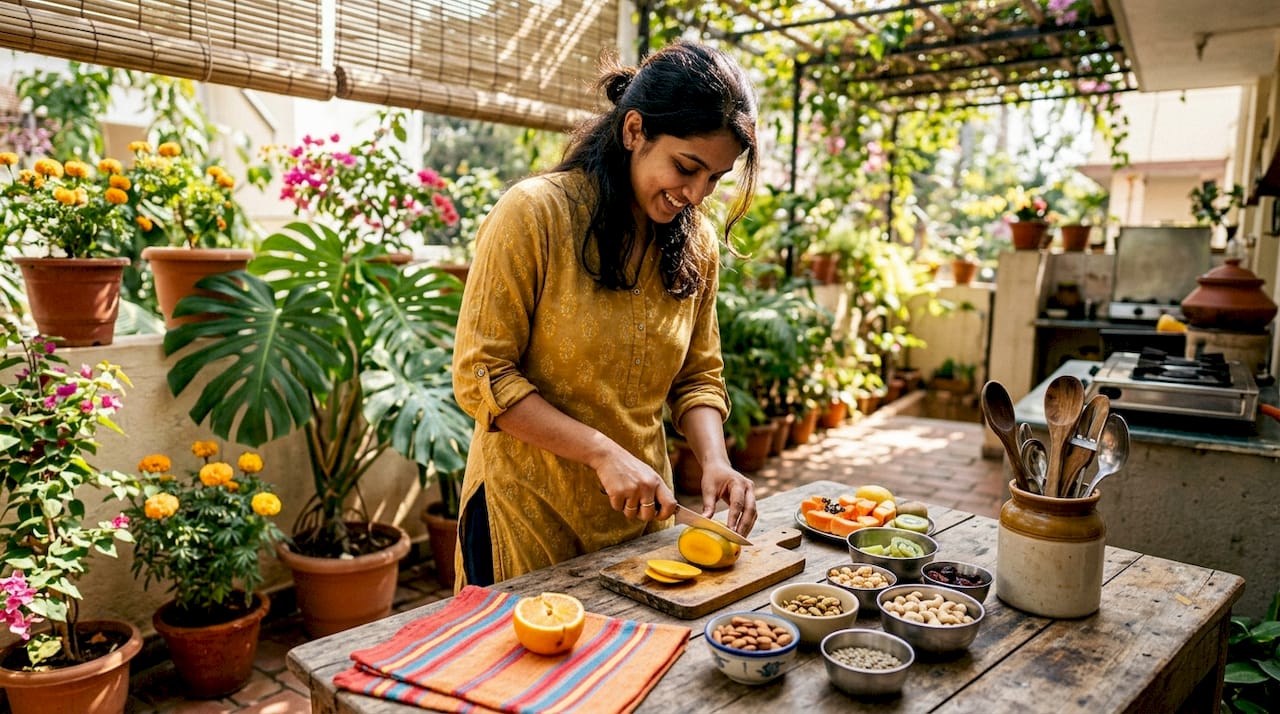
Better-for-you snacks are defined as minimally processed whole foods low in added sugars, sodium, and saturated fat that combine protein, fiber, and healthy fats to keep you full between meals. The industry term for this category is “nutrient-dense snacking,” and it covers everything from a handful of almonds to hummus with sliced vegetables. Organizations like the American Heart Association, Cleveland Clinic, and Health Canada all point to the same core principle: what are better for you snack alternatives comes down to ingredient quality and nutritional balance, not just calorie count. We at Desimunchiess believe great snacking should feel like a treat, not a compromise.
What nutritional criteria define better-for-you snack alternatives?
The foundation of a genuinely healthy snack is its macronutrient balance. Protein, fiber, and healthy fats work together to slow digestion, stabilize blood sugar, and reduce the urge to reach for another handful twenty minutes later. A snack built around only refined carbohydrates, like a standard bag of chips or a plain rice cake, spikes blood sugar fast and leaves you hungry again quickly.
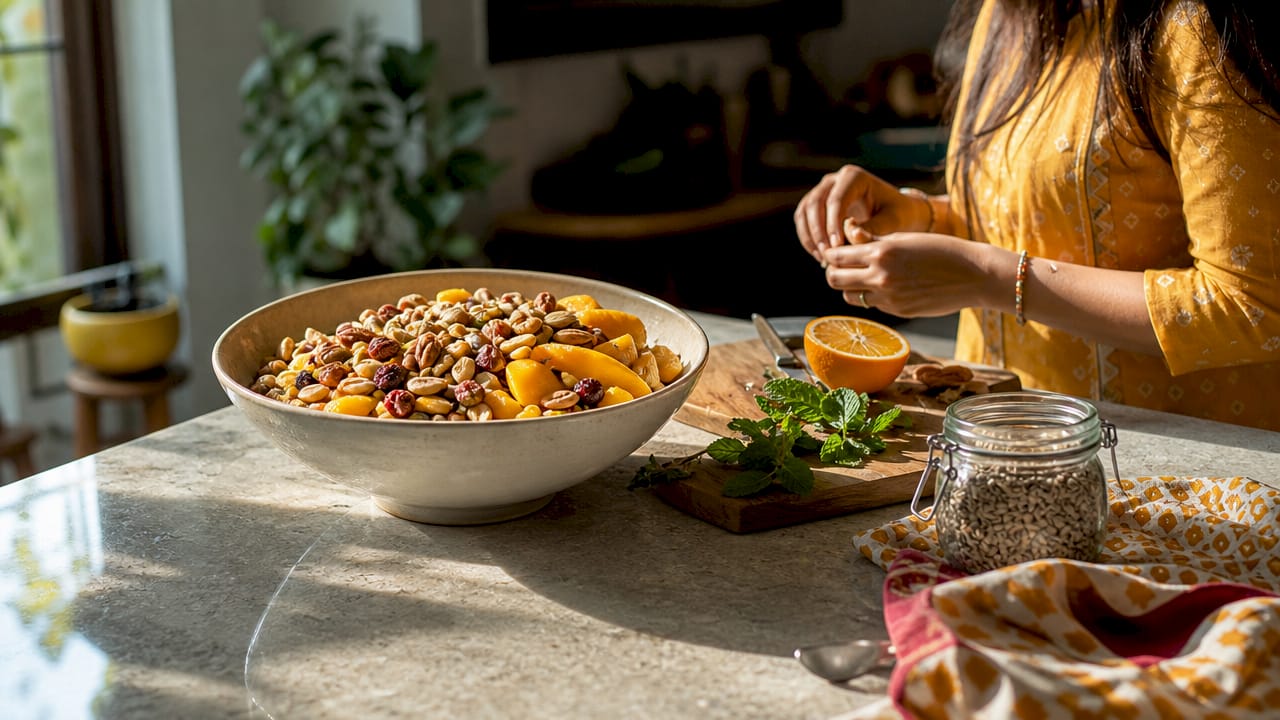
Health Canada’s guidance on healthier snack options focuses on limiting three specific nutrients: added sugars, sodium, and saturated fat. Reading a nutrition label with those three numbers in mind takes about ten seconds and immediately separates a genuinely nutritious snack from one dressed up in health-food packaging. Many products marketed as “natural” or “organic” still carry high sodium or added sugar loads.
The American Heart Association reinforces this by endorsing minimally processed foods as the backbone of heart-healthy eating, with explicit guidance to minimize added sugars and sodium. This matters for snacking specifically because snacks are often where added sugars and sodium quietly accumulate throughout the day, even when main meals are clean.
Here is what to look for on any snack label:
Protein: At least 3 to 5 grams per serving to support satiety
Fiber: 2 or more grams per serving to slow digestion
Healthy fats: Unsaturated fats from nuts, seeds, or avocado rather than saturated or trans fats
Added sugars: As close to zero as possible, or under 5 grams per serving
Sodium: Under 200 milligrams per serving for most packaged snacks
Pro Tip: Flip the package over before you read the front. Front-of-package claims like “multigrain” or “reduced fat” are marketing. The nutrition facts panel and ingredient list tell the real story.
How do popular better-for-you snacks compare in nutrition and convenience?
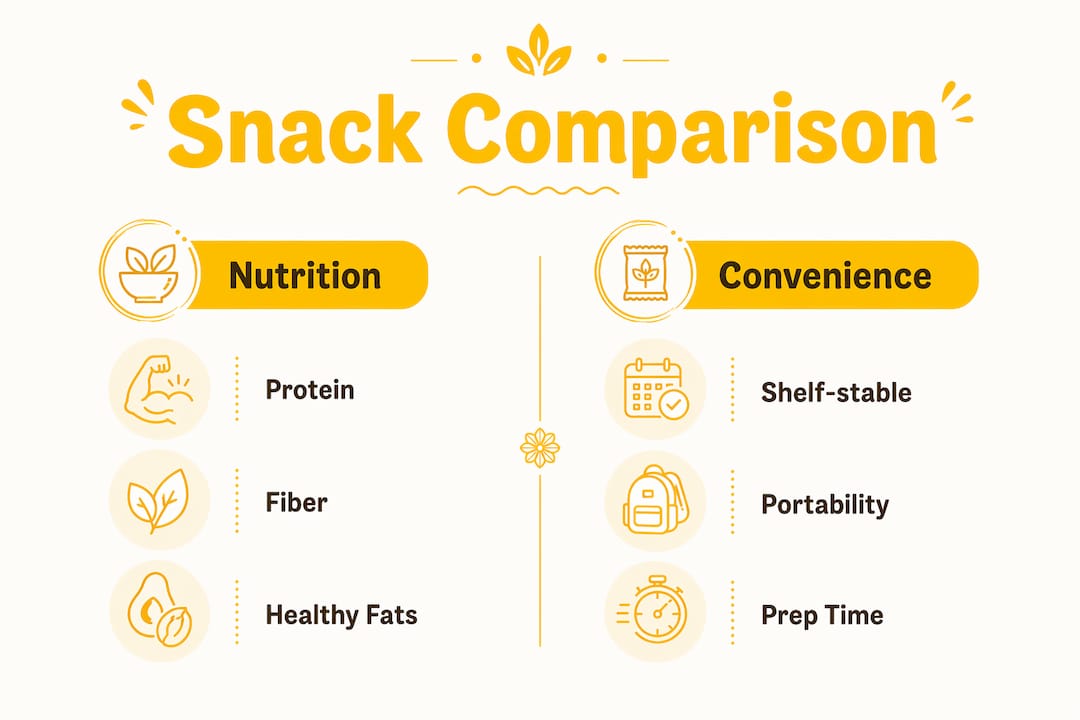
Not all nutritious snack ideas are created equal when it comes to convenience, taste, and family appeal. The table below compares seven commonly recommended options across the criteria that matter most for real-life snacking.
Snack | Serving Size | Calories | Protein | Fiber | Convenience |
Almonds | 1 oz (23 nuts) | ~160 | 6g | 3.5g | Shelf-stable, portable |
Plain Greek yogurt | 3/4 cup | ~100 | 17g | 0g | Refrigerated |
Air-popped popcorn | 3 cups | ~90 | 3g | ~4g | Shelf-stable |
Hummus with veggies | 2 tbsp hummus | ~50 | 2g | 1g | Refrigerated, prep needed |
Apple with nut butter | 1 medium + 2 tbsp | ~250 | 4g | 5g | Portable with prep |
Roasted chickpeas | 1/2 cup | ~130 | 7g | 6g | Shelf-stable |
Dark chocolate with almonds | 1 square + 6 nuts | ~120 | 3g | 2g | Shelf-stable |
The Cleveland Clinic highlights that 2 tablespoons of natural peanut butter keeps calories under 250 while delivering protein and healthy fat. That combination is exactly what makes nut-based snacks so effective for hunger control. Roasted chickpeas are a standout for families because they are crunchy, savory, and shelf-stable, which means they travel well in a lunchbox or gym bag.
A few less obvious but highly effective options deserve attention:
Homemade trail mix with raw nuts, seeds, and a small amount of dark chocolate chips gives you control over sugar and sodium content that store-bought versions rarely offer.
Edamame (frozen and microwaved) delivers 8 grams of protein per half-cup serving and takes three minutes to prepare.
Cottage cheese with fruit combines casein protein with natural sweetness, making it one of the most filling low-calorie snacks available.
The shelf-stable versus refrigerated distinction matters more than most people realize. Shelf-stable snacks like almonds, traditional Indian snack varieties, and roasted chickpeas are genuinely grab-and-go. Refrigerated options like yogurt and hummus require planning, a cooler bag, or access to a fridge at work or school.
What practical tips help you select, prepare, and portion healthy snacks?
Knowing which snacks are nutritious is only half the equation. The other half is having them ready when hunger hits, because that is the moment most people default to whatever is closest and easiest.
Here is a practical weekly prep routine that works for individuals and families:
Pre-cut vegetables on Sunday. Carrots, celery, bell peppers, and cucumber slices stored in water in the fridge stay crisp for five days. Pair them with individual hummus cups for a ready-to-grab option.
Hard-boil a batch of eggs. Six eggs take twelve minutes and provide a week’s worth of high-protein snacks at roughly 70 calories each.
Pre-portion trail mix into small containers. Measure out one-ounce servings rather than eating from the bag. Portion distortion is one of the most common reasons people overeat even genuinely healthy snacks.
Stock your freezer with edamame. A bag costs under three dollars and delivers multiple high-protein servings with zero prep beyond microwaving.
Keep a fruit bowl visible. Placement matters. Apples, bananas, and oranges on the counter get eaten. The same fruit in a drawer gets forgotten.
Health Canada recommends keeping lower-fat yogurt and cheese in cooler bags for portability, which is a practical solution for school lunches and long commutes. For sweet cravings specifically, measuring 2 tablespoons of natural peanut butter rather than eyeballing the serving is a reliable way to satisfy the craving without overshooting calories.
Pro Tip: Use a muffin tin to pre-portion snacks for the week. Fill each cup with nuts, dried fruit, or a mix of seeds and dark chocolate chips. Cover with plastic wrap and refrigerate. You get twelve perfectly portioned servings in under five minutes.
For families, the goal is stocking snacks that work for multiple ages and preferences. Apples, oatmeal packets, nut butter pouches, plain popcorn, and mixed nuts cover a wide range of tastes and are all portable and family-friendly enough for school bags, office desks, and road trips.
Which snacks best support weight management and long-term health?
Nutrient-dense snacks do more than fill a gap between meals. They actively support weight management by reducing total daily calorie intake, a mechanism that works through satiety rather than restriction.
Research published in Nutrients found that replacing solid snacks with almonds significantly improves diet quality scores by increasing protein, fiber, and unsaturated fats while reducing added sugars, sodium, and saturated fat. The effect was strongest in children and young adults, which makes almonds one of the most evidence-backed snack swaps for families. A one-ounce serving of almonds contains 6 grams of protein, 3.5 grams of fiber, and 13 grams of mostly unsaturated fat.
The University of Florida IFAS notes that snacks with added sugars do not keep people satisfied as long as higher-protein, higher-fiber options. This is the core argument against most conventional junk food: it is not just that chips and cookies are calorie-dense, it is that they fail to trigger the satiety signals that protein and fiber activate. You eat more because the food itself does not tell your body to stop.
“Build an arsenal of go-to snacks that combine fiber, protein, and healthy fats. That combination reduces cravings and keeps you satisfied longer.” — Registered Dietitian Julia Zumpano, Cleveland Clinic
The American Heart Association’s 2026 dietary guidance frames minimally processed snacks as part of a broader cardiovascular health pattern, not just a weight management tool. Reducing added sugars and sodium at the snack level compounds over time into meaningful reductions in blood pressure and cardiovascular risk. Snacking is not a minor dietary detail. It is a daily habit that shapes long-term health outcomes.
The table below shows how smart snack swaps translate into measurable nutritional improvements:
Swap | What you lose | What you gain |
Chips → roasted chickpeas | Saturated fat, sodium | Protein, fiber |
Candy bar → dark chocolate with almonds | Added sugar, trans fat | Healthy fat, antioxidants |
Flavored yogurt → plain Greek yogurt | Added sugar | Protein, probiotics |
Crackers → apple with nut butter | Refined carbs, sodium | Fiber, healthy fat |
Key takeaways
Better-for-you snacks built around protein, fiber, and healthy fats reduce hunger, improve diet quality, and support long-term health more effectively than any calorie-restricted approach alone.
Point | Details |
Nutritional criteria matter most | Look for protein, fiber, and healthy fats while limiting added sugars, sodium, and saturated fat. |
Almonds are a standout swap | Replacing conventional snacks with almonds improves diet quality for both adults and children. |
Portion control is non-negotiable | Pre-portioning snacks into containers prevents overeating even genuinely nutritious options. |
Prep time drives consistency | Pre-cut vegetables, hard-boiled eggs, and portioned trail mix make healthy choices the easy choice. |
Snacking affects heart health | The American Heart Association links minimally processed snack choices to reduced cardiovascular risk. |
Why I think most people overcomplicate healthy snacking
Here is what years of paying attention to food habits has taught me: the biggest barrier to better snacking is not knowledge. Most people already know that almonds beat chips. The real problem is friction. When you are hungry at 3 p.m. and the only thing within reach is a vending machine, nutrition facts do not matter.
The concept that changed my approach is what the University of Florida IFAS calls snack architecture: designing your snack environment around protein, fiber, and healthy fats with pre-portioned servings already ready to go. It sounds simple because it is. But most people skip the Sunday prep and then wonder why they default to junk food by Wednesday.
I have also seen people fall into the “I ate the healthy thing, but I ate too much” trap. A bag of mixed nuts is genuinely nutritious. Half a bag of mixed nuts eaten mindlessly in front of a screen is not. Portion control is not about deprivation. It is about making the healthy choice the default choice before hunger clouds your judgment.
The other thing worth saying: indulgence is not the enemy. One square of dark chocolate with a few almonds is a legitimate, research-backed snack. Exploring homemade snack alternatives with bold flavors and real ingredients is one of the most enjoyable ways to build a snack routine you actually stick to. Sustainable snacking is snacking you enjoy, not snacking you endure.
— Shivam
Discover bold, better-for-you snacks from Desimunchiess
At Desimunchiess, we make snacking something to look forward to. Every product we craft uses authentic recipes, high-quality ingredients, and handcrafted methods that bring real home-style flavor to your snack routine.
Whether you are stocking up for the family or treating yourself to something genuinely satisfying, our range covers you. Our Priniti Tasty Nuts deliver the protein and healthy fat combination that nutrition experts recommend, with the bold flavor that makes snacking feel like a reward. Browse the full Desimunchiess store to find freshly made, convenient options that fit your lifestyle and taste great every time. Good snacking should never feel like a compromise.
FAQ
What makes a snack “better for you”?
A better-for-you snack is minimally processed and combines protein, fiber, and healthy fats while keeping added sugars, sodium, and saturated fat low. Health Canada and the American Heart Association both use these criteria as the standard for nutritious snack choices.
What are the best low-calorie snacks for hunger control?
Air-popped popcorn at roughly 90 calories for 3 cups, plain Greek yogurt at around 100 calories per serving, and 2 tablespoons of hummus under 100 calories are among the most effective low-calorie snacks for managing hunger, according to Cleveland Clinic.
How do I avoid overeating healthy snacks?
Pre-portion snacks into single-serving containers before hunger strikes. The University of Florida IFAS identifies portion distortion as a primary reason people overeat even nutritious options, and pre-portioned packaging removes that risk entirely.
Are nuts a good snack for weight management?
Yes. Research published in Nutrients shows that replacing conventional solid snacks with almonds improves diet quality by increasing protein, fiber, and unsaturated fats while reducing added sugars and sodium, with benefits observed across age groups including children.
What are easy clean eating snacks for families?
Apples, plain popcorn, mixed nuts, hard-boiled eggs, and lower-fat yogurt are all family-friendly clean eating snacks that are portable, minimally processed, and require little to no preparation. Health Canada specifically recommends these as practical options for on-the-go households.
Recommended
Comments