
Festival-Exclusive Indian Snacks: 9 Must-Try Treats

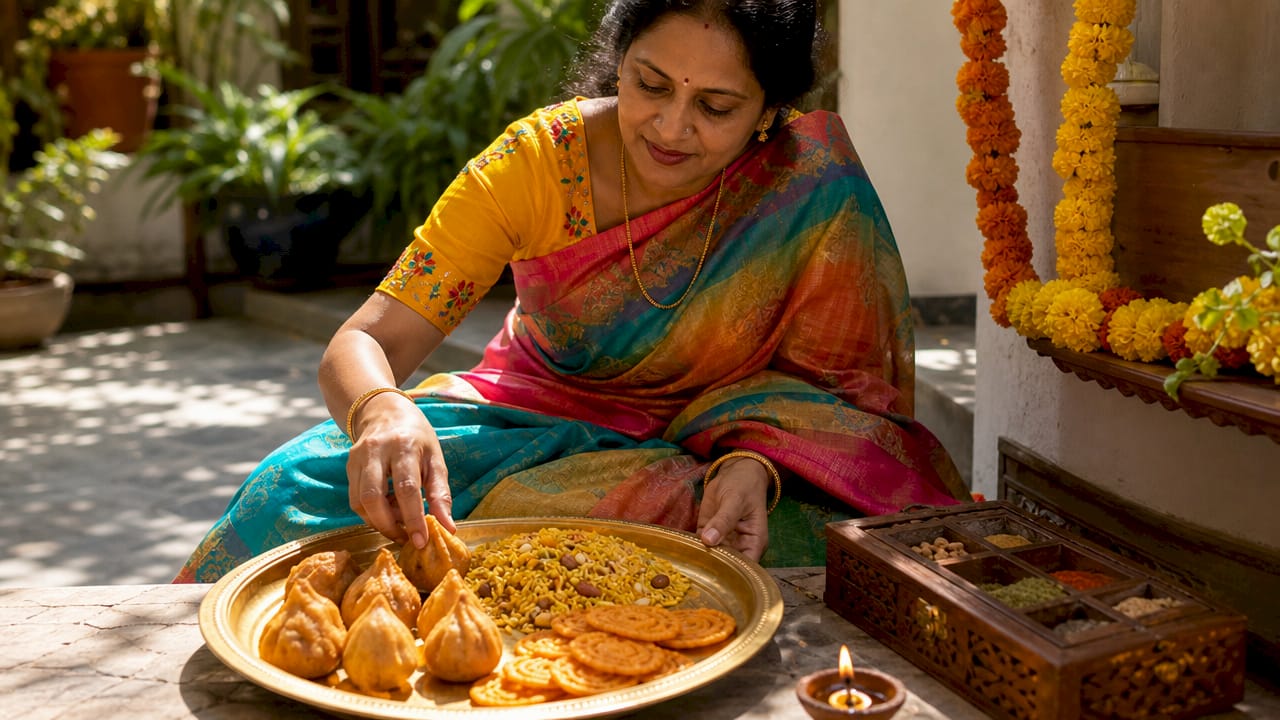
Festival-exclusive Indian snacks are treats prepared specifically for religious and cultural celebrations, using traditional ingredients and methods that set them apart from everyday snacks. These are not just food. They carry ritual meaning, regional identity, and the kind of bold flavor that only comes from recipes passed down through generations. The best examples of festival-exclusive Indian snacks include Nippattu from Karnataka, Kora Khai from Odisha, Fried Modak for Ganesh Chaturthi, and Farsi Puri for Diwali. Each one tells you exactly where it comes from and why it matters. If you love food and want to experience Indian festivals at their most authentic, these are the snacks to know.
1. What are the best examples of festival-exclusive Indian snacks?
The most iconic festival snacks in India share three traits: they use region-specific ingredients, they are made in large batches, and they carry cultural or ritual meaning. The five snacks below represent the clearest examples of this tradition.
Nippattu
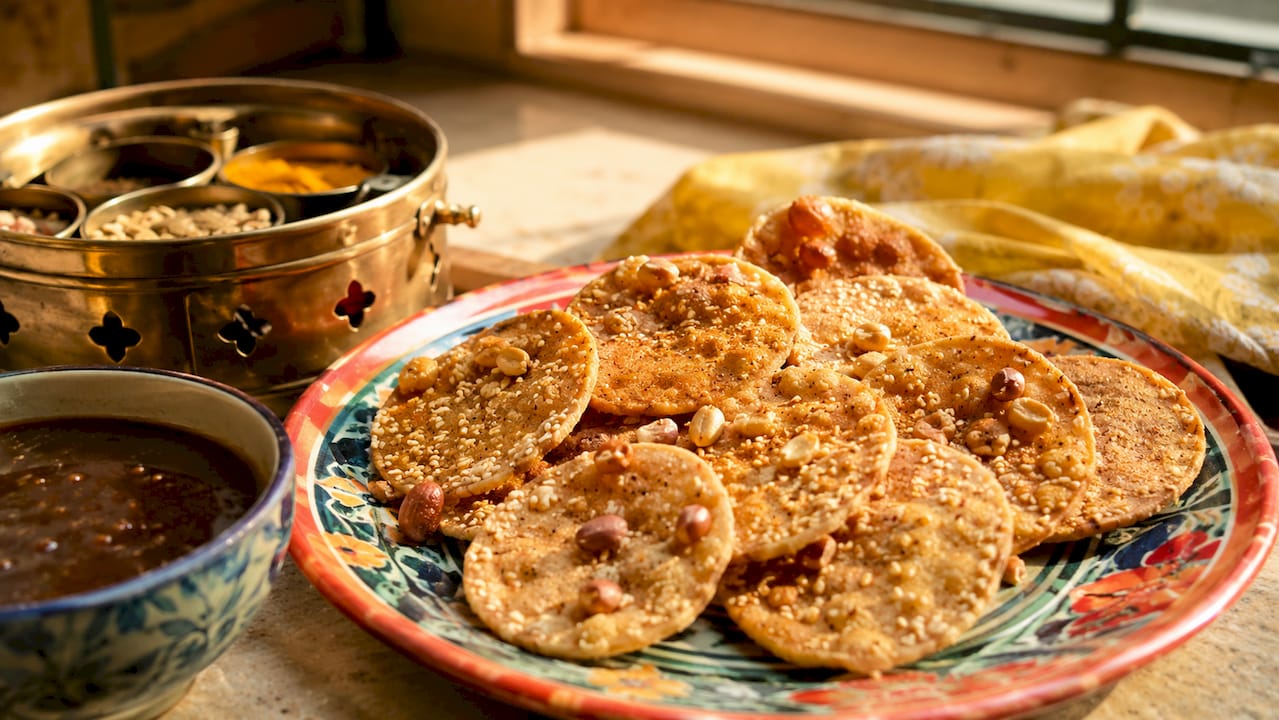
Nippattu is a flat, disc-shaped fried snack from Karnataka made with rice flour, roasted chana dal, peanuts, sesame seeds, dried red chilies, curry leaves, and coconut oil. It is a festival staple during Gowri-Ganesh and Dussehra. One nippattu weighs roughly 15–20 grams and contains approximately 70–90 kcal. That makes it easy to serve in small portions without overwhelming guests. Festival servings typically consist of 2–4 discs, which lets hosts balance it alongside richer sweets and mixes.
Kora Khai
Kora Khai is a traditional puffed-rice sweet from Odisha, made from puffed rice coated with jaggery syrup and lightly flavored with ghee. It is served as Mahaprasad during Rath Yatra and other Jagannath Temple festivals. This snack is one of the clearest examples of ritual-food heritage in Indian culture. Eating Kora Khai is not just a snack choice. It is an act of devotion tied directly to religious identity.
Bombay Mix (Mixture)
Bombay Mix contains sev, fried lentils, peanuts, chickpea flour snacks, puffed rice, fried onion, and curry leaves, with regional variants across India. Maharashtra calls its version Chiwda, while West Bengal calls it Chanachur. This snack is one of the best examples of how the types of Indian namkeen varieties explained across regions reflect local taste and ingredient availability. No two regional versions taste exactly alike, which makes it endlessly interesting for adventurous eaters.
Fried Modak
Fried Modak is made from a wheat flour shell filled with sweet coconut, dry fruits, and jaggery, then deep-fried to a crispy golden brown. It is served during Ganesh Chaturthi and Diwali. Unlike the steamed version, the fried variety has a longer shelf life. That practical advantage makes it a better fit for festival gifting and extended celebrations.
Farsi Puri
Farsi Puri is a Gujarati Diwali snack made from plain flour, semolina, and whole black peppercorns, deep-fried into crispy puris that can be stored for up to two weeks. Families traditionally make it weeks ahead of Diwali and pack it in airtight tins for gifting. That advance preparation is a defining feature of festival-exclusive snacks. The flavor actually deepens over a few days, which is something everyday snacks rarely do.
Pro Tip: When assembling a festival snack tray, place Nippattu discs at the base and layer Bombay Mix on top. The contrasting textures create a more satisfying bite and make the tray look generous without extra effort.
2. How do regional variations shape festival snack ingredients?
Regional ingredient swaps do more than change flavor. They reflect cultural identity in ways that are specific and traceable. Understanding the difference between namkeen mixture varieties means understanding the geography and history behind each recipe.
Bombay Mix regional splits. Maharashtra’s Chiwda leans toward flattened rice and coconut. West Bengal’s Chanachur uses mustard oil and a sharper spice profile. Both are technically the same snack category, but they taste like different states.
Nippattu peanut variations. Some Karnataka regions include peanuts in Nippattu; others omit them entirely due to local preference or allergy considerations. The authentic Karnataka preparation balances spices and textures precisely, so removing peanuts requires adjusting the sesame and chana dal ratio to maintain the right crunch.
Modak regional names and fillings. The same deep-fried dumpling concept appears as Karanji in Maharashtra, Gujiya in North India, and Kajjikayalu in Andhra Pradesh. Each version adjusts the filling, from dry coconut and jaggery to khoya and sugar, and the frying method varies slightly by region.
Farsi Puri storage culture. Gujarati households treat advance preparation as a quality step, not just a convenience. Airtight tins are critical for maintaining crispness and flavor, and the snack is considered more reliable as a festival gift precisely because it holds up well over time.
These differences matter when you are building a festival platter. Choosing a Chanachur over a Chiwda changes the flavor direction of the entire tray.
3. What makes festival snacks distinct from everyday snacks?
Festival snacks are designed for batch preparation, gifting, and room-temperature storage. That practical design separates them from the types of Indian namkeen explained as everyday snacks, which are made for immediate consumption.
“The best festival snacks are built to travel, to be shared, and to last. A snack that goes soft in two days has no place in a Diwali tin.”
Kora Khai shows this most clearly. It is served as Mahaprasad at the Jagannath Temple, which means it carries religious significance beyond its ingredients. Receiving it is an act of blessing, not just a snack exchange. That ritual layer is completely absent from everyday namkeen.
Festival snack platters also balance sweet and savory deliberately. A well-assembled tray includes crispy savory pieces like Nippattu alongside sweet items like Fried Modak or Kora Khai. The contrast keeps guests eating longer and creates a more memorable sensory experience. Portion sizing matters too. Smaller, crispier pieces like Nippattu discs let guests sample multiple items without filling up on one thing.
Pro Tip: Store Farsi Puri and Nippattu in separate airtight containers. Mixing them causes moisture transfer, which softens the Nippattu faster and dulls the peppercorn punch of the Farsi Puri.
4. How to assemble an authentic festival snack platter
A well-built festival platter covers four sensory bases: crunch, chew, sweet, and spice. Getting the balance right is what separates a memorable spread from a forgettable one.
Snack | Role on the platter | Best pairing |
Nippattu | Crunchy base, savory anchor | Masala chai |
Bombay Mix | Textural variety, spice layer | Mint chutney |
Fried Modak | Sweet contrast, rich filling | Black coffee |
Kora Khai | Light sweet, palate cleanser | Plain water or lassi |
Farsi Puri | Crispy, peppery, giftable | Masala chai |
A few practical tips for putting it together:
Use curated snack assortment principles: aim for at least three textures and two flavor profiles on every tray.
Place Nippattu discs flat so they do not break under the weight of other snacks.
Add Bombay Mix last, right before serving, to preserve its crunch. Bombay Mix delivers layered crunch through sev strands, fried lentils, puffed elements, and fried onion, and that texture fades quickly once exposed to air.
Serve Fried Modak warm when possible. The coconut-jaggery filling softens slightly with heat and becomes noticeably richer.
For gifting, pack Farsi Puri and Nippattu in separate tins. Both retain crispness best in airtight storage, but they absorb each other’s moisture if packed together.
If you want to go deeper on heritage snack recipes tied to specific festivals, the preparation methods for each of these snacks reward the extra reading.
Key takeaways
Festival-exclusive Indian snacks are defined by their ritual purpose, regional ingredients, and practical design for batch preparation, gifting, and long shelf life.
Point | Details |
Ritual and cultural meaning | Snacks like Kora Khai are served as religious offerings, not just food. |
Regional identity in every bite | Bombay Mix, Nippattu, and Modak each reflect the specific state they come from. |
Built for gifting and storage | Farsi Puri stays crisp for up to two weeks in airtight tins, making it ideal for Diwali gifts. |
Balance sweet and savory | A strong festival platter combines Fried Modak and Kora Khai with savory Nippattu and Bombay Mix. |
Portion size matters | Serving 2–4 Nippattu discs per person lets guests sample the full platter without overeating. |
Festival snacks taught me something I did not expect
by Shivam
I grew up thinking festival snacks were just the fun part of celebrations. They were background noise to the rituals and decorations. Then I spent time actually learning where each snack came from, and my thinking shifted completely.
Kora Khai stopped being a puffed-rice sweet the moment I understood it was Mahaprasad. That context changes how you eat it. You slow down. You pay attention. The same thing happened with Farsi Puri when I realized families start making it weeks before Diwali, not because they have to, but because the flavor improves with time. That patience is built into the recipe.
What I find most interesting about exotic Indian snack flavors is the textural contrast. Nippattu next to Bombay Mix is not redundant. They are doing completely different things in your mouth. One is a clean disc crunch. The other is a chaotic mix of sev, lentils, and puffed rice. Together they are more satisfying than either one alone.
My honest advice: do not stick to the snacks you already know. The lesser-known Indian snack types are where the real surprises are. Kora Khai from Odisha is almost unknown outside the state, and it is one of the most interesting snacks in the entire country.
— Shivam
Desimunchiess brings authentic festival snacks to your door
We at Desimunchiess know how hard it is to find freshly made, bold-flavored festival snacks outside of India or away from home. That is exactly why we make them the home-style way, with real ingredients and real care in every batch.
Our range includes snacks like Tikoni Mathi, a savory classic that fits perfectly on any festival platter. Every product is handcrafted and made fresh, so you get the crunch and flavor that mass-produced snacks simply cannot deliver. Browse the full range of authentic Indian snacks and build your own festival spread at home. Good snacks, made with love. That is what we do.
FAQ
What are festival-exclusive Indian snacks?
Festival-exclusive Indian snacks are treats prepared specifically for religious and cultural celebrations, using traditional regional ingredients and methods that distinguish them from everyday namkeen. Examples include Nippattu, Kora Khai, Fried Modak, and Farsi Puri.
What is the difference between Bombay Mix and Chiwda?
Bombay Mix is the broad category of mixed savory snacks containing sev, fried lentils, peanuts, and puffed rice. Chiwda is the Maharashtra-specific version, which typically uses flattened rice and coconut as its base ingredients.
How long do festival snacks like Farsi Puri stay fresh?
Farsi Puri stays crisp for up to two weeks when stored in airtight tins at room temperature. That shelf life makes it one of the most practical snacks for Diwali gifting and advance preparation.
Are festival snacks kid-friendly?
Most festival snacks work well for kids, especially Kora Khai and Fried Modak, which are sweet and mild. Nippattu and Farsi Puri contain dried chilies and black peppercorns, so spice levels are worth checking for younger guests.
What is Indian namkeen?
Indian namkeen is the broad category of savory fried or roasted snacks made from lentils, rice flour, chickpea flour, and spices. Festival snacks like Nippattu and Bombay Mix fall within the namkeen category but are distinguished by their ritual context and batch preparation methods.
Recommended
Comments