
Homemade vs. Packaged Snack Comparison: Choose Smart

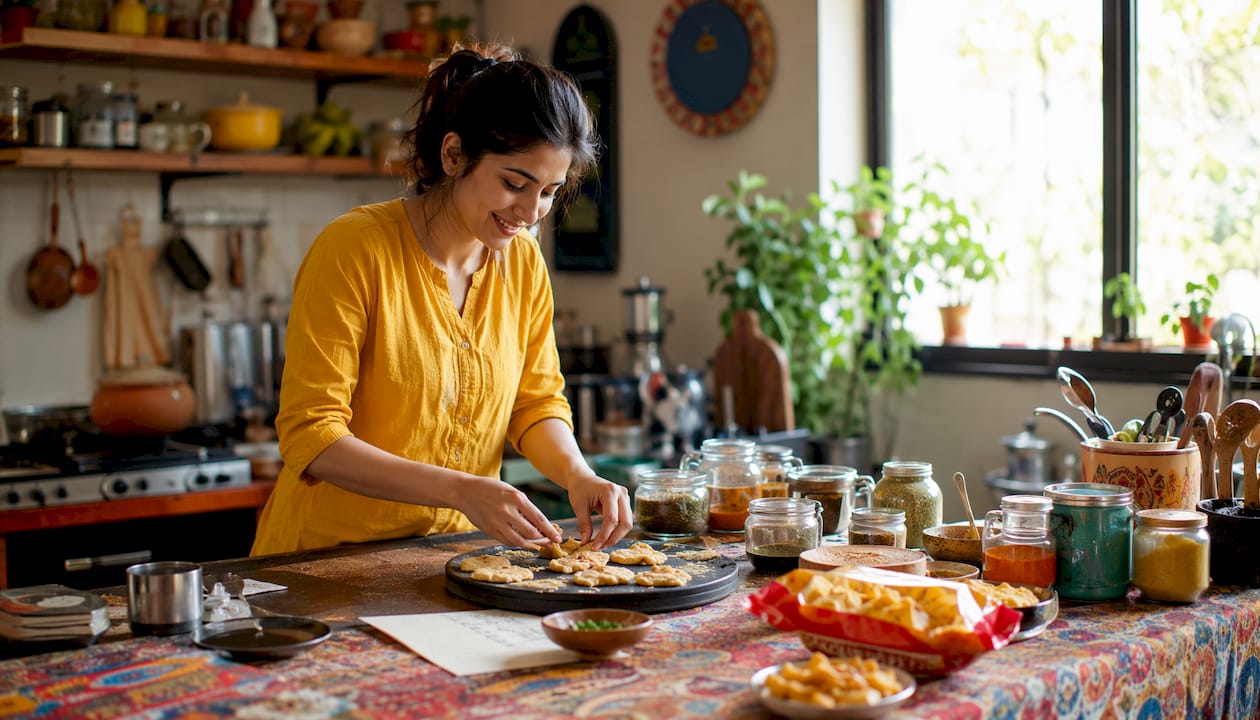
Homemade snacks usually win for nutrition control, taste, and cost per serving. Packaged snacks win for convenience, portability, and shelf life. The right choice depends on your situation, not a blanket rule.
Quick verdict by situation:
Work commute or travel: Grab a packaged option with a short ingredient list. The Cleveland Clinic notes that minimally processed, shelf-stable foods with few ingredients can be genuinely nutritious.
Batch-prep day or home snacking: Go homemade. You control the oil, sugar, and salt, and you typically pay less per serving.
Kids’ lunches or busy weekdays: Either works. A peer-reviewed study published in Food Chemistry Advances found that homemade and industrial snacks had comparable nutritional compositions across several food categories.
Table of Contents
How do homemade and packaged snacks compare side by side?
This homemade versus packaged snack comparison covers the seven dimensions that matter most to health-conscious eaters.
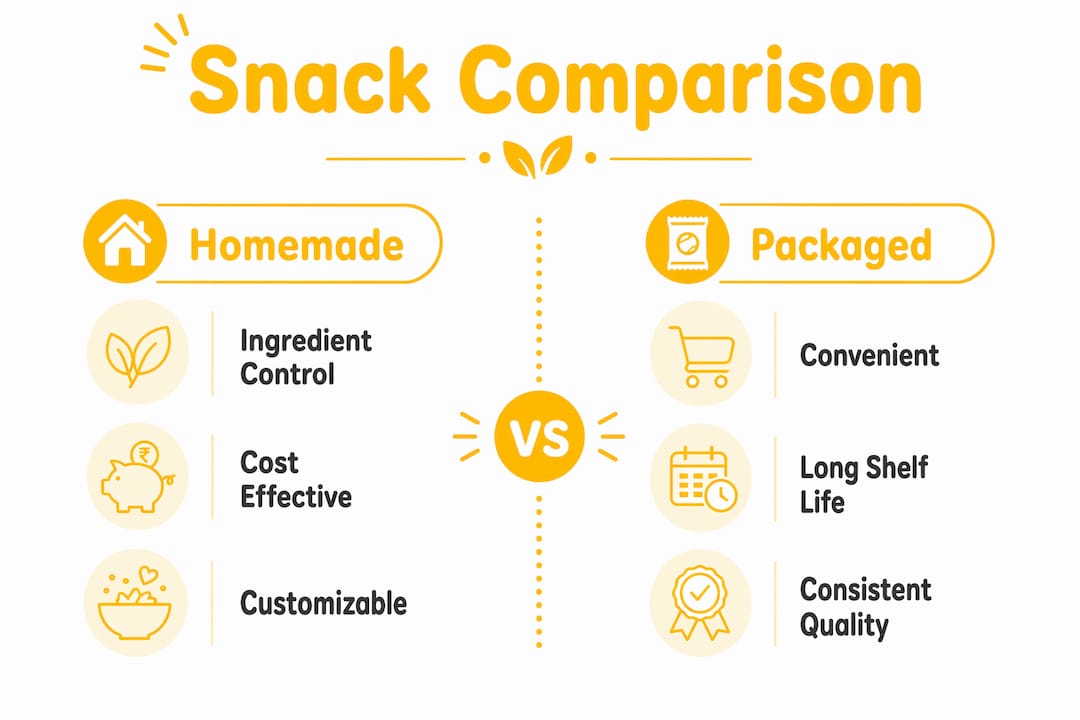
Dimension | Homemade | Packaged |
Nutrition | Full ingredient control; no hidden sugars, sodium, or additives | Varies widely; minimally processed options can be nutritious |
Convenience & portability | Requires prep time; less grab-and-go | Ready instantly; travel-friendly |
Cost per serving | Generally lower; avoids packaging and branding premiums | Single-serve packs often cost more per unit |
Shelf life & storage | Days to a week (refrigerated); shorter room-temp life | Weeks to months; no refrigeration needed |
Food safety & consistency | Depends on home hygiene and storage habits | Factory controls offer more consistent temperature and hygiene |
Taste & satiety | Whole-food fiber and texture tend to satisfy longer | Many “healthy” packs use isolated fibers or sweeteners |
Environmental impact | Minimal packaging waste | Single-serve packaging adds up quickly |
A few things worth noting:
Whole food snacks deliver naturally occurring fiber and nutrient synergy that many packaged “healthy” options try to replicate with added isolates.
The FDA regulates Nutrition Facts labels, so the numbers on packaged foods are reliable. Marketing claims like “natural” or “made with whole grains” are not regulated the same way.
Homemade snacks skip the packaging premium, but that savings only holds if you’re not wasting ingredients.
Why homemade snacks often give you more for your money and your health
The biggest advantage of making snacks at home is ingredient control. You decide how much oil goes into roasted chickpeas, how much sugar goes into a granola bar, and whether the flour is whole grain or refined. That control directly affects calories, satiety, and micronutrient density. Homemade snack nutrition is a topic we cover in depth for families navigating this exact trade-off.
On cost, homemade wins consistently. Single-serving packaged snacks carry a branding and packaging premium that adds up fast, and they can leave you reaching for a second pack because the portion is small. NDSU Extension research confirms that homemade snack mixes are typically lower in calories, sodium, and sugar than popular packaged alternatives, and the per-serving cost drops further when you buy staple ingredients in bulk.
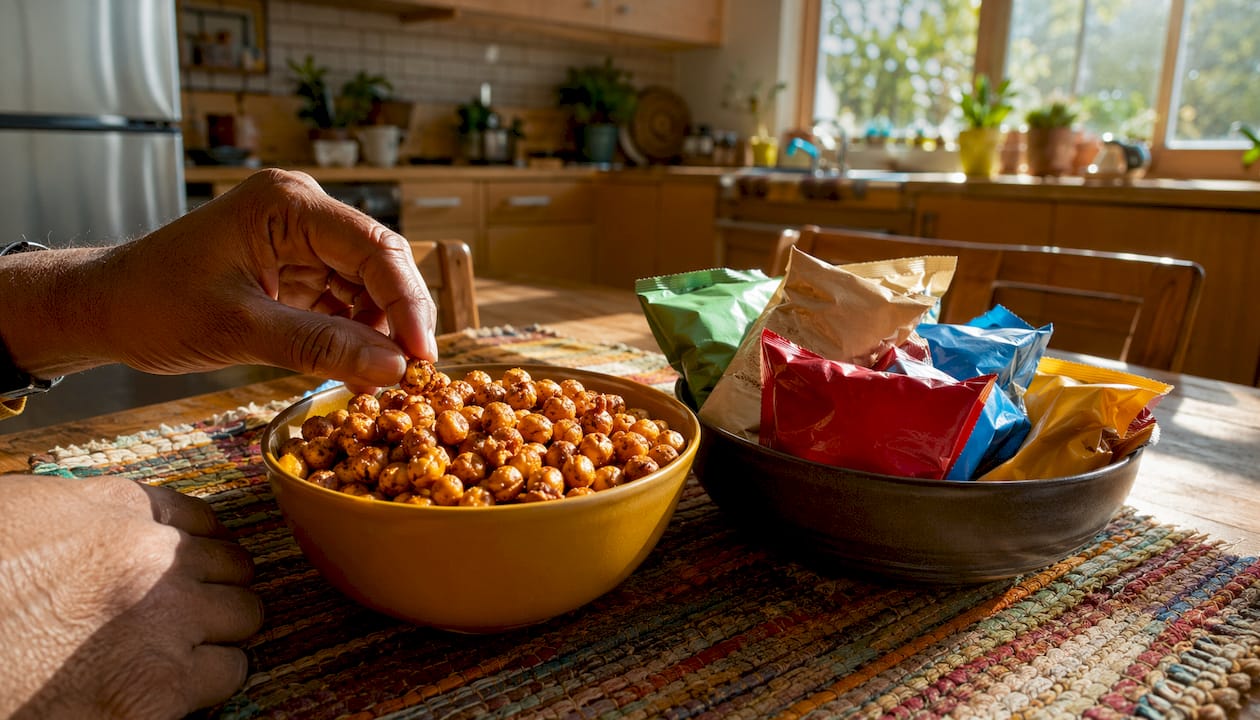
Taste and satiety are real advantages too. Whole-food fiber from oats, nuts, or legumes keeps you fuller longer than the isolated fibers added to many packaged bars. Texture matters: a freshly roasted handful of spiced chana has a crunch and warmth that a shelf-stable pouch rarely matches.
Watch out for these homemade pitfalls:
Portion creep: Homemade snacks are easy to over-eat because there’s no serving-size label staring at you. Pre-portion into small jars or zip-top bags right after making them.
Food-safety gaps: Store perishable homemade snacks in airtight containers, refrigerate anything with dairy or eggs within two hours, and label with a date. Most homemade snacks stay fresh 3–5 days refrigerated.
Time cost: Batch prep once or twice a week beats daily cooking. Roasted chana or atta biscuits take 30 minutes and last all week.
Pro Tip: Cut added sugar in homemade recipes by 25% and replace refined oil with a smaller amount of cold-pressed oil. Most people can’t taste the difference, but the nutritional profile shifts noticeably.
When packaged snacks are actually a smart choice
Packaged snacks are not the enemy. The question is which ones you pick and why you’re reaching for them.
Dietitian Kelly Abramson puts it plainly:
That framing is useful. A packaged option is practical for travel, long workdays, or any situation where refrigeration isn’t available. The goal is choosing one that’s actually worth eating.
Label-reading checklist for packaged snacks:
Ingredients first: Choose items whose ingredient list reads like your own pantry. Julia Zumpano of the Cleveland Clinic recommends fewer, recognizable ingredients as the single strongest indicator of a minimally processed product.
Added sugars: Aim for under 5 g per serving when possible.
Sodium: Under 200 mg per serving is a reasonable target for a snack.
Trans fats: The label may say “0 g trans fat” while the ingredient list still contains “partially hydrogenated oil.” Read both.
Fiber-to-carb ratio: Look for roughly 1 g of fiber per 10 g of carbohydrates to support satiety.
5-ingredient rule: If you can’t pronounce most of the list, put it back.
Watch marketing language carefully. “Low-fat” often means added sugar. “Made with whole grains” can mean whole grain is the fifth ingredient after refined flour and sugar. “Natural” has no FDA-regulated definition for snack foods. The Nutrition Facts panel and ingredient list are your real tools. For more guidance on minimally processed snacks, we’ve put together a practical breakdown.
Food-safety expert Brian Hitchcock points out that industrial processing can control temperature and hygiene more consistently than most home kitchens, which is a genuine advantage for shelf-stable products when the manufacturer uses clean, short ingredient lists.
How to decide in the moment: a quick situation checklist
Ask yourself three questions before you choose:
How long until I can access a refrigerator?
Am I aiming for real satiety, or just a flavor treat?
Will packaging disposal be a concern?
Situation-by-situation guide:
Morning commute: Packaged wins. Grab a portable snack format with under six ingredients and pair it with a piece of fruit.
Travel (flights, road trips): Packaged wins. Long shelf life and no refrigeration needed. Check sodium on the label.
Busy desk day: Either works. A pre-portioned homemade batch from the weekend is ideal. A single-serve pack paired with an apple is a solid backup.
Batch-prep Sunday: Homemade wins. Make a week’s worth of roasted chana, atta biscuits, or spiced nuts in one session.
Kids’ school lunch: Homemade wins for nutrition control. Pre-portion into snack bags the night before to save morning time.
Desimunchiess: homemade-style snacks without the prep time
Not every day has room for batch cooking. That’s where Desimunchiess fits in. We make freshly prepared, bold-flavored Indian snacks, including suji rusk, atta biscuits, roasted chana, traditional cookies, and Indian sweets, using authentic recipes and high-quality ingredients. Think of it as the middle path: the ingredient transparency and taste of homemade, with the convenience of a packaged product.
Transparent ingredients rooted in traditional recipes
Small-batch production for freshness you can actually taste
Direct-to-consumer ordering, so no retail markup
Honest shelf life: fresher than long-shelf industrial products, so plan accordingly
One honest note: Desimunchiess products have a shorter shelf life than mass-market ultra-processed snacks. That’s a feature, not a flaw. It means fewer preservatives and more real flavor. Store them as directed and enjoy them fresh.
All labeling follows FDA standards. If you have allergies, check the product page before ordering.
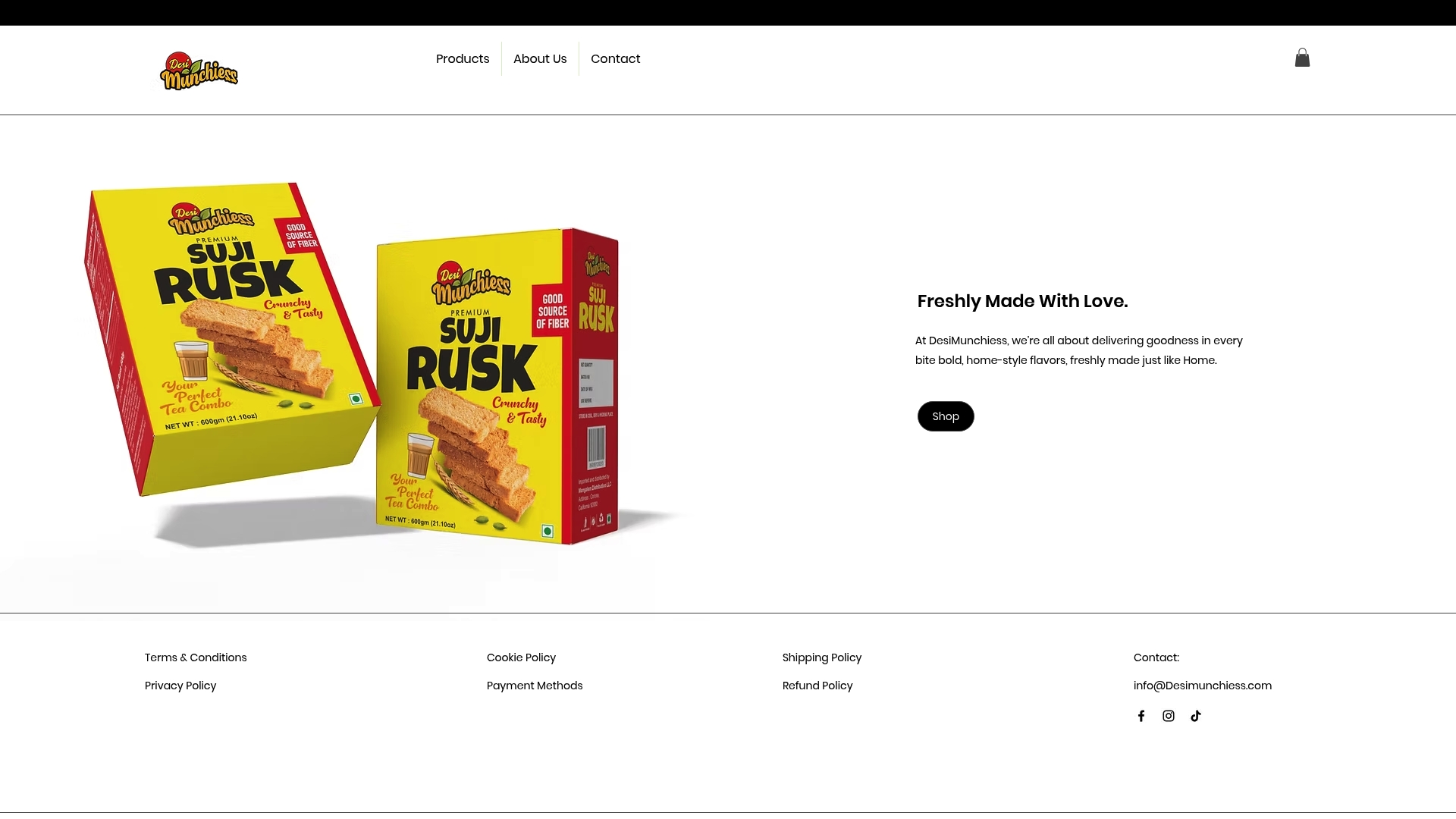
Shop Desimunchiess snacks and find your new go-to.
10 quick homemade snack ideas you can actually make this week
10-minute single-serve builds:
Spiced yogurt bowl: Plain Greek yogurt + mixed seeds + a drizzle of honey. Ready in 3 minutes. Refrigerate up to 2 days.
Roasted chickpeas (pan method): Canned chickpeas, olive oil, cumin, and chili powder. 10 minutes on medium heat. Store in an open bowl at room temp for up to 3 days.
Nut butter + apple slices: No prep beyond slicing. Eat immediately.
Spiced popcorn: Air-pop, toss with turmeric and a pinch of salt. 5 minutes. Best eaten same day.
Cucumber + hummus: Slice, dip, done. Keep refrigerated up to 2 days.
Batch-prep options (make once, snack all week):
Small-batch atta biscuits: Whole wheat flour, ghee, a touch of jaggery. Bake at 350°F for 18 minutes. Store in an airtight container at room temp for up to 7 days.
Roasted spiced chana: Dried chickpeas, cumin, coriander, amchur. Roast at 400°F for 25 minutes. Room temp in a sealed jar for up to 5 days.
Oat energy balls: Rolled oats, peanut butter, honey, dark chocolate chips. No bake. Refrigerate up to 1 week. For a grab-and-go wrap idea that pairs well with these, Forkward Kitchen has a solid recipe.
Seed and nut mix: Pumpkin seeds, almonds, dried cranberries, a pinch of sea salt. Mix and portion into small bags. Room temp up to 2 weeks.
Homemade granola bars: Oats, honey, almond butter, sunflower seeds. Press into a pan, refrigerate 2 hours, cut into bars. Store refrigerated up to 5 days.
Pro Tip: Label every batch container with the date and a “best by” note. It takes 10 seconds and prevents the guessing game that leads to food waste or unsafe eating.
Key Takeaways
Homemade snacks give you the most control over nutrition and cost, but packaged snacks earn their place when convenience, portability, or shelf life is the priority.
Point | Details |
Homemade wins on control | You set the oil, sugar, and salt levels, which directly affects satiety and calorie quality. |
Packaged wins on convenience | Minimally processed options with short ingredient lists are genuinely nutritious for busy days. |
Label-reading is non-negotiable | Check ingredients first, then added sugars (under 5 g), sodium, and fiber-to-carb ratio. |
Pair for better satiety | A packaged snack paired with a fresh component improves fullness and nutritional balance. |
Desimunchiess bridges both | Freshly made, traditional Indian snacks with transparent ingredients and direct-to-consumer freshness. |
Why a pragmatic, nutrition-first approach is the one worth taking
The homemade-versus-packaged debate gets moralized more than it should. Homemade is not automatically virtuous, and packaged is not automatically harmful. The peer-reviewed comparison from Food Chemistry Advances showed identical nutritional compositions between homemade and industrial versions of several foods. That finding should settle the guilt trip.
What actually matters is the quality of ingredients and the intent behind your choices. A homemade snack loaded with refined sugar and palm oil is not healthier than a well-chosen packaged option with five clean ingredients. The Cleveland Clinic, Kelly Abramson, and Brian Hitchcock all point toward the same practical truth: context and ingredient quality determine the outcome, not the production method.
We favor homemade-style packaged options from Desimunchiess over mass-market ultra-processed items when you need convenience. That’s not a marketing position. It’s what the evidence supports: short ingredient lists, traditional recipes, and real food flavors beat a long list of additives every time. The safety case for homemade-style snacks is something we’ve written about directly, and it holds up.
Choose by situation. Read the label. Batch prep when you can. And don’t let perfect be the enemy of a genuinely good snack.
Desimunchiess: fresh, bold, and ready to order
Desimunchiess makes homemade-style Indian snacks the way they’re meant to taste: bold, fresh, and made with ingredients you’d actually recognize.
Authentic recipes: suji rusk, atta biscuits, roasted chana, traditional cookies, pickles, and Indian sweets
Ingredient transparency and small-batch freshness
Direct-to-consumer ordering with no retail markup
Shorter shelf life than industrial products by design; store as directed and enjoy fresh
Please review product pages for allergen information before ordering
Order from Desimunchiess and taste the difference a real recipe makes.
This article is general nutritional information, not professional dietary advice. Confirm any health-specific choices with a registered dietitian or your healthcare provider.
Sources and further reading
Cleveland Clinic: Should I avoid shelf-stable or packaged foods? — Julia Zumpano, RD, on minimally processed packaged foods and short ingredient lists as a practical guide.
ScienceDirect: Home-made vs industry-made nutrient composition study — Peer-reviewed comparison finding comparable nutritional profiles between homemade and industrial food versions.
Kelly Abramson, RD: Single-serving snack packs — Dietitian perspective on using packaged snacks as neutral tools for consistent nourishment.
Fox News / Brian Hitchcock: Homemade vs processed foods — Food-safety expert commentary on industrial temperature and hygiene controls.
Diets in Review: 100-calorie snack packs pros and cons — Unit-cost and satiety analysis of single-serve packaged snacks.
NDSU Agriculture Extension: Make your own snack mixes — Practical cost and nutrition data for homemade snack mixes.
Qua Nutrition: Whole food snacks vs packaged healthy snacks — Fiber-to-carb ratio and 5-ingredient rule guidance.
Desimunchiess: Why homemade snacks are safer for children — Ingredient customization and food-safety practices for homemade snack preparation.
FDA Nutrition Facts label: The primary regulatory reference for all packaged food label claims in the United States. Use the Nutrition Facts panel and ingredient list as your verification tools.
Recommended
Comments