
How to Pack School Lunchbox Savory Snacks Kids Love

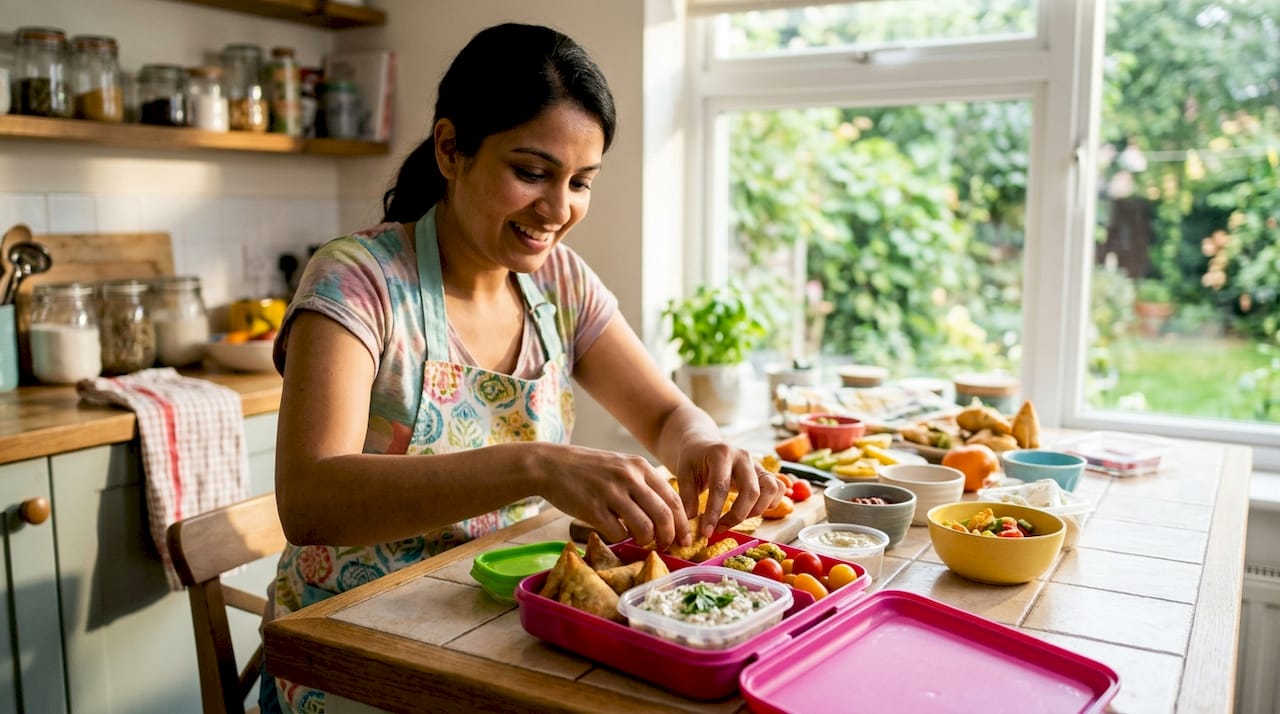
Savory snacks are the most effective way to fuel kids through a school day without the sugar crash that follows sweet treats. When you pack school lunchbox savory snacks with intention, you combine real nutrition with flavors kids actually want to eat. Children need protein, fiber, and healthy fats at lunch to stay focused and energized. The good news is that the best savory lunchbox snacks take under 30 minutes of active prep, freeze well, and travel without falling apart. This guide gives you recipes, nutrition targets, packing strategies, and variety tips all in one place.
What are easy savory snack recipes perfect for school lunchboxes?
Simple, batch-friendly recipes are the foundation of stress-free school lunch packing. The goal is to cook once and eat all week. These three recipes hit that mark every time.
Chicken and cheese muffins. Combine shredded cooked chicken, shredded cheddar, eggs, and a little flour in a muffin tin. Bake at 375°F for about 20 minutes. These muffins are soft, protein-rich, and hold their shape in a lunchbox. Make a batch of 12 on Sunday and refrigerate or freeze the extras.
Pizza muffins. Use a basic muffin batter, stir in pizza sauce, mozzarella, and mini pepperoni, then bake. Homemade pizza muffins require about 10 minutes of active prep and 22–25 minutes of bake time, and they freeze safely for up to one month. Kids love the familiar flavor, and parents love the zero-effort weekday morning.
Parmesan crisps. Spoon small mounds of grated Parmesan onto a lined baking sheet and bake at 400°F for 5–7 minutes until golden. DIY Parmesan crisps take about 10 minutes total and cost far less than store-bought versions, which can run up to 80¢ per crisp. Swap in Pecorino or add dried rosemary to vary the flavor without changing the method.
Flavor variations worth trying
Herbs and cheese swaps keep these recipes from feeling repetitive. Add smoked paprika or cumin to chicken muffins for a bolder bite. Mix sun-dried tomatoes and basil into pizza muffin batter for an Italian twist. For Parmesan crisps, a pinch of chili flakes adds just enough heat for older kids. These small changes cost almost nothing but make a real difference in keeping kids excited about lunch.

Pro Tip: Freeze pizza muffins and chicken muffins overnight, then place them directly into the lunchbox in the morning. They act as natural ice packs and thaw safely by lunchtime, keeping the whole box cool without a separate ice pack.
How to meet children’s nutritional needs when packing savory snacks
Protein targets are the clearest guide for building a nutritious savory lunchbox. Early elementary children need about 19g of protein daily, while older kids ages 9–14 need closer to 34g. Targeting at least 10g of protein per lunch snack puts kids well on track. Two chicken and cheese muffins or a serving of hummus with whole-grain crackers can hit that mark easily.
Protein alone does not complete the picture. Heart health experts recommend savory snacks that combine fiber, protein, and healthy fats together. That combination provides sustained energy rather than a short spike. A lunchbox built on this principle keeps kids focused through afternoon classes. You can read more about snacks in children’s nutrition to understand how each macro plays a role.
Nutrient-rich ingredients to build into every savory snack
Protein sources: Shredded chicken, canned tuna, hard-boiled eggs, cheese, edamame, or hummus
Fiber sources: Whole-grain crackers, raw veggie sticks, chickpeas, or whole-wheat wraps
Healthy fats: Avocado, nut butter (where school policy allows), cheese, or olive oil-based dips
Flavor boosters: Fresh herbs, mild spices, lemon juice, or a small amount of quality cheese
Simple savory snacks built from these four categories outperform pre-packaged options that are often high in sodium and saturated fat. Homemade versions let you control every ingredient. For families who want to go further, Desimunchiess offers a guide on homemade snack nutrition that breaks down what to look for by age group.
What are practical tips for packing savory snacks that stay fresh?
Moisture is the enemy of a good lunchbox. Moisture migration happens when juices from fruits, dips, or wet ingredients seep into crackers or bread, turning them soggy by lunchtime. That soggy texture is the top reason kids refuse to eat their lunch. Preventing it takes two minutes of extra thought during packing.
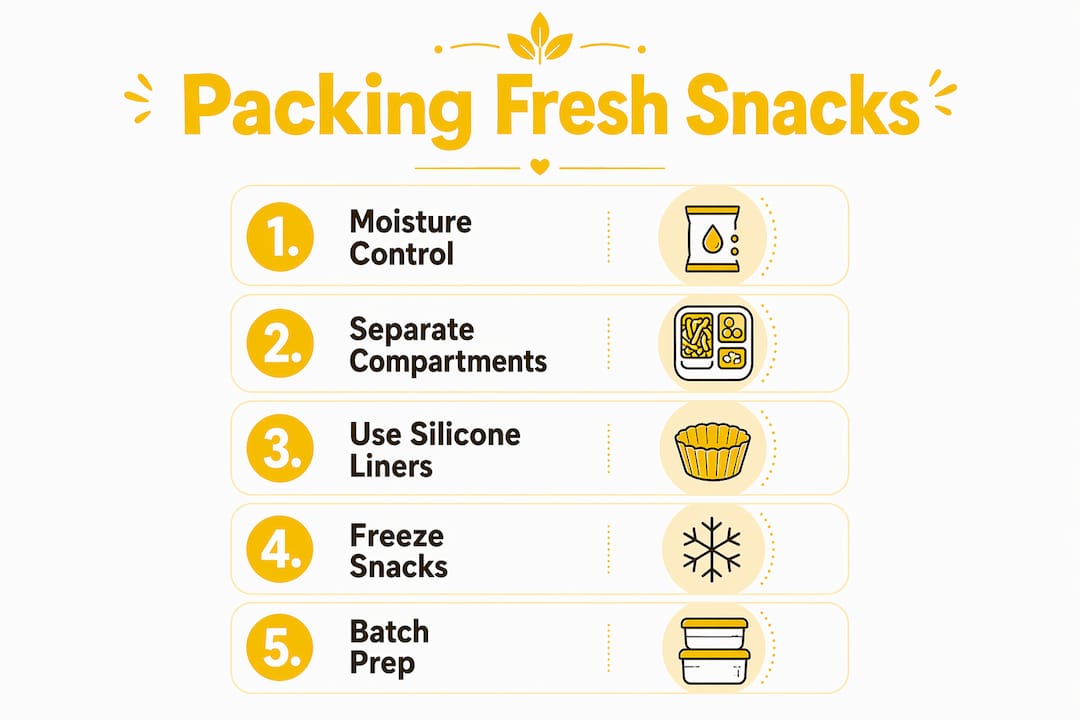
The most reliable fix is physical separation. Use a bento-style box with sealed compartments so dips never touch crackers. Silicone muffin liners work perfectly inside larger containers to create soft barriers between wet and dry items. Bento-style compartments also reduce sensory-based food refusal by making portions look manageable rather than overwhelming.
Common packing mistakes and how to fix them
Soggy wraps: Pat all wet fillings dry before assembling. Pack pinwheels cut-side up in a snug container, or pack the whole roll and let kids slice it themselves at lunch.
Crackers going soft: Never pack crackers in the same compartment as hummus or salsa. Use a small sealed container for the dip.
Snacks arriving warm: Place a frozen muffin or a small frozen fruit cup in the box. It chills the whole lunchbox and thaws by lunch.
Kids skipping the veggies: Cut vegetables into small, uniform pieces and place them in the most visible compartment. Small portions feel less daunting.
Pro Tip: Prep all your savory snacks on Sunday in one batch session. Portion them into individual containers and stack them in the fridge. Monday through Friday, you just grab and pack. This single habit cuts morning prep time dramatically.
How can parents create variety and avoid lunchbox boredom?
Lunchbox boredom is real, and it leads to uneaten food coming home every day. Nutritionists recommend a modular mix-and-match system built on rotating building blocks rather than hunting for a new recipe every week. The system works because the components stay familiar while the combinations stay fresh.
The four building blocks are protein, vegetables, whole grains, and fun bites. Rotate one category each week while keeping the others steady. For example, swap chicken muffins for hard-boiled eggs one week, then edamame the next. Keep the crackers and veggie sticks consistent so kids always have something they recognize.
Savory snack pairings that work well together
Hummus + cucumber rounds + whole-grain pita triangles
Cheese cubes + cherry tomatoes + whole-grain crackers
Chicken muffin + carrot sticks + a small container of ranch dip
Parmesan crisps + sliced bell peppers + a hard-boiled egg
Turkey pinwheel slices + celery sticks + guacamole
The “rainbow” approach adds another layer of appeal. Aim for at least three colors in every lunchbox. Red bell pepper, orange carrot, green cucumber, and yellow cheese together look inviting and signal variety. Colorful, compartmentalized presentations reduce food refusal and improve how much kids actually eat.
Involve your kids in the process. Let them pick one protein and one veggie each week from a short list you approve. That small act of ownership makes kids far more likely to eat what they chose. It also takes the guesswork off your plate entirely.
Key Takeaways
Packing savory lunchbox snacks that kids eat requires combining protein-rich recipes, moisture control, and a rotating mix-and-match system built on four core building blocks.
Point | Details |
Target 10g protein per snack | Aim for at least 10g protein per lunch snack to meet children’s daily needs. |
Batch prep and freeze | Make muffins and crisps in bulk on weekends and freeze for easy weekday packing. |
Prevent moisture migration | Use sealed compartments and silicone liners to keep dry snacks crisp all day. |
Use the modular system | Rotate proteins, veggies, and grains weekly to prevent boredom without extra effort. |
Involve kids in choices | Letting kids pick one component each week increases how much they actually eat. |
Why savory snacks changed how I think about school lunch
I used to overthink school lunches. Every Sunday felt like a puzzle I had to solve from scratch. Then I stopped chasing new recipes and started building a system instead. Once I had three or four reliable savory snack recipes in rotation, the whole week became easier. Chicken muffins on Monday, pizza muffins on Wednesday, Parmesan crisps on Friday. Done.
What surprised me most was how much less food came home uneaten. Savory snacks travel better than sandwiches. They hold their texture, they pack into small spaces, and kids treat them like a treat rather than an obligation. The protein keeps kids full longer, which means fewer complaints about being hungry before dinner.
The one thing I wish someone had told me earlier: freeze everything you can. A frozen muffin in the lunchbox is not a compromise. It is a feature. It keeps the box cold, it thaws perfectly, and it tastes just as good as fresh. That single habit saved me more time than any other school lunch tip I have ever tried.
If you are still packing the same sad sandwich every day, give batch-prepped savory snacks one week. The results will speak for themselves.
— Shivam
Bold, homemade flavors from Desimunchiess for your lunchbox
At Desimunchiess, we believe every bite should feel like it came straight from a home kitchen. We make freshly crafted, bold-flavored snacks using traditional recipes and real ingredients, with no mass-production shortcuts.
Parents who want preservative-free homemade snacks for their kids’ lunchboxes will find exactly that in our range. Every product is handcrafted for freshness and flavor. We also share practical guides on safer homemade snacks for children so you always know what goes into every bite. Visit Desimunchiess to browse our full collection and find your next lunchbox favorite.
FAQ
What savory snacks are easiest to pack for school lunch?
Chicken and cheese muffins, pizza muffins, and Parmesan crisps are among the easiest options. All three batch-prep in under 35 minutes and freeze well for up to one month.
How much protein should a school lunchbox savory snack contain?
Target at least 10g of protein per lunch snack. Early elementary children need about 19g of protein daily, while older kids ages 9–14 need closer to 34g.
How do I keep savory snacks from getting soggy in the lunchbox?
Use a bento-style box with sealed compartments and silicone liners to separate wet and dry items. Pack pinwheels cut-side up and always pat wet fillings dry before assembling wraps.
Can I use frozen snacks in a school lunchbox?
Yes. Frozen savory muffins or fruit cups act as natural ice packs and thaw safely by lunchtime, keeping the lunchbox cold without a separate cooler pack.
How do I stop my child from getting bored with the same lunchbox snacks?
Use a modular mix-and-match system with four rotating building blocks: protein, vegetables, whole grains, and fun bites. Swap one category each week and involve your child in choosing one component to increase variety and buy-in.
Recommended
Comments