
Make Snacking Fun for Picky Eaters: A Parent's Guide

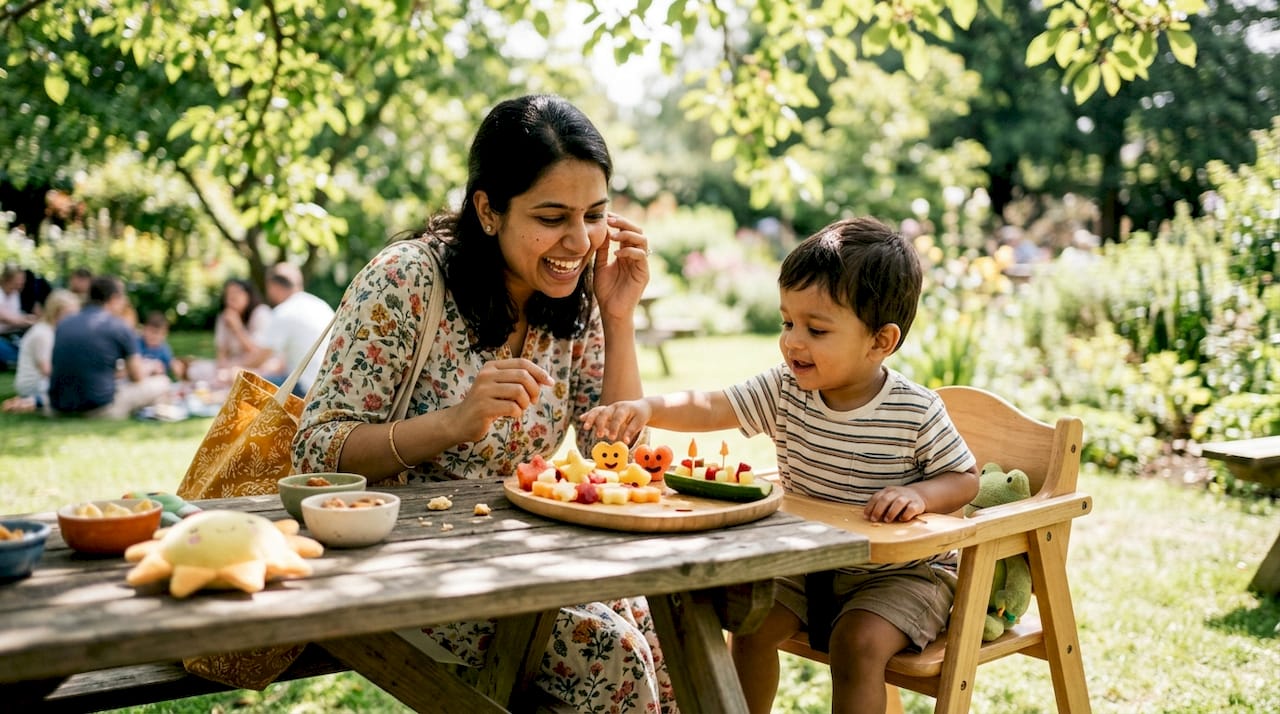
Turning snack time into a sensory adventure is the most effective way to make snacking fun for picky eaters and reduce mealtime resistance. Children who engage three or more senses during food exploration are more likely to accept new foods over time. That means sight, touch, smell, and eventually taste all play a role. The CDC recommends building curiosity around food rather than pressuring kids to eat. Pediatric dietitians call this approach “food play,” and the research behind it is clear.
How can you make snacking fun for picky eaters?
Food play is defined as any no-pressure interaction with food that does not require a child to eat. It is the single most effective tool pediatric dietitians use to build sensory comfort around unfamiliar foods. When a child sorts grapes by color, presses a cookie cutter into a slice of cheese, or smells a piece of mango without any expectation to eat it, they are building familiarity. That familiarity is what eventually leads to acceptance.
Food play builds sensory comfort by letting children interact with food on their own terms. The key difference between food play and snack time is pressure. Snack time carries an expectation to eat. Food play carries none. That separation matters more than most parents realize.
Here are the core food play techniques that work:
Sorting by color: Line up red strawberries, orange clementine slices, and green grapes. Ask your child to arrange them by shade. No eating required.
Making food faces: Use sliced banana for a smile, blueberries for eyes, and shredded carrots for hair on a plate. The act of building the face creates touch and visual engagement.
Smelling before tasting: Hold a piece of cucumber or a fresh herb near your child’s nose. Smell is the first gateway to taste acceptance.
Texture sorting: Group foods by how they feel. Crunchy crackers in one pile, soft cheese in another. This reduces texture aversion over time.
Pro Tip: Schedule food play sessions at a completely separate time from actual snack time. Decoupling play from eating removes performance pressure and lets your child explore without stress.
Pediatric dietitian Alyssa Fontaine puts it directly: parents should shift focus from eating to building curiosity and comfort with food. That mindset shift changes everything about how you approach snack time.
What creative snack presentations appeal to picky eaters?
Presentation is not just decoration. Creative snack constructions like cucumber boats with pretzel sails or celery snails with nut butter actively encourage children to engage with vegetables and fruits they would otherwise ignore. The visual novelty triggers curiosity before the first bite ever happens.
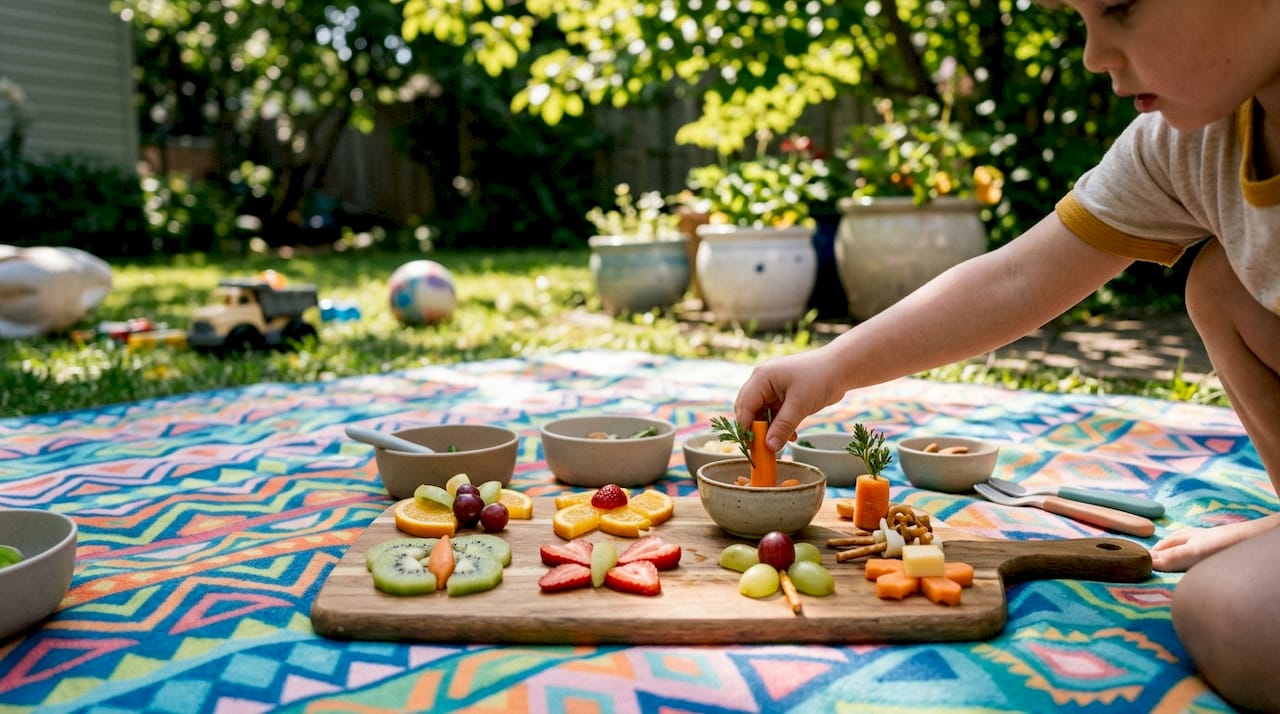
Offering a rainbow of colors through fruits and vegetables makes snacks visually appealing. Visual appeal triggers curiosity and willingness to sample. A plate of beige crackers gets ignored. A plate with red pepper strips, yellow cheese cubes, and purple grapes gets explored.
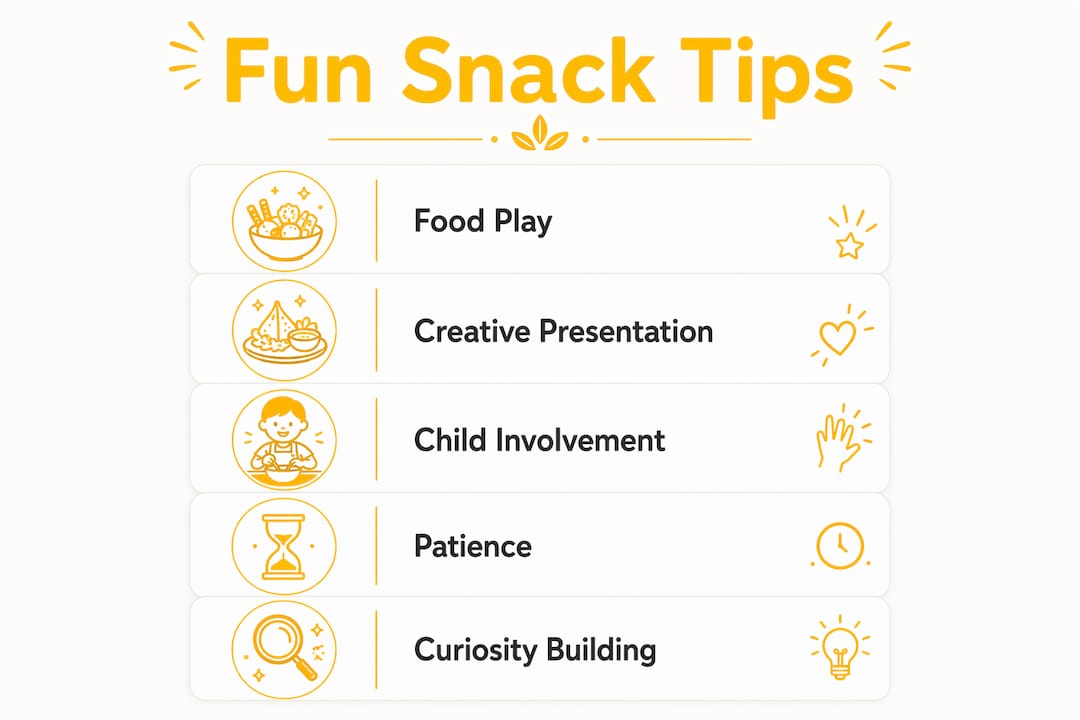
Here are four snack constructions that work well for picky eaters:
Snack Construction | Key Ingredients | Ease of Prep | Fun Factor |
Cucumber boats | Cucumber, cream cheese, pretzel sticks | Easy | High |
Fruit and cheese sailboats | Apple slices, cheddar, toothpick flag | Easy | High |
Celery snails | Celery, peanut butter, raisin | Very easy | Medium |
Edible sandcastles | Rice cakes, hummus, veggie “flags” | Medium | Very high |
Beyond the constructions themselves, interactive elements make a real difference. Dippers give children control. A small bowl of hummus, yogurt dip, or guacamole next to veggie sticks lets kids decide what to dip and how much. That choice reduces anxiety around new foods.
Build-your-own skewers: Set out cubes of melon, cheese, and cucumber. Let your child thread them onto a blunt skewer in any order they choose.
Mini food faces on rice cakes: Spread nut butter and hand your child the toppings. Raisins, banana slices, and sunflower seeds become a face.
Color-coded snack plates: Assign a color theme for the day. “Orange day” means carrots, cheddar, and clementines. The theme makes it a game.
Pro Tip: Interactive food art shifts the focus from pressure to eat to enjoyment of the food experience itself. Let your child lead the design, and you will see more willingness to taste.
For more ideas on building snack plates that work for kids, the guide on savory lunchbox snacks at Desimunchiess covers practical combinations children actually enjoy.
How does involving kids in snack prep increase acceptance?
Involving children in snack assembly gives them autonomy and control, which directly increases their willingness to try new foods. A child who builds their own snack feels ownership over it. That ownership reduces the fear of the unfamiliar. It is one of the most reliable picky eater snack solutions parents have.
Here is a simple, age-appropriate approach to snack prep involvement:
Ages 2 to 3: Let them wash fruits and vegetables under running water. Tearing lettuce leaves or dropping blueberries into a bowl counts as real participation.
Ages 4 to 5: Hand them a child-safe spreader and let them apply hummus or cream cheese to crackers. Pouring pre-measured ingredients into a bowl works well too.
Ages 6 to 8: They can use a butter knife to slice soft fruits like bananas or strawberries. Assembling skewers and arranging snack plates is fully within reach.
Ages 9 and up: Simple no-cook recipes like yogurt parfaits, trail mix, or fruit salad are appropriate. Let them choose the ingredients from a curated set of options.
The environment during prep matters as much as the task itself. Play upbeat music. Keep the kitchen counter at their height with a step stool. Use colorful bowls and kid-friendly tools. The goal is to make the kitchen feel like a place of fun, not a place of obligation.
Pro Tip: Allowing kids to build their own snacks empowers them and reduces anxiety around trying new foods. Offer two or three ingredient choices rather than an open-ended selection. Fewer choices feel less overwhelming for young children.
Starting with foods your child already likes and gradually adding one new item is the most effective way to introduce variety. Blending familiar and novel snacks reduces fear and builds comfort without confrontation. The role of snacks in children’s nutrition goes beyond calories. Snack time is a learning opportunity.
How do you handle picky eater resistance at snack time?
Resistance is normal. The most common mistake parents make is treating refusal as failure. It is not. It may take 8 to 10 exposures before a picky child accepts a new food. That number is not discouraging. It is a realistic target that tells you to keep going without pressure.
Here are the most effective strategies for managing resistance:
The 3-bite rule: Ask your child to take three small bites before deciding they dislike something. Frame it as a “scientist test,” not a rule. Scientists try things to gather data. Kids respond to that framing.
Texture management: If crunch is the problem, try the same food in a softer form. Raw carrots become steamed carrots. If soft textures are the issue, add a crunchy topping. Work with the preference, not against it.
Repeated exposure without pressure: Put a new food on the plate alongside familiar favorites. Do not comment on it. Do not ask if they tried it. Just let it exist there, meal after meal.
Positive reinforcement: Celebrate curiosity, not consumption. “You smelled it! That’s a big deal” is more effective than “You didn’t eat it again.”
Consistency over intensity: One daily snack attempt beats three forced tastings per week. Routine builds comfort faster than pressure.
“The goal is not to get your child to eat the food today. The goal is to make the food feel safe enough to try someday. Every exposure without pressure moves you closer to that day.”
Managing texture and flavor preferences takes patience. Some children are genuinely more sensitive to bitter flavors or rough textures due to how their sensory systems process input. That is not defiance. Recognizing the difference between preference and sensitivity helps you respond with empathy instead of frustration. Consistency and warmth are the two tools that work every time.
Key Takeaways
The most effective way to help picky eaters accept new snacks is to combine sensory play, creative presentation, and child involvement without any eating pressure.
Point | Details |
Food play builds acceptance | Separate food play from snack time to remove pressure and build sensory comfort gradually. |
Visual appeal matters | A rainbow of colors on the snack plate triggers curiosity before the first bite. |
Involvement reduces anxiety | Letting kids assemble their own snacks gives them control and increases willingness to try. |
Repetition is the strategy | It takes 8 to 10 exposures before a child accepts a new food, so stay consistent. |
Reinforce curiosity, not eating | Celebrate smelling, touching, and tasting attempts equally to build a positive food relationship. |
Snack time is about exploration, not perfection
Here is what I have learned from watching parents struggle with picky eaters: the problem is almost never the food. The problem is the expectation attached to it. The moment a parent sits down with a plate and silently hopes their child will eat the cucumber, the child feels that hope as pressure. Kids are remarkably good at reading the room.
What actually works is removing yourself from the outcome. Put the snack out. Walk away. Let your child come to it on their own terms. I have seen children who refused a food for months suddenly eat it without fanfare the moment no one was watching. That is not magic. That is what happens when you build curiosity around food instead of compliance.
The parents who make the most progress are the ones who treat every snack session as a win, regardless of how much gets eaten. A child who touched a strawberry today is closer to eating one next week. A child who smelled a piece of mango is one step ahead of where they were yesterday. Progress with picky eaters is measured in inches, not miles. That is not a problem. That is just how children learn.
— Shivam
Desimunchiess: snacks made for real families
At Desimunchiess, we know that feeding a picky eater takes more than a good recipe. It takes snacks that are genuinely delicious, freshly made, and bold enough to spark curiosity on their own.
Our handcrafted, home-style snacks use real ingredients and traditional recipes that bring warmth and flavor to every bite. They are the kind of snacks kids actually want to pick up and try. Whether you are building a creative snack plate or looking for better snack alternatives that satisfy without compromise, Desimunchiess has options your family will love. Shop our full range at Desimunchiess and bring a little more joy to snack time today.
FAQ
What is food play and how does it help picky eaters?
Food play is any no-pressure interaction with food that does not require a child to eat. Repeated sensory exposure through touch, smell, and sight builds familiarity and gradually reduces food reluctance.
How many times do I need to offer a new food before my child tries it?
It typically takes 8 to 10 exposures before a picky child accepts a new food. Offer it consistently without pressure and celebrate any interaction with the food, not just eating.
What are the easiest fun shaped snacks for picky eaters to start with?
Cucumber boats, fruit and cheese sailboats, and celery snails are easy to assemble and visually engaging. Creative snack constructions encourage children to interact with vegetables and fruits they would otherwise avoid.
Should I make my child take at least one bite of every new food?
The 3-bite rule works best when framed as a curiosity exercise, not a rule. Forcing bites creates negative associations. Inviting your child to “test it like a scientist” keeps the experience positive and pressure-free.
How do I get my picky eater to try new snacks without a fight?
Start with foods they already like and add one new item alongside them. Blending familiar and novel snacks reduces fear and builds comfort without confrontation or mealtime battles.
Recommended
Comments