
Mustard Seeds' Role in Indian Snacks Explained

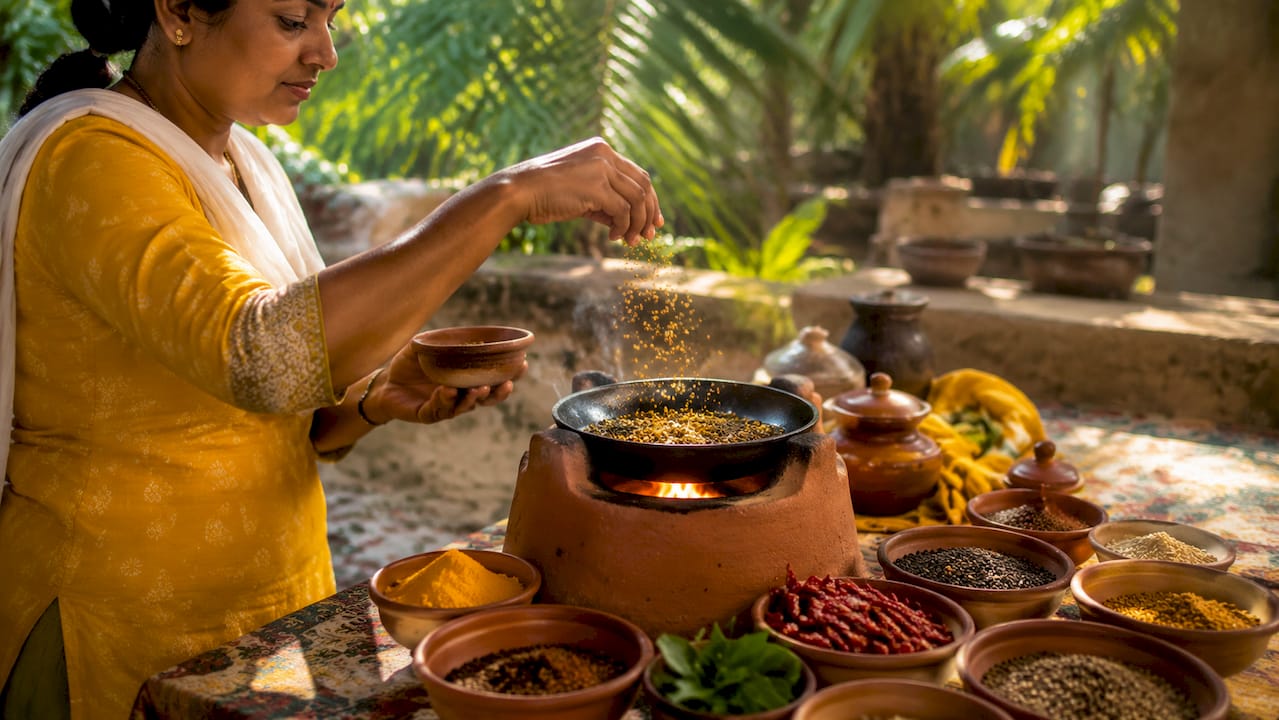
Mustard seeds are the first spice added to hot oil in Indian snack cooking, and that single act defines the flavor of everything that follows. The role of mustard seeds in Indian snacks is built on a technique called tempering (known in Indian kitchens as tadka), where seeds hit hot oil and release volatile aromatic compounds that no other spice can replicate. From South Indian Chickpea Sundal to street-style Masala Puffed Rice, mustard seeds form the nutty, earthy base that makes these snacks taste unmistakably homemade. Understanding how and why they work transforms you from someone who follows a recipe into someone who truly cooks.
How does mustard seed tempering shape indian snack flavor?
Tempering is the process of frying whole spices in hot oil to extract their fat-soluble flavor compounds before combining them with other ingredients. Mustard seeds go in first because their volatile oils release during this brief, intense heat exposure, creating an aromatic foundation that coats every ingredient that follows. That familiar crackling pop is not just satisfying to hear. It signals that the oil has reached the right temperature to properly activate the seeds.
The crackling sound signals that oil is hot enough for frying, which is critical for achieving crisp texture in snacks like Masala Puffed Rice. If the oil is too cool, the seeds absorb fat instead of releasing aroma, and the entire snack turns greasy. This is why experienced cooks never rush the pop.
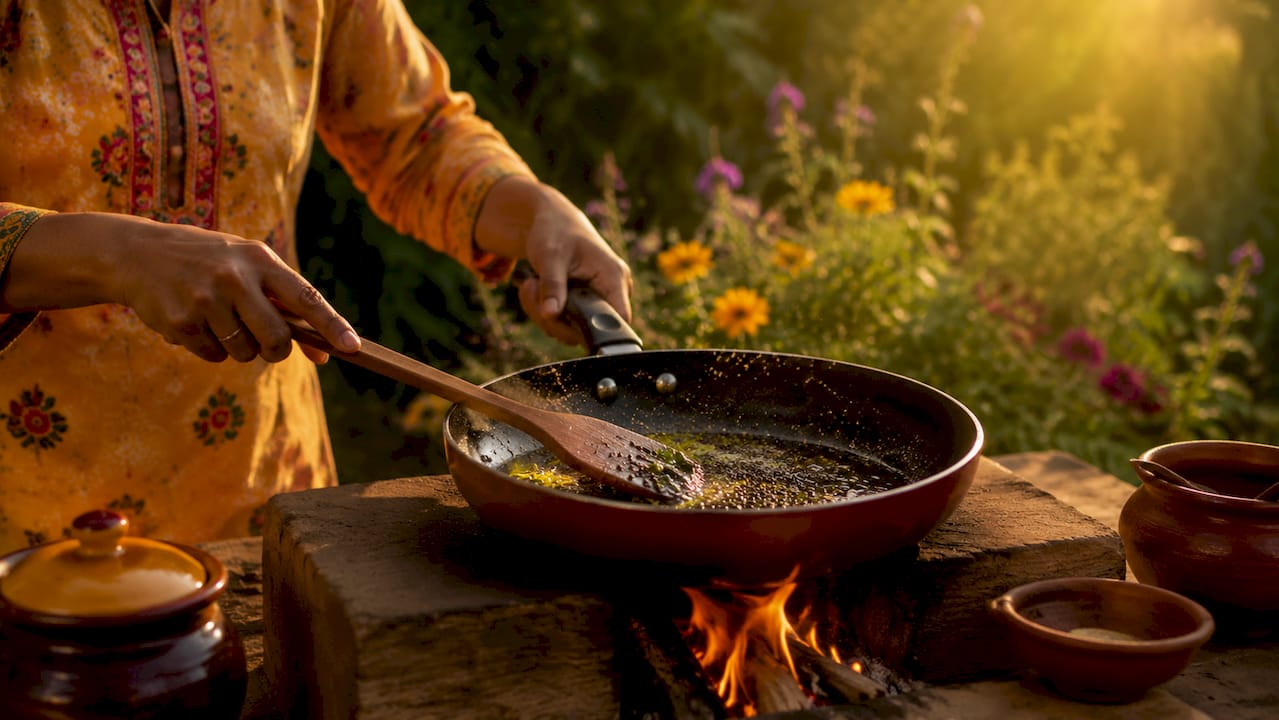
Mustard seeds also contribute a mild crunch to finished snacks. In Chickpea Sundal, a popular South Indian snack made with boiled chickpeas, the tempered seeds add textural contrast against the soft legumes. In Masala Puffed Rice, they provide tiny bursts of nuttiness between the light, airy puffed grains. The earthy, sharp flavor they deliver connects the heat of dried chilies to the herbal brightness of curry leaves, creating a layered taste that feels complete rather than one-dimensional.
Here is what happens step by step during proper mustard seed tempering:
Heat oil in a pan over medium-high heat until it shimmers
Add mustard seeds and cover loosely with a lid (they pop and scatter)
Wait for the crackling to slow, which takes roughly 20–30 seconds
Add curry leaves, dried chilies, or other aromatics immediately after
Combine the tempered oil with your main snack ingredients while still hot
Pro Tip: Cover the pan with a splatter screen or a loose lid the moment mustard seeds hit the oil. They pop aggressively and will scatter across your stovetop otherwise.
You can explore more about traditional tempering methods used across different Indian snack styles to see how this technique adapts across regions.
Black, brown, or yellow: which mustard seeds work best?
Not all mustard seeds behave the same way in the pan, and choosing the wrong type changes the flavor of your snack noticeably. The three main varieties used in Indian cooking are black, brown, and yellow (also called white), and each has a distinct intensity and best use case.
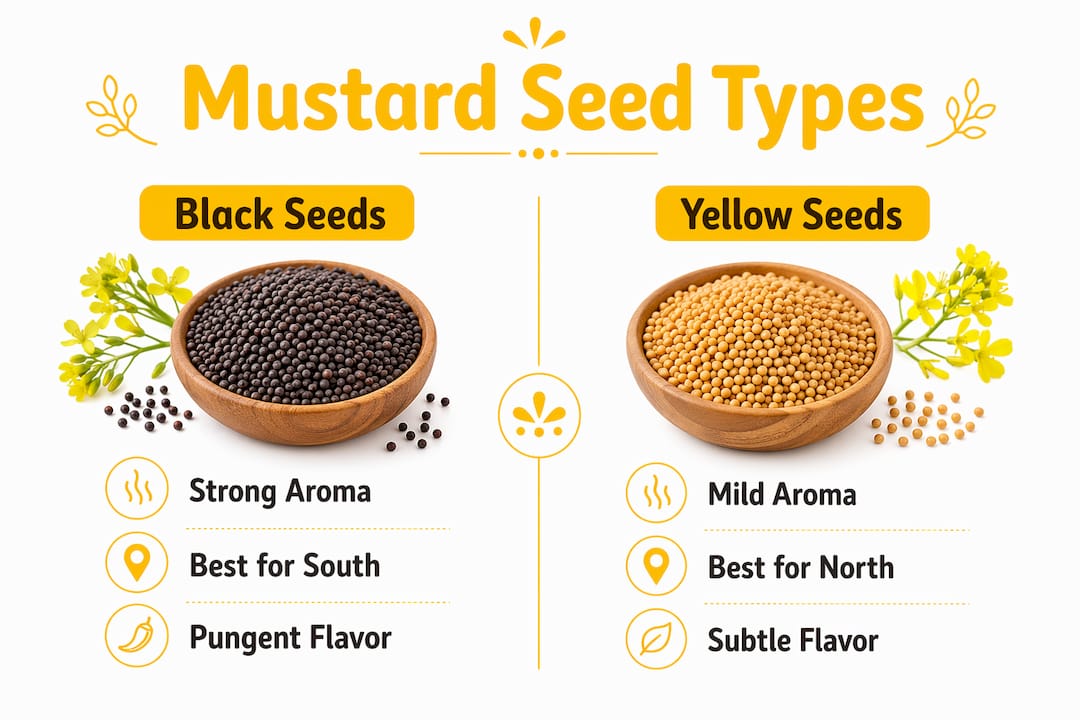
Variety | Flavor Profile | Best Use in Snacks |
Black mustard seeds | Strong, pungent, deeply aromatic | South Indian tempering: Sundal, Masala Puffed Rice |
Brown mustard seeds | Slightly milder, warm, nutty | General tempering across regional snacks |
Yellow/white mustard seeds | Mild, slightly tangy, less aromatic | Northern Indian snacks, pickles, lighter preparations |
Black mustard seeds are the most common choice for tempering in South Indian snack recipes. Their pungency is highest before cooking and mellows into a rich nuttiness once they hit hot oil. Brown mustard seeds are nearly identical but carry slightly less heat, making them a good substitute when you want the same technique with a softer result. Yellow mustard seeds are the mildest of the three. They are less suited for high-heat tempering and appear more often in Northern Indian preparations or as a pickling spice.
Flavor intensity directly affects the final snack. A South Indian Chickpea Sundal made with yellow mustard seeds instead of black will taste noticeably flat. The selection also affects mouthfeel. Black seeds, being smaller and denser, stay firm and crunchy after tempering. Yellow seeds are larger and softer, which changes the texture of the finished dish. Matching the right variety to the recipe is not a minor detail. It is the difference between an authentic result and a close approximation.
What are the health benefits of mustard seeds in snacks?
Mustard seeds are a genuine nutritional contributor, not just a flavoring agent. They supply essential minerals including phosphorus, iron, calcium, zinc, magnesium, and manganese. These minerals support bone health, energy metabolism, and immune function, which means the tiny teaspoon of seeds in your snack is doing real nutritional work.
The anti-inflammatory properties of mustard seeds are well documented. Isothiocyanates, the compounds formed when mustard seeds are crushed or tempered, reduce pro-inflammatory cytokines like TNF-alpha by up to 40%. That is a meaningful reduction, and it comes from a spice you are already using for flavor.
Mustard seeds also function as a digestive aid. They stimulate gastric juices, which helps your body break down food more efficiently. This makes them especially useful in protein-rich snacks like Chickpea Sundal, where digestion support is a genuine benefit.
The antioxidant compounds in mustard seeds are linked to chronic disease prevention. Regular consumption, even in small culinary amounts, contributes to reducing oxidative stress in the body. Beyond their direct health contributions, mustard seeds add bold flavor without requiring extra salt or fat. That means snacks tempered with mustard seeds can taste rich and satisfying while staying lighter than their mass-produced counterparts.
Key health contributions at a glance:
Anti-inflammatory: reduces cytokine activity through isothiocyanates
Digestive support: stimulates gastric juice production
Mineral-dense: delivers iron, calcium, magnesium, and zinc per serving
Antioxidant activity: linked to reduced oxidative stress
Flavor without excess sodium: adds depth without relying on added salt
Exploring snack diversity across India shows how mustard seeds appear in health-conscious preparations from multiple regions, not just South Indian cuisine.
How to use mustard seeds correctly in home snack cooking
Getting mustard seeds right at home comes down to quantity, timing, and pan management. Standard tempering uses 0.5 to 1 teaspoon of mustard seeds per batch. Using less produces a weak aromatic base. Using more can make the snack bitter, especially with black mustard seeds.
Follow these steps for consistent results every time:
Measure 0.5 to 1 teaspoon of mustard seeds before you start cooking
Heat your oil over medium-high heat until it shimmers visibly
Add mustard seeds to the center of the pan, not the edges
Cover loosely and wait for the crackling to peak and then slow
Add curry leaves and dried chilies immediately after the pop subsides
Combine the tempered mixture with your main ingredient while the oil is still hot
Toss quickly and evenly so every piece gets coated with the aromatic oil
Pan management is where most home cooks go wrong. Overcrowding the pan drops the oil temperature sharply. Overcrowding cools the oil, which leads to greasy, soggy snacks instead of crisp ones. Use a pan that gives your ingredients room to move.
For snacks made with poha (flattened rice), texture management is equally important. Quick rinsing preserves texture during cooking and mixing with mustard seed tempering. Over-soaking poha makes it mushy before it ever hits the pan, and no amount of good tempering will fix that.
Pro Tip: Always use fresh mustard seeds. Seeds that have been sitting in your pantry for over a year lose their volatile oil content and will not pop properly, which means weaker aroma and less flavor in your finished snack.
For more recipe context and technique guidance, the heritage snack recipes guide covers classic preparations where mustard seed tempering is central to the method.
Key takeaways
Mustard seeds are the single most important tempering spice in Indian snack cooking because they release irreplaceable volatile aromatics that form the flavor foundation of every dish they touch.
Point | Details |
Tempering comes first | Add mustard seeds to hot oil before any other ingredient to release their full aroma. |
Variety selection matters | Black seeds suit South Indian snacks; yellow seeds work better in Northern or pickled preparations. |
Health benefits are real | Mustard seeds reduce inflammation, aid digestion, and supply six key minerals per serving. |
Quantity is precise | Use 0.5 to 1 teaspoon per batch. More causes bitterness; less produces a flat flavor base. |
Technique determines texture | Avoid overcrowding the pan and over-soaking poha to keep snacks crisp and well-coated. |
Why mustard seeds deserve more respect than they get
I have cooked with mustard seeds for years, and the most common mistake I see home cooks make is treating them as background noise. They toss in a pinch, skip the pop, and wonder why their snack tastes flat. The truth is that mustard seeds are not a supporting spice. They are the opening act that sets the tone for everything else in the pan.
What surprises most people is how regional the choice of mustard seed variety actually is. In Tamil Nadu and Kerala, black mustard seeds are non-negotiable. In Maharashtra, brown seeds appear more frequently. In Rajasthan, yellow seeds show up in entirely different snack contexts. That regional specificity tells you something important: this is not a one-size-fits-all ingredient. The variety you choose signals which culinary tradition you are working within.
My honest recommendation for home cooks is to stop measuring mustard seeds by eye. Use a proper measuring spoon until you have made the same snack at least a dozen times. The difference between half a teaspoon and a full teaspoon is more significant than most people realize, especially with black mustard seeds. Once you have that quantity dialed in, focus entirely on the pop. When the crackling slows, that is your cue. Move fast, add your next ingredients, and keep the heat up. That 30-second window is where authentic Indian snack flavor is made or lost.
— Shivam
Taste the difference that real tempering makes
At Desimunchiess, we build every snack around the same principle: get the tempering right, and the rest follows naturally. Our products use freshly sourced mustard seeds and traditional handcrafted methods, so you get that bold, home-style flavor in every bite.
Our Tikoni Mathi is a great example of what proper mustard seed tempering does for a traditional snack. It is crisp, aromatic, and made the way it should be. No shortcuts, no mass-production compromises. If you want to taste what authentic Indian snack making feels like, browse our full range of freshly made Indian snacks and find your new favorite. We make them with love, and it shows.
FAQ
What is the role of mustard seeds in indian snacks?
Mustard seeds are used primarily in tempering, where they are fried in hot oil to release volatile aromatic compounds that form the flavor base of Indian snacks. They add a nutty, earthy depth that supports other spices like curry leaves and dried chilies.
Which mustard seeds are best for tempering indian snacks?
Black mustard seeds are the standard choice for South Indian snack tempering because of their strong, pungent aroma that mellows into nuttiness when cooked. Brown seeds work as a milder substitute, while yellow seeds are better suited for Northern Indian preparations.
How many mustard seeds should i use per batch?
Standard tempering uses 0.5 to 1 teaspoon of mustard seeds per snack batch. Using more than one teaspoon with black mustard seeds can introduce bitterness into the finished dish.
Are mustard seeds healthy in snack cooking?
Mustard seeds supply six key minerals including iron, calcium, and magnesium, and their isothiocyanates reduce pro-inflammatory cytokines by up to 40%. They also stimulate gastric juices, which supports digestion in protein-rich snacks like Chickpea Sundal.
Why do mustard seeds pop during cooking?
The popping occurs when volatile oils inside the seed expand rapidly from the heat of the oil. That crackling sound indicates the oil has reached the correct temperature for proper tempering and crisp snack texture.
Recommended
Comments