
Avoid Serving Size Traps: Namkeen Portion Size and FDA Label Tips

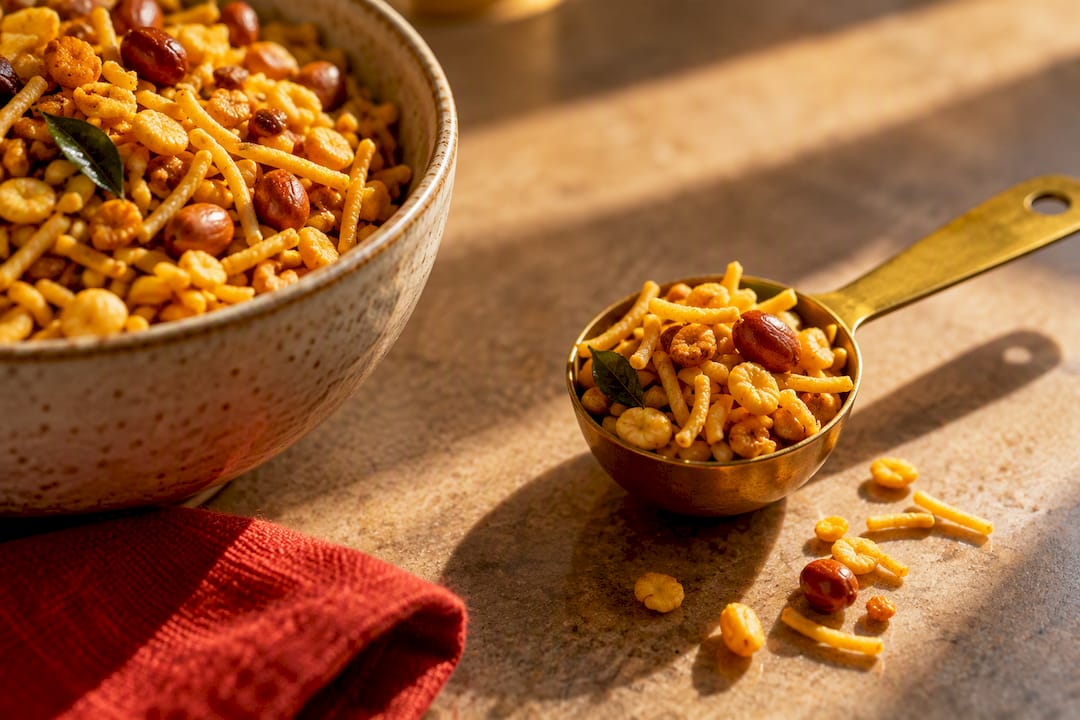
A healthy namkeen portion is a small handful, about 20 to 30 grams, which lands you somewhere between 100 and 180 calories depending on the type. That range matters because most namkeen is calorie-dense, often 420 to 600 calories per 100 grams, so a casual “just a bit more” can double your intake fast. Check the table below and the label math further down to get your actual number right.
TL;DR:
Most namkeen portions of 20-30 grams contain 100-180 calories, but larger servings can easily double daily calorie intake if unmeasured.
Fried, nut-heavy blends like masala peanut mixtures and bhujia reach 520-600 calories per 100 grams, making small portions crucial for calorie control.
Visual cues, such as a small handful or three tablespoons, approximate a 30-gram portion, while pre-portioning helps prevent overeating straight from larger bags.
Reading label details carefully ensures total calorie intake aligns with the actual amount consumed, especially when eating entire bags or larger servings.
Choosing lighter options like roasted chana or chivda, and serving namkeen in small bowls, helps keep snack calories within the 200-300 range for a satisfying, mindful treat.
Table of Contents
What Counts As a Healthy Namkeen Portion Size?
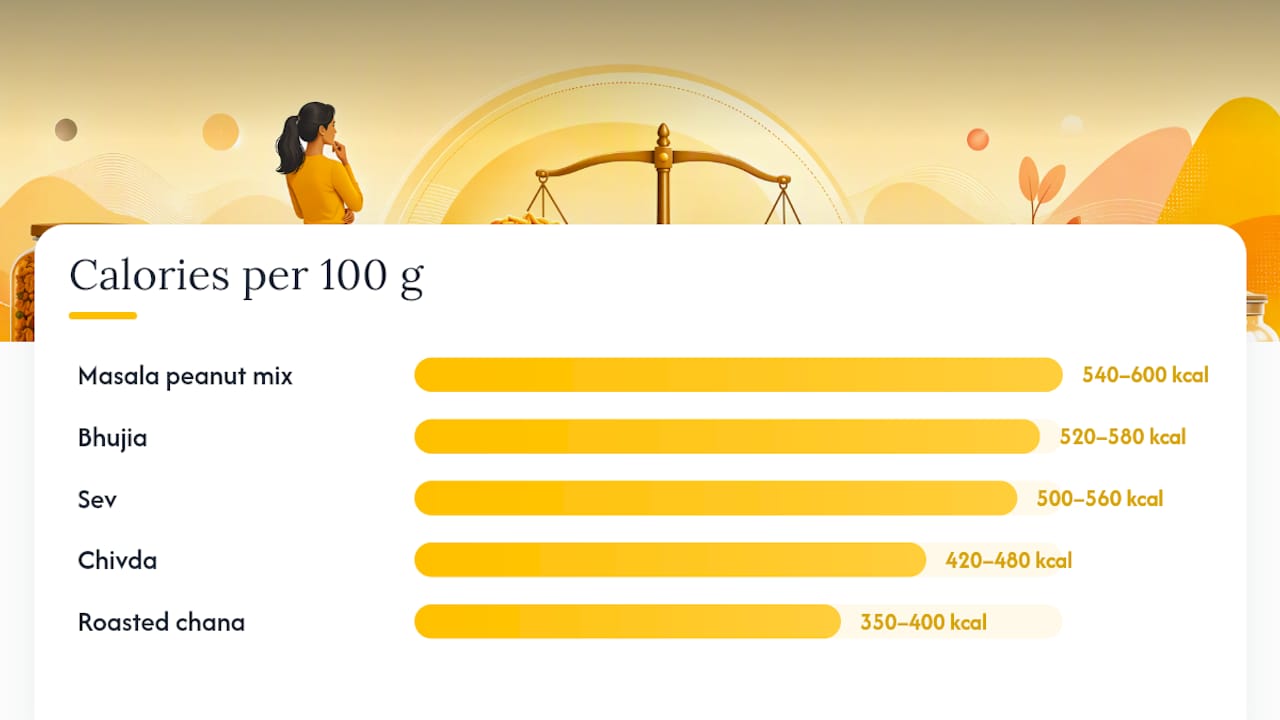
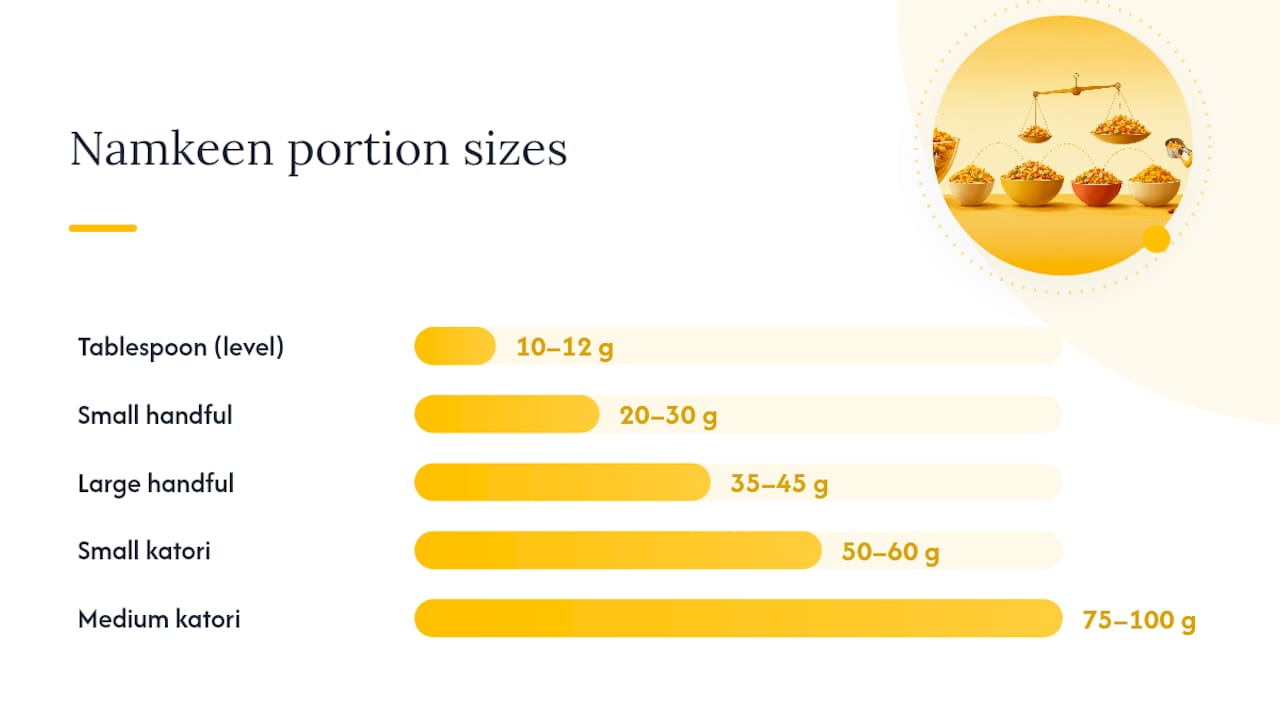
Namkeen calories swing hard depending on what’s in the mix, and the numbers surprise most people the first time they see them side by side. Fried, nut-heavy blends run hot. Roasted, single-ingredient snacks run cooler. Here’s how the most common types stack up per 100 grams, per a small 30-gram handful, and per a fuller 75-gram bowl.
Namkeen type | Calories per 100 g | Calories in 30 g | Calories in 75 g |
Bhujia | 520–580 | 150–180 | 390–450 |
Sev | 500–560 | 150–180 | 375–420 |
Mixture / Bombay mix | 480–540 | 144–162 | 360–405 |
Chivda | 420–480 | 126–144 | 315–360 |
Masala peanut mixture | 540–600 | 162–180 | 405–450 |
Roasted chana | 350–400 | 105–120 | 262–300 |
These ranges pull from comparison data on popular Indian snacks, with a peanut-based namkeen mix independently checked around 480 to 500 calories per 100 grams on consumer nutrition trackers. Masala peanut mixtures and bhujia sit at the top of the pack because oil and nuts pack energy into a small volume. Roasted chana comes in noticeably lighter, which makes it the easiest swap when you want the crunch without the calorie load.
A medium bowl can quietly cost you a whole meal. A 100-gram bowl of masala peanut mixture typically contains several hundred calories, close to what many people eat at lunch, delivered in a bowl you could finish in front of the TV without noticing.
How to Eyeball a Portion Without a Scale
Most kitchens don’t have a food scale sitting next to the namkeen jar, so visual cues do the heavy lifting. These are rough, but they’re close enough to keep you honest:
Small handful: 20–30 grams, roughly what fits in a cupped palm.
Large handful: 35–45 grams, a loose double scoop with both hands.
Small katori (bowl): 50–60 grams, about a third of a standard cereal bowl.
Medium katori (bowl): 75–100 grams, a bowl that looks “snack-sized” but carries a full meal’s worth of calories for the denser namkeens.
If you want more precision without buying kitchen equipment, a standard tablespoon holds about 10 to 12 grams of most namkeen mixes, so three level tablespoons gets you close to that 30-gram small-handful target. The American Heart Association uses this same logic for portion size versus serving size, comparing everyday objects to food amounts so you don’t need a scale for daily eating.
Pro Tip: Pre-portion your namkeen into small containers or resealable snack bags the day you open the pack. Eating straight from a family-size bag is the single biggest reason “one handful” turns into four.
Reading the Label So the Serving Size Doesn’t Fool You
The FDA draws a clear line between a serving size and a portion: the serving size on a Nutrition Facts label reflects what people typically eat, not a recommendation, while your portion is simply how much you choose to eat. Manufacturers sometimes lean on unrealistically small serving sizes, and research on labeling practices shows that consumers who don’t check servings per container routinely underestimate what they’ve actually eaten. Here’s the fix:
Find the serving size in grams on the label.
Check servings per container, listed right above it.
Weigh or estimate how many grams you actually ate.
Divide that by the label’s serving size to get your multiplier.
Multiply the calories and sodium per serving by that number.
Say a 100-gram bag lists four servings of 25 grams each at 130 calories and 300 milligrams of sodium per serving. Eat the whole bag, and you’ve taken in 520 calories and 1,200 milligrams of sodium. That’s four times the number printed in bold on the front panel.
Keeping Namkeen Inside a 200 to 300 Calorie Snack
Nutrition guidance from the International Food Information Council points to 200 to 300 calories as the range for a snack that actually satisfies without tipping into meal-size territory. A single 30-gram handful of most namkeen types already puts you in that window, which means the trick isn’t cutting namkeen out. It’s building the rest of the snack around it.
Pair a small handful with a boiled egg, a handful of edamame, or plain yogurt to add protein and stretch out fullness.
Add volume with something low-calorie, like cucumber sticks or air-popped popcorn, so the plate looks fuller than the calorie count suggests.
Reach for roasted chana or a baked snack over a heavily fried one when you’re snacking daily rather than occasionally.
Serve namkeen in a small bowl instead of eating from the bag, every single time.
Pro Tip: Treat oil-heavy, nut-dense namkeen like bhujia or masala peanut mixtures as a weekend or occasional treat, and save roasted chana or chivda for the everyday snack drawer. Same craving, less calorie damage.
Handcrafted Namkeen and Portion Control
Small-batch snacks make portion control easier because you’re not fighting a giant industrial bag designed to be bottomless. Some brands make snacks in small batches, using traditional recipes and real ingredients, which means the flavor stays close to what you’d get from a home kitchen instead of a factory line. Roasted chana is a solid pick if you’re watching calories closely but still want that toasted, savory crunch. Smaller packs and mix-and-match bundles also help, since a smaller bag naturally limits how much you can eat without thinking about it.
What I’ve Learned About How People Actually Overeat Namkeen
The mistake isn’t ignorance. Most people know namkeen is calorie-dense. The real problem is eating straight from the bag while doing something else, which erases any sense of how much has actually gone in. I’ve also noticed that people treat “healthy” swaps like roasted chana as license to eat more of it, which quietly cancels out the calorie savings. Portion control, not full abstinence, is the lever that actually works here. You don’t need to give up namkeen. You need a bowl, a handful you can see, and a habit of stopping there.
— Shivam
Snack Smarter With Desimunchiess
Portion control gets a lot easier when the snack itself is made in a size that doesn’t tempt you to keep going. Certain handcrafted, small-batch snacks made with traditional recipes and real ingredients provide bold, home-style flavor without the mystery ingredients in a mass-produced bag.
Roasted chana is a natural pick if you’re building a lighter snack rotation, and browsing the full snacks and roasted chana lineup lets you compare pack sizes so you can grab something closer to a single portion instead of a family-size bag. If you’re leaning toward something baked rather than fried, the Atta Biscuits are worth a look too. Head to the all-products page, pick a size that matches how you actually snack, and start portioning with a bowl instead of a bag.
Sources
FAQ
How Many Calories Are in 20 Grams of Namkeen?
A 20-gram portion of most namkeen types runs roughly 100 to 120 calories, depending on whether it’s a lighter option like chivda or a denser one like bhujia. Check the calories-per-100-gram ranges above and scale down proportionally for your exact type.
Does Namkeen Cause Weight Gain?
Namkeen itself doesn’t cause weight gain any more than any other calorie-dense food does. Eating large, unmeasured portions regularly, especially straight from the bag, is what pushes daily calorie intake up over time, since many varieties pack 420 to 600 calories per 100 grams.
How Many Calories Are in 1 Cup of Namkeen?
A full cup of namkeen weighs roughly 75 grams, a typical medium portion size, which typically works out to 350 to 500 calories for most types. That’s closer to a full meal than a snack, so a cup is a good example of a portion worth splitting or measuring down.
Is It Okay to Eat Namkeen Daily?
Eating namkeen daily is fine if you stick to a small, measured portion, roughly 20 to 30 grams, and keep the total snack in the 200 to 300 calorie range nutrition guidance recommends. Leaning toward roasted chana or lighter chivda for everyday snacking, and saving heavier fried mixtures for occasional treats, keeps daily namkeen sustainable rather than a habit that quietly adds up.
Recommended
Comments