
What Does Bikaneri Namkeen Mean? Origin and Authenticity
- DesiMunchiess

- 2 days ago
- 6 min read
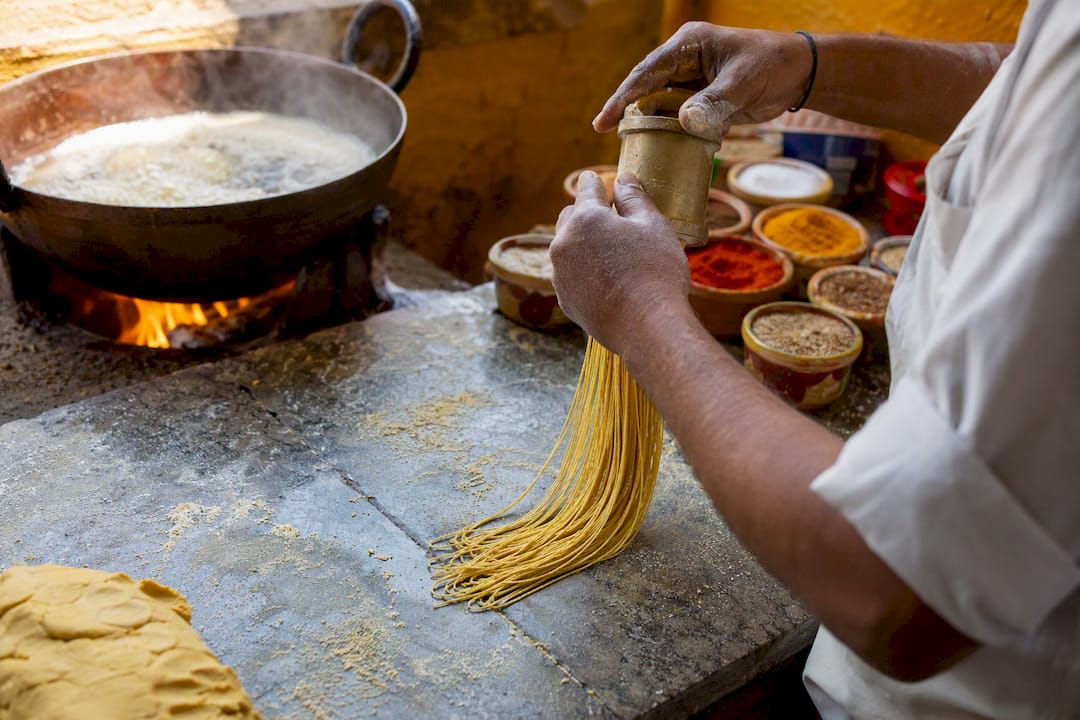
Bikaneri namkeen means savory, spiced snacks that come from Bikaner, a desert city in Rajasthan, India. “Namkeen” is simply the Hindi word for salty snack food, and the “Bikaneri” tag tells you exactly where it was born. The most famous example, by far, is Bikaneri bhujia, a crunchy, spiced noodle-like snack that’s earned legal protection tied to its birthplace.
Namkeen literally means “salty” in Hindi, used broadly for savory snack foods.
Bikaneri signals geographic origin, not just a flavor style. It’s a place name, like “Champagne” for sparkling wine.
Bhujia is the hero product. It’s the reason the world knows Bikaner’s name at all.
We’ll get into what makes it official, what’s inside it, and how to spot the real thing versus a knockoff.
Key Takeaways
Bikaneri namkeen refers to savory snacks from Bikaner, Rajasthan, with GI-protected Bikaneri bhujia as the defining example made from moth bean flour.
Point | Details |
Definition | “Namkeen” means salty snack food in Hindi; “Bikaneri” ties it to Bikaner, Rajasthan. |
Origin | Bikaneri bhujia dates to around 1877, during Maharaja Dungar Singh’s reign. |
Key ingredient | Moth bean flour (Vigna aconitifolia) distinguishes it from standard besan-based bhujia. |
Legal protection | GI status, granted in September 2010, restricts the name to registered Bikaner producers. |
Economic role | The cottage industry employs an estimated 2.5 million people in the region. |
Table of Contents
The History Behind Bikaneri Namkeen and Bhujia
Bikaneri bhujia traces back to around 1877, during the reign of Maharaja Dungar Singh, according to CNN’s coverage of the snack’s origin. A local shopkeeper is credited with mixing moth bean flour with spices and frying it into thin strands, a recipe that stuck around for nearly 150 years.
Around 1877: First bhujia recipes appear in Bikaner, tied to Maharaja Dungar Singh’s court.
Early 1900s onward: Local bazaar producers turn it into a daily trade good.
September 2010: The Indian Patent Office grants Geographical Indication status, confirmed in The Hindu’s reporting on Bikaneri bhujia.
By the numbers: GI protection came after decades of copycat products flooded the market under the Bikaneri name, per The Hindu’s account of the legal process.
What started as a bazaar snack scaled into an industry. Haldiram’s, one of the biggest names in Indian packaged food, took bhujia from Bikaner’s lanes to national shelves, and that shift from small stalls to factory lines changed how most people encounter this snack today.
What Ingredients Make Bikaneri Bhujia Different?
The defining ingredient is moth bean, known scientifically as Vigna aconitifolia, ground into flour instead of the standard gram flour (besan) used in ordinary bhujia. This single swap is what separates a true Bikaneri product from a generic one, according to Wikipedia’s entry on Bikaneri bhujia.
Moth bean flour (Vigna aconitifolia), sometimes blended with a small amount of gram flour.
Groundnut oil for frying, which shapes both flavor and texture.
Spice blend typically including red chili, black pepper, and asafoetida.
Standard bhujia made purely from besan tends to be softer and milder. Authentic Bikaneri bhujia is light yellow, noticeably crunchier, and more strongly flavored than regular sev, according to TasteAtlas’s description of the snack. If a bag of “bhujia” tastes flat or looks pale white instead of golden yellow, the moth bean content is probably missing.
How Is Traditional Bikaneri Bhujia Made?
The process hasn’t changed much since the 1800s, even where it’s now done on an industrial scale.
Mix the dough. Moth bean flour combines with water, spices, and a touch of gram flour into a thick paste.
Shape the strands. The dough is pressed through a sev press with a fine, sieve-like nozzle to create thin, hollow strands.
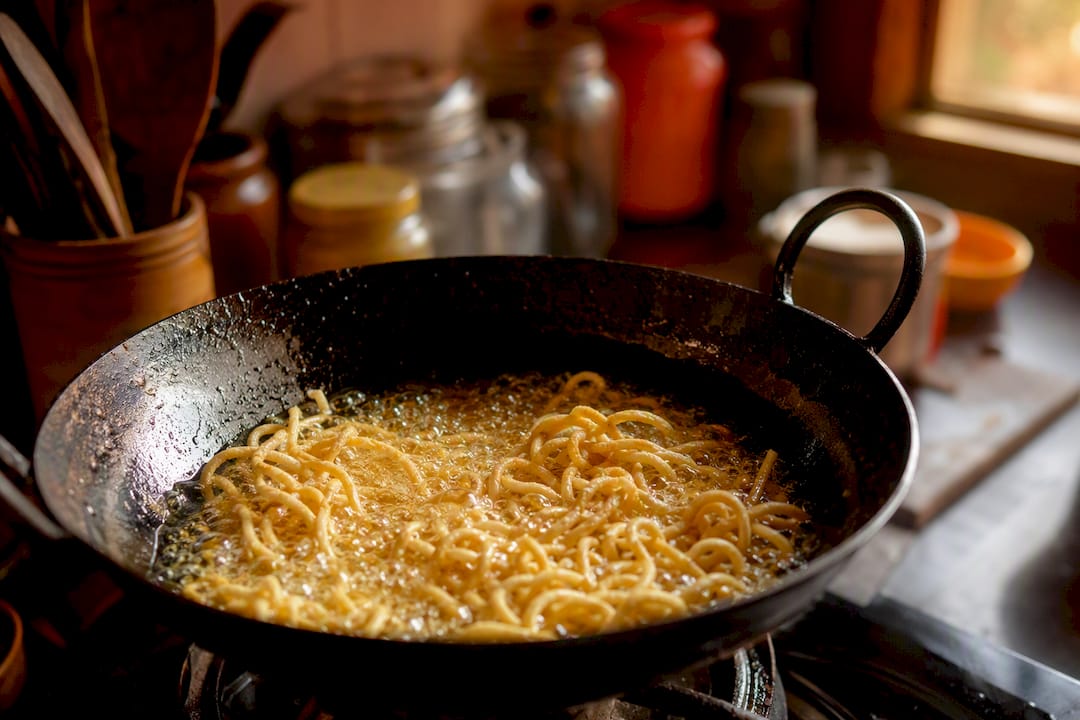
Fry in groundnut oil. Hot oil crisps the strands within seconds, giving bhujia its signature snap.
Drain and cool. Excess oil is removed, and the bhujia cools completely before packing.
Package for freshness. Sealed promptly to lock in crunch and prevent moisture absorption.
Bikaner’s desert climate plays a real role here. Dry air and the region’s water quality are commonly credited with helping the fried strands stay crisp longer, a detail noted in The Hindu’s reporting on local production.
Pro Tip: If you’re frying namkeen at home, keep oil temperature steady around medium-high heat. Oil that’s too cool makes soggy, greasy strands instead of that signature crunch.
What Does GI Protection Mean for Bikaneri Bhujia?
A Geographical Indication (GI) is a legal label that ties a product’s name to a specific place, similar to how only sparkling wine from Champagne, France can carry that name. Bikaneri bhujia received this protection in September 2010, according to The Hindu, which means only registered producers in the Bikaner district can legally call their product “Bikaneri bhujia.”
Look for a GI certification mark or a registered producer’s name on the package.
Be skeptical of “Bikaneri-style” labels. That wording often means a product mimics the name without meeting GI standards.
Check for a listed place of manufacture. Bikaner, Rajasthan should appear somewhere on authentic packaging.
The government’s ODOP listing recognizes bhujia as Bikaner’s flagship food product, which gives local cottage producers legal standing and a marketing edge against copycats using the name loosely.
Why Is Bikaner Famous for Namkeen?
Bhujia isn’t just a snack in Bikaner. It’s an identity. The cottage industry built around it employs an estimated 2.5 million people in the region, many of them women working in small-batch production, according to Wikipedia’s documentation of the industry.
Bhujia shows up at weddings, festivals, and as a go-to gift when visiting family.
It’s a point of local pride, the way a hometown dish becomes shorthand for where someone’s from.
Haldiram’s helped push bhujia from regional bazaars to national and international markets, scaling daily production far beyond what small shops could manage, per The Hindu’s account.
That growth created a real tension. Mass production expanded access to bhujia worldwide, but it also diluted the name, letting products with little connection to Bikaner ride on its reputation.
How Can You Recognize Authentic Bikaneri Namkeen?
A few quick checks separate the real thing from a generic imitation sold under a familiar name.
Check the ingredient list for Vigna aconitifolia or “moth bean,” not just gram flour.
Look for a GI label, registered producer name, or Bikaner listed as the place of manufacture.
Judge by sight and smell: authentic bhujia is light yellow, not pale white, with a sharp spice aroma.
Compare texture. It should snap cleanly, not crumble into powder or feel chewy.
Pro Tip: When buying online or from a diaspora grocer, ask the seller directly about the producer’s name and batch date. A seller who can’t answer either question probably isn’t selling the real thing. Diaspora buyers often do better trusting brands that name their sourcing and ingredients clearly, per TasteAtlas’s guidance on authenticity checks.
Bhujia vs. Sev and Other Bikaneri Namkeen
Bhujia and sev look alike but aren’t the same snack. Sev is typically made purely from gram flour and tends to be softer, thinner, and milder in flavor. Bhujia, especially the Bikaneri kind, uses moth bean flour and delivers a stronger, spicier crunch.
Sev: besan-based, mild, often used as a topping for chaat.
Bikaneri bhujia: moth bean based, bold flavor, eaten on its own.
Other Bikaneri namkeen includes spiced lentil mixes, papad, and roasted gram snacks, all sharing that same desert-region spice profile.
The word “bhujia” gets used generically for any thin fried namkeen, but “Bikaneri bhujia” specifically points back to that original moth-bean recipe from Rajasthan. For a deeper look at how these terms stack up, our comparison of namkeen and other savory snacks breaks down where each style fits.
Why This Snack’s Story Matters to Us
We built Desimunchiess around the idea that a snack’s origin story is part of what makes it worth eating. Learning how Bikaneri bhujia earned its name, its GI status, and its moth-bean recipe only deepened our respect for getting these details right in our own kitchen. We’re an online seller of homemade-style Indian snacks, and authenticity isn’t a marketing line for us. It’s the entire point. If you want to see how bhujia fits alongside other regional snacks, check out our guide to lesser-known Indian snack types.
Taste Bikaneri Bhujia Made the Traditional Way
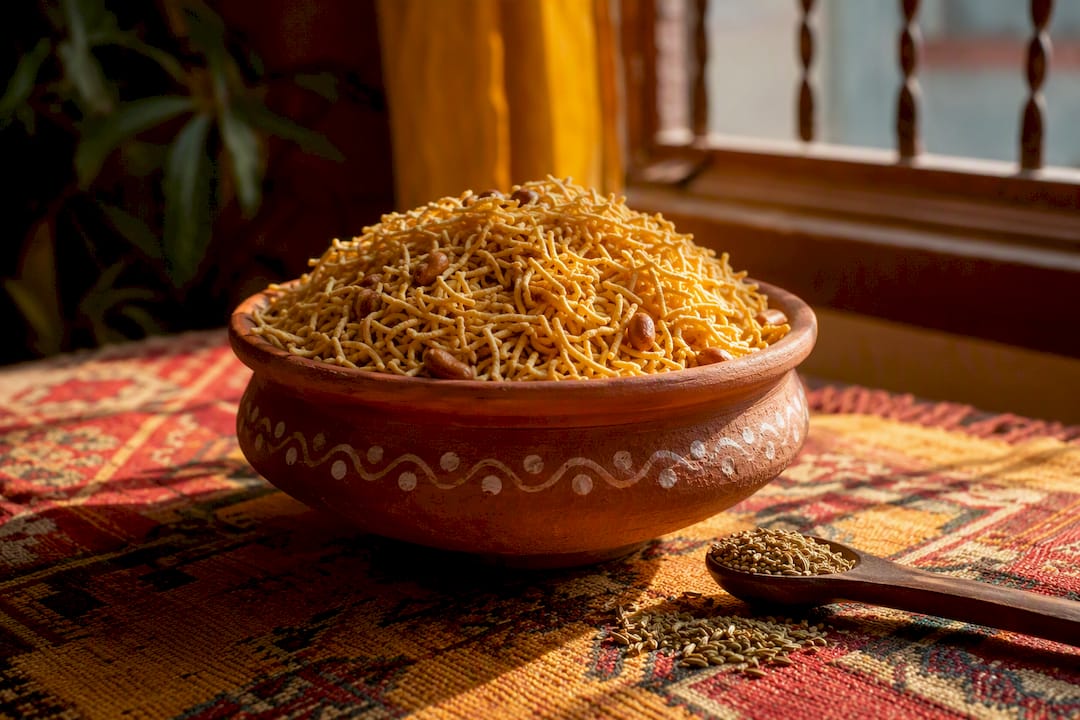
Reading about moth bean flour and GI labels is one thing. Tasting the real crunch is another. Our Priniti Bhujia is handcrafted in small batches using traditional recipes, so you get that same bold, spiced flavor without guessing whether what’s in the bag matches what’s on the label. We keep things fresh and honest, snack by snack. Shop our bhujia today and taste what authentic actually means.
Sources
Recommended
Comments