
100–215 Cal Nankhatai for U.S. Bakers: History and Home Recipe
- DesiMunchiess

- 2 days ago
- 6 min read
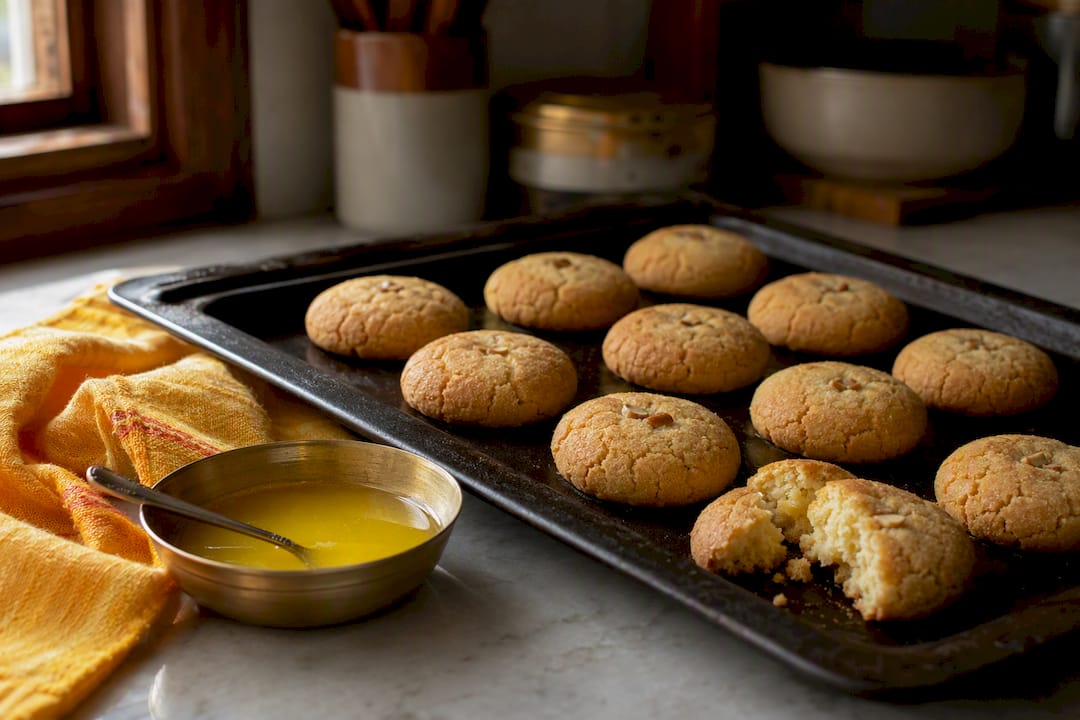
Nankhatai is a traditional Indian shortbread cookie, usually eggless, made with ghee, flour, and sugar, and flavored with cardamom. It’s known for a crumbly, sandy texture that melts on your tongue rather than crunching. The name traces back to Persian, and the cookie itself grew out of centuries of trade and baking traditions across the Indian subcontinent.
TL;DR:
Traditional recipes use refined wheat flour, ghee, and powdered sugar, with optional additions like semolina or gram flour for texture.
Most nankhatai contain around 455 calories per 100 grams, with a typical cookie ranging from 100 to 215 calories depending on size and fat content.
The cookie’s crumbly, melt-in-your-mouth texture results from minimal gluten development and the use of ghee instead of butter.
Variations include semolina for crunch, nut-heavy toppings, and vegan options with plant-based oils or butter, with regional tweaks influencing flavor and texture.
Table of Contents
Where Does Nankhatai Come From?
We love that nankhatai carries so much history in one bite. Most food historians trace its roots to Surat, Gujarat, around the 16th century, a bustling trade port where Persian, Dutch, and local Indian influences mixed in the kitchen just as much as they did on the docks.
The name itself tells the story. “Nan” comes from the Persian word for bread, and “khatai” likely derives from “Cathay,” an old term for China, hinting at cookie-baking techniques that traveled the trade routes. Some accounts point to Parsi and Dutch bakers in Surat as the ones who adapted foreign biscuit recipes into something distinctly local.
A few things stand out about how it evolved:
Dutch bakers reportedly experimented with leftover bread dough, adding fat and sugar to keep it from going stale.
Local bakers swapped in ghee and Indian spices, shifting it away from a European biscuit and toward something new.
Over generations, it settled into the eggless, crumbly cookie we recognize today, spreading from Gujarat across the subcontinent.
That blend of Persian vocabulary and Indian technique is why writers often call nankhatai a symbol of culinary exchange rather than a single country’s invention.
What Goes Into Nankhatai?
The ingredient list is short, but every item pulls weight. Traditional recipes build the dough around a few staples:
Flours: Maida (refined wheat flour) is the base in most versions, often blended with besan (gram flour) or fine semolina for texture.
Fat: Ghee is the classic choice, though butter works too and gives a slightly different richness.
Sweetener: Powdered sugar, never granulated, since it needs to dissolve smoothly into the fat.
Flavor: Ground green cardamom is standard, sometimes joined by a pinch of saffron.
Topping: Chopped pistachios or almonds pressed into the center before baking.
Leavening: Older recipes called for ammonium bicarbonate, a technique tied to Chinese almond-cookie baking; most home bakers today just use baking powder.
Pro Tip: If you’re gluten-sensitive, swap maida for a gluten-free flour blend and lean harder on besan. It naturally has no gluten and adds a nutty depth that plays well with the cardamom.
Butter can stand in for ghee in a pinch, but ghee’s slightly caramelized, nutty flavor is really what makes nankhatai taste like nankhatai and not just a generic butter cookie.
Why Does Nankhatai Taste So Different From a Butter Cookie?
Bite into a nankhatai and it doesn’t snap. It crumbles, almost powders, then dissolves. That’s the texture bakers call “khasta,” and it comes from how little gluten gets developed in the dough.
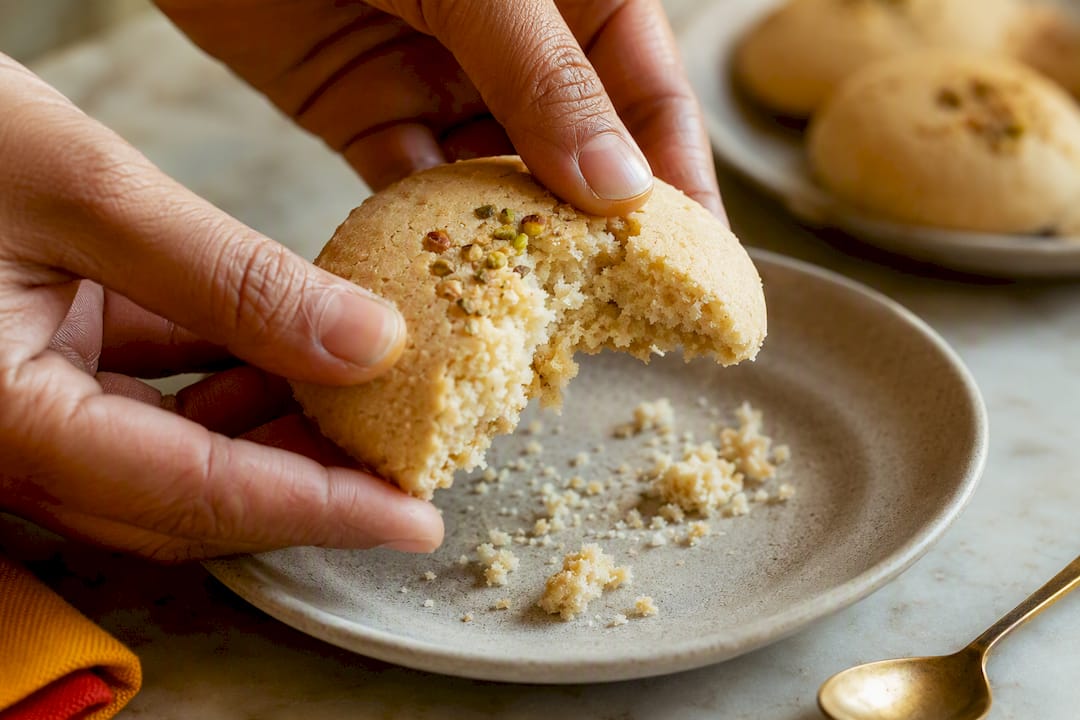
Compare that to a Scottish shortbread or a Western butter cookie, which usually get some structure from egg or a firmer creaming method. Nankhatai skips the egg entirely and relies on ghee coating the flour particles, which blocks gluten from forming long strands.
A few textural differences worth knowing:
Besan and semolina add grit and a slightly nutty bite, unlike the smooth crumb of an all-maida cookie.
Ghee melts at a lower temperature than butter, which is part of why the cookie feels like it’s dissolving rather than chewing.
Less mixing means less gluten, which means more of that sandy, delicate crumb everyone associates with a good nankhatai.
How Is Nankhatai Made at Home?
The method is more forgiving than people expect. Here’s the general sequence most home-baker recipes follow:
Cream the ghee and powdered sugar together until light, or rub cold ghee into the flour mixture by hand for a sandier result.
Fold in the dry ingredients, maida, besan or semolina, cardamom, and baking powder, mixing just until combined.
Bring the dough together gently, without kneading it like bread dough.
Divide and roll into small balls, flattening slightly and pressing a nut into the center.
Chill for 10 to 15 minutes if the dough feels soft, which helps the cookies hold their shape.
Bake at around 300 to 325°F for 15 to 20 minutes, until the edges turn pale golden but the tops stay light.
The biggest beginner mistake is overmixing, which builds gluten and turns a delicate cookie tough and dense. The second is overbaking, since nankhatai firms up as it cools, so pulling it slightly early usually gives a better crumb.
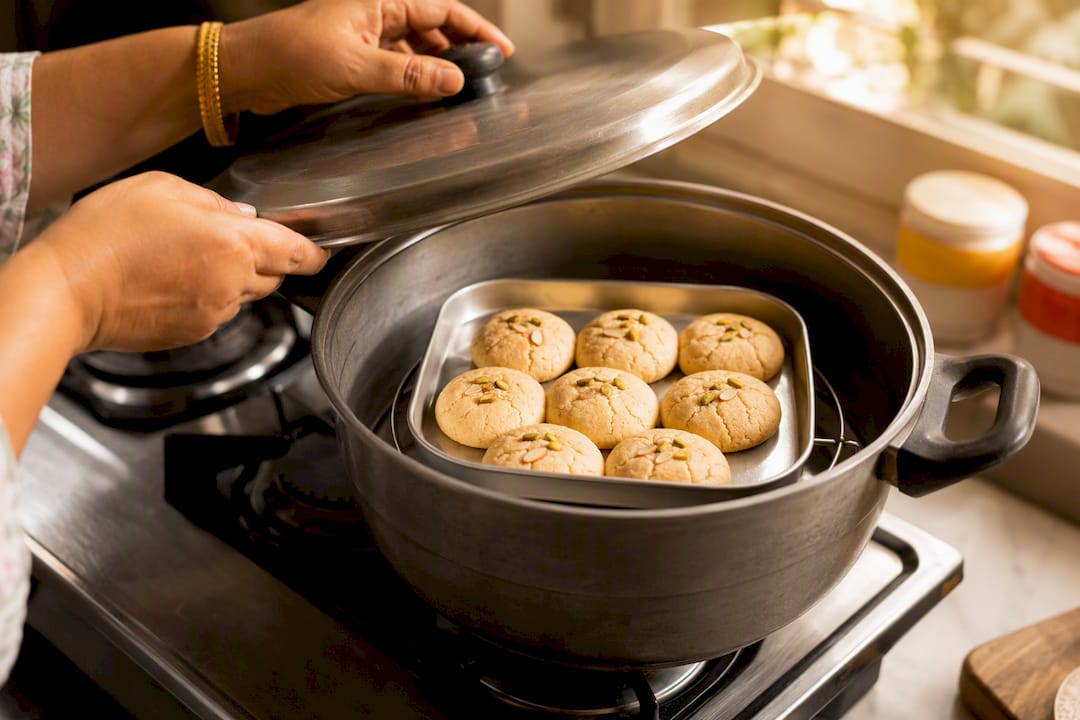
Pro Tip: No oven? Recipes from Indian Healthy Recipes show that nankhatai can be baked in a covered pan on the stovetop or in a pressure cooker without water, using low heat and a stand or trivet to keep cookies off direct metal.
What Are the Common Nankhatai Variations?
Once you know the base recipe, the variations make sense as small dial turns on flour, fat, and flavor. Some of the most common ones:
Besan-heavy nankhatai leans into gram flour for a nuttier, slightly denser cookie.
Semolina versions add a bit of crunch alongside the classic melt-in-mouth crumb.
Irani-style biscuits, popular in old-school Bombay and Karachi bakeries, are often topped generously with pistachios or almonds and baked slightly firmer.
Nutmeg or saffron add-ins show up in festive batches for extra aroma.
Vegan versions swap ghee for a neutral plant oil or vegan butter, trading some richness for accessibility.
Want it softer? Use more ghee and slightly less flour. Want it crisper? Add a touch more semolina and bake a couple minutes longer. Either way, you’re working within a tradition that’s always welcomed regional tweaks, from Gujarat to Hyderabad to Karachi.
How Many Calories Are in Nankhatai?
Nankhatai earns its energy density honestly, mostly from ghee and sugar. Commercial nankhatai runs about 455 calories per 100 grams, and a single cookie typically lands somewhere between 100 and 215 calories depending on its size and how much fat the recipe uses.
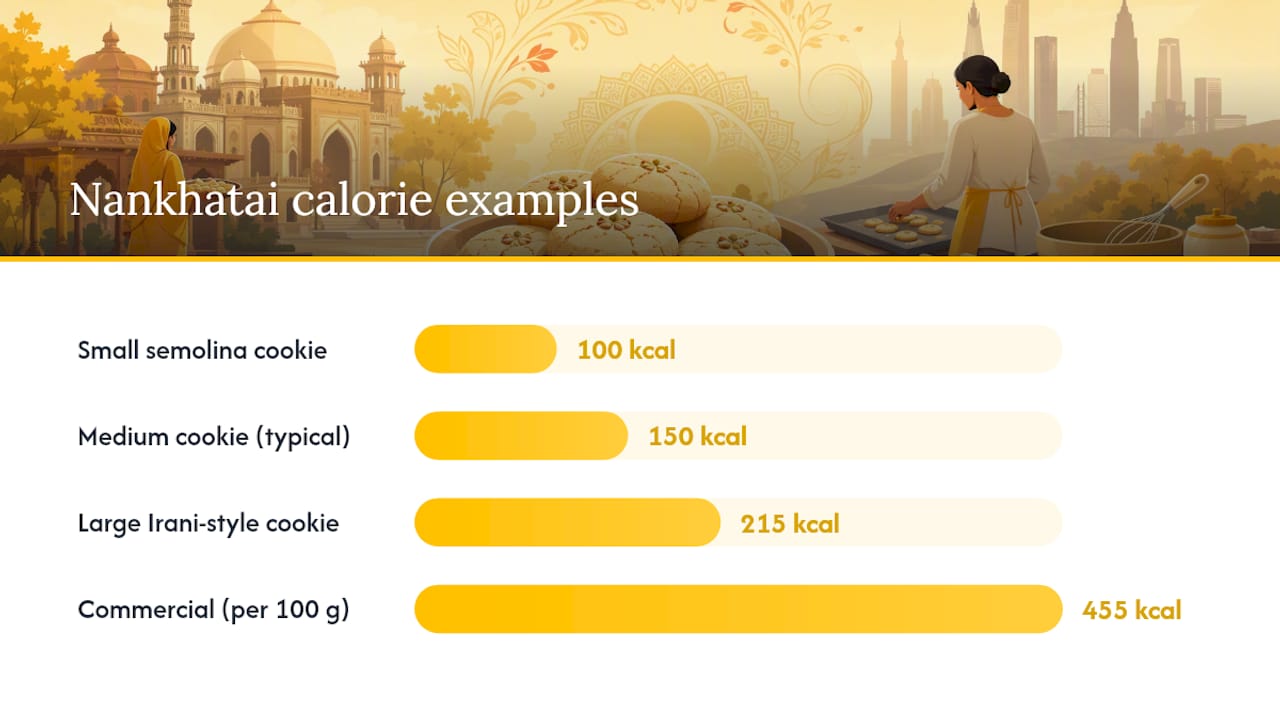
That range matters when you’re deciding how many to grab with your chai. A smaller, semolina-based cookie sits toward the lower end, while a larger, ghee-heavy Irani-style biscuit pushes toward the higher one. If you’re tracking portions, our breakdown of tea biscuit calories covers how nankhatai compares to other popular tea-time snacks.
Two or three cookies alongside a cup of tea is the typical serving most people land on, plenty to satisfy without overdoing the sugar and fat.
How Is Nankhatai Traditionally Served?
Nankhatai has always been a tea-time cookie first. Walk into an old-school bakery counter across Gujarat, Maharashtra, or Karachi and you’ll usually find a glass case stacked with them, right alongside other baked Indian snacks sold by weight.
It shows up in a few familiar settings:
Paired with masala chai during afternoon breaks, the cardamom in the cookie echoing the spice in the tea.
Handed out during Diwali, Eid, and other festive gatherings as part of homemade gift boxes.
Set out alongside dry fruits and nuts on a platter for guests.
Served with plain black tea or even coffee for a simpler, everyday snack.
If you want to lean into the pairing, a good loose-leaf black or spiced chai blend brings out the cardamom in the cookie without competing with it.
Why Nankhatai Still Matters to Us at Desimunchiess
We think about nankhatai the same way we think about every recipe we make: it’s not just a cookie, it’s a memory someone’s grandmother perfected over decades. That’s the standard we hold ourselves to when we handcraft our own baked snacks, sourcing real ghee, real spices, and skipping shortcuts that flatten flavor.
A cookie built on ghee and cardamom only works if the ingredients are honest. That’s the same philosophy behind our atta biscuits, made with whole-wheat flour for that same home-kitchen texture people grew up with. If you’re assembling your own spice stash for a baking project, a dedicated spice storage set keeps cardamom, saffron, and nutmeg fresh and easy to grab.
Good nankhatai should taste like someone’s kitchen, not a factory line.
— Shivam
Where This Information Comes From
History and etymology details come from Wikipedia’s nankhatai entry and Scroll’s food history piece. Recipe and method details come from Indian Healthy Recipes, and calorie data comes from EatThisMuch.
Craving the real thing without the baking mess? Shop Desimunchiess for handcrafted snacks made the traditional way, or try our tikoni mathi for another classic tea-time bite.
Sources
Recommended
Comments