
Why Bhujia Is the Indian Diaspora's Favorite Snack

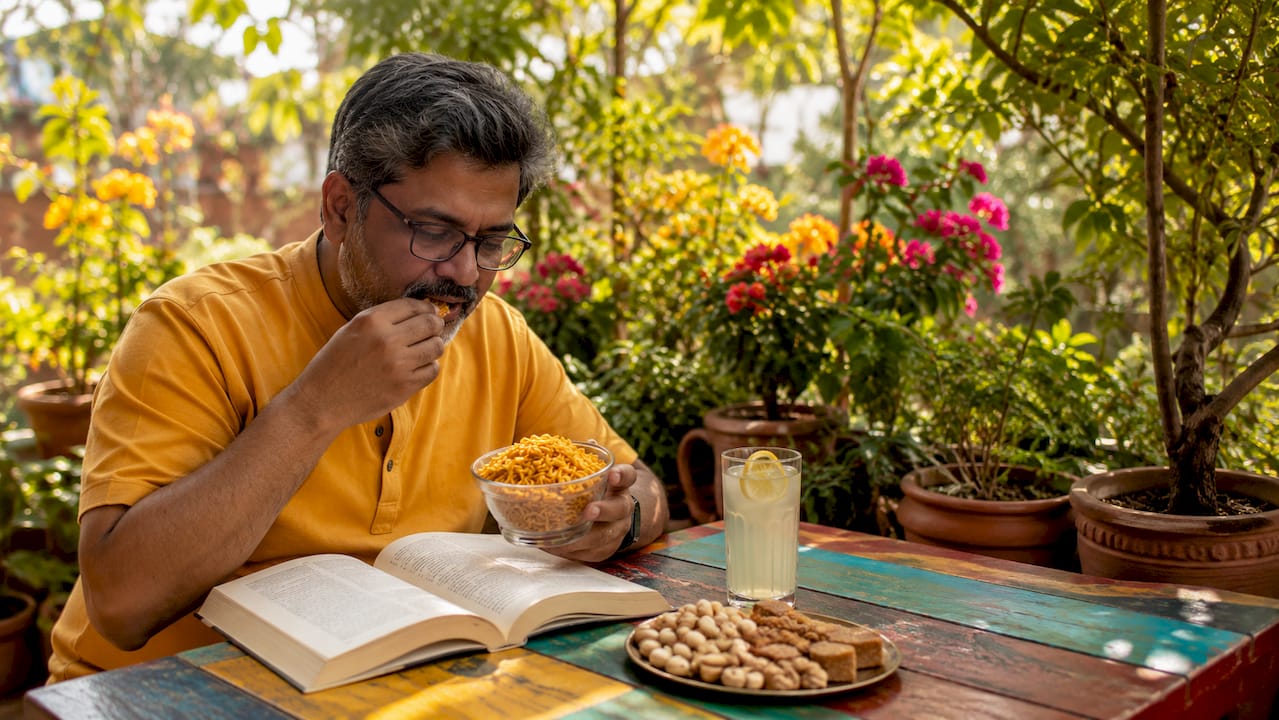
Bhujia is a crispy, spiced Indian snack from Bikaner, Rajasthan, and it is the single most recognized comfort food among Indian diaspora communities worldwide. Its combination of bold flavor, long shelf life, and deep cultural roots explains why bhujia is a popular Indian diaspora snack in ways that no other packaged food quite matches. From a tin of Haldiram’s on a London kitchen shelf to a bag of Bikaji shared at a Diwali party in New Jersey, bhujia travels with people. It carries memory, identity, and the unmistakable taste of home.
What is Bikaneri bhujia and how did it originate?
Bikaneri bhujia is the original, protected form of bhujia, and its story begins in 1877 under Maharaja Shri Dungar Singh in Bikaner, Rajasthan. The snack was developed using two local ingredients: moth beans and gram flour. Both ingredients were hardy, drought-resistant, and widely available in the Thar desert. That combination produced a shelf-stable, ready-to-eat snack that could survive the region’s extreme heat without refrigeration.
The desert origins of bhujia were not accidental. Bikaner’s arid climate made food preservation a daily challenge. Bhujia solved that problem by being naturally dry, spiced, and calorie-dense. It was nutritional insurance for a population living in one of India’s harshest environments. That practical origin is part of what makes bhujia so culturally significant. It was never a luxury snack. It was a survival food that became a beloved one.
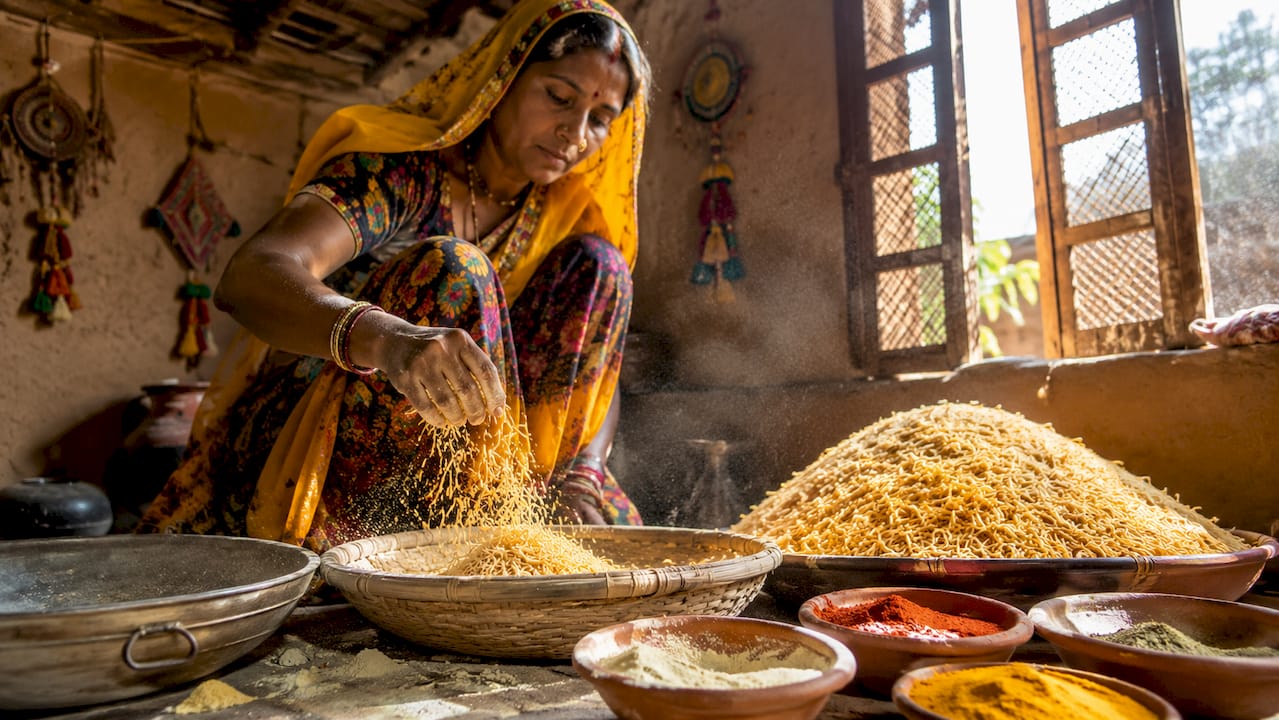
Bikaneri bhujia received Geographical Indication (GI) protection, with a patent issued in 2010 to local Bikaner manufacturers. GI protection means only producers in Bikaner can legally call their product “Bikaneri bhujia.” That legal status reinforces the snack’s authenticity and gives diaspora consumers a clear quality signal when buying abroad.
Key facts about Bikaneri bhujia’s origin:
Founding year: 1877, under Maharaja Shri Dungar Singh
Core ingredients: Moth beans and gram flour, both native to Rajasthan
Climate advantage: Naturally shelf-stable without refrigeration
GI protection: Granted in 2010 to preserve regional authenticity
Cultural status: Recognized as intangible culinary heritage representing desert resilience
The bhujia snack history is not just a food story. It is a story of a community turning scarcity into something extraordinary.
How bhujia became a global brand for Indian diaspora communities
Bhujia’s journey from a cottage industry product to a global staple is largely the story of two brands: Haldiram’s and Bikaji. Both companies recognized that the Indian diaspora abroad craved authentic flavors and were willing to pay for quality they could trust.
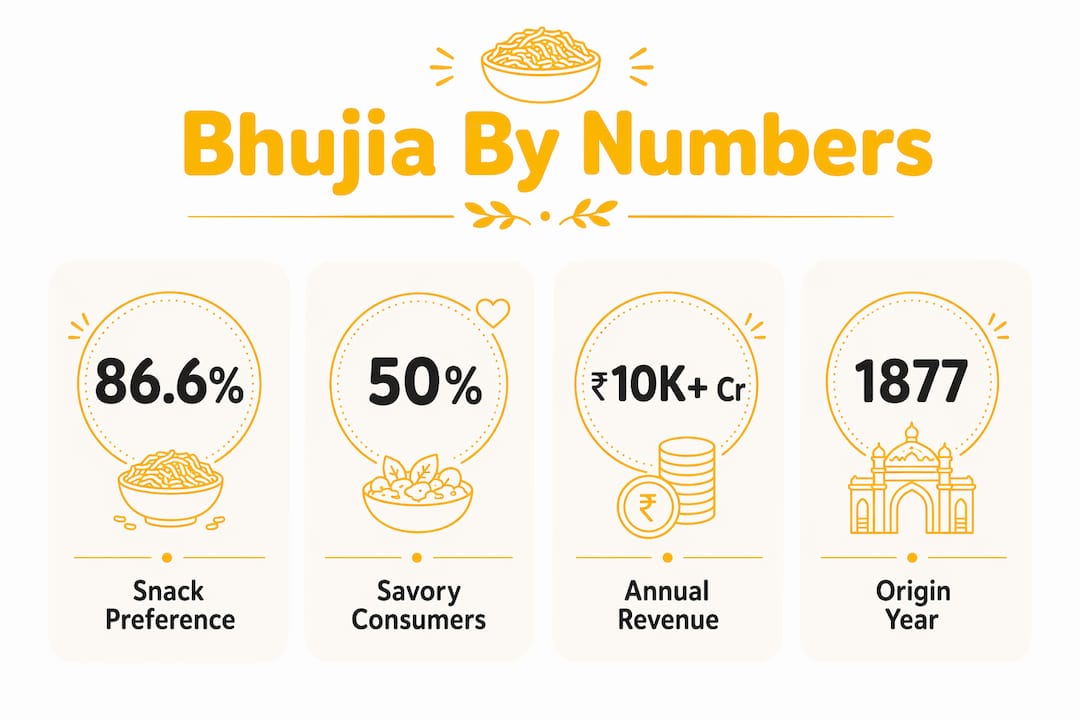
Haldiram’s transformed bhujia from a loose, unbranded product into a global food brand with revenues exceeding ₹10,000 crore and a presence in over 80 countries. That scale did not come from advertising alone. It came from obsessive consistency. Every bag tasted the same whether you bought it in Mumbai or Manchester. That reliability built trust with diaspora consumers who had no other way to verify quality from thousands of miles away.
Bikaji followed a similar path, focusing on traditional recipes and clean production to earn its place on diaspora shelves. Both brands understood that for the Indian diaspora, bhujia was not just a snack. It was a cultural anchor. Selling it poorly would mean losing something irreplaceable.
The transformation from cottage product to premium brand was the key unlock for diaspora trust. When bhujia moved into sealed, labeled packaging with consistent weight and flavor, diaspora consumers could finally rely on it the same way they relied on any trusted household brand.
Haldiram’s exports to over 80 countries, targeting diaspora communities first before expanding to non-Indian consumers
Bikaji built its reputation on traditional Bikaneri recipes with minimal deviation
Export strategy: Both brands prioritized diaspora markets in the UK, USA, Canada, and Australia before pursuing mainstream retail
Brand loyalty: Diaspora consumers consistently return to the same brands because the flavor matches their memory of home
Pro Tip: When buying bhujia abroad, look for sealed packaging with a GI-certified Bikaneri label or a trusted brand like Haldiram’s or Bikaji. That label tells you the recipe has not been altered for local tastes.
Why does bhujia taste so addictive?
Bhujia’s addictive quality is not accidental. It is the result of a specific sensory combination that triggers the brain’s reward system. The crunch and spice of bhujia activate dopamine release in the nucleus accumbens, the brain’s reward center. Salt amplifies the signal. The auditory crunch adds a second layer of stimulation. Together, they create a loop that makes you reach for another handful before you have finished the first.
This is the bhujia taste profile explained through neuroscience. It is not just spicy noodles. It is a multisensory experience that combines taste, sound, and smell into one repeatable reward. Repeated exposure to this loop actually reduces dopamine receptors over time, which means your brain demands more bhujia to feel the same satisfaction. That is why one handful is rarely enough.
The four-step sensory reward loop works like this:
Sensory cue: The smell of bhujia or the sight of the packet triggers an immediate craving
First bite: The crunch activates auditory and taste receptors simultaneously
Dopamine release: Salt, spice, and texture combine to trigger the brain’s reward response
Habit reinforcement: The brain records the reward and strengthens the craving for next time
“Bhujia consumption is a behavioral loop: a sensory cue triggers craving, consumption activates reward, and the habit reinforces itself alongside cultural identity.”
Consumer data backs this up. 86.6% of Indian snack consumers prefer ready-to-eat snacks at home, and 50% consume savory snacks three to five times weekly. That frequency is not random. It reflects a deeply ingrained snacking habit built on exactly the kind of sensory reward bhujia delivers.
How bhujia serves as an emotional anchor for the diaspora
Bhujia is more than a snack for the Indian diaspora. It is a direct, physical connection to home. Its shelf stability means it can be packed in a suitcase, mailed in a care package, or stored in a pantry for months without losing flavor. No preparation is needed. You open the bag and you are back in your grandmother’s kitchen.
The emotional role of bhujia is tied to specific rituals. Tea-time with bhujia is a near-universal memory for anyone who grew up in a North Indian household. That ritual does not disappear when you move to Toronto or Sydney. It gets recreated, often with the same brand your family used back home. That act of recreation is what makes bhujia a cultural symbol, not just a popular Indian snack abroad.
Key reasons bhujia functions as an emotional anchor:
Shelf stability: Survives long-distance transit without refrigeration, making it ideal for care packages
No preparation: Ready to eat straight from the bag, removing any barrier to the comfort ritual
Tea-time ritual: Paired with chai across generations, the combination is a sensory memory trigger
GI-protected authenticity: Knowing the product is genuinely Bikaneri adds cultural pride to every bite
Generational sharing: Parents introduce bhujia to children born abroad, passing the cultural connection forward
Pro Tip: If you are sending bhujia in a care package internationally, double-seal the bag inside a zip-lock pouch. The spice aroma is strong enough to permeate cardboard, and customs officers sometimes flag heavily scented packages.
The bhujia cultural significance runs deep precisely because it requires no translation. You do not need to explain it to another Indian. The shared experience is instant.
How bhujia fits into global kitchens today
Bhujia’s role in global cooking has expanded well beyond the snack bowl. Its naturally gluten-free and vegan profile makes it compatible with a wide range of dietary preferences, which has helped it gain traction in mainstream Western kitchens. That compatibility was built into the recipe long before gluten-free and vegan trends became mainstream consumer demands.
Chefs and home cooks now use bhujia as a garnish on chaats, poha, and curd-based dishes. It adds crunch, spice, and texture in a single ingredient. Some cooks sprinkle it over salads or use it as a topping for avocado toast. These fusion uses reflect how bhujia in Indian cuisine has crossed over into everyday global cooking without losing its identity.
Ethnic snacks contribute 68% of revenues for major Indian snack companies. That figure confirms that diaspora loyalty and mainstream curiosity are both driving demand at scale.
Use case | How bhujia is used | Dietary benefit |
Traditional snacking | Eaten straight from the bag with chai | Gluten-free, vegan |
Chaat topping | Sprinkled over papdi chaat or bhel puri | Adds crunch and spice |
Poha garnish | Mixed into or served alongside poha | Texture contrast |
Fusion cooking | Used as salad topping or toast garnish | Plant-based crunch |
Party platter | Served alongside dips at gatherings | Easy, no-prep option |
Bhujia’s versatility is one of the strongest arguments for its staying power. It works in traditional recipes and modern fusion dishes equally well. That range keeps it relevant across generations and across cultures.
Key Takeaways
Bhujia is popular among the Indian diaspora because it combines an irreplaceable sensory experience, deep cultural roots, and practical shelf stability that no other Indian snack fully replicates.
Point | Details |
Ancient, protected origin | Bikaneri bhujia dates to 1877 and holds GI protection, guaranteeing authenticity. |
Brand trust drives diaspora loyalty | Haldiram’s and Bikaji built global reach through consistent quality, not advertising. |
Neuroscience explains the craving | Crunch, salt, and spice trigger dopamine loops that reinforce repeat consumption. |
Emotional and cultural anchor | Shelf stability and tea-time rituals make bhujia a direct connection to home. |
Culinary versatility extends reach | Gluten-free and vegan by nature, bhujia fits traditional and fusion cooking equally. |
Why bhujia hits differently when you are far from home
I have eaten a lot of Indian snacks over the years. Chakli, mathri, namak pare, sev. All of them are good. None of them do what bhujia does. There is something specific about that thin, spiced crunch that lands differently when you are sitting in a city that does not smell like India. You open the bag and the aroma hits first. Then the crunch. And for about thirty seconds, you are somewhere else entirely.
What I find genuinely interesting is that bhujia’s appeal is not nostalgic in a sad way. It is grounding. It reminds you that your culture is portable. You carried it with you. That is a powerful thing for a snack to do, and I do not think most people consciously recognize it while it is happening.
The brands that get this right, like Haldiram’s and Bikaji, never tried to reinvent bhujia for Western palates. They kept the recipe honest. That decision, to trust the product rather than dilute it, is why diaspora consumers keep coming back. You can read more about the heritage behind Indian snack recipes to understand just how much craft goes into getting these flavors right.
The one thing I would push back on is the idea that bhujia is just a comfort food. It is also a statement. Serving it at a party, packing it in a lunch, or gifting it in a care package says something about who you are and where you come from. That kind of cultural confidence is worth celebrating.
— Shivam
Craving the real thing? Desimunchiess has you covered
If reading this made you want to reach for a bag of bhujia right now, we get it completely. At Desimunchiess, we make freshly prepared, bold-flavored Indian snacks that taste like they came straight from a home kitchen, not a factory floor. Every batch is made with care, using traditional recipes and quality ingredients.
You can grab authentic bhujia online directly from our store, or browse the full range of classic Indian snacks we offer for diaspora snack lovers across the country. Whether you are stocking up for a party, sending a care package, or just treating yourself on a Tuesday evening, we have got something that will bring that taste of home right to your door.
FAQ
What makes Bikaneri bhujia different from regular bhujia?
Bikaneri bhujia is made specifically from moth beans and gram flour in Bikaner, Rajasthan, and holds GI protection granted in 2010. Other bhujia varieties may use different legumes or spice blends and cannot legally carry the Bikaneri name.
Why is bhujia so popular among Indians living abroad?
Bhujia is shelf-stable, requires no preparation, and delivers an immediate sensory connection to home. Its long shelf life makes it easy to transport internationally, and its familiar flavor triggers strong comfort associations for diaspora communities.
Which brands make the most trusted bhujia for diaspora consumers?
Haldiram’s and Bikaji are the two most recognized bhujia brands among diaspora communities. Haldiram’s exports to over 80 countries and built its reputation on consistent quality across every market.
Is bhujia gluten-free and vegan?
Bhujia is naturally gluten-free and vegan, made from legume-based flour and spices with no dairy or wheat. That profile makes it compatible with a wide range of dietary preferences beyond traditional Indian cooking.
How often do Indian snack consumers eat bhujia?
Consumer data shows 50% of Indian snack consumers eat savory snacks three to five times weekly. Bhujia, as one of the most accessible and shelf-stable options, is a consistent part of that snacking habit.
Recommended
Comments