
Why Small Batch Snacks Are Fresher for Kids

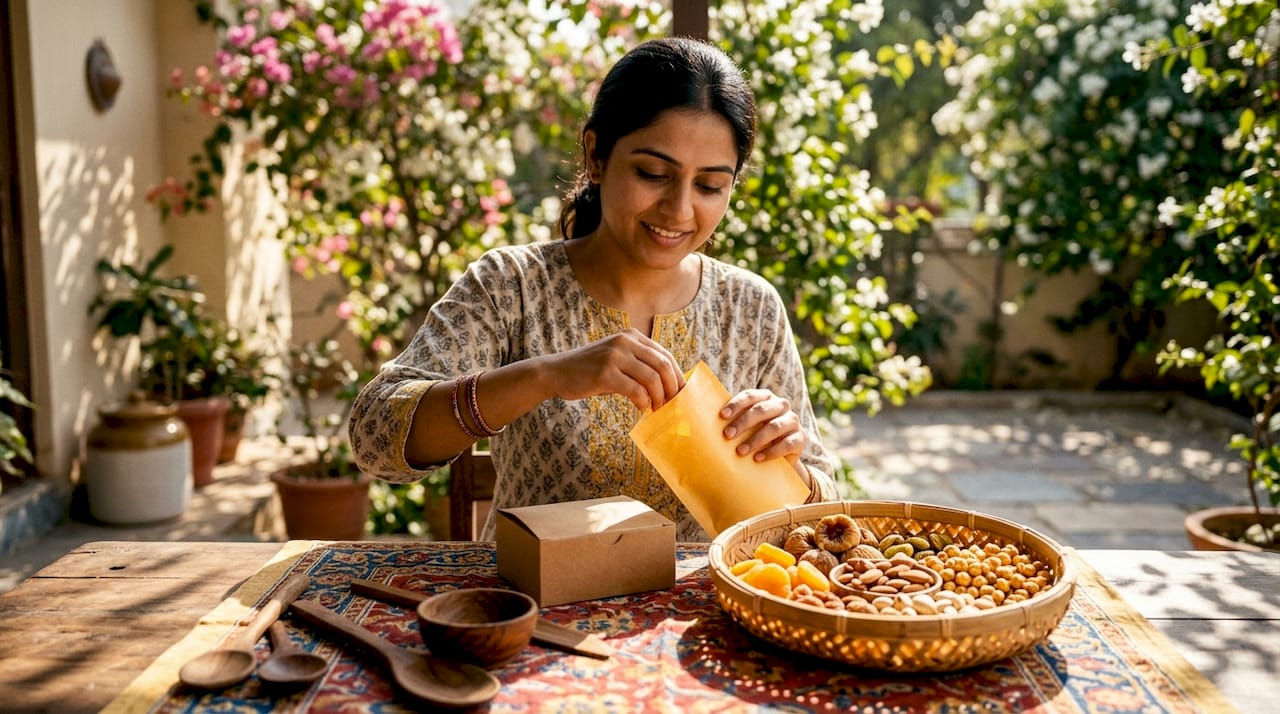
Small batch snacks are fresher for kids because they are made with whole, minimally processed ingredients in limited runs, preserving superior flavor and nutritional quality. The food industry calls this approach “artisan production” or “small-run manufacturing,” and the difference it makes for children’s snacks is real and measurable. Factory snacks require synthetic preservatives to survive 6–12 months on shelves. Small batch snacks skip those additives entirely. That single difference changes everything about what your child actually eats.
Why small batch snacks are fresher for kids: the production difference
Production scale is the root cause of freshness differences between small batch and mass-produced snacks. Factory snacks travel through long supply chains before reaching store shelves. Each step adds time, and time degrades nutrients, flavor, and fat quality.
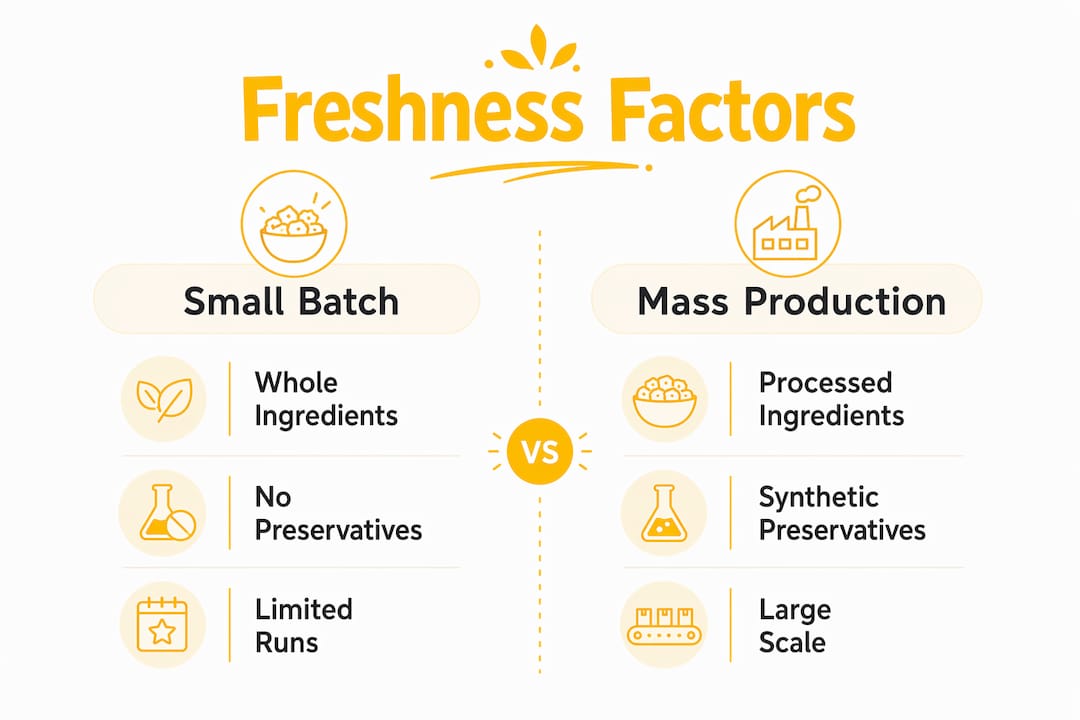
Mass-produced snacks rely on emulsifiers, stabilizers, and artificial preservatives to maintain texture and appearance across months of storage. Small batch snacks achieve stability through balanced proportions of whole ingredients instead. That means no synthetic additives masking stale flavors or degraded fats.
Ingredient sourcing also differs sharply. Small batch producers buy fresher, higher-quality raw materials in smaller quantities and use them quickly. Factory lines buy in bulk and store ingredients for extended periods before processing. By the time a factory snack reaches your child, its core ingredients may have been sitting in a warehouse for weeks.
The table below shows how these two production approaches compare across key freshness factors.
Factor | Small batch production | Mass production |
Ingredient freshness | Whole, recently sourced ingredients | Bulk-stored, pre-processed inputs |
Preservatives | None or minimal | Synthetic preservatives for 6–12 month shelf life |
Additives | No emulsifiers or stabilizers | Emulsifiers, stabilizers, and flavor agents common |
Storage time before sale | Days to weeks | Weeks to months |
Ingredient list length | Short, recognizable items | Extended lists with chemical additives |
Pro Tip: Check the ingredient list before buying any snack for your child. If you cannot pronounce more than two items on the list, the snack likely contains industrial additives absent from fresh, small batch options.
The nutritional value of snacks drops with storage time. Vitamins, especially fat-soluble ones like A, D, E, and K, degrade when exposed to heat, light, and prolonged storage. Small batch snacks reach your child closer to the moment of preparation, which means those nutrients are still intact.
How fat quality shapes snack freshness and your child’s nutrition
Fat quality is one of the most overlooked factors in children’s snack nutrition. Mass-produced snacks often contain oxidized fats from extended storage, which degrades both taste and nutritional quality before the package even opens. That stale, cardboard-like taste in factory crackers or chips is oxidized fat. It is not just unpleasant. It means the beneficial fatty acids your child needs are already broken down.
Small batch producers use fresh butter, cold-pressed oils, and whole-food fats that have not been sitting in industrial tanks. Genuine freshness means food prepared recently from whole ingredients, with fat-soluble vitamins and fatty acids still active. That distinction matters for growing children whose brains and bodies depend on quality fats.
Here is how fat sources compare between the two production types:
Small batch snacks: Real butter, cold-pressed oils (such as sesame or coconut), ghee, and whole nut pastes
Mass-produced snacks: Partially hydrogenated oils, refined vegetable oils stored long-term, synthetic antioxidants added to slow oxidation
The difference shows up in taste immediately. Fresh fats carry flavor. Oxidized fats carry staleness. Children’s palates are sensitive, and they notice the difference even when they cannot name it.
Pro Tip: Look for snacks that list a specific fat source like “cold-pressed sesame oil” or “real butter” rather than generic “vegetable oil.” Specific fat labeling is a strong signal of small batch, fresh production.
Understanding snack nutrition for families starts with fat quality. When fats are fresh, the whole snack tastes better and delivers more nutritional value per bite.
How does small batch production control quality better?
Small batch production gives producers direct, real-time control over every batch. That control produces better snacks. Artisan producers use sensory feedback to detect subtle quality shifts, adjusting aroma, balance, and mouthfeel during production. Machines cannot replicate that process.
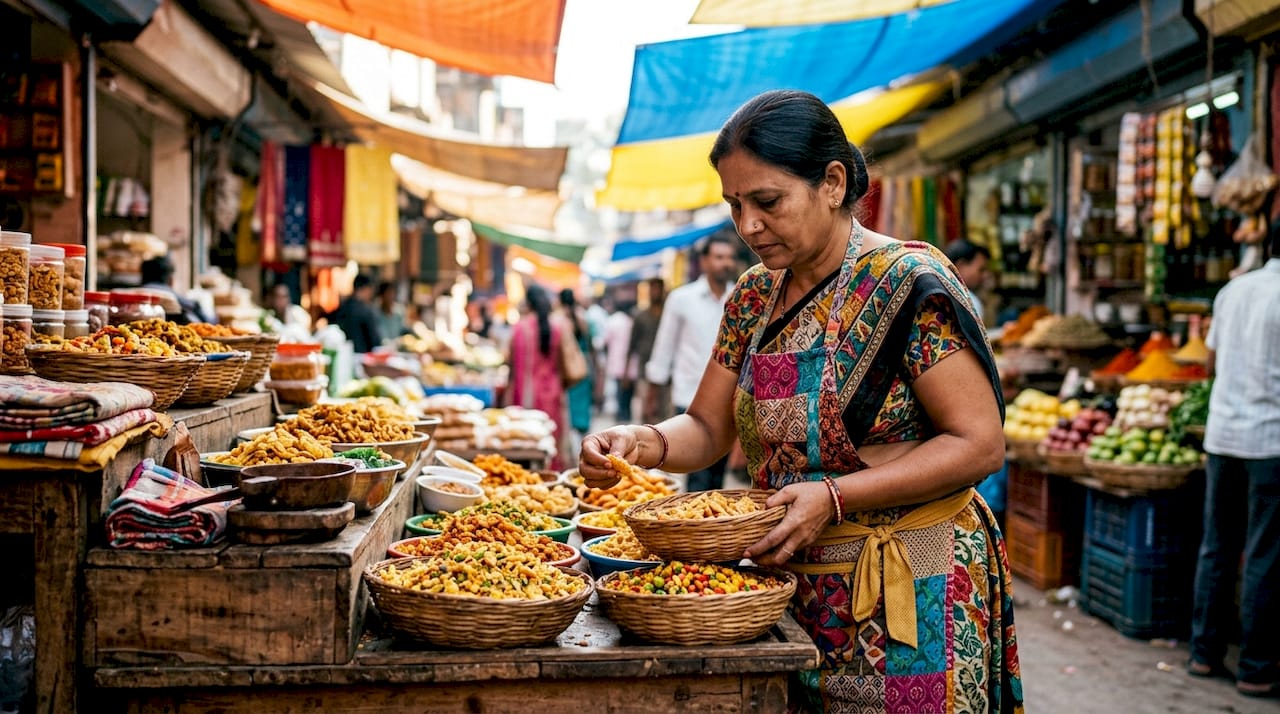
This “human filter” approach means a producer can catch a batch that is slightly over-salted or under-cooked and fix it immediately. In a factory line running thousands of units per hour, a quality deviation multiplies across the entire run before anyone notices.
Small batch producers perform real-time sensory checks and adjust seasoning or cook times during production. The result is crunchier texture, more vivid flavor, and better consistency across every piece your child eats.
Quality control method | Small batch | Mass production |
Inspection type | Human sensory testing per batch | Automated sensors at scale |
Adjustment speed | Immediate, mid-batch correction | Post-run analysis, next batch |
Flavor consistency | High, adjusted in real time | Variable across large runs |
Defect detection | Early, by taste and aroma | Late, often by weight or appearance |
Ingredient freshness check | Per batch, hands-on | Standardized input specs only |
The practical result for parents is simple. Small batch snacks taste more consistent because someone with real sensory judgment made them. That consistency also means your child gets the same quality every time, not a lucky bag from a factory run that happened to go well.
Learning about traditional snack-making techniques shows exactly how hands-on production preserves flavor and freshness in ways industrial methods cannot match.
How to choose and store fresh small batch snacks for your kids
Choosing the right snack starts at the label. Fresh small batch snacks are identifiable by label transparency, ingredient quality, and short composition lists. Parents who know what to look for can spot a genuinely fresh snack in seconds.
Read the ingredient list first. A short list with recognizable, whole-food ingredients signals small batch production. Five to eight ingredients is a strong benchmark. Factory snacks routinely list 20 or more.
Look for specific fat sources. “Real butter” or “cold-pressed oil” beats “vegetable oil blend” every time for freshness and nutrition.
Check for production or packaging dates. Fresh small batch snacks often carry a recent production date rather than a distant best-by date. A snack made this week is fresher than one made six months ago.
Avoid long preservative lists. Small batch snacks carry no synthetic preservatives or flavor agents. If you see sodium benzoate, BHA, BHT, or TBHQ on the label, the snack is factory-made.
Store snacks correctly at home. Keep small batch snacks in a cool, dry place away from direct sunlight. Airtight containers extend freshness significantly. Refrigerate snacks made with fresh dairy fats after opening.
Choosing healthier snacks for your child does not require a nutrition degree. A short ingredient list and a recent production date tell you most of what you need to know.
Incorporating fresh small batch snacks into your child’s routine is also straightforward. Pack them in school lunches, offer them as after-school snacks, or use them as a side with meals. Their bold, natural flavors tend to satisfy kids better than artificially flavored factory snacks, which means less snack-time negotiation for you.
Key Takeaways
Small batch snacks are fresher for kids because limited-run production preserves whole ingredients, active nutrients, and natural flavor in ways factory-scale manufacturing cannot.
Point | Details |
No synthetic preservatives | Small batch snacks use whole ingredients for stability, skipping the additives factory snacks need for 6–12 month shelf life. |
Better fat quality | Fresh butter and cold-pressed oils in small batch snacks retain fat-soluble vitamins and flavor that oxidized factory fats lose. |
Real-time quality control | Artisan producers use sensory testing to catch and fix quality issues mid-batch, producing more consistent flavor and texture. |
Shorter ingredient lists | Recognizable, whole-food ingredients signal genuine freshness and transparency parents can trust. |
Proper storage extends freshness | Cool, dry storage in airtight containers at home preserves the quality advantages small batch snacks already have. |
What I have learned from watching kids eat real food
— Shivam
I have spent years watching children react to food, and the pattern is consistent. Kids gravitate toward snacks that taste like something real. They push away the ones that taste like a chemistry experiment. That preference is not picky eating. It is good instinct.
The marketing around “fresh” has become so diluted that parents reasonably distrust it. Every factory bag claims freshness. But genuine freshness, the kind that comes from whole ingredients prepared recently without synthetic stabilizers, produces a noticeably different eating experience. You can taste it. Your child can taste it.
What concerns me most about mass-produced snacks is not the preservatives themselves but what they signal. A snack that needs 12 months of shelf life was never designed around freshness. It was designed around logistics. Those are two very different priorities, and only one of them benefits your child.
Small batch snacks are not a trend. They are a return to how food was always made before industrial supply chains took over. The nutritional science backs up what home cooks have always known: food made recently from real ingredients is better food. Full stop.
— Shivam
Fresh snacks your family will actually love
We make every snack at Desimunchiess the way it should be made: small batches, real ingredients, bold flavors that taste like home. No long preservative lists. No oxidized oils. Just freshly made snacks your kids will reach for again and again.
Our fresh Indian snacks are crafted in limited runs so every bag arrives at your door with the flavor and nutrition intact. Try our Tikoni Mathi, a crispy, home-style snack made with real ingredients and zero artificial additives. Or grab our Tamarind Candy for a bold, naturally flavored treat kids love. Shop Desimunchiess and taste the difference that small batch, freshly made snacks deliver.
FAQ
What makes small batch snacks fresher than store-bought options?
Small batch snacks are made in limited runs with whole ingredients and no synthetic preservatives, so they reach your child closer to the time of preparation. Factory snacks require preservatives to last 6–12 months, which changes both flavor and nutritional quality.
Are small batch snacks actually more nutritious for kids?
Fresh small batch snacks retain fat-soluble vitamins and active fatty acids that degrade during extended storage in mass-produced snacks. Nutritional value is highest when food is freshly processed and not stored long-term.
How can I tell if a snack is genuinely small batch?
Look for a short ingredient list with recognizable, whole-food items and a recent production date. Label transparency and ingredient quality are the clearest indicators of small batch, fresh production.
How should I store small batch snacks to keep them fresh?
Store them in a cool, dry place in an airtight container away from sunlight. Snacks made with fresh dairy fats should be refrigerated after opening to prevent oxidation.
Why do kids tend to prefer small batch snack flavors?
Small batch snacks use higher-quality ingredients and real-time sensory quality checks, producing more vivid, consistent flavor. Children’s palates respond strongly to natural flavors, which is why fresh snacks tend to get eaten and factory snacks get left in the bag.
Recommended
Comments