
10 Minutes vs 3–4 Weeks: Achar and Chutney for Home Cooks

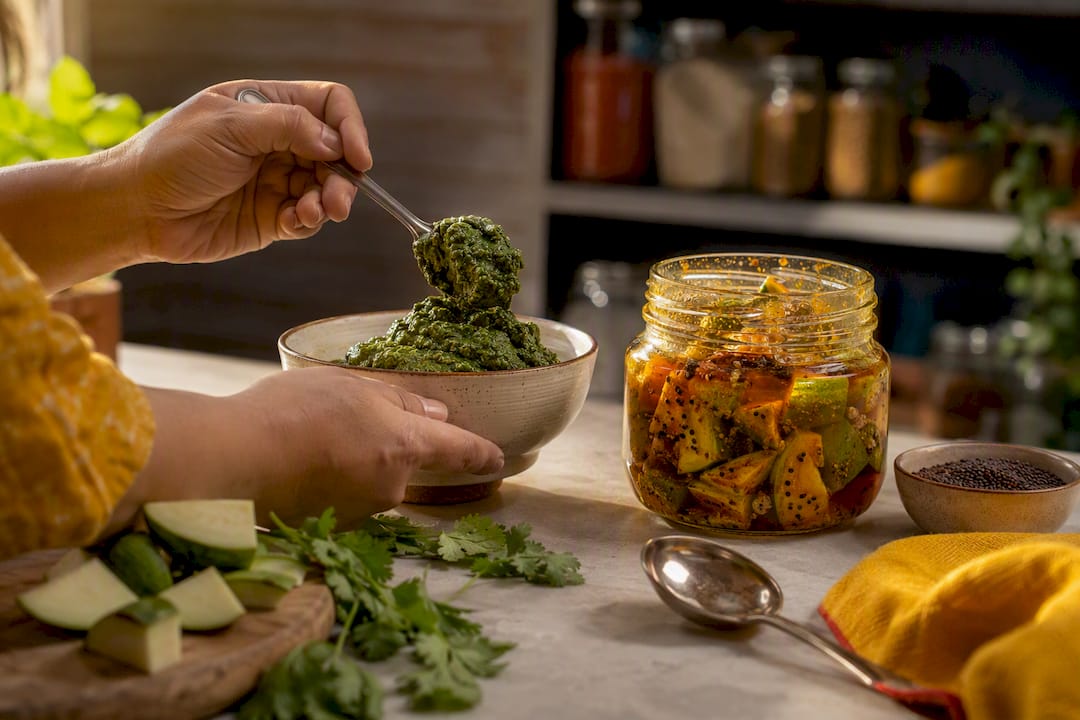
Achar and chutney are not the same thing, even though menus and grocery labels blur the line constantly. Achar is a preserved, pickled condiment built with salt, oil, and spice to last for months. Chutney is a fresh or lightly cooked condiment meant to be eaten within days or a couple of weeks. If you want a pantry staple with punch, reach for achar. If you want bright, immediate flavor to spoon over dinner tonight, make chutney.
TL;DR:
Achar is a long-lasting, preserved condiment made with salt, oil, and spices, while chutney is a fresh or lightly cooked sauce meant for short-term use.
Achar involves fermentation in salt or brine and oil, maturing over weeks, whereas chutney is typically blended raw or simmered briefly, ready within days.
Regional differences lead to confusion, with North Indian achar generally made with green mango and oil, while South Indian chutneys are eaten fresh or quickly.
Proper storage of achar requires sterilized jars, an oil seal, dry utensils, and refrigeration for chutney; spoilage signs include cloudiness and off smells.
Modern variations see achar with unconventional ingredients like pineapple or garlic, and chutney with items like avocado or chocolate, expanding their flavor profiles.
Table of Contents
Achar vs Chutney at a Glance
The two condiments split apart the moment you look at how they’re made and how long they survive on a shelf.
Preservation method: Achar relies on salt, oil, or brine and often ferments over weeks; chutney is usually eaten fresh or simmered briefly.
Base ingredients: Achar typically starts with raw fruit or vegetable (mango, lime, carrot); chutney can use fruit, vegetables, herbs, or legumes like roasted chana dal.
Texture: Achar stays chunky and glossy with oil; chutney ranges from a smooth paste to a thick, jam-like reduction.
Flavor profile: Achar leans salty, sour, and heavily spiced; chutney balances sweet, tangy, and herbaceous notes.
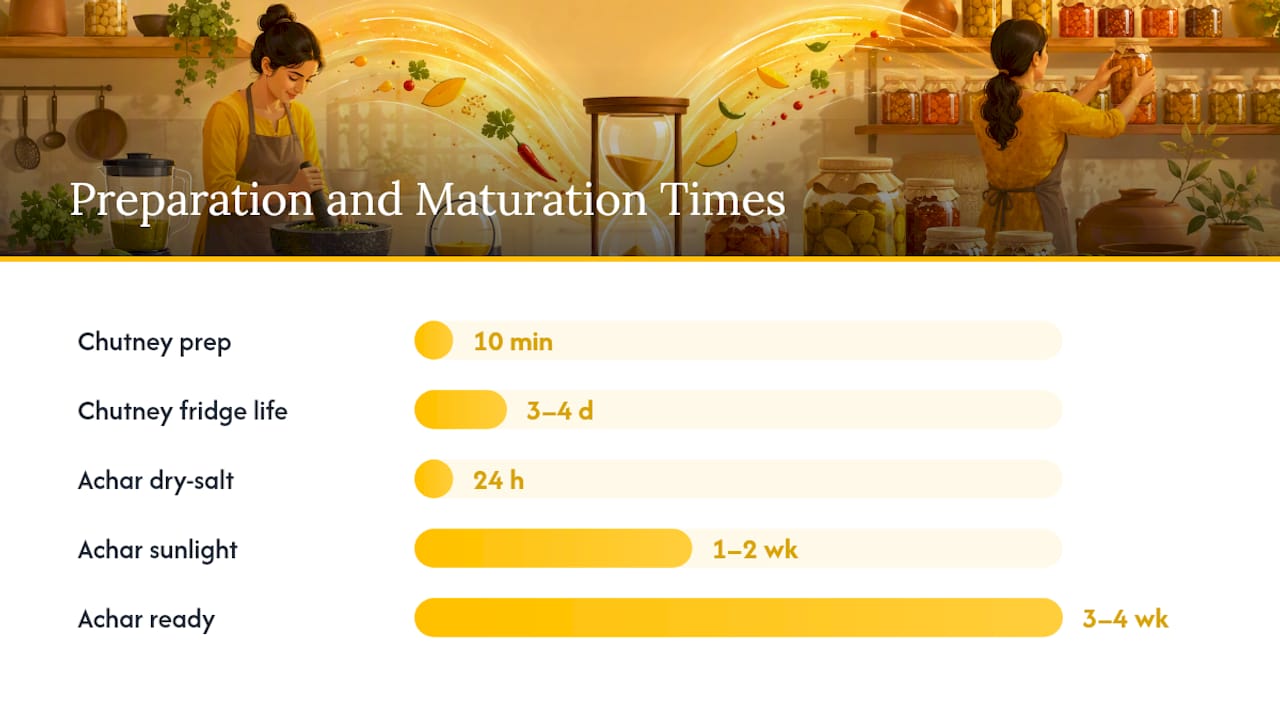
Shelf life: Achar can last months to years when made correctly; chutney generally lasts days to a couple of weeks refrigerated.
One wrinkle worth flagging: jarred British-style “mango chutney,” the sweet, syrupy condiment sold in Western supermarkets, has almost nothing in common with Indian mango achar beyond the fruit. That single product has caused more confusion about the difference between achar and chutney than almost any other item on a grocery shelf.
How Are Achar and Chutney Actually Made?
The techniques behind each condiment explain why one sits in a jar for a year and the other gets eaten by Thursday.
Achar starts with dry-salting or brining raw produce to pull out moisture, which is the first defense against spoilage. A spice masala, usually mustard seed, fenugreek, fennel, and red chili, gets toasted and ground, then mixed in. Unrefined mustard oil (used across North India) or sesame oil (common in the South) is not a garnish here. It’s a functional preservative that carries spice essential oils into the fruit tissue, which is exactly why oil-packed achar tastes deeper the longer it sits. The mixture then matures in sunlight or a warm room for one to several weeks, sometimes longer for a slow ferment.
Chutney takes the opposite route. Fresh chutneys, like mint-cilantro or coconut, get ground raw in a blender with little or no cooking. Cooked chutneys, like tamarind or tomato, simmer down with vinegar or tamarind for acidity and sugar or jaggery for sweetness until they reduce to a thick puree. South Indian versions often add roasted dals or coconut for body instead of sugar.
Achar: salt or brine, whole spice masala, oil seal, weeks of maturation.
Chutney: raw grind or short simmer, acid plus sugar or jaggery, ready same day.
Pro Tip: If a recipe calls for mustard oil and tells you to sun the jar for a week, you’re making achar, not chutney, no matter what the ingredient list looks like on paper.
Why Do Regional Names for These Condiments Overlap?
Ask five people from five different Indian regions to define “chutney” and you’ll get five different jars.
North Indian aam ka achar is the textbook example: raw green mango, coarse mustard seed, fenugreek, and a heavy pour of mustard oil, sun-cured for a week or more before it’s edible. It’s sharp, sour, and built to last through a season.
South India tells a different story. Coconut chutney and spiced lentil powders called chutney podi are both eaten fresh or within days, yet some regional dialects use “achar” loosely for pickled vegetables that would technically qualify as achar by North Indian standards.
North India: aam ka achar (raw mango, mustard oil, fenugreek, sun-cured).
South India: coconut chutney and chutney podi (fresh or roasted, eaten quickly).
Nepal: tomato achar, a fresh-cooked condiment that borrows the word “achar” but behaves more like a chutney.
Western markets: bottled “mango chutney,” a colonial-era hybrid that muddies the terminology further.
That last category matters. Culinary historians point out that achar’s history stays largely India-centric, while chutney’s meaning broadened considerably during the colonial era, which is exactly why a British pantry shelf and an Indian one use the same word for two different foods.
When Should You Serve Achar Instead of Chutney?
Portion size alone tells you which condiment belongs on your plate.
Achar gets used sparingly, a teaspoon alongside dal, roti, or curd rice, because its salt and oil content pack concentrated flavor into a small bite. Chutney gets used far more liberally. A dosa might carry two full tablespoons of coconut chutney, and a sandwich or cheese board can take a generous smear of tamarind or mint chutney without overwhelming the dish.
Achar pairings: dal and rice, parathas, curd rice, khichdi.
Chutney pairings: dosas and idlis, samosas and pakoras, sandwiches, cheese boards.
Balance rule: if the meal is already rich or spicy, lean on a sweeter chutney; if the meal is plain, a salty achar adds contrast.
Chutney’s range extends well beyond Indian cooking, too. The same logic that makes tamarind chutney work on a cheese board applies to other fruit preserves used the same way, like a cloudberry jam served alongside strong cheese, where the sugar-forward preserve cuts through fat the same way a good chutney does.
How Long Do Achar and Chutney Actually Keep?
Storage rules diverge sharply here, and getting them wrong is the fastest way to waste a batch.
Sterilize the jar first. Boil or oven-dry glass jars before packing achar; any leftover moisture invites mold.
Keep the oil seal intact. A thin layer of oil floating on top of achar blocks air and is your main defense against spoilage, so top it off if the level drops.
Use a dry spoon, every time. Wet or dirty utensils introduce bacteria that no amount of salt or spice will stop.
Refrigerate fresh chutney immediately. Raw herb chutneys like mint-cilantro hold for a few days; cooked chutneys with vinegar or sugar can stretch to one or two weeks.
Freeze what you won’t use soon. Small portions of chutney frozen in an ice-cube tray keep their flavor for months and thaw in minutes.
Watch for cloudiness, off smells, or surface film on either condiment. Traditional achar recipes also run high in sodium and oil, worth noting if you’re managing intake, a point covered in more depth in our breakdown of pickle nutrition.
Two Quick Recipes That Show the Real Difference
Nothing makes the achar vs chutney divide clearer than standing at the counter and actually making both.
Mint-cilantro chutney (ready in 10 minutes):
Blend a cup each of fresh mint and cilantro with green chili, ginger, a squeeze of lemon, and salt.
Add a splash of water to loosen the paste to a spoonable consistency.
Taste and adjust acid; a fresh chutney should taste sharp, not flat.
Refrigerate in a sealed container; use within three to four days.
Mango achar (ready to eat in three to four weeks):
Cut raw, unripe mango into small cubes and dry-salt for 24 hours to draw out moisture.
Toast and coarsely grind mustard seed, fenugreek, fennel, and red chili into a masala.
Mix the mango with the masala and pack tightly into a sterilized jar.
Cover completely with mustard oil, then set the jar in sunlight for one to two weeks, stirring occasionally, before moving it to a cool, dark cupboard to finish maturing.
The mango achar keeps sharpening in flavor for weeks as the oil pulls spice compounds deeper into the fruit, a slow transformation that a fresh chutney never goes through.
Pro Tip: Start any first achar batch small, one jar, not five. You’ll want room to adjust salt and oil ratios before committing a whole mango season to one recipe.
What’s the Health Difference Between Achar and Chutney?
Neither condiment is eaten in large enough quantity to make or break a diet, but their nutritional profiles genuinely differ.
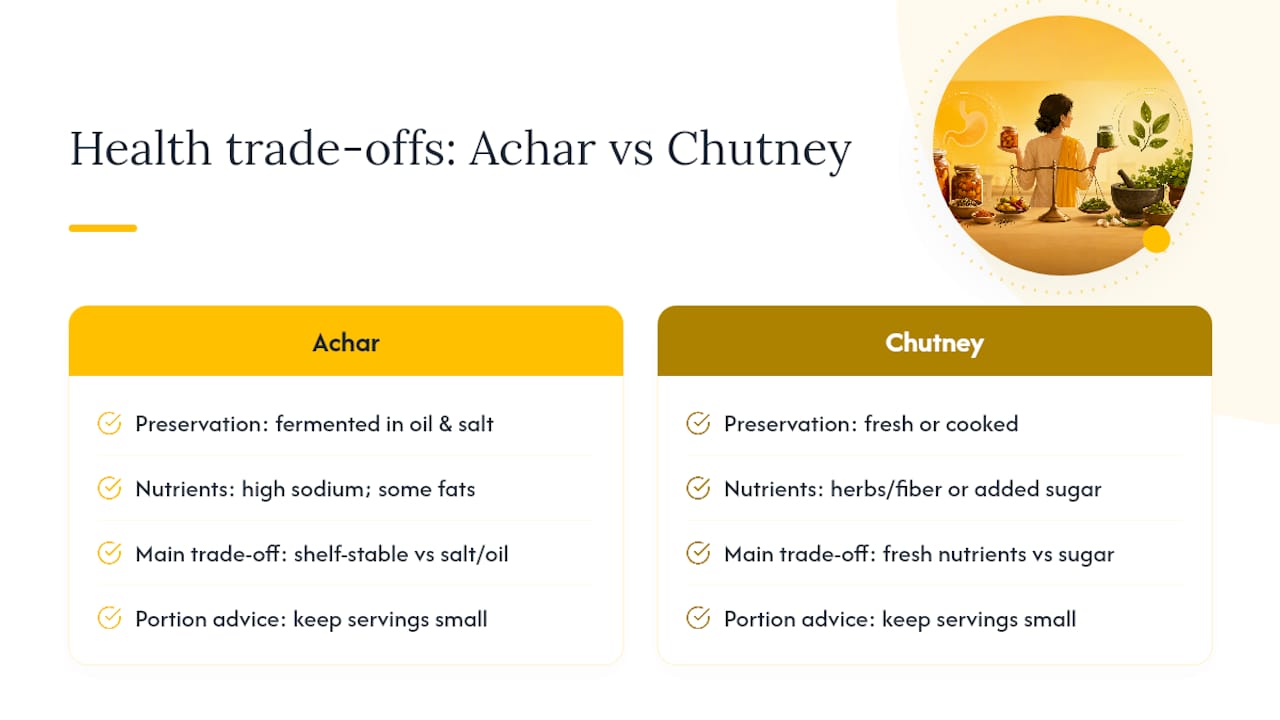
Achar’s preservation method is also its biggest nutritional trade-off: heavy salt and oil are what make it shelf-stable, and both add up if you’re eating more than a spoonful a day. The mustard or sesame oil does carry some heart-healthy fats, but the sodium content in traditional achar runs high enough that anyone watching blood pressure should treat it as a flavor accent, not a side dish.
Chutney’s nutritional story depends heavily on which kind you’re eating. Fresh herb chutneys made from mint, cilantro, or coconut carry almost no added fat or sugar and deliver a real dose of fresh herbs and, in coconut-based versions, some fiber. Cooked chutneys built on tamarind, date, or tomato lean sweeter, since sugar or jaggery is what gives them their signature balance, so a tamarind chutney on your samosa is closer to a fruit preserve than a low-calorie garnish.
The practical takeaway: achar brings sodium and healthy fats in small doses, chutney brings sugar or fresh nutrients depending on the recipe, and portion size matters more for either one than any single ingredient does.
How Are Cooks Reinventing Achar and Chutney Today?
Traditional recipes are far from frozen in time. Home cooks and small producers keep pushing both categories into new territory.
Fusion achars now show up built from unconventional bases, garlic-chili achar meant as a hot sauce substitute, or fruit achars using pineapple and even citrus peel instead of the usual mango and lime. Some cooks blend achar spicing into Western-style relishes, essentially borrowing the mustard-oil masala technique but applying it to cucumbers or onions for a quicker turnaround.
Chutney has moved even further afield. Avocado chutney, beet chutney, and even chocolate-chili chutney show up on modern Indian restaurant menus, borrowing the cooked-reduction technique but swapping in ingredients that would have been unheard of a generation ago. Cross-cultural sauces, mango chutney folded into a barbecue glaze, or tamarind chutney used as a glaze for roasted vegetables, are becoming common in home kitchens that treat Indian condiments as a flavor toolkit rather than a fixed category.
None of this erases the core distinction. A fusion achar is still preserved in oil and salt; a fusion chutney is still fresh or reduced. The techniques travel even when the ingredients don’t.
A Note on Getting the Terms Right
Getting these words right isn’t pedantic, it changes what lands on your plate and how long it stays safe to eat. Calling a fresh herb chutney an achar, or vice versa, leads to real mistakes: under salting a pickle meant for months of storage, or over processing a condiment meant to taste bright. Western labeling habits, thanks largely to that colonial-era jarred mango chutney, have blurred these lines for decades. Respecting each region’s own recipe, and the reasoning behind it, is worth the extra attention. The preserved pickle lines from certain producers often reflect a respect for traditional methods.
— Shivam
Want Achar Without Making It Yourself?
Making a proper batch of mango achar takes weeks of salting, spicing, and sun-curing, and not everyone has a sunny windowsill or the patience for a month-long maturation schedule. Some brands offer small-batch pickles made with traditional spice profiles and oil-packed preservation, providing deep, matured flavor without the need for home curing.

The Mango Pickle sticks close to the classic North Indian profile: raw mango, mustard oil, and a spiced masala built for a teaspoon-at-a-time bite alongside dal or curd rice. If you’d rather sample a spread of flavors, the Mixed Pickle covers more ground in one jar, and the full pickle and canned food lineup is worth a look if you’re building out a pantry shelf instead of a single jar. Order a jar, keep it sealed with its oil layer intact, and taste what a proper achar is supposed to be.
Sources
The definitions and technique notes in this article draw on the Wikipedia entry on achaar for preservation methods and oil’s role, BBC Good Food’s chutney glossary for chutney’s defining traits, Tarla Dalal’s comparison of pickles, achaar, and chutney for maturation timing, and Delia Online’s guide to making chutneys and pickles for process and storage. For a hands-on recipe, see the Punjabi-style aam ka achaar referenced above, and for background on labeling confusion, DakshinMart’s explainer covers the topic in more depth.
FAQ
What Is Achar Made Of?
Achar is typically made from raw fruit or vegetables (mango, lime, carrot) mixed with a spice masala and preserved in oil, salt, or brine, then left to mature for weeks or longer.
Is Pickle the Same as Chutney?
No. Pickle (achar) is a salt-and-oil preserved condiment built for long shelf life, while chutney is a fresh or lightly cooked condiment meant to be eaten within days to a couple of weeks.
What Is the Difference Between Achar and Pickle?
In everyday use, they’re the same thing. “Achar” is the Indian term, and “pickle” is its common English translation; both describe fruit or vegetables preserved in salt, oil, or brine.
What Is Chutney, Exactly?
Chutney is a fruit, vegetable, or herb-based condiment that’s either blended fresh or simmered with vinegar and sugar until thick, served as an immediate accompaniment rather than a long-term preserve.
Can I Buy Ready-Made Achar Instead of Making It?
Yes. Desimunchiess makes small-batch mango and mixed pickles using traditional oil-based curing, available on the all-products page for anyone who wants authentic achar without the weeks-long process.
Recommended
Comments