
8 Gram Flour Snacks Home Cooks Can Master With One Recipe Template

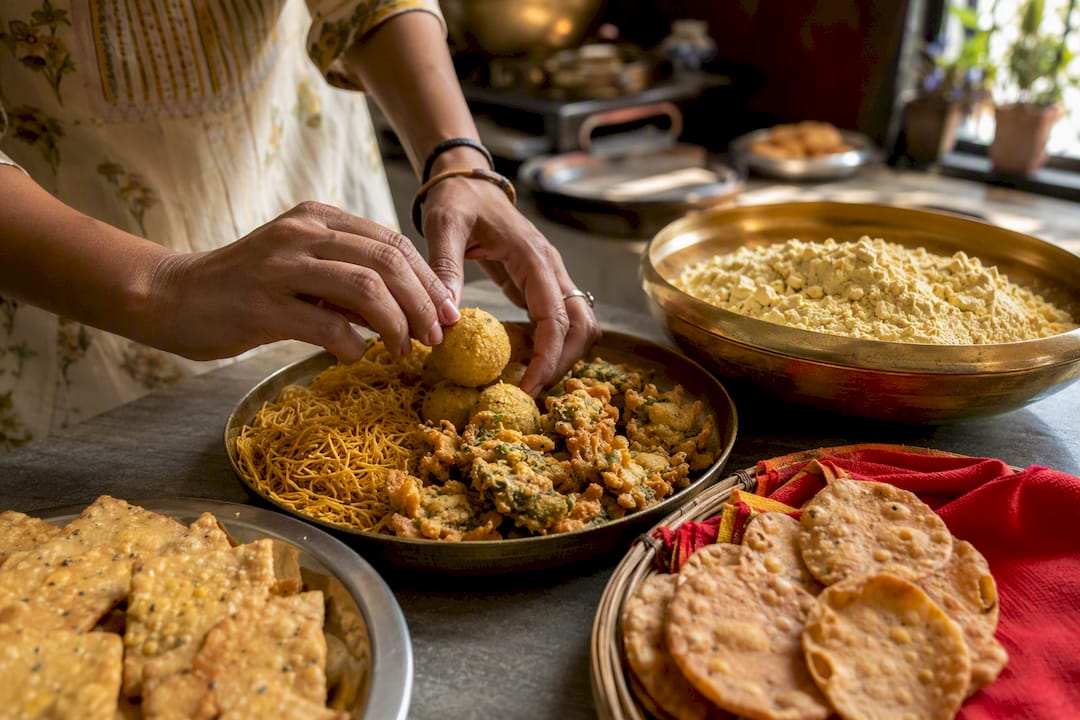
Gram flour snacks are savory or sweet bites made from besan, the ground chickpea flour that gives Indian cooking its nutty backbone. Think crispy sev, golden pakoras, or melt-in-your-mouth ladoo. This guide walks through eight classic recipes, one reusable batter and dough template, and the fry-versus-bake-versus-air-fry tradeoffs that decide whether your snack turns out crisp or sad.
TL;DR:
Roasting besan before mixing enhances the nutty flavor and prevents flat, raw-tasting snacks.
Deep-frying produces the crispiest texture, but baking and air frying reduce oil intake with some tradeoffs in crunch and shelf stability.
Maintaining proper oil temperature and batter consistency is crucial to avoid greasy, tough, or soggy snacks.
Store snacks on a wire rack and keep fried or baked items in airtight containers for up to a few weeks, re-crisp in the oven if needed.
Using a standard besan to oil and water ratio allows for versatile recipe adaptations across different snack types.
Table of Contents
8 Gram Flour Snacks Every Home Cook Should Try
Besan works as both a savory workhorse and a sweet-tooth fix, and these eight snacks show off that range. We picked them because they cover every texture a snack lover craves, from shattering crunch to soft, ghee-rich chew.
Sev/karasev. Thin, noodle-like strands pressed straight into hot oil, spiced with turmeric and chili. Roasting the besan first gives it a nutty depth instead of a raw, beany taste, and it’s the backbone of nearly every Diwali snack mix.
Besan paara. Diamond-cut crackers that fry up flaky and can also be air-fried or baked for a lighter version with the same crunch.
Besan pakora. Vegetable fritters dunked in a seasoned besan batter, fried until the outside crackles and the inside stays tender. Onions, potatoes, and spinach all work.
Besan ladoo. Roasted besan bound with ghee, sugar, and cardamom, rolled into rich little balls. It’s the sweet counterpart to every savory item on this list.
Fafda and papdi. Gujarati staples: fafda is a long, flat, slightly stiff cracker, while papdi is thinner and more delicate. Both lean on a firm dough and a quick fry.
Suji-besan balls. A blend of semolina and gram flour gives these snacks a gritty chew against a crisp shell, a texture combo you don’t get from besan alone.
Baked besan papdi. The lower-oil answer to fried papdi, using a touch of baking powder or hot oil in the dough to mimic that fried lift.
Crispy gram flour toast. A quick tea-time fix: besan batter spread thin on bread and pan-toasted until golden. It’s the fastest recipe on this list, ready in under ten minutes.
If you want a protein boost, chickpea-flour energy balls made with seeds and dates are worth adding to the rotation. They pack in more protein and fiber than a plain ladoo and travel well in a lunchbox.
The One Recipe Template You Need for Besan Snacks
Once you know the basic ratios, you can riff on almost any besan snack without hunting down a new recipe every time. Here’s the framework we come back to again and again.
Sev dough: 1 cup besan, 2 tablespoons hot oil (rubbed in until crumbly), and just enough water, usually 2 to 4 tablespoons, to form a soft, pipeable dough.
Pakora batter: 1 cup besan to roughly ½ to ¾ cup water, adjusted until the batter coats a spoon but drips off slowly.
Papdi/paara dough: 1 cup besan, 2 tablespoons oil or ghee, a pinch of salt, and water added gradually to form a stiff, roti-like dough that rolls thin without cracking.
Spice-wise, ajwain (carom seeds), turmeric, red chili powder, a pinch of hing (asafoetida), and cumin cover most savory recipes. For sweets like ladoo, swap those for cardamom and a touch of nutmeg.
Fat choice changes the final texture more than most home cooks expect. Ghee gives besan snacks that signature roasted-nutty aroma, especially in ladoo, while a neutral oil like sunflower or avocado keeps things lighter for pakora batter. If you’re cutting back on saturated fat, cut the ghee in ladoo by a third and replace it with measured amounts, a trick that works well when you’re also swapping jaggery for white sugar to lighten the recipe overall.
For texture control, semolina adds crunch to sev and suji-besan balls, rice flour lightens fried crackers, and a small pinch of baking powder gives baked papdi some lift without deep-frying. Look for besan at Indian grocers or in the international aisle of most large U.S. supermarkets. It’s naturally gluten-free, but always check the package if you’re cooking for someone with celiac disease, since cross-contamination during milling does happen.
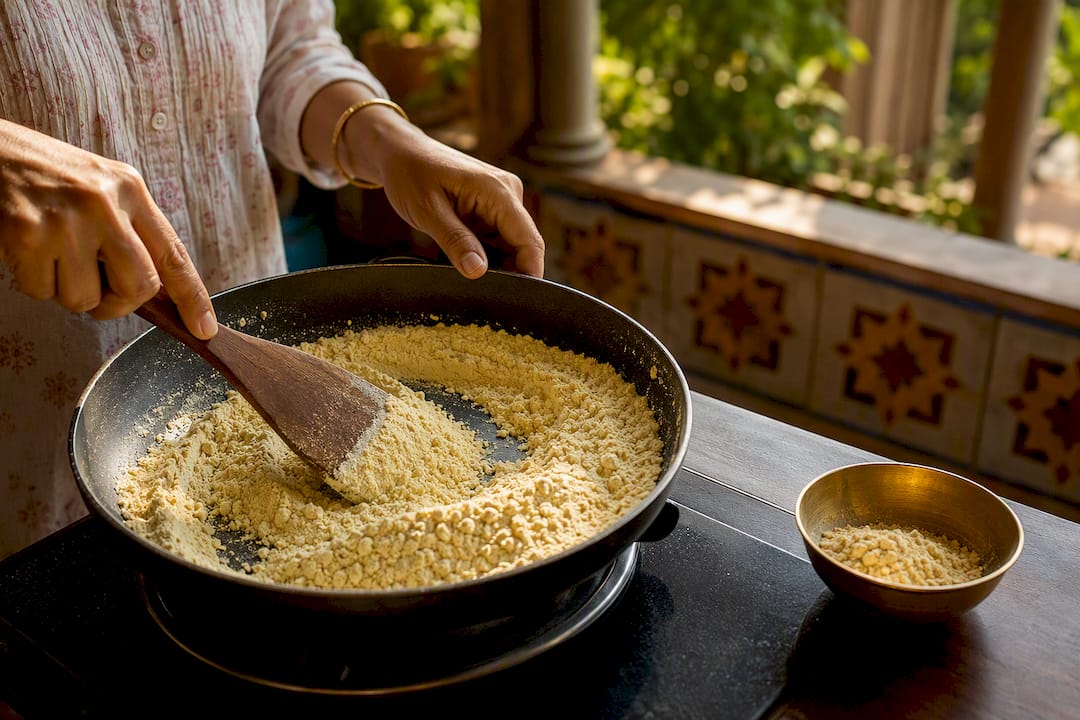
Pro Tip: Always roast raw besan in a dry pan for 3 to 4 minutes before using it in ladoo or sev dough. Skipping this step is the single biggest reason homemade besan snacks taste flat or “raw” instead of nutty.
Deep-Fry, Air Fryer, or Bake: Which Method Fits Your Snack?
Deep-frying still produces the crispiest, most traditional texture, but it’s not the only route to a good besan snack anymore.
Deep-frying: Keep oil between 325°F and 350°F. Too hot and the outside burns before the inside cooks; too cool and the snack soaks up oil instead of crisping.
Air fryer: Flatten pieces slightly, space them apart so air circulates, and drop your usual oven temperature by about 25°F. A light oil spray before cooking mimics the fried crust.
Baking: Works well for papdi and paara. Use a convection setting around 350°F, and add a small amount of baking powder or hot oil to the dough to compensate for the lift you’d normally get from frying, a trick documented in baked besan paara recipes.
Fried snacks generally deliver the richest flavor and longest-lasting crunch, but baked and air-fried versions cut oil significantly, which matters if you’re making a big batch for regular snacking rather than a once-a-year festival tray. The tradeoff shows up in shelf life too: oil acts as a preservative, so lower-oil versions tend to go stale a few days sooner.
To know when something’s done without guessing, watch for three cues: the color should turn a deep golden (not pale, not brown), the frying sound should quiet down as moisture cooks off, and a piece should feel rigid, not bendy, once it cools for 30 seconds. For a closer side-by-side on flavor and health tradeoffs, see this comparison of baked versus fried Indian snacks.
Why Your Batter or Dough Isn’t Turning Out Right
Most besan snack failures trace back to one of two things: batter consistency or oil temperature. Get those right and everything else falls into place.
For pakora batter, use the drop test: a spoonful should fall off in a thick ribbon, not run off in a stream (too thin) and not plop like paste (too thick). For sev and papdi dough, press a small piece between your fingers. It should hold shape without cracking at the edges. If it crumbles, add water one teaspoon at a time.
If you want that light, almost spongy interior in fritters without relying on baking soda, whisk the batter briskly in one direction for several minutes before frying. This works air into the mixture the same way whisking egg whites does, and it’s a technique traditional Indian snack makers have relied on for generations.
Thin batter: Whisk in a tablespoon of besan at a time until it thickens.
Dense, tough dough: Rest it covered for 10 minutes to let the flour hydrate before shaping.
Soggy snacks: Your oil was too cool, or you overcrowded the pan and dropped the temperature.
Oily results: Drain on a wire rack, not paper towels, which trap steam and soften the crust.
Pro Tip: Fry in small batches of 5 to 6 pieces at a time. Overcrowding drops oil temperature fast, and that’s the number one cause of greasy, limp snacks.
Storing and Serving Your Homemade Besan Snacks
Let fried or baked snacks cool completely on a wire rack before storing. Cooling on a plate traps steam underneath and softens the crunch within hours.
Crackers (paara, papdi): Keep 2 to 4 weeks in an airtight tin at room temperature.
Sev and other fried noodles: Last 1 to 3 weeks if completely cool and dry before sealing.
Ladoo: Refrigerate and use within 1 to 2 weeks, depending on how much ghee the recipe uses.
Re-crisping: A few minutes in a 300°F oven or a dry skillet restores crunch lost to humidity.
Serving ideas: Pair savory snacks with chai, tamarind or mint chutney, or fold them into a chaat mix with yogurt and pickle for a fuller plate.
If you’re gifting a batch, pack snacks in airtight tins, and a food-safe silica packet doesn’t hurt in humid climates.
An Insider’s Take on What Makes Besan Snacks Worth Mastering
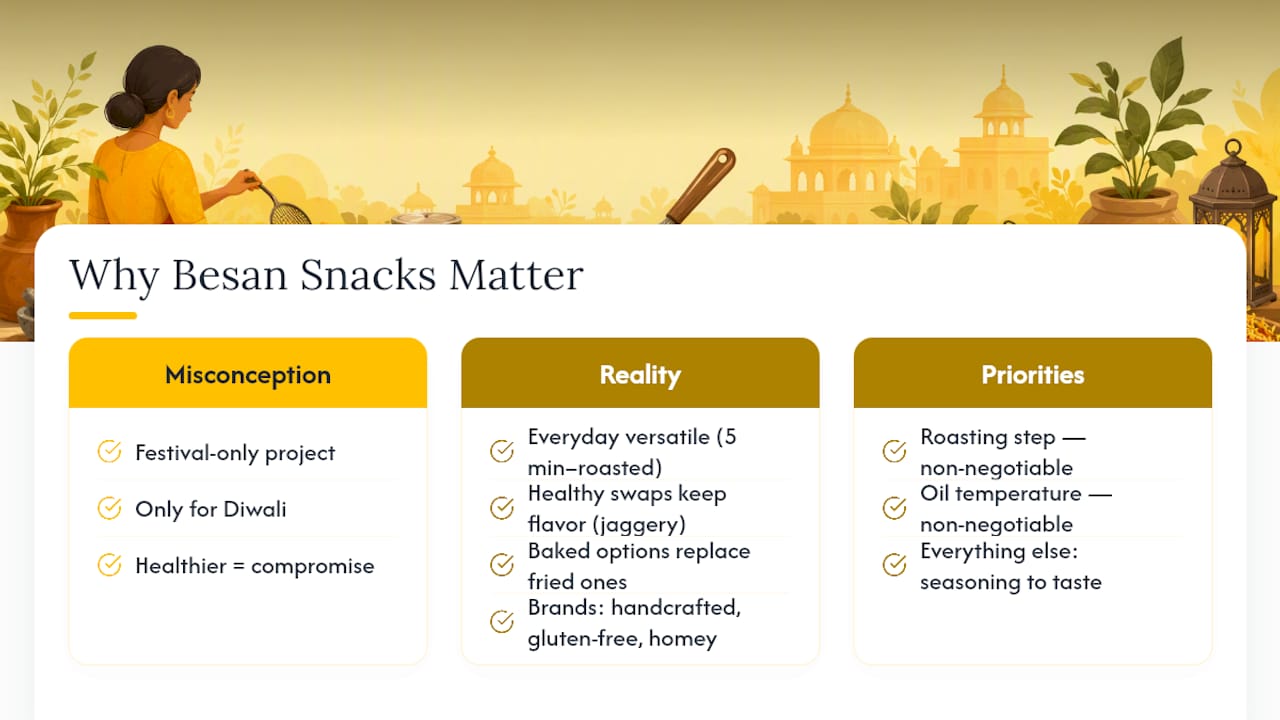
Most recipe blogs treat gram flour snacks as a once-a-year festival project, something you make for Diwali and forget about the rest of the year. That undersells besan badly. It’s one of the few pantry staples that moves fluidly between a five-minute crispy toast and a slow, roasted ladoo, and home cooks who only pull it out for holidays are missing a genuinely versatile everyday ingredient.
The bigger misconception is that healthier besan snacks have to taste like a compromise. They don’t. Small swaps like jaggery for sugar or a baked papdi instead of a fried one keep the flavor profile intact while changing the nutrition math. Some snack brands build their lineups on similar principles: handcrafted batches, gluten-free besan where the recipe calls for it, and recipes close enough to home cooking that you’d recognize your grandmother’s kitchen in them. If you’re testing these recipes at home, treat the roasting step and the oil temperature as your two non-negotiables. Everything else is seasoning to taste.
— Shivam
Skip the Prep, Keep the Flavor: Ready-Made Besan Snacks
Some days you want the crunch of fresh sev or the sweetness of ladoo without pulling out the frying thermometer, and that’s exactly where Desimunchiess steps in. Some companies offer batches handcrafted in small runs using traditional recipes that produce roasted, nutty besan flavor without requiring much attention during cooking.
Browse the full snacks, sweets, and pickle lineup to find pairings for your next chai break, including roasted chana for a lighter nibble and pickles that round out a chaat-style spread. If you loved the ladoo section above, the Atta Biscuits make a great next taste test. Order a sampling today and see how close handcrafted comes to homemade.
Sources
FAQ
What can I make with gram flour?
Gram flour makes both savory snacks like sev, pakora, and papdi, and sweet treats like ladoo. It also works as a batter binder, a thickener for curries, and a base for crispy toasts.
What is gram flour best used for?
Besan shines in fried and baked snacks because it fries up crisp and roasts into a nutty flavor. It’s also common in Indian curries as a thickener and in sweets like ladoo for its dense, satisfying texture.
Is gram flour healthy to eat?
Gram flour is naturally gluten-free and higher in protein and fiber than refined wheat flour, especially in recipes like chickpea-flour energy balls built around seeds and dates. How healthy the final snack is depends heavily on how much oil or ghee goes into the recipe.
Can I eat gram flour daily?
Besan in moderate amounts, especially in baked or air-fried snacks rather than deep-fried ones, fits into a regular diet for most people. Anyone with a chickpea allergy or kidney concerns tied to legume protein should check with a doctor before eating it daily.
Are gram flour snacks gluten-free?
Besan itself is naturally gluten-free, which makes most traditional gram flour snacks safe for people avoiding gluten, though cross-contamination during milling or packaging is worth checking on the label and you can learn more about making a reliably crisp gluten free pizza crust with psyllium for texture tips. Desimunchiess offers gluten-free options for readers who want that reassurance built in.
Recommended
Comments