
30g vs 1/2 Cup: Roasted or Boiled Chana for Real Snack Portions

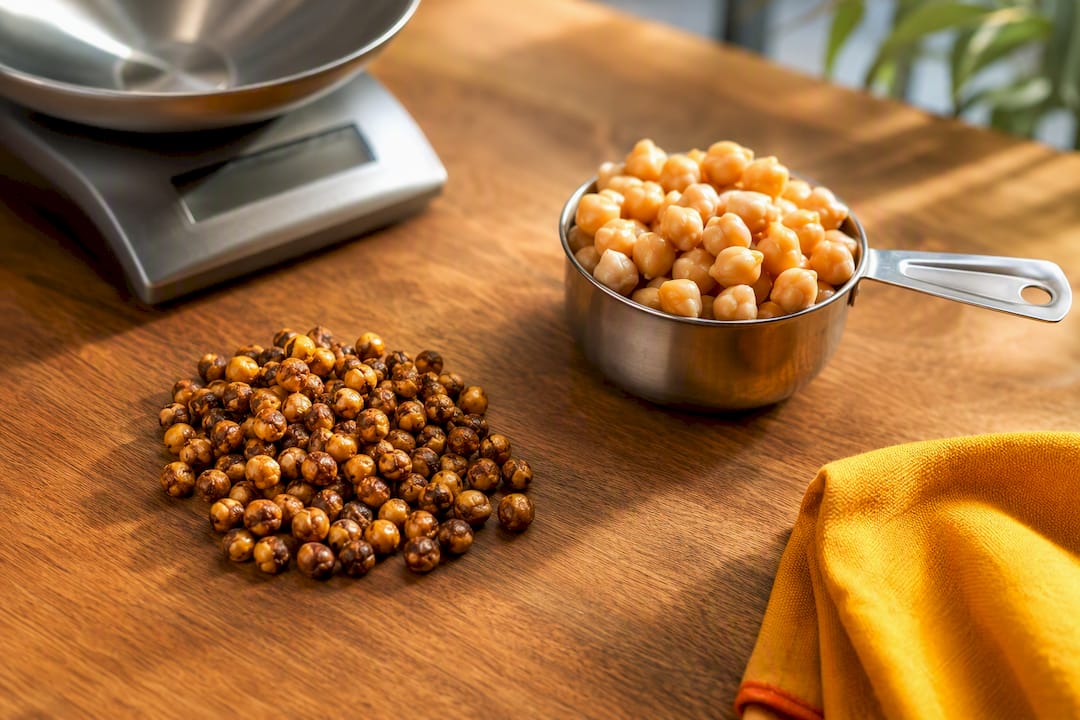
If your goal is a lighter, more hydrating snack, boiled chana wins. If you want a crunchy, protein-dense bite that travels well, roasted chana wins. Both come from the same humble chickpea, so the real question isn’t which one is “healthier” in some abstract sense. It’s which one matches what you’re actually trying to do today. Skip the oil and salt on either one, and you’re set. Add a lot of both, and the whole comparison falls apart.
TL;DR:
Roasted chana is more calorie-dense and convenient for snacking, with a portion of 30 grams providing around 110 calories and 6 grams of protein.
Boiled chana offers more fiber and protein per typical serving, with half a cup delivering roughly 7.5 to 8 grams of protein and higher water content.
Cooking methods influence anti-nutrient levels, with boiling reducing compounds like phytic acid more effectively than roasting; soaking and discarding soak water improves digestion.
Roasted chana’s higher nutrient density is due to water loss during roasting, while water absorption in boiled chana dilutes nutrients but allows for larger servings with similar or greater absolute nutrients.
For weight management, boiled chana’s higher water volume helps control calorie intake, while roasted chana is better suited for quick protein boosts between meals.
Table of Contents
Roasted Chana vs Boiled Chana: The Nutrition Numbers
Here’s where a lot of people get tripped up: roasted chana looks like a protein powerhouse next to boiled chana, but that gap is mostly water talking, not magic. Roasting drives moisture out of the chickpea, which concentrates everything else, protein, calories, carbs, and minerals, into a smaller amount of food. Boiling does the opposite. The chickpea soaks up water as it cooks, so the same weight of food carries more hydration and fewer calories.
That’s why per-100g comparisons can be misleading if you don’t also look at real portions. Nutrition-data references commonly cite roasted chana at roughly 20 to 22 grams of protein and 360 to 380 calories per 100 grams, while boiled chana lands closer to 8 to 9 grams of protein and about 160 calories per 100 grams. A US clinical-nutrition reference puts one cup of boiled chickpeas at roughly 15 grams of protein and about 160 calories, a helpful real-world portion instead of a lab-sized 100 grams.
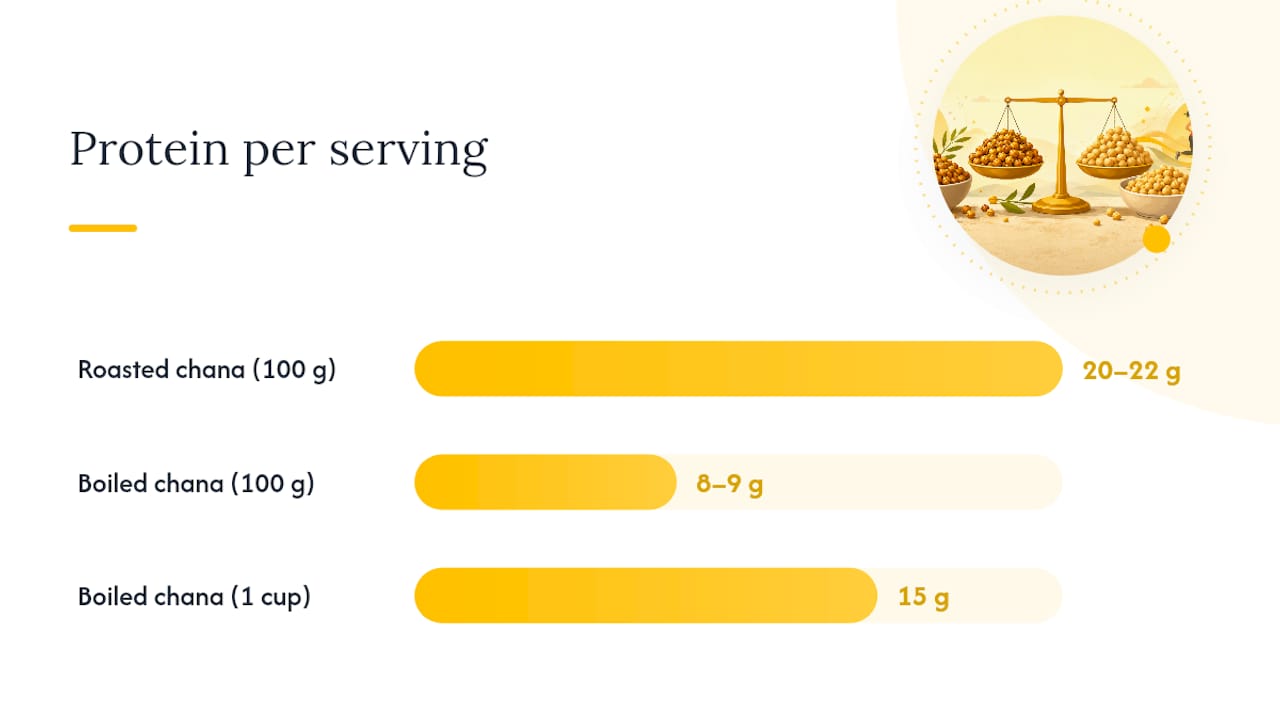
Do chickpeas actually lose protein when they’re boiled? Not really. The protein content per 100 grams drops mainly because water dilutes the density, not because boiling destroys protein. Weigh a dry chickpea before and after boiling, and you’ll see the water weight explain most of the difference.
Here’s how the two stack up on realistic portions rather than lab-sized samples:
Nutrient (per portion) | Roasted chana (30g) | Boiled chana (1/2 cup) |
Calories | ~110 | ~110 |
(Note: These portion estimates are approximations for typical servings.) | Protein | ~6g | ~7.5 to 8g | (Portion estimates based on cited nutrition ranges) | Carbs | ~15g | ~20g | | Fat | ~2g | ~2g | | Fiber | ~3g | ~6g |
Notice that once you match portions instead of comparing raw 100-gram figures, boiled chana actually edges ahead on protein and fiber per bite. Roasted chana wins on convenience and calorie efficiency: fewer grams needed to feel satisfied, since the crunch and concentrated flavor make small portions more filling.
Micronutrients follow the same concentration logic. Iron, magnesium, and folate all show up at higher levels per 100 grams in roasted chana simply because there’s less water to dilute them. But per realistic serving, boiled chana often delivers similar or greater absolute amounts, since you typically eat a larger volume of it. Neither form loses these minerals through cooking, they just get redistributed by moisture content.
How Soaking, Boiling, and Roasting Change Digestion
Chickpeas carry natural anti-nutrients, mainly phytic acid and lectins, that can block mineral absorption and cause the bloating some people associate with legumes. How you cook them determines how much of that gets neutralized.
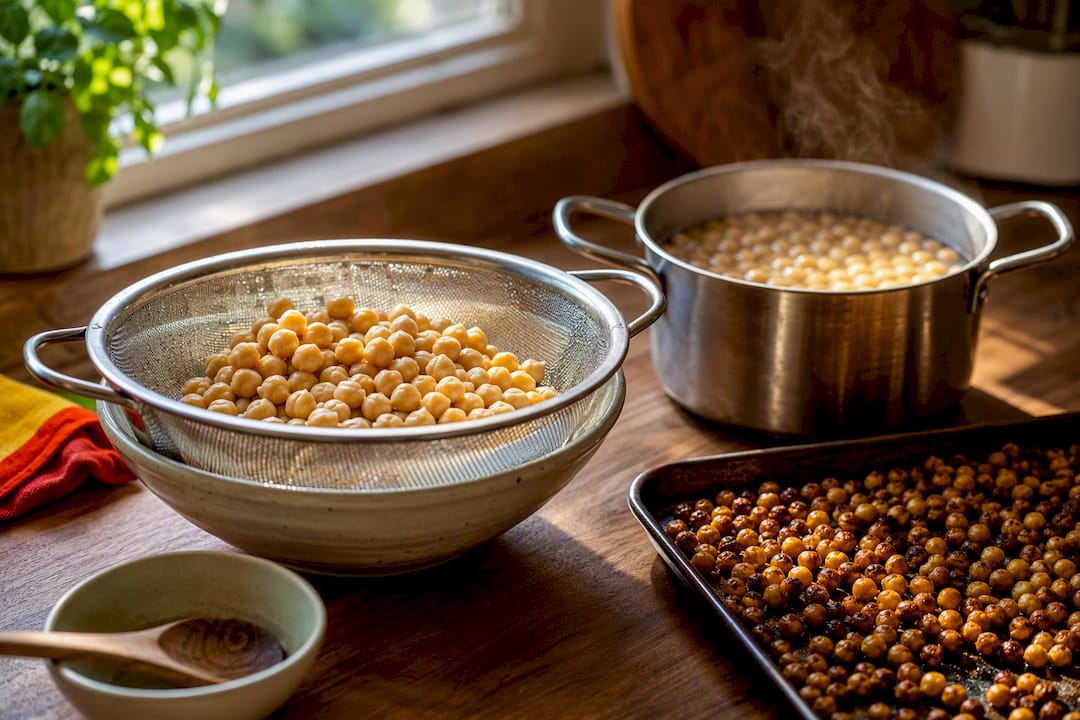
A peer-reviewed comparison of cooking methods published in Food Science and Biotechnology found that boiling and steaming reduce anti-nutrient levels more reliably than dry roasting, largely because water-soluble compounds like phytic acid leach out into the cooking liquid. Roasting, meanwhile, doesn’t have that same leaching effect, but the same study found dry heat can improve protein digestibility by partially breaking down protein structures, making the amino acids easier for your body to access even without water involved.
Practical steps that actually move the needle:
Soak dried chickpeas for 60 to 90 minutes before boiling to loosen phytic acid.
Discard the soak water rather than cooking with it.
Boil until fully tender rather than just softened; undercooked chickpeas hold onto more anti-nutrients.
Add a pinch of turmeric or a small amount of asafoetida to the cooking water, a common practitioner habit for easing legume-related gas.
If you’re roasting, start with pre-soaked and boiled chickpeas before drying and roasting, rather than roasting raw dried chana, for the best of both effects.
Pro Tip: If gas or bloating is your main hesitation with chana, boiled is almost always the gentler starting point. Roasted chana skips the soak-and-discard step entirely, so if you’re sensitive to legumes, work up to it slowly.
Calories, Blood Sugar, and Weight Management
Ounce for ounce, roasted chana is the more calorie-dense food, which cuts both ways. It’s efficient if you’re trying to eat fewer calories overall and still feel full, since 30 grams goes a long way. It’s also easy to overdo, since a “handful” of roasted chana can quietly add up to 200 or 300 calories before you’ve noticed.
Boiled chana is harder to overeat by accident. A full cup runs around 260 to 300 calories, roughly double a small roasted portion, but you’re eating far more volume and water along with it, which tends to fill you up before the calories catch up.
On blood sugar, both forms benefit from chana’s fiber and protein combination, which slows glucose absorption compared to refined carb snacks. Neither form is inherently “low glycemic” or “high glycemic” on its own; what matters more is what you pair it with. A few ways to keep the glycemic response gentle:
Pair roasted chana with a small amount of healthy fat, like a few nuts, to slow digestion further.
Add boiled chana to a salad with leafy greens rather than eating it plain with rice.
Avoid roasted chana varieties coated in sugar or heavy seasoning blends, which spike glycemic load fast.
Keep portions consistent rather than eating “until the bag is empty,” since roasted chana’s crunch makes portion creep easy.
Choosing the Right Chana for Your Day
The best form of chana depends less on nutrition charts and more on what you’re doing when you eat it.
Grab roasted chana when you need something portable: a desk snack, a car snack, or anything eaten with your hands and no bowl in sight. A 30-gram handful (about 6 grams of protein, 110 calories) fits neatly between meals.
Reach for boiled chana when you’re building a meal, not just snacking. It folds into salads, grain bowls, and post-workout plates where volume and hydration matter more than portability. A half-cup serving (about 7.5 to 8 grams of protein) works well alongside a protein source you’re already eating.
Combine both across the week rather than picking one permanently. Roasted chana as a midmorning snack, boiled chana tossed into dinner, covers convenience and meal-building without leaning too hard on either.
Morning and midafternoon tend to be the best windows for roasted chana, since its higher calorie density works better as fuel than as a bedtime snack. Boiled chana fits almost anywhere, including as a light dinner addition, since it’s easier on the stomach before sleep. For more ideas on working chana into a higher-protein routine, these traditional Indian snack ideas are worth a look.
Why Desimunchiess Roasted Chana Earns a Place in This Comparison
We built Desimunchiess around one idea: snacks should taste like they came from someone’s kitchen, not a factory line. Our roasted chana with skin sticks to that promise. It’s handcrafted in small batches using traditional methods, not mass-produced and shipped in bulk, which is part of why the flavor stays bold instead of flat.
A few things worth knowing about how we approach it:
We use whole chickpeas with skin intact, which keeps more of the natural fiber and texture people love in roasted chana as a snack.
Small-batch roasting means fresher stock reaches you faster than large commercial runs typically allow.
No shortcuts on ingredients. Just chana, done the way it’s meant to be done.
This piece comes to you from Shivam, and if you want to see the product behind the recommendation, our product page has the full details.
What I’d Tell a Friend Standing in Front of Both Options
Most people overthink this choice. Boiled chana and roasted chana aren’t competitors, they’re tools for different jobs, and the “healthier” label depends entirely on what you’re solving for.
If weight management is the goal, boiled chana’s water content works in your favor. If you’re chasing a convenient protein hit between meals, roasted chana’s density does the job better. For blood sugar, both are fine as long as you’re not drowning them in oil, sugar, or salt. My actual rule: use boiled chana to build meals, use roasted chana to survive the gap between them. Stop treating this like a competition and start treating it like a toolkit.
— Shivam
Ready to Add Roasted Chana to Your Snack Routine?
If concentrated protein and satisfying crunch are what you’re after, Desimunchiess roasted chana delivers both without the mass-produced aftertaste. The roasted chana comes handcrafted in small runs, aiming to taste closer to something roasted at home rather than mass-produced factory snacks.
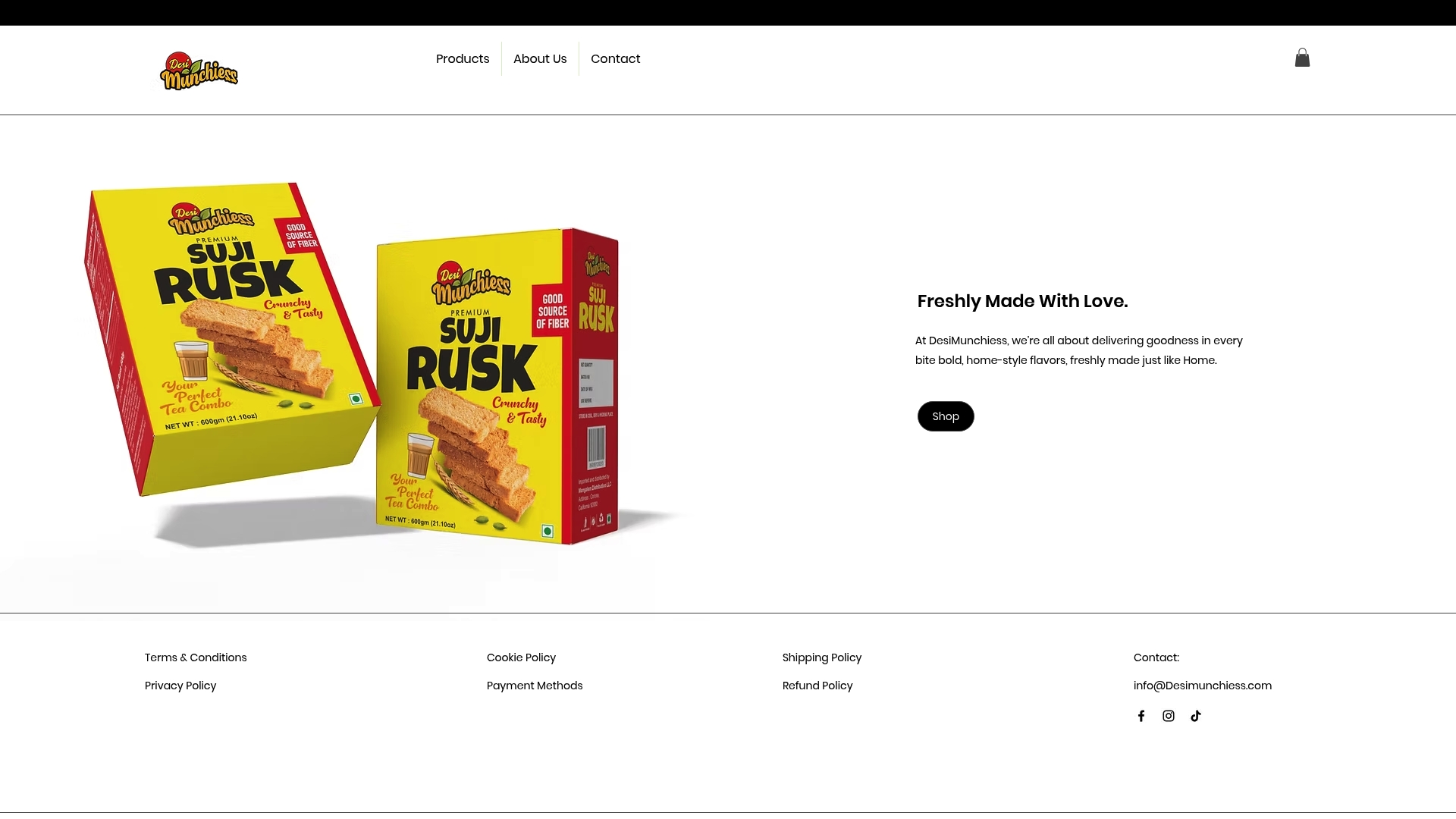
Try tossing a handful into a trail mix with almonds and a few raisins for a midafternoon snack that actually holds you over. If you go through snacks fast, the 1kg bag keeps you stocked without reordering every other week. Head over to Desimunchiess to check out the full lineup and get your order started.
Sources
FAQ
Can I Eat 100 Grams of Chana Every Day?
Yes, for most healthy adults, 100 grams of either roasted or boiled chana fits comfortably into a daily diet, though 100 grams of roasted chana (around 360 to 380 calories) is a much bigger calorie load than 100 grams of boiled chana (around 160 calories). Adjust your portion based on which form you’re eating rather than treating 100 grams as a fixed serving.
What Is the Best Time to Eat Roasted Chana?
Late morning or midafternoon works best, since its higher calorie density serves as effective fuel between meals rather than right before bed. A 30-gram handful is a reasonable single serving.
Do Chickpeas Lose Protein When Boiled?
Not meaningfully. The drop in protein per 100 grams comes from added water diluting the density during boiling, not from protein breaking down or washing away.
Which Chana Is Higher in Protein?
Roasted chana shows more protein per 100 grams because moisture loss concentrates nutrients, typically 20 to 22 grams versus 8 to 9 grams for boiled. Per realistic serving size, though, boiled chana often delivers a comparable or slightly higher protein amount, since people generally eat a larger volume of it.
Recommended
Comments