
13 Light Late Night Indian Snacks for U.S. Kitchens

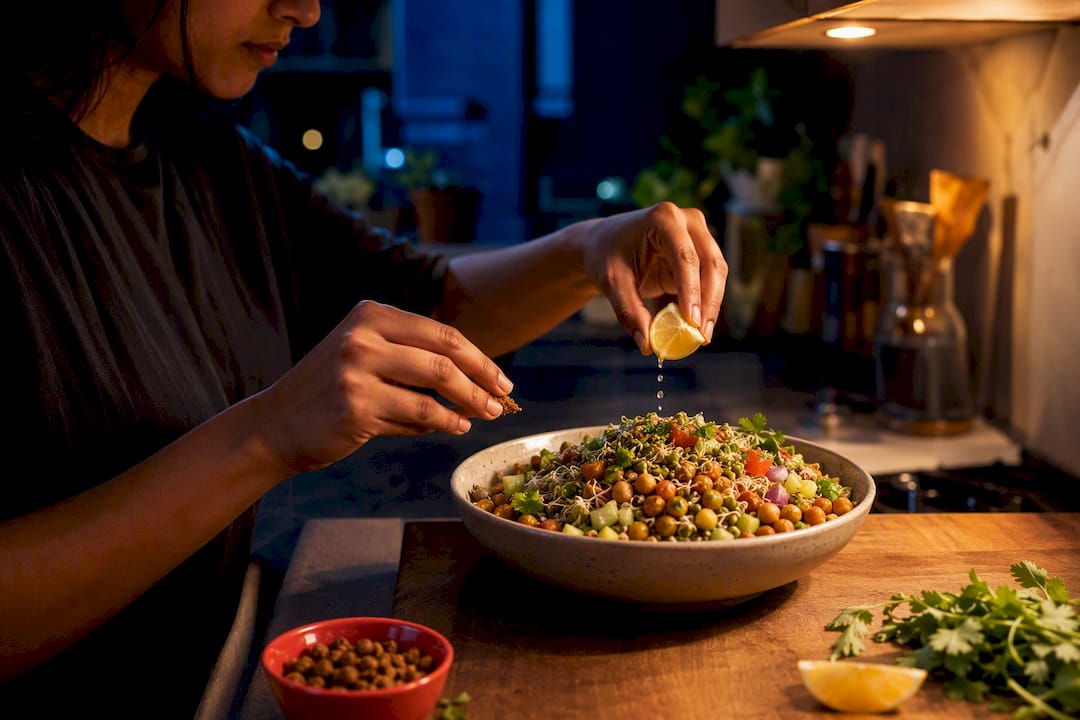
When a late-night craving hits, reach for something light, savory, and protein- or fiber-rich, like roasted chana, dhokla, makhana, or a quick besan chilla, instead of anything deep fried. These fill you up without weighing you down. Below, you’ll find quick recipes, no-cook picks, and healthy options under 200 calories, so tonight’s craving gets handled fast.
TL;DR:
Most late-night Indian snacks under 200 calories depend on portion control, with steaming or air-roasting methods to reduce oil content and calorie load.
Light, high-protein options like sprouted moong, roasted chana, and dhokla are best suited if you need recovery or sustained energy before bed.
Recipes like besan chilla, makhana, and paneer bhurji toast can be prepared in 10 to 20 minutes, using ingredients already common in Indian kitchens.
Ready-made snacks such as roasted makhana or spiced mathi offer quick, portion-controlled options when cooking isn’t feasible late at night.
The choice of beverage, like spiced buttermilk or plain water, influences digestion and comfort based on the snack’s heaviness and oil content.
Table of Contents
Late Night Indian Snacks: 13 Ideas Worth Keeping On Hand
Craving something around 11 PM doesn’t mean you have to choose between “boring” and “regret it in the morning.” These late night Indian snacks split into five buckets: savory quick bites, light steamed options, protein and fiber picks, crunchy munchies, and a couple of sweet finishes for when only dessert will do.
Paneer bhurji toast – Crumbled paneer sautéed with onion and turmeric, piled on toasted bread. Ten minutes, one small slice is plenty.
Besan chilla – A savory gram flour pancake with onions and chili. Filling, protein rich, ready in under 10 minutes.
Mini aloo tikki – Small, pan-crisped potato patties. Keep it to one or two pieces since potato adds up fast.
Dhokla – Steamed, fermented gram flour squares. Light on the stomach and genuinely easy to digest.
Idli – Soft steamed rice cakes, best with a thin tomato chutney instead of sambar if it’s very late.
Roasted chana – Crunchy roasted chickpeas, no oil needed. A palm-sized handful covers the craving.
Sprout chaat – Sprouted moong tossed with onion, tomato, lemon, and chaat masala. Zero cooking required.
Murmura chivda – Puffed rice tossed with roasted peanuts, curry leaves, and a light tadka. Crunchy without the grease of a bag of chips.
Masala makhana – Roasted fox nuts with light spice. One of the better keep-around snacks since it’s already low in oil.
Papdi with chutney – Crisp papdi discs with a spoon of tamarind or mint chutney. Fast, but watch the portion.
Fruit chaat – Chopped seasonal fruit with a pinch of chaat masala and lime. A sweet option that doesn’t spike sugar hard.
Small kheer cup – A 3 to 4 ounce portion of rice or vermicelli kheer if you want something sweet and warm.
Khakra – Thin, baked wheat crisps. Good with a light dip if you want crunch with almost no oil.
Several of these overlap with heritage snack-making traditions worth knowing if you want to adapt them at home. Recipe indexes covering dozens of Indian snacks and starters are a solid reference if you want to expand this list further, and a larger snack recipe collection covers variations like mirchi bajji and veg puffs for when you’re cooking earlier in the evening rather than at midnight.
Healthy Indian Snacks Under 200 Calories For Late Night
Keeping a snack under roughly 200 calories helps you satisfy hunger without undoing your day, and Healthline’s guidance on late-night snacking points to fiber and protein as the two things that make a small portion actually feel like enough.
Pro Tip: Swap frying for steaming or air-roasting whenever you can. It cuts the calorie load without cutting the flavor.
Roasted chana (1/2 cup): A half cup serving provides a crunchy, fiber- and protein-rich snack without added oil. Skip the oil roast; buy or make the dry-roasted version.
Masala makhana (1 cup): Roughly 90 to 100 calories air-fried or oven-roasted, per Ministry of Curry’s makhana chivda method. Go light on ghee.
Steamed dhokla (3 pieces): A small steamed serving is airy, tangy, and easy to digest.
Sprouted moong salad (1 cup): Under 150 calories, and the fiber slows digestion so you stay full longer.
Vegetable poha (1 cup): Around 180 calories if you go light on oil and skip the peanuts on top.
Idli (2 small pieces): A small serving with a thin chutney instead of a ghee-laden sambar is light and filling.
IndiaTV News’s roundup of Indian snacks under 200 calories backs several of these same picks, and the common thread across all six is portion control paired with a lower-oil cooking method.
Quick Indian Snack Recipes You Can Make Tonight
Every recipe here runs 10 to 20 minutes, start to finish, using ingredients most Indian kitchens already stock.
Masala roasted makhana – 2 cups makhana, 1 teaspoon ghee, 1/2 teaspoon turmeric, red chili powder, chaat masala, curry leaves. Toss makhana in ghee and spices, air-fry at 350°F for 8 minutes or roast on a dry pan on low heat, stirring often. Serves 2.
10-minute besan chilla – 1 cup gram flour, water, chopped onion, green chili, cumin, salt. Whisk into a batter, pour onto a hot pan, cook 2 minutes per side. Serves 1 to 2.
Quick sprout chaat – 1 cup sprouted moong, chopped tomato and onion, lemon juice, chaat masala, coriander. Mix everything cold. No stove needed. Serves 1.
Microwave dhokla shortcut – 1 cup gram flour batter with yogurt, ginger paste, and a pinch of baking soda, poured into a greased bowl and microwaved 3 to 4 minutes. Serves 2.
Paneer bhurji toast – 1/2 cup crumbled paneer, chopped onion, turmeric, cumin, 2 slices bread. Sauté paneer 4 minutes, pile onto toast. Serves 1.
Two swaps make all five easier on the stomach: cut the ghee or oil by half and add a spoon of plain yogurt on the side for cooling relief instead of extra chutney.
No-Cook Indian Snacks For When You Just Don’t Feel Like Cooking
Some nights the craving wins but the energy doesn’t. Keep these on hand and skip the stove entirely:
Roasted peanuts or almonds tossed with chaat masala and a squeeze of lime.
Murmura chivda mixed with roasted peanuts, curry leaves, and a drizzle of mustard oil, made in batches ahead of time.
Papdi topped with chopped cucumber, onion, and a spoon of tamarind chutney.
Store-bought roasted makhana, warmed briefly and shaken with black salt and roasted cumin powder.
Stock your pantry with roasted chana, plain makhana, whole spices for chaat masala, and a jar of tamarind chutney, and you’ll rarely be caught without an option.
How To Pick The Right Late-Night Snack
Three quick rules cut through the decision fast:
Check the clock. Less than an hour before bed, go light: sprout chaat, fruit chaat, or a small handful of roasted chana. More than two hours out, a besan chilla or paneer toast is fine.
Match it to your activity. If you trained or walked that evening, protein-heavy options like sprouts or paneer bhurji help recovery. If you’ve been sitting all day, stick to fiber-forward picks like dhokla or idli.
Set a calorie ceiling. If weight management matters to you, treat 200 calories as your target and choose steamed or roasted over fried every time.
Pro Tip: Add a spoon of plain yogurt to spicy snacks. The fat and protein slow digestion and ease the burn, so you sleep instead of tossing.
Avoid heavy gravies, large portions of anything deep-fried, and creamy curries close to bedtime. They sit in the stomach longer and are the most common cause of late-night indigestion.
Why Late-Night Snacking Has Deep Roots In Indian Food Culture
Late-night eating in India isn’t a modern habit born from insomnia and phone scrolling. Wedding functions, festival nights, and long train journeys have always come with a snack tray close by. Diwali nights bring out namkeen mixes and sweets meant for grazing well past dinner. Ramadan’s suhoor meal leans on light, energy-sustaining bites before dawn. Even a casual college hostel night in study season usually has someone frying poha or mixing chaat at midnight.
Occasion shapes the snack. A festive night calls for something a little indulgent, a small kheer cup or a handful of spiced mathi. For a study session or work-from-home late shift calls for something fast and protein-forward, like sprout chaat or roasted chana, since the goal is staying alert, not celebrating. A monsoon evening practically demands something hot and crisp, which is where a lighter, air-roasted chivda earns its place over a deep-fried pakora.
None of this is really about hunger alone. Sharing a plate of chaat at midnight during a family gathering is a social ritual as much as a meal. That’s worth keeping in mind: the “right” late-night snack in India has always depended on who you’re with and what the night calls for, not just what’s fastest to make.
Regional Favorites: How Late-Night Snacking Differs Across India
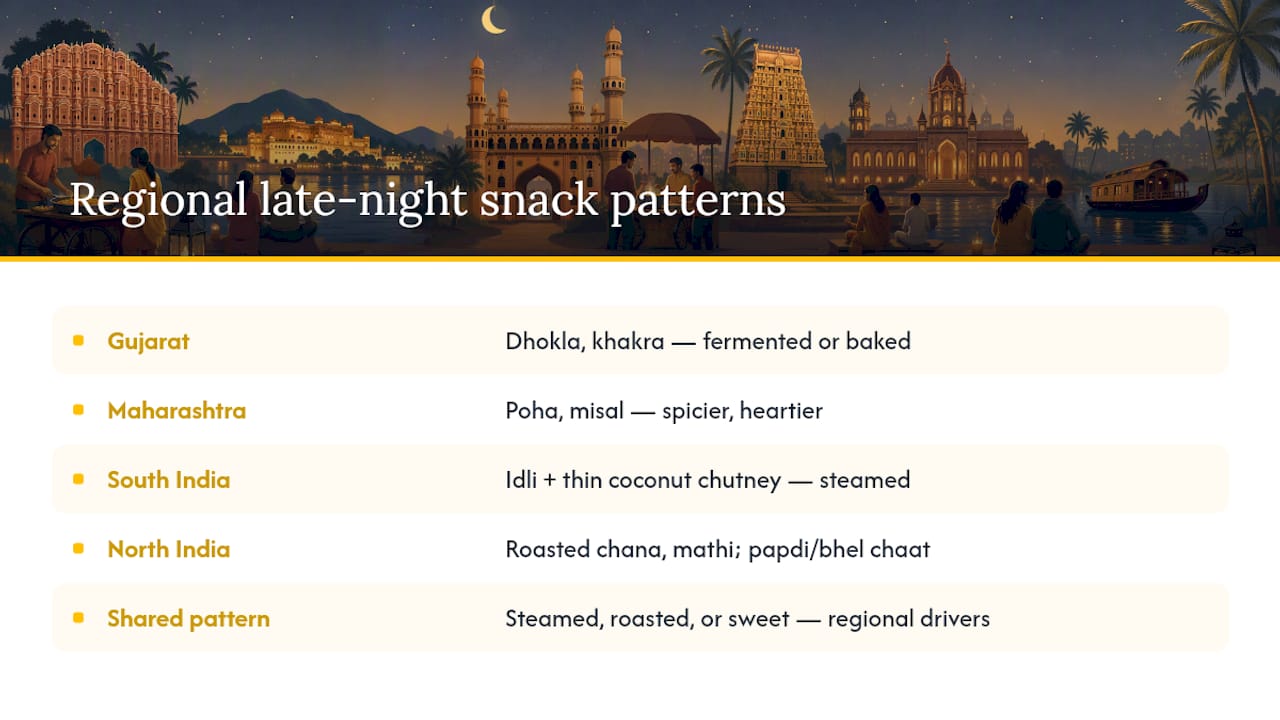
Ask someone in Gujarat what they reach for at night and you’ll likely hear dhokla or khakra, both light, fermented or baked, and easy on the stomach. Head to Maharashtra and poha or a bowl of misal takes over, spicier and heartier, built for people who want a real meal disguised as a snack.
In the south, idli and a thin coconut chutney are the late-night default, gentle enough to eat right before bed. Bengal leans toward something sweet, a small portion of chanar payesh or a handful of murki, reflecting the region’s fondness for closing the day on a sweet note rather than a savory one.
Up north, roasted chana and mathi dominate, dry, spiced, and shelf-stable, which makes sense in a region with hot summers where anything creamy spoils fast. Street stalls in cities like Delhi and Lucknow keep chaat counters running well into the night, serving papdi chaat and bhel puri to a crowd that treats midnight snacking as a normal part of the evening, not an exception to it.
The pattern across regions is consistent even when the dish changes: fermented or steamed where digestion matters most, dry roasted where shelf life matters most, and sweet where the culture leans that way. Recreating any of these regional versions works well as a heritage snack project if you want to go beyond the quick fixes above.
What To Drink With Your Late-Night Indian Snack
The right drink can make or break how a snack sits with you before bed. Spiced buttermilk, or masala chaas, is the classic pairing for anything fried or heavy, since the cumin and ginger in it help settle the stomach. It’s a natural match for paneer bhurji toast or besan chilla.
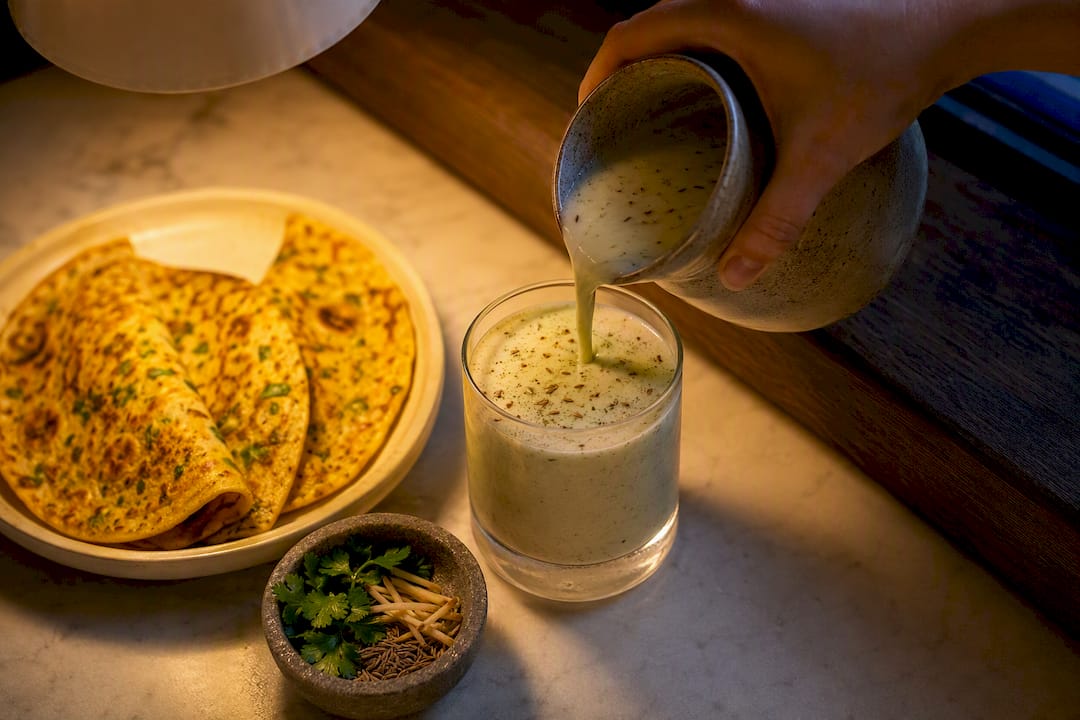
Warm water with a pinch of ajwain works well after anything oily, cutting through the heaviness better than a cold drink would. For lighter snacks like dhokla, idli, or sprout chaat, plain water or a mild herbal tea like chamomile is enough, since these snacks don’t need much help digesting.
Skip caffeinated chai or coffee if bedtime is close. It sounds obvious, but plenty of people pair chai with a midnight samosa without thinking about the caffeine hitting right when they’re trying to wind down. If you want something with a bit more flavor than water, a small glass of chilled coconut water pairs surprisingly well with spicier snacks like papdi chaat, since the natural sweetness balances the chili without adding sugar the way a soda would.
A Publisher’s Take: When Ready-Made Beats Homemade At Midnight
Cooking at midnight isn’t always realistic, even with a 10-minute recipe. That’s where a small-batch, handcrafted snack earns its place. DesiMunchiess makes ready-to-eat options built around the same portion-friendly thinking covered here. They are useful on nights when the craving is real but the energy for cooking isn’t. For a deeper look at making cleaner, lighter versions at home, our post on clean ingredient Indian snacks covers the same territory this article does, just from the kitchen side. A ready-made snack isn’t a shortcut you should feel guilty about. It’s just a different way to get the same bite of home.
— Shivam
Craving Something Ready To Eat Right Now?
Not every night leaves room for chopping onions or heating a pan, and that’s exactly the gap a handcrafted, ready-made snack fills. Desimunchiess makes small-batch Indian snacks the same way you’d want to make them yourself if you had the time, so instead of choosing between a bag of chips and a 20-minute recipe, you get a third option that’s already done.
The Tikoni Mathi is a good example: a dry, spiced, shelf-stable snack that fits the low-oil, portion-friendly profile this whole article has been pointing toward, ready straight from the pack with none of the frying. If tonight’s craving needs an answer faster than any recipe can deliver, browse the full snack shop and pick something that matches how you actually want to eat.
Sources
Recommended
Comments