
Keep Home Pickles Safe with Mustard Oil: 6 Practical Steps

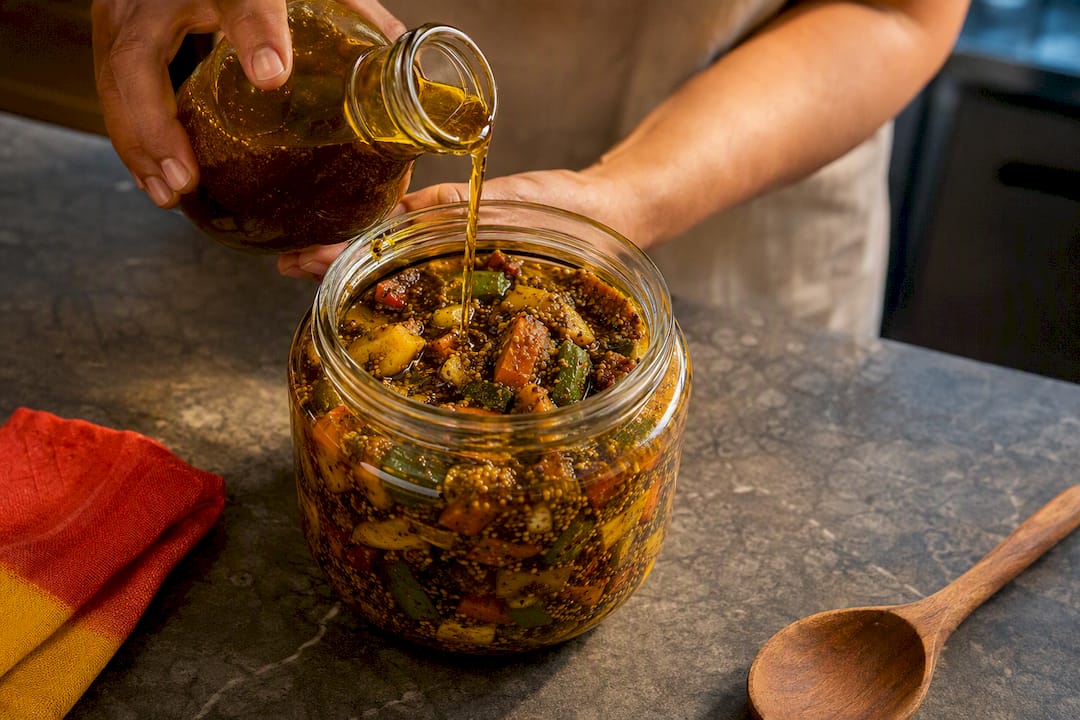
Mustard oil is the traditional pickling oil for many Indian-style achar, and for good reason: its pungent flavor and antimicrobial compounds both season and help preserve pickles. But oil alone won’t keep a jar safe. You need the right salt levels, dry handling, and often some acid to bring the risk of spoilage down to where it belongs.
TL;DR:
Mustard oil’s antibacterial and antifungal compounds make it effective for preserving pickles when combined with proper salt and acid levels.
Oil-only barriers can promote botulism unless paired with sufficient salt and acid to lower water activity and prevent bacterial growth.
Cold-pressed mustard oil, labeled as kachi ghani, retains pungent preservative compounds better than refined oils, which are milder and less effective.
Drying produce thoroughly and using generous salt are essential steps to prevent moisture, which can lead to spoilage despite oil sealing.
Properly made mustard oil pickles can last between 6 and 12 months at room temperature if stored correctly with full oil coverage and dry utensils.
Table of Contents
Why Mustard Oil Belongs in Your Pickle Jar
Mustard oil earns its place in Indian kitchens for a reason that goes beyond tradition. It contains allyl isothiocyanate, a compound responsible for that sharp, sinus-clearing bite, and it carries documented antibacterial and antifungal activity. That’s not a small detail. It means the oil is doing double duty: flavoring the pickle and working alongside salt to slow down the organisms that would otherwise spoil it.
The pungency also plays well with the classic pickle spice lineup. Mustard oil’s sharpness balances fenugreek, fennel, and asafoetida instead of getting lost next to them, which is part of why so many North Indian and Bengali recipes call for it by name.
Compare that to other oils:
Sesame oil brings a nutty, milder flavor that suits South Indian styles but lacks the same pungency.
Neutral oils like sunflower or canola preserve reasonably well but add nothing to the taste.
Cold-pressed mustard oil keeps both the flavor punch and the preservative compounds intact, which is why culinary sources point to it as the default for achar.
Is Mustard Oil Alone Enough to Prevent Botulism?
No. This is the part home picklers skip, and it’s the part that matters most. Oil floats on top of a pickle and forms a seal that blocks air, but that same low-oxygen environment is exactly what Clostridium botulinum favors. A thick oil layer can help preserve a pickle, but only when combined with salt and low water activity, not as a stand-alone barrier.
Safety Callout: Extension research on home preservation warns that oil-only environments can create real botulism risk, and that acid or adequate salt levels are necessary controls, not optional extras.
To pickle safely with mustard oil:
Add vinegar, lemon juice, or citric acid to lower the pH, especially for low-salt recipes.
Use generous salt, typically in the range traditional achar recipes call for, not a pinch.
Sterilize jars in boiling water and dry them fully before filling.
Keep every piece of produce completely dry before it goes near the oil.
Heat the oil until it just smokes, then cool it before pouring, and refrigerate the jar once it’s opened.
Kachi Ghani vs. Refined: Which Mustard Oil Should You Buy?
Cold-pressed mustard oil, sold as kachi ghani, is the traditional pick, and it’s the one worth seeking out. The cold-press method keeps the pungent compounds and preservative activity that heat processing tends to strip away, while refined mustard oil is milder and less effective at both jobs.
Reading the label matters more than most shoppers realize. Look for:
“Kachi ghani” or “cold-pressed” stated directly on the label, not implied by packaging color.
A short ingredient list: mustard seed oil, nothing else.
A deep amber color and a sharp smell when you open the bottle.
No vague “vegetable oil blend” wording, which usually signals dilution with cheaper oils.
Fresh oil smells sharp and slightly bitter in a good way. Oil that’s gone flat or rancid smells dull and tastes greasy rather than pungent, and it won’t preserve as well either.
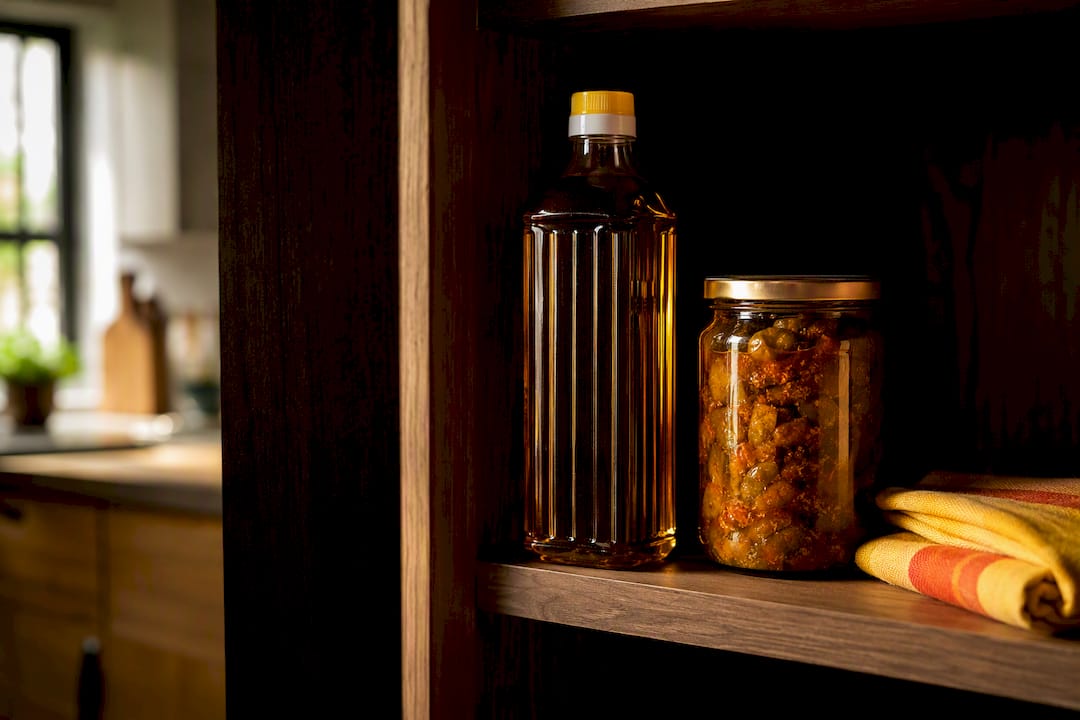
Pro Tip: Store your mustard oil in a cool, dark cupboard, not next to the stove. Heat and light break down the pungent compounds faster than almost anything else in your kitchen.
How to Dry, Cure, and Mature Your Pickle Safely
Moisture is the real enemy here, not time. Even a trace of water lets bacteria take hold underneath that protective oil layer, so drying is not optional.
Many home cooks follow a loose version of the “three, two, one” rhythm common in achar-making: salt the cut produce first, let it rest and release liquid, then dry before oil goes anywhere near it.
Salt generously and let the produce sit for several hours to draw out surface water.
Dry thoroughly, either by sun-drying cut pieces across two to three days or using low-heat oven-drying for smaller batches.
Mix in spices once the pieces show no visible moisture.
Heat the mustard oil until it lightly smokes, then let it cool before pouring.
Pour oil to fully cover the solids, seal, and label with the date.
Sun-cure for 7 to 10 days, shaking or stirring daily with a clean, dry spoon.
Pro Tip: Never use a wet or metal spoon inside the jar. A single drop of water or a reactive metal surface can undo weeks of careful drying.
Two Mustard Oil Pickle Recipes to Try at Home
Mango pickle. Cut raw green mango into pieces, salt at roughly the ratio your family recipe calls for, and let it sit until the moisture releases. Toast fennel, fenugreek, mustard seed, and red chili, then mix into the dried mango. Heat mustard oil until it smokes lightly, then cool it before pouring over the mix. Sun-cure for 7 to 10 days, tasting on day three to check spice balance.
Salt and dry the mango pieces completely.
Toast and grind the spice mix.
Combine spices with mango.
Heat, cool, and pour the oil to fully cover.
Sun-cure, stirring daily with a dry spoon.
Chilli pickle. Slit whole green or red chilies and air-dry them for a few hours to remove surface moisture. Toss with mustard seed, asafoetida, and turmeric, then pack into a sterilized jar. Pour warm, cooled mustard oil until the chilies are fully submerged. Let it mature for at least a week before tasting, checking that the oil layer still covers everything.
How Long Do Mustard Oil Pickles Actually Last?
Made correctly, mustard oil pickles hold up for months. Traditional guidance commonly puts properly made pickles at a 6 to 12 month shelf life at room temperature, with refrigeration recommended after the jar is opened.
The habits that get you there are simple but easy to neglect:
Keep the oil level above the solids at all times, topping it up if it drops.
Always use a clean, completely dry spoon, every single time.
Store in glass jars rather than plastic or metal, which can react with the acid and salt.
Watch for off-odors, visible mold, or unusual gas bubbling. Any of those means the jar gets discarded, not tasted.
Shelf-Life Note: A properly sealed jar with full oil coverage and no surface moisture is the difference between a pickle that lasts a year and one that spoils in weeks.
From Home Kitchen to Handcrafted Batch: Our Approach
*Author: Shivam,
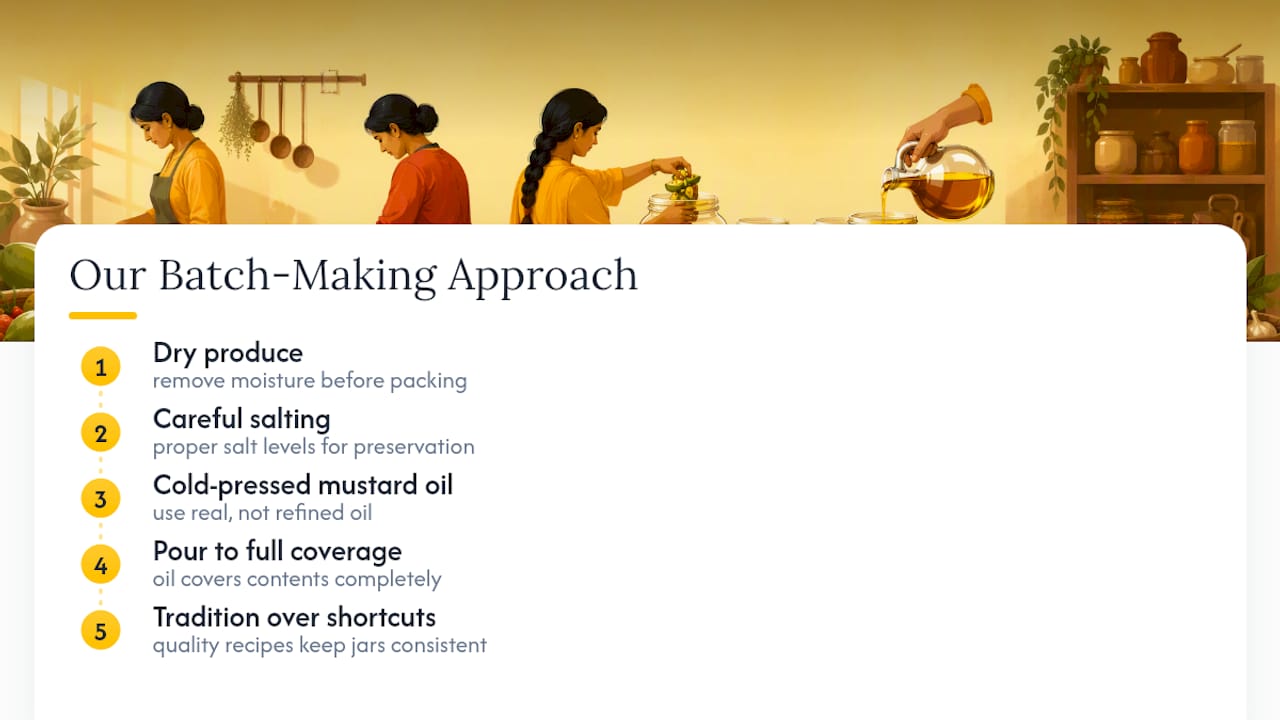
Every batch we make at Desimunchiess follows the same logic laid out here: dry produce, careful salting, and real cold-pressed mustard oil, poured to full coverage. We lean on traditional recipes and quality ingredients rather than shortcuts, because the same rules that keep a home jar safe are the ones that keep a small-batch jar consistent. You can see that approach reflected across our mixed pickle and other achar on our shelves.
Oil, Vinegar, or Fermentation: Which Fits Your Pickle?
Oil-based pickles deliver rich, spice-forward depth built for the long haul in your pantry. Vinegar pickles are faster and tangier, good for a quick side dish. Fermentation adds probiotic complexity but demands more patience. If cultural authenticity and shelf stability matter most to you, mustard oil is still the right call.
— Shivam
Skip the Sun-Curing and Get Handcrafted Achar Delivered
Making your own mustard oil pickle is deeply satisfying, but it takes days of drying, curing, and watching over jars. Some companies offer handcrafted, small-batch production and traditional recipes with quality ingredients that replicate the taste of a home kitchen.
If mango is your favorite, our mango pickle and mango chilli pickle both use real cold-pressed mustard oil the way this guide describes it. Prefer heat over sweetness? The green chilli pickle delivers that same spice-forward punch without you ever touching a sun-curing tray. And if mango happens to pair well with your tea routine too, Tri Crow Coffee’s mango loose leaf tea makes a nice companion flavor. Browse the full pickle and muraba selection and order a jar today.
Sources
FAQ
Is Mustard Oil Good for Pickles?
Yes. Mustard oil’s pungent compounds season pickles while contributing antibacterial and antifungal activity that supports preservation. It still needs to be paired with proper salt and dry handling to be safe long term.
What Is the Secret to Crunchy Pickles?
The real secret is removing surface moisture before the produce ever meets the oil. Salting, then air-drying or sun-drying for a couple of days, pulls water out so the texture stays firm instead of turning mushy.
What Is the Disadvantage of Mustard Oil?
Its biggest drawback is that an oil seal alone doesn’t guarantee safety. Because oil creates a low-oxygen layer, it can favor botulism-causing bacteria unless it’s combined with adequate salt and acid.
What Is the 321 Rule for Pickles?
The core idea, backed by drying research, is always the same: remove moisture before you seal, often in several stages including salting, drying, and maturing before oil goes in.
How Long Do Homemade Mustard Oil Pickles Last?
Properly made pickles with full oil coverage and no trapped moisture typically last 6 to 12 months at room temperature. Refrigerate after opening and always use a dry spoon to extend that shelf life.
Recommended
Comments